- Inicio

- Impresión en lienzo
- Max Ernst
- Untitled (12)

 Preview
 Enviar
 Compartir
 Detalles

 Descargar
 Similares
 Radiografía
 Presentación de diapositivas
Untitled (12)
 Acrylic On Canvas
- WallArt
- Surrealist Exploration
 1920
1920- Modern
 30.0 x 25.0 cm
 Ver más
Giclée / Impresión de arte
Impresión giclée o en lienzo de calidad de museo con producción rápida y opciones de acabado flexibles. ( Switch to hand made Painting Switch to Image)




P118B $10

P118H $10

P118W $10

P438Z $10

P508JH $12

P508YH $12

P805H $10

P805Z $10

P919BZ $10

P919G $10

P919XJ $10

P959ZH $10

P968JZ $12

W106C $8

W218G $10

W218JH $8

W218Y $10

W307PJ $10

W316G $10

W316PJ $8

W316Y $10

W398PJ $8

W4111J $10

W500HY $15

W500JH $15

W692G $12

W849H $8

W940BG $15

W953PJ $8




Elija entre nuestros tamaños predefinidos que respetan las proporciones originales de la obra.

Puede introducir sus propias dimensiones para adaptarse a un marco o espacio específico. Si el tamaño seleccionado no coincide con las proporciones de la imagen original, recortaremos la obra de arte o extenderemos la imagen con un borde con efecto espejo o de color sólido. Se enviará una maqueta digital para su aprobación antes de que comience la producción.
Tenga en cuenta que la vista previa en pantalla no refleja el recorte o la extensión real. Solo la maqueta mostrará con precisión la composición final.
Aunque existen tamaños personalizados, recomendamos seleccionar una dimensión de la lista predefinida para preservar las proporciones originales.
Entrega mundial () en 2 semanas en lugar de las 4/5 semanas estándar. (28 julio)

Envío exprés gratuito a todo el mundo

Lienzo de lino de alta calidad

Seguro de envío total

Garantía de reembolso de impuestos aduaneros

Garantía de fidelidad de color

Política de devolución de 60 días (solo por defectos)

Garantía de devolución del 100% del dinero

Descuento por pedido múltiple
 La opción de vidrio solo está disponible en tamaños inferiores a 110 cm.

Untitled (12)
Giclée / Impresión de arte
Tamaño de la reproducción
-


Precio total final
$ 62
Descripción de la obra
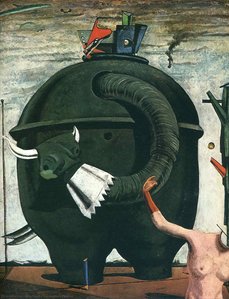
Unveiling the Dreamscape: Max Ernst's "Untitled (12)"
Max Ernst’s “Untitled (12)” is not merely a painting; it’s an immersion into the subconscious, a meticulously crafted exploration of surrealist anxieties and desires. Executed in 1920, this work embodies the burgeoning spirit of experimentation that defined the early years of the movement, showcasing Ernst's mastery of technique and his profound engagement with psychological themes. The image depicts a bizarre architectural tableau – a colossal structure resembling a towering cake or stacked boxes dominates the foreground, crowned by an imposing clock tower. Two smaller buildings punctuate the background, adding to the unsettling sense of scale and disorientation. At the heart of this dreamscape lies a startling juxtaposition: a pair of enormous scissors, seemingly out of place yet undeniably central to the composition’s enigmatic power.
A Surrealist Genesis
Born in Brühl, Germany, in 1891, Max Ernst was a key figure in the development of surrealism. His artistic trajectory wasn't dictated by formal training but by an intensely personal and intellectual quest. Influenced by philosophers like Nietzsche and Freud, Ernst sought to unlock the hidden realities residing within the human psyche. “Untitled (12)” perfectly reflects this approach; it’s a deliberate disruption of rational order, a visual manifestation of the illogical and dreamlike states that fascinated him. The painting emerged during a period of immense social and political upheaval – the aftermath of World War I had shattered traditional values, leaving artists grappling with questions of identity, meaning, and the nature of reality itself. Ernst’s work became a powerful expression of this collective disorientation.
Technique and Composition
Ernst's technique in “Untitled (12)” is characterized by a meticulous layering of oil paint, creating a textured surface that adds to the painting’s unsettling quality. The use of collage elements – though not explicitly visible in this reproduction – was a hallmark of Ernst’s process, often incorporating found objects and images to further destabilize traditional representational forms. The composition itself is deliberately unbalanced, with the towering structure drawing the eye upwards while the oversized scissors create a jarring focal point. This deliberate asymmetry contributes to the painting's sense of unease and invites the viewer to question their own perceptions.
Symbolic Layers and Emotional Resonance
The symbolism within “Untitled (12)” is deliberately ambiguous, inviting multiple interpretations. The building itself could represent societal structures – perhaps crumbling or distorted – while the clock tower suggests a fractured sense of time. The scissors, a potent symbol of cutting, severing, and transformation, introduce an element of violence and disruption. The overall effect is profoundly unsettling, evoking feelings of anxiety, disorientation, and a subtle sense of dread. This emotional impact is precisely what makes Ernst’s work so compelling – it taps into our deepest fears and desires, forcing us to confront the irrational aspects of human experience. The painting's enduring appeal lies in its ability to resonate with viewers on a subconscious level, prompting reflection on the nature of reality and the complexities of the human mind.
Obras similares


Biografía del artista
Max Ernst: Una Vida en el Surrealismo
Juventud y Educación
- Nacido: 1 de abril de 1891, en Brühl, Alemania.
- El padre de Ernst, Philipp Ernst, era maestro de sordos y pintor aficionado, fomentando el interés temprano de Max por el arte.
- Estudió filosofía, historia del arte, literatura, psicología y psiquiatría en la Universidad de Bonn desde 1909.
- Esta diversa formación académica influyó profundamente en sus posteriores exploraciones artísticas.
Desarrollo Artístico e Influencias
- Un momento decisivo fue la exposición Sonderbund en Colonia (1912), donde conoció obras de Pablo Picasso, Vincent van Gogh, y Paul Gauguin.
- En 1914, conoció a Hans Arp, comenzando una amistad que duró toda la vida e influyó significativamente en su trayectoria artística.
- La Primera Guerra Mundial impactó profundamente a Ernst; sus experiencias como soldado llevaron al desencanto y a una visión crítica de la sociedad.
- Se sintió influenciado por las obras de Sigmund Freud, explorando temas de la mente inconsciente en su arte.
Dada y Surrealismo
- Ernst se convirtió en una figura clave del grupo Dada de Colonia después de la Primera Guerra Mundial, rechazando las convenciones artísticas tradicionales.
- Pionero en técnicas innovadoras como frottage (frotar lápiz sobre superficies texturizadas) y grattage (raspar pintura para revelar capas subyacentes).
- En la década de 1920, se unió al movimiento Surrealista en París, colaborando con artistas como Paul Éluard.
- Su obra durante este período exploró imágenes oníricas y temas psicológicos.
Obras Principales y Técnicas
- Frottage: Una técnica utilizada para crear texturas e imágenes inesperadas, ejemplificada en muchas de sus obras.
- Collage: Ernst empleó con frecuencia el collage, combinando elementos dispares para crear composiciones surrealistas.
- Obras Notables:
- La Ciudad Entera
- Euclides
- De Esto Ninguno Debería Saber
- Bosque y Paloma
- Sus pinturas a menudo presentan imágenes simbólicas, incluyendo pájaros (particularmente su alter ego Loplop), paisajes y yuxtaposiciones inquietantes.
Vida Tardía y Legado
- Ernst se trasladó a Estados Unidos durante la Segunda Guerra Mundial, continuando pintando y experimentando con nuevas técnicas.
- Regresó a Francia después de la guerra y permaneció activo hasta su muerte el 1 de abril de 1976, en París.
- Significado Histórico: Las contribuciones de Max Ernst a Dada y Surrealismo fueron innovadoras. Desafió las normas artísticas, exploró la mente subconsciente e inventó técnicas innovadoras que continúan inspirando a los artistas de hoy en día.
- Sigue siendo una de las figuras más importantes e influyentes del arte del siglo XX.

Max Ernst
1891 - 1976 , Alemania
Datos clave
- Artistas Influenciados: ['Muchos artistas posteriores']
- Artistas Que Influyeron:
- Pablo Picasso
- Vincent van Gogh
- Paul Gauguin
- Sigmund Freud
- Fecha De Muerte: 1 de abril de 1976
- Fecha De Nacimiento: 1 de abril de 1891
- Lugar De Nacimiento: Brühl, Alemania
- Movimiento Artístico: Dadaísmo y Surrealismo
- Nacionalidad: Alemán/Americano/Francés
- Nombre Completo: Max Ernst
- Obras Notables:
- La Ciudad Entera
- Euclides
- Bosque y Paloma
- El Elefante de Célebes
Artículos relacionados

Surrealismo Expresionista: 10 Obras Maestras que Transformaron el Arte | ArtsDot
Descubre las 10 obras maestras del Surrealismo Expresionista con ArtsDot. Explora la historia de Dalí, Magritte y Miró, su técnica y significado. Encuentra reproducciones de arte exclusivas para transformar tu hogar. ¡Explora la colección completa en ArtsDot.com!
Max Ernst: Las 25 Obras Maestras del Surrealismo para Decorar tu Hogar con Arte
Descubre las 25 obras maestras de Max Ernst, el rey del surrealismo. Explora su arte onírico, técnicas innovadoras y simbolismo profundo. Reproducciones de alta calidad para decorar tu hogar con estilo en ArtsDot.com

Surrealismo: 10 Obras Maestras que Transformaron el Arte y la Decoración
Descubre las 10 obras maestras del Surrealismo con Dalí, Magritte y Miró. Explora la historia, el simbolismo y la técnica de estos íconos del arte moderno. Encuentra reproducciones de alta calidad para tu hogar en .

Echoes of Trauma & Hope: Representing Transformation in Artworks of 1918
Explore the profound artistic responses to World War I's trauma & hope. Discover Expressionist masterpieces by Bacon, de Kooning & more. Expert insights for collectors & art enthusiasts at ArtsDot.

Echoes of Time: Exploring the Enduring Appeal & Historical Context of Vintage Art Prints
Explore the captivating world of vintage art prints! Discover their history, collecting tips & enduring appeal. Expert insights on chromolithography and building a legacy collection with ArtsDot.