


 Vista previa
 Compartir
 Compartir
 Ver detalles
 Guía
Guía

 Descargar
 Ver artículos similares
 Radiografía
 Presentación de diapositivas
 Estadísticas
Paysage avec lune


 Leer más
La obra de arte que se muestra en esta página está protegida por las leyes de propiedad intelectual, lo que significa que no podemos crear ni vender legalmente una reproducción idéntica. Esta protección se hace cumplir en virtud de acuerdos internacionales como el Convenio de Berna y por las leyes nacionales, incluidas aquellas establecidas por el Ley de derechos de autor de los EE. UU. - Título 17.
Este método cumple plenamente con las normativas de derechos de autor, ya que no implica la copia ni la duplicación de la obra protegida. En su lugar, se trata de una reinterpretación creativa: una nueva pintura influenciada por la original, pero que no es idéntica a ella.
Giclée / Impresión de arte
Impresiones giclée o en lienzo de calidad de museo con producción rápida y opciones de acabado flexibles. ( Encargar reproducción pintada a mano Ver versión en imagen digital)




P118B €10

P118H €10

P118W €10

P438Z €10

P508JH €12

P508YH €12

P805H €10

P805Z €10

P919BZ €10

P919G €10

P919XJ €10

P959ZH €10

P968JZ €12

W106C €8

W218G €10

W218JH €8

W218Y €10

W307PJ €10

W316G €10

W316PJ €8

W316Y €10

W398PJ €8

W4111J €10

W500HY €15

W500JH €15

W692G €12

W849H €8

W940BG €15

W953PJ €8




Elija entre nuestros tamaños predefinidos que respetan las proporciones originales de la obra.

Introduzca el ancho y el alto que necesite para adaptarse a su marco o pared. Una impresión solo puede recortarse, nunca hacerse más grande que la imagen original, por lo que un tamaño con una forma distinta perderá parte de la obra. Le enviaremos una maqueta digital para su aprobación antes de realizar cualquier impresión. La imagen que se muestra en esta página no refleja el recorte real; solo la maqueta lo hace.
Envío a todo el mundo () en 2 semanas en lugar de las 4/5 semanas estándar. (24 octubre)

Envío exprés gratuito a todo el mundo

Lienzo de lino de alta calidad

Seguro de envío completo

Garantía de reembolso de impuestos aduaneros

Garantía de fidelidad cromática exacta

Política de devolución de 100 días (solo por defectos)

Garantía de devolución del 100% del dinero

Oferta por volumen
 La opción de vidrio solo está disponible en tamaños inferiores a 110 cm.

Paysage avec lune
Giclée / Impresión de arte
Tamaño de la reproducción
-


Precio total
€ 54
A Lunar Reverie: Max Ernst's *Paysage avec lune*
Max Ernst’s *Paysage avec lune* (Landscape with Moon) is more than just a depiction of a celestial body; it’s an immersion into the subconscious, a testament to the artist’s lifelong fascination with dreams, mythology, and the unsettling beauty of the surreal. Painted during a period of intense experimentation and intellectual exploration, this work embodies Ernst's core artistic philosophy – a deliberate rejection of representational accuracy in favor of evoking emotional responses and challenging conventional perceptions.
- Subject Matter: The painting centers around a dramatically rendered moon dominating the composition. Its large size immediately commands attention, drawing the viewer into its luminous presence. Surrounding it are subtle details – smaller forms in the sky that could be interpreted as distant landscapes or simply symbolic elements, adding to the work’s enigmatic quality.
- Style and Technique: Ernst's technique is characterized by a deliberate layering of textures and colors, achieved through a combination of oil paint and possibly collage elements (a common practice within his oeuvre). The application of paint is loose and expressive, prioritizing atmosphere and mood over precise detail. This approach aligns with the burgeoning Surrealist movement’s rejection of academic realism.
Echoes of the Surreal: Historical Context
Created by Max Ernst between 1924 and 1930, *Paysage avec lune* emerged from a pivotal moment in art history – the rise of Surrealism. Following World War I, artists like Ernst were profoundly affected by the trauma and disillusionment of the era. They sought to bypass rational thought and tap into the realm of dreams, the unconscious, and the irrational as a means of expressing profound anxieties and exploring alternative realities. Ernst’s exploration of automatism – a technique involving spontaneous creation without conscious control – was central to his process, allowing him to access deeper layers of meaning within his work.
- Influence of Mythology: The moon itself holds significant symbolic weight across cultures and throughout history. Often associated with femininity, intuition, and the cyclical nature of time, its presence in Ernst’s painting suggests a connection to primal forces and archetypal narratives.
- Connection to Dadaism: Ernst's early work was deeply influenced by Dadaism, characterized by its anti-rational stance and embrace of absurdity. This influence is evident in the painting’s unsettling atmosphere and rejection of traditional artistic conventions.
Decoding the Symbolism
*Paysage avec lune* resists straightforward interpretation, inviting viewers to engage with its ambiguities and explore their own subconscious associations. The moon's glow can be seen as a beacon of hope or a symbol of isolation, depending on one’s perspective. The smaller forms in the sky may represent fragmented memories, distorted landscapes, or even glimpses into other dimensions. Ernst deliberately avoided providing definitive answers, believing that art should provoke thought and emotion rather than offer concrete explanations.
- Color Palette: The dominant use of yellow – a color often associated with light, optimism, and the sun – contrasts sharply with the darkness of the night sky, creating a dynamic tension within the composition.
- Compositional Balance: Despite its dreamlike quality, the painting maintains a sense of balance, with the moon positioned centrally to draw the viewer’s eye while the surrounding elements contribute to the overall harmony.
Emotional Impact and Artistic Value
*Paysage avec lune* possesses a captivating power that transcends its simple subject matter. It evokes a profound sense of mystery, solitude, and wonder – qualities that have resonated with viewers for decades. As a work by Max Ernst, a key figure in the development of 20th-century art, this painting represents a significant contribution to the Surrealist movement and offers a unique window into the artist’s complex inner world. A hand-painted reproduction allows you to bring this evocative piece into your own space, transforming it into a focal point for contemplation and artistic appreciation.
Preguntas y respuestas
¿Qué técnica se utilizó para "Paysage avec lune" de Max Ernst?
La técnica de "Paysage avec lune" de Max Ernst es Acrylic On Canvas. Las reproducciones pretenden recrear la apariencia de esta técnica.
¿Cómo equilibra la luz y la sombra "Paysage avec lune"?
Los valores registrados para "Paysage avec lune" de Max Ernst son: bright de brillo y Gentle Luminance de luminancia.
¿A qué artista se le atribuye "Paysage avec lune"?
El artista detrás de "Paysage avec lune" es Max Ernst. La obra está catalogada bajo el nombre de Max Ernst.


Biografía del artista
Max Ernst: Una Vida en el Surrealismo
Juventud y Educación
- Nacido: 1 de abril de 1891, en Brühl, Alemania.
- El padre de Ernst, Philipp Ernst, era maestro de sordos y pintor aficionado, fomentando el interés temprano de Max por el arte.
- Estudió filosofía, historia del arte, literatura, psicología y psiquiatría en la Universidad de Bonn desde 1909.
- Esta diversa formación académica influyó profundamente en sus posteriores exploraciones artísticas.
Desarrollo Artístico e Influencias
- Un momento decisivo fue la exposición Sonderbund en Colonia (1912), donde conoció obras de Pablo Picasso, Vincent van Gogh, y Paul Gauguin.
- En 1914, conoció a Hans Arp, comenzando una amistad que duró toda la vida e influyó significativamente en su trayectoria artística.
- La Primera Guerra Mundial impactó profundamente a Ernst; sus experiencias como soldado llevaron al desencanto y a una visión crítica de la sociedad.
- Se sintió influenciado por las obras de Sigmund Freud, explorando temas de la mente inconsciente en su arte.
Dada y Surrealismo
- Ernst se convirtió en una figura clave del grupo Dada de Colonia después de la Primera Guerra Mundial, rechazando las convenciones artísticas tradicionales.
- Pionero en técnicas innovadoras como frottage (frotar lápiz sobre superficies texturizadas) y grattage (raspar pintura para revelar capas subyacentes).
- En la década de 1920, se unió al movimiento Surrealista en París, colaborando con artistas como Paul Éluard.
- Su obra durante este período exploró imágenes oníricas y temas psicológicos.
Obras Principales y Técnicas
- Frottage: Una técnica utilizada para crear texturas e imágenes inesperadas, ejemplificada en muchas de sus obras.
- Collage: Ernst empleó con frecuencia el collage, combinando elementos dispares para crear composiciones surrealistas.
- Obras Notables:
- La Ciudad Entera
- Euclides
- De Esto Ninguno Debería Saber
- Bosque y Paloma
- Sus pinturas a menudo presentan imágenes simbólicas, incluyendo pájaros (particularmente su alter ego Loplop), paisajes y yuxtaposiciones inquietantes.
Vida Tardía y Legado
- Ernst se trasladó a Estados Unidos durante la Segunda Guerra Mundial, continuando pintando y experimentando con nuevas técnicas.
- Regresó a Francia después de la guerra y permaneció activo hasta su muerte el 1 de abril de 1976, en París.
- Significado Histórico: Las contribuciones de Max Ernst a Dada y Surrealismo fueron innovadoras. Desafió las normas artísticas, exploró la mente subconsciente e inventó técnicas innovadoras que continúan inspirando a los artistas de hoy en día.
- Sigue siendo una de las figuras más importantes e influyentes del arte del siglo XX.

Max Ernst
1891 - 1976 , Alemania
Datos clave
- Artistas Influenciados: ['Muchos artistas posteriores']
- Artistas Que Influyeron:
- Pablo Picasso
- Vincent van Gogh
- Paul Gauguin
- Sigmund Freud
- Fecha De Muerte: 1 de abril de 1976
- Fecha De Nacimiento: 1 de abril de 1891
- Lugar De Nacimiento: Brühl, Alemania
- Movimiento Artístico: Dadaísmo y Surrealismo
- Nacionalidad: Alemán/Americano/Francés
- Nombre Completo: Max Ernst
- Obras Notables:
- La Ciudad Entera
- Euclides
- Bosque y Paloma
- El Elefante de Célebes
Artículos relacionados
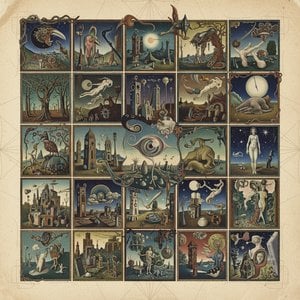
Max Ernst: Las 25 Obras Maestras del Surrealismo para Decorar tu Hogar con Arte
Descubre las 25 obras maestras de Max Ernst, el rey del surrealismo. Explora su arte onírico, técnicas innovadoras y simbolismo profundo. Reproducciones de alta calidad para decorar tu hogar con estilo en ArtsDot.com

John Constable: Las 25 Obras Maestras del Paisaje Inglés | ArtsDot
Descubre las 25 obras maestras de John Constable, el pintor romántico inglés que capturó la belleza del paisaje. Explora su técnica, historia y significado en ArtsDot.com. Reproducciones de arte de alta calidad para tu hogar.

Katsushika Hokusai: Las 25 Obras Maestras del Ukiyo-e que Transformaron el Arte Japonés | ArtsDot
Descubre las 25 obras maestras de Katsushika Hokusai, el genio del ukiyo-e. Explora 'La Gran Ola', paisajes japoneses y su impacto en el arte moderno. Reproducciones de alta calidad para tu hogar en ArtsDot.com.
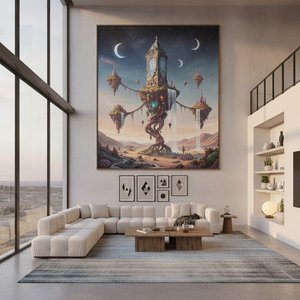
Dreamscapes Unveiled: A Curated Guide to Integrating Surrealist Landscape Art into Modern Interiors
Discover how to transform your home with the captivating mystery of Surrealist landscape art. Our expert guide explores iconic dreamscapes, offering professional tips on curating, styling, and commissioning bespoke surrealist masterpieces for a sophisticated, soulful interior.

Paisajes Románticos: 10 Obras Maestras que Definieron un Movimiento Artístico
Descubre los 10 paisajes románticos más influyentes de artistas como Caspar David Friedrich y Turner. Explora la belleza, el simbolismo y las técnicas del movimiento romántico. Reproducciones de arte exclusivas en ArtsDot.com.


