

 Ver en contexto
 Enviar
 Compartir
 Detalles

 Descargar
 Similares
 Radiografía
 Presentación de diapositivas
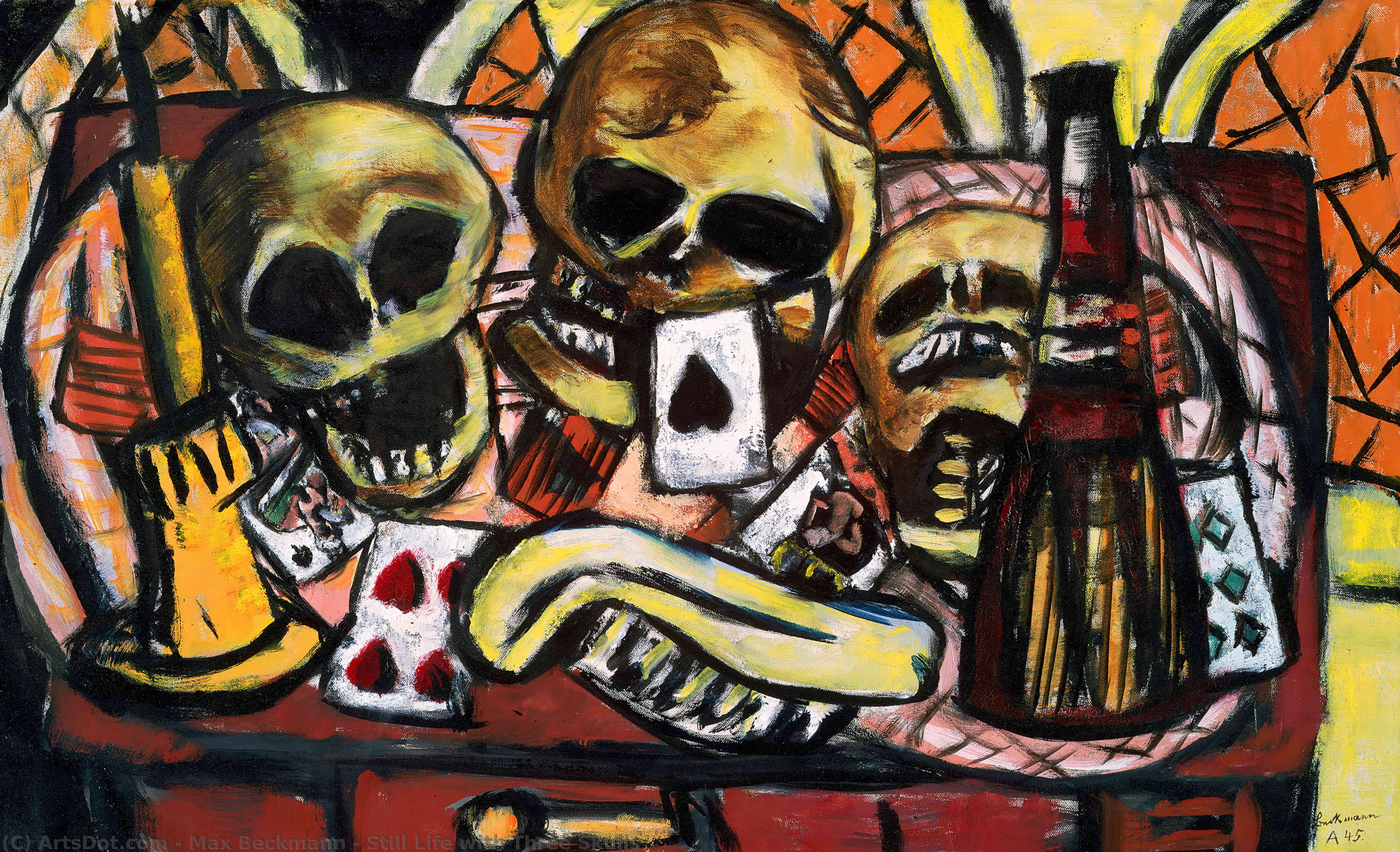
Still Life with Three Skulls


 Ver más
Adquiera una imagen digital de alta resolución y optimizada, muy superior a la vista previa en línea.
Cada archivo es preparado meticulosamente por nuestros especialistas internos mediante el uso de herramientas avanzadas y un experto retoque manual. Nos aseguramos de que cada imagen posea una claridad excepcional, una precisión cromática impecable y un detalle minucioso.
El archivo final se entrega por correo electrónico en un plazo de 72 horas, optimizado para su uso inmediato en entornos profesionales, editoriales y de impresión. Esta es la misma calidad en la que confían los estudios de diseño, las editoriales y las galerías de primer nivel.
Imagen Digital
Descarga un archivo de alta resolución para exhibición personal, impresión y proyectos creativos. ( Comprar impresión Comprar pintura hecha a mano)
Incluido en cada pedido de imágenes digitales
Entrega digital experta, garantizada.
Al elegir ArtsDot.com, no solo está adquiriendo una imagen; está recibiendo una obra de arte digital mejorada profesionalmente, elaborada con precisión y respaldada por una garantía de satisfacción. Esto es todo lo que incluye su pedido, automáticamente:

Entrega rápida por email
Recibirá su archivo de imagen digital en alta resolución por correo electrónico en un plazo de 72 horas tras realizar su pedido, listo para su uso inmediato.

Archivo digital optimizado por IA
Su obra de arte se optimiza profesionalmente mediante herramientas avanzadas de IA y edición manual, garantizando el máximo detalle, claridad y precisión cromática.

Reenvío gratuito de por vida
¿Has borrado o perdido tu archivo por error? No te preocupes: te lo volveremos a enviar en cualquier momento, sin coste adicional.

Sin gastos de importación, siempre
Disfrute de su obra de arte al instante sin aduanas, aranceles ni gastos de envío; las descargas digitales siempre están libres de impuestos.

Garantía de fidelidad de color
Garantizamos que su imagen digital refleje los colores originales con la mayor fidelidad posible, mediante el uso de herramientas profesionales y gestión del color.

Garantía de satisfacción de 60 días
Si no está satisfecho con su imagen digital, la revisaremos o le reembolsaremos el 100% en un plazo de 60 días, sin preguntas.

100% Garantía de devolución de dinero
¿No está satisfecho? Obtenga un reembolso completo dentro de los 60 días posteriores a la recepción de su archivo digital, sin necesidad de explicaciones.

Descuentos por pedidos grandes
Compra 3 imágenes, ahorra 10% - Compra 5, ahorra 15% - Compra 10+, ahorra 20%. Ideal para proyectos creativos, galerías y agencias.
A Memento Mori in Modernity
In the hauntingly evocative Still Life with Three Skulls, the viewer is invited into a somber, introspective space where the boundaries between life and death blur through the lens of German Expressionism. Max Beckmann, a master of capturing the psychological weight of the human condition, presents a composition that transcends mere tabletop arrangement. The painting features three skulls arranged across a dark, textured surface, their hollow sockets staring back with an unsettling permanence. Interspersed among these skeletal remains are various bottles and a solitary knife, objects that ground the macabre subject matter in a domestic, almost mundane reality. This juxtaposition creates a profound tension, as the everyday items of life sit alongside the undeniable symbols of mortality.
The technique employed by Beckmann is nothing short of visceral. Eschewing the delicate smoothness of classical still lifes, he utilizes a bold, distorted approach to space and form that reflects his experience as a medical orderly during World War I. The brushwork feels heavy and deliberate, imbuing each object with a sense of sculptural weight. There is a rhythmic quality to the placement of the bottles—one perched in the upper right, another near the center, and a third anchoring the lower left—which guides the eye through a labyrinth of light and shadow. This use of chiaroscuro, reminiscent of the Old Masters like Rembrandt, serves to heighten the drama, pulling the skulls out of the darkness and forcing a confrontation with their stark, bony architecture.
Symbolism and the Weight of Existence
To gaze upon this work is to engage with the ancient tradition of memento mori—the reminder that death is an ever-present companion. However, Beckmann breathes a modern, existential dread into this classical theme. The skulls are not merely decorative symbols; they represent the fragility of the human ego and the inevitable decay of all material things. The presence of the knife adds a layer of latent violence or perhaps the surgical precision of fate, while the bottles suggest the fleeting pleasures of the senses that cannot stave off the end. For the collector or interior designer, this piece offers more than just visual interest; it provides a profound intellectual anchor for a room, sparking conversation about the cyclical nature of life and the enduring legacy of human struggle.
For those seeking to integrate such a powerful work into a curated space, a high-quality reproduction of Still Life with Three Skulls serves as a centerpiece of immense character. It is an ideal selection for a study, a library, or a sophisticated gallery wall where art is intended to provoke thought and evoke emotion. The painting’s dark palette and commanding presence allow it to harmonize with rich textures like leather, dark wood, and velvet, creating an atmosphere of timelessness and intellectual depth. Owning this piece is an invitation to contemplate the beauty found within the shadows and to appreciate the raw, unfiltered truth of the human experience as captured by one of the twentieth century's most significant artistic voices.
Obras relacionadas




Biografía del artista
Vida temprana y desarrollo artístico
Max Beckmann, un renombrado pintor, dibujante, grabador, escultor y escritor alemán, nació el 12 de febrero de 1884 en Leipzig, Sajonia. Su viaje artístico comenzó con representaciones académicamente correctas, que luego se transformaron en figuras y espacios distorsionados, reflejando su visión alterada de la humanidad después de servir como ordenanza médica durante la Primera Guerra Mundial.Estilo artístico e influencias
El estilo de Beckmann, arraigado en la imaginería del vidrio medieval, estuvo influenciado por varios artistas, incluyendo a Cézanne, Van Gogh, Blake, Rembrandt y Rubens. También se inspiró en los artistas europeos del norte del siglo tardío medieval y del Renacimiento temprano, como Bosch, Bruegel y Matthias Grünewald.Obras notables y exposiciones
- El Bark (adquirido por la Galería Nacional de Berlín)
- Autorretrato con esmoquin (comprado en 1928)
- Retrospectivas en la Städtische Kunsthalle Mannheim (1928) y en Basilea y Zúrich (1930)
Vida posterior y exilio
La fortuna de Beckmann cambió con el ascenso de Adolf Hitler, lo que llevó a su despido de la escuela de arte en Frankfurt y a la confiscación de más de 500 de sus obras. Vivió en autoexilio en Ámsterdam durante diez años, sin lograr obtener un visado para los Estados Unidos.Legado
- Enseñó en las escuelas de arte de la Universidad Washington en St. Louis y el Museo de Brooklyn
- La primera retrospectiva en los Estados Unidos tuvo lugar en 1948 en el City Art Museum, Saint Louis
- La Galería Max-Slevogt, Alemania, presenta una colección de sus obras
- Nació: 12 de febrero de 1884
- Falleció: 27 de diciembre de 1950
Contexto Histórico y Recepción
Beckmann fue una figura central en el desarrollo del Expresionismo alemán, aunque rechazó la etiqueta. Su obra refleja las turbulencias sociales y políticas de su tiempo, especialmente los horrores de la Primera Guerra Mundial y el ascenso del nazismo. Su estilo evolucionó desde representaciones académicas hasta un lenguaje visual más abstracto y simbólico, que a menudo exploraba temas de alienación, violencia y desesperanza. A pesar de enfrentar persecución bajo el régimen nazi, su legado perdura como uno de los artistas más importantes del siglo XX.
Max Beckmann
1884 - 1950 , Alemania
Breves datos
- Artistas Que Influyeron:
- Cézanne
- Van Gogh
- Blake
- Rembrandt
- Rubens
- Bosch
- Bruegel
- Grünewald
- Fecha De Fallecimiento: 27 de diciembre de 1950
- Fecha De Nacimiento: 12 de febrero de 1884
- Lugar De Nacimiento: Leipzig, Alemania
- Movimiento Artístico: Expresionismo Alemán
- Nacionalidad: Alemán
- Nombre Completo: Max Beckmann
- Obras Notables:
- El Bark
- Autorretrato con Tuxedo
- La Noche
- Columbine
- Gran Escena de Angustia

