


 Vista previa
 Compartir
 Compartir
 Ver detalles
 Guía
Guía

 Descargar
 Ver artículos similares
 Radiografía
 Presentación de diapositivas
 Estadísticas
Untitled
 Acrylic On Canvas
- WallArt
- Color Field Painting
 1944
1944- Modern
 38.0 x 53.0 cm
 Leer más
La obra de arte que se muestra en esta página está protegida por las leyes de propiedad intelectual, lo que significa que no podemos crear ni vender legalmente una reproducción idéntica. Esta protección se hace cumplir en virtud de acuerdos internacionales como el Convenio de Berna y por las leyes nacionales, incluidas aquellas establecidas por el Ley de derechos de autor de los EE. UU. - Título 17.
Este método cumple plenamente con las normativas de derechos de autor, ya que no implica la copia ni la duplicación de la obra protegida. En su lugar, se trata de una reinterpretación creativa: una nueva pintura influenciada por la original, pero que no es idéntica a ella.
Giclée / Impresión de arte
Impresiones giclée o en lienzo de calidad de museo con producción rápida y opciones de acabado flexibles. ( Encargar reproducción pintada a mano Ver versión en imagen digital)




P118B €10

P118H €10

P118W €10

P438Z €10

P508JH €12

P508YH €12

P805H €10

P805Z €10

P919BZ €10

P919G €10

P919XJ €10

P959ZH €10

P968JZ €12

W106C €8

W218G €10

W218JH €8

W218Y €10

W307PJ €10

W316G €10

W316PJ €8

W316Y €10

W398PJ €8

W4111J €10

W500HY €15

W500JH €15

W692G €12

W849H €8

W940BG €15

W953PJ €8




Elija entre nuestros tamaños predefinidos que respetan las proporciones originales de la obra.

Introduzca el ancho y el alto que necesite para adaptarse a su marco o pared. Una impresión solo puede recortarse, nunca hacerse más grande que la imagen original, por lo que un tamaño con una forma distinta perderá parte de la obra. Le enviaremos una maqueta digital para su aprobación antes de realizar cualquier impresión. La imagen que se muestra en esta página no refleja el recorte real; solo la maqueta lo hace.
Envío a todo el mundo () en 2 semanas en lugar de las 4/5 semanas estándar. (22 octubre)

Envío exprés gratuito a todo el mundo

Lienzo de lino de alta calidad

Seguro de envío completo

Garantía de reembolso de impuestos aduaneros

Garantía de fidelidad cromática exacta

Política de devolución de 100 días (solo por defectos)

Garantía de devolución del 100% del dinero

Oferta por volumen
 La opción de vidrio solo está disponible en tamaños inferiores a 110 cm.

Untitled
Giclée / Impresión de arte
Tamaño de la reproducción
-


Precio total
€ 54
Mark Rothko’s ‘Untitled’ (1944): A Symphony of Loss and Transcendence
This intimate 38 x 53 cm canvas, painted in 1944 by the seminal Abstract Expressionist Mark Rothko, offers a poignant glimpse into the artist's deeply personal exploration of existential themes. Emerging from a childhood steeped in displacement – born in Latvia to a family navigating the turbulent landscape of early 20th-century Eastern Europe – Rothko’s artistic vision was fundamentally shaped by experiences of loss and the search for meaning amidst profound uncertainty. ‘Untitled,’ with its commanding red background and carefully arranged elements, embodies this struggle with remarkable intensity.
- The Palette of Emotion: The dominant crimson hue isn't merely a color; it’s a visceral representation of passion, sorrow, and perhaps even the lingering echoes of trauma. Rothko masterfully employs color to evoke raw emotion, a technique central to his mature style.
- Compositional Drama: The central figure, positioned before a group, immediately draws the viewer's eye, suggesting a moment of confrontation or contemplation. Surrounding this focal point are scattered birds – symbols often associated with freedom and spirituality – and an array of musical instruments. These elements contribute to a dynamic tension within the work.
Technique and Style: Rothko’s Layered Approach
Rothko's technique in ‘Untitled’ exemplifies his signature approach, characterized by the layering of thin washes of color – known as “veiling” – over one another to create luminous, semi-transparent blocks. This process builds up depth and complexity within each field of color, preventing the surface from appearing flat. The artist meticulously built up these layers, often working for extended periods on a single area, resulting in a remarkable textural richness. Notice how the edges of the red bleed subtly into the surrounding colors, creating an ethereal quality that is characteristic of Rothko’s work.
- Color Fields: The painting relies heavily on color fields – large areas of saturated hue – to create a meditative and immersive experience for the viewer.
- Veiling Technique: This layering technique, crucial to Rothko's style, generates subtle shifts in tone and creates an illusion of depth and movement within the composition.
Symbolism and Historical Context
'Untitled’ was created during a pivotal period in Rothko’s career, following his move to New York in 1940. The post-war era, marked by anxieties about the future and the lingering effects of trauma, profoundly influenced his work. The inclusion of musical instruments – a piano, violin, and trumpet – can be interpreted as symbols of human expression, creativity, and perhaps even a yearning for harmony amidst chaos. The presence of birds, frequently associated with spiritual aspiration and transcendence, adds another layer of symbolic meaning. This piece reflects the broader artistic currents of Abstract Expressionism, which sought to express profound emotional truths through non-representational forms.
Emotional Impact and Collecting
Rothko’s ‘Untitled’ (1944) is more than just a painting; it's an experience. Its powerful color palette and evocative composition invite viewers to confront fundamental questions about life, death, and the human condition. This reproduction offers a remarkable opportunity to own a piece of art history – a tangible connection to one of the 20th century’s most influential artists. Its intimate scale makes it ideal for a variety of interior design settings, from modern minimalist spaces to more traditional rooms seeking a touch of contemplative drama.
Preguntas y respuestas
¿Los colores de "Untitled" de Mark Rothko son intensos o tenues?
El color de "Untitled" presenta una saturación de Balanced Soft y una intensidad de Vivid.
¿Qué atmósfera aportaría una reproducción de "Untitled" de Mark Rothko a una habitación?
La atmósfera Calm de "Untitled" de Mark Rothko combina perfectamente con su espacio recomendado: un Living Room.
¿En qué etapa de la carrera de Mark Rothko se sitúa "Untitled", dada su fecha?
La fecha de 1944 sitúa a "Untitled" en el Mature Period del desarrollo de Mark Rothko.
Obras relacionadas


Biografía del artista
vida temprana e influencias
Mark Rothko (Marcus Rothkowitz), un reconocido artista estadounidense, nació el 25 de septiembre de 1903 en Dvinsk, Letonia. Su familia emigró a los Estados Unidos cuando tenía solo diez años. Este cambio cultural influyó más tarde en su estilo artístico.evolución artística
La obra temprana de Rothko se caracterizó por el **expresionismo abstracto**, un estilo que enfatizaba el proceso de creación del arte más que el producto final. Sus pinturas, como No. 18 (1948) y Untitled (1948), mostraban su enfoque único del color y la forma.- **Campo de color:** El uso de campos de color rectangulares audaces por Rothko, a menudo en marcado contraste entre sí, creó una sensación de profundidad y emoción.
- **Estructura orgánica:** Sus pinturas parecían respirar vida, como si los colores fueran entidades vivientes.
obras notables y exposiciones
- No. 10 (1950), una pintura que marcó un cambio significativo en el estilo de Rothko, ahora forma parte de la colección del Museo de Arte Moderno.
- Las murales de Seagram, una serie de pinturas encargadas para el restaurante Four Seasons, mostraron la capacidad de Rothko para adaptar su estilo a diferentes entornos.
- No. 3 (1950), una pintura que ejemplifica el uso de campos de color rectangulares audaces por Rothko.
vida tardía y legado
La vida de Rothko estuvo marcada por las luchas con la salud mental y un matrimonio tumultuoso. Falleció el 25 de febrero de 1970, a los 66 años. A pesar de sus desafíos, Rothko dejó una huella imborrable en el mundo del arte. Ocre y rojo sobre rojo (campo de color), una pintura que muestra el enfoque único del color de Rothko, se puede encontrar en la colección ArtsDot.com. La página de Wikipedia de Mark Rothko proporciona más información sobre su vida y estilo artístico.
Mark Rothko
1903 - 1970 , Letonia
Datos clave
- Artistas Que Influyeron:
- Edward Hopper
- Pablo Picasso
- Fecha De Muerte: 25 de febrero de 1970
- Fecha De Nacimiento: 25 de septiembre de 1903
- Influencia En Artistas:
- Minimalismo
- Arte contemporáneo
- Lugar De Nacimiento: Daugavpils, Letonia
- Movimiento Artístico: Expresionismo Abstracto
- Nacionalidad: Estadounidense
- Nombre Completo: Mark Rothko (Marcus Rothkowitz)
- Obras Notables:
- No. 18 (1948)
- No. 10 (1950)
- Murales Seagram
- No. 3 (1950)
Artículos relacionados

The Sublimity of Color: Exploring the Emotional Landscapes of Mark Rothko's Abstract Expressionism
Explore the profound emotional depth of Mark Rothko's abstract expressionism. Discover the history, techniques & lasting impact of this pivotal Color Field painter. Expert insights for collectors and art enthusiasts.

Kandinsky: Las 25 Obras Maestras del Pionero de la Abstracción | ArtsDot
Descubre las 25 obras maestras de Wassily Kandinsky, pionero del arte abstracto. Explora su expresionismo, composiciones únicas y la historia detrás de cada cuadro. Reproducciones de alta calidad para decorar tu hogar con arte moderno en ArtsDot.com.

Abstracción Geométrica: 10 Obras Maestras que Transformaron el Arte Moderno | ArtsDot
Descubre las 10 obras maestras de la abstracción geométrica que revolucionaron el arte moderno. Explora a Mondrian, Malevich y Kandinsky en ArtsDot.com. Reproducciones de alta calidad para tu hogar.
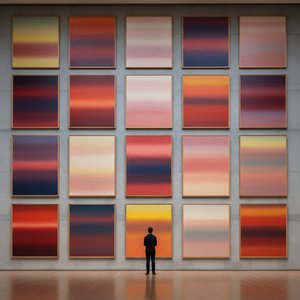
Mark Rothko: Las 25 Obras Maestras que Definen la Expresión Abstracta | ArtsDot
Descubre las 25 obras maestras de Mark Rothko, pionero del expresionismo abstracto. Explora la historia, el significado y los colores vibrantes que definen su arte emocional. Reproducciones de alta calidad en ArtsDot.com.

Expresionismo Abstracto: 10 Obras Maestras que Transformaron el Arte |
Descubre las 10 obras maestras del Expresionismo Abstracto: Pollock, Rothko y más. Explora la historia, técnica y significado de estos lienzos icónicos. Reproducciones de arte exclusivas en .


