


 Vista previa
 Compartir
 Compartir
 Ver detalles
 Guía
Guía

 Descargar
 Ver artículos similares
 Radiografía
 Presentación de diapositivas
 Estadísticas
Untitled 62


 Leer más
La obra de arte que se muestra en esta página está protegida por las leyes de propiedad intelectual, lo que significa que no podemos crear ni vender legalmente una reproducción idéntica. Esta protección se hace cumplir en virtud de acuerdos internacionales como el Convenio de Berna y por las leyes nacionales, incluidas aquellas establecidas por el Ley de derechos de autor de los EE. UU. - Título 17.
Como una alternativa respetuosa y legal, ofrecemos obras de arte personalizadas y pintadas a mano inspiradas en la original. Nuestros expertos y profesionales del arte estudian cuidadosamente el estilo, el sentimiento y la esencia artística de la obra original para crear una pieza nueva y única que evoque la misma sensación, siendo al mismo tiempo una creación original por derecho propio.
Este método cumple plenamente con las normativas de derechos de autor, ya que no implica la copia ni la duplicación de la obra protegida. En su lugar, se trata de una reinterpretación creativa: una nueva pintura influenciada por la original, pero que no es idéntica a ella.
Reproducción al óleo hecha a mano
Óleo sobre lienzo pintado a mano en el tamaño y marco de su elección, realizado por encargo por nuestros artistas. ( Cambiar a formato impreso Ver versión en imagen digital)




P118B €10

P118H €10

P118W €10

P438Z €10

P508JH €12

P508YH €12

P805H €10

P805Z €10

P919BZ €10

P919G €10

P919XJ €10

P959ZH €10

P968JZ €12

W106C €8

W218G €10

W218JH €8

W218Y €10

W307PJ €10

W316G €10

W316PJ €8

W316Y €10

W398PJ €8

W4111J €10

W500HY €15

W500JH €15

W692G €12

W849H €8

W940BG €15

W953PJ €8




Elija entre nuestros tamaños predefinidos que respetan las proporciones originales de la obra.

Escriba el ancho y el alto que necesite para adaptarse a su marco o a su pared. Al ser una obra pintada a mano, para un tamaño con una forma distinta, el artista puede pintar un poco más alrededor de la imagen o recortar un poco; usted elige. Le enviaremos una maqueta digital para su aprobación antes de comenzar la pintura. La imagen que se muestra en esta página no refleja el resultado real; solo la maqueta lo hace.
Tras realizar el pedido, el equipo de ArtsDot.com enviará un correo electrónico al cliente para solicitar instrucciones y proporcionarle una vista previa del boceto.
Envío a todo el mundo () en 3-4 semanas en lugar de las 5 semanas estándar. (24 octubre). Sin comprometer la calidad.

Envío exprés gratuito a todo el mundo

Lienzo de lino de alta calidad

Seguro de envío completo

Garantía de reembolso de impuestos aduaneros

Garantía de fidelidad cromática exacta

Política de devolución de 100 días (solo por defectos)

Garantía de devolución del 100% del dinero

Oferta por volumen
 La opción de vidrio solo está disponible en tamaños inferiores a 110 cm.

Untitled 62
Técnica de reproducción
Tamaño de la reproducción
-


Precio total
€ 231
Mark Rothko's Untitled 62: A Descent into Color and Emotion
Mark Rothko’s “Untitled 62” presents a compelling invitation into the heart of abstract expressionism, a realm where form dissolves into feeling and color becomes the primary language. This large-scale canvas, characterized by its layered application of rich browns and punctuated by the reflective gleam of a metal bowl, immediately draws the viewer in with an intensity that speaks to Rothko’s profound engagement with human experience. The painting isn't merely a visual spectacle; it’s a carefully constructed meditation on themes of loss, isolation, and the enduring search for meaning – concerns deeply rooted in the artist’s own life and the turbulent historical context of his time.
- Subject Matter: While seemingly abstract, the composition centers around a group of figures rendered in varying shades of brown. Their interaction, or perhaps their mere presence, suggests a tableau of human connection—or disconnection—a recurring motif in Rothko’s work.
- Technique: Rothko's signature technique – the deployment of rectangular blocks of color layered upon one another – is powerfully evident here. The application is thick and textured, creating a palpable sense of depth and movement. This layering builds up to an almost sculptural effect, inviting close inspection and encouraging the viewer to lose themselves within the surface variations.
- Color Palette: The dominant browns evoke a sense of earthiness, melancholy, and perhaps even decay – colors often associated with mortality and remembrance. The inclusion of the reflective bowl introduces a sharp contrast, acting as a focal point that disrupts the overall chromatic harmony and adds an element of unsettling beauty.
The Shadow of Early Trauma and Existential Inquiry
Understanding “Untitled 62” requires acknowledging the formative experiences that shaped Mark Rothko’s artistic vision. Born in Daugavpils, Latvia, in 1903, he carried within him a legacy of displacement and hardship. His family's emigration to Portland, Oregon, following pogroms and political instability in his homeland, instilled in him a deep awareness of human suffering. This early exposure to trauma – the loss of his father – profoundly influenced his artistic trajectory, leading him to explore themes of mortality, grief, and the search for solace within abstract forms. The bowl itself can be interpreted as a symbol of containment—perhaps representing the attempt to hold onto memories or grapple with overwhelming emotions.
Rothko’s Place in Abstract Expressionism
“Untitled 62” firmly situates Rothko within the broader context of American Abstract Expressionism, a movement that emerged after World War II and sought to express profound emotional truths through non-representational imagery. While influenced by earlier European avant-garde movements like Cubism and Surrealism, Rothko developed a distinctly personal style characterized by his monumental scale, intense color fields, and meditative approach. His work stands apart from the more gestural or chaotic expressions of some of his contemporaries, favoring instead a quiet intensity that invites contemplation and introspection. The painting’s formal qualities—the carefully calibrated proportions of the rectangular blocks, the subtle gradations of tone—reflect Rothko's meticulous attention to detail and his desire to create works that would resonate with viewers on a deeply emotional level.
Emotional Impact and Collector’s Appeal
“Untitled 62” possesses an undeniable power to evoke a visceral response. Its scale commands attention, while its color palette and textured surface invite prolonged contemplation. This piece is more than just a decorative object; it's a portal into the artist's psyche, offering a glimpse of his struggles with existential questions and his profound empathy for the human condition. As a hand-painted reproduction from ArtsDot.com, this artwork offers collectors the opportunity to own a faithful representation of a seminal work by one of the 20th century’s most influential artists – a piece that will undoubtedly enrich any interior space with its beauty, depth, and emotional resonance.
Preguntas y respuestas
¿Qué estado de ánimo expresa "Untitled 62" de Mark Rothko dentro de Abstract Expressionism?
"Untitled 62" transmite un tono emocional Melancholic dentro del movimiento Abstract Expressionism.
¿Qué tipo de obra es "Untitled 62"?
"Untitled 62" de Mark Rothko está clasificada como WallArt. La categoría describe el tipo de obra de arte que es el original.
¿Qué tan intensos son los colores en "Untitled 62" de Mark Rothko?
La intensidad cromática de "Untitled 62" es Balanced. La intensidad describe la fuerza con la que se perciben los colores.


Biografía del artista
vida temprana e influencias
Mark Rothko (Marcus Rothkowitz), un reconocido artista estadounidense, nació el 25 de septiembre de 1903 en Dvinsk, Letonia. Su familia emigró a los Estados Unidos cuando tenía solo diez años. Este cambio cultural influyó más tarde en su estilo artístico.evolución artística
La obra temprana de Rothko se caracterizó por el **expresionismo abstracto**, un estilo que enfatizaba el proceso de creación del arte más que el producto final. Sus pinturas, como No. 18 (1948) y Untitled (1948), mostraban su enfoque único del color y la forma.- **Campo de color:** El uso de campos de color rectangulares audaces por Rothko, a menudo en marcado contraste entre sí, creó una sensación de profundidad y emoción.
- **Estructura orgánica:** Sus pinturas parecían respirar vida, como si los colores fueran entidades vivientes.
obras notables y exposiciones
- No. 10 (1950), una pintura que marcó un cambio significativo en el estilo de Rothko, ahora forma parte de la colección del Museo de Arte Moderno.
- Las murales de Seagram, una serie de pinturas encargadas para el restaurante Four Seasons, mostraron la capacidad de Rothko para adaptar su estilo a diferentes entornos.
- No. 3 (1950), una pintura que ejemplifica el uso de campos de color rectangulares audaces por Rothko.
vida tardía y legado
La vida de Rothko estuvo marcada por las luchas con la salud mental y un matrimonio tumultuoso. Falleció el 25 de febrero de 1970, a los 66 años. A pesar de sus desafíos, Rothko dejó una huella imborrable en el mundo del arte. Ocre y rojo sobre rojo (campo de color), una pintura que muestra el enfoque único del color de Rothko, se puede encontrar en la colección ArtsDot.com. La página de Wikipedia de Mark Rothko proporciona más información sobre su vida y estilo artístico.
Mark Rothko
1903 - 1970 , Letonia
Datos clave
- Artistas Que Influyeron:
- Edward Hopper
- Pablo Picasso
- Fecha De Muerte: 25 de febrero de 1970
- Fecha De Nacimiento: 25 de septiembre de 1903
- Influencia En Artistas:
- Minimalismo
- Arte contemporáneo
- Lugar De Nacimiento: Daugavpils, Letonia
- Movimiento Artístico: Expresionismo Abstracto
- Nacionalidad: Estadounidense
- Nombre Completo: Mark Rothko (Marcus Rothkowitz)
- Obras Notables:
- No. 18 (1948)
- No. 10 (1950)
- Murales Seagram
- No. 3 (1950)
Artículos relacionados

Expresionismo Abstracto: 10 Obras Maestras que Transformaron el Arte |
Descubre las 10 obras maestras del Expresionismo Abstracto: Pollock, Rothko y más. Explora la historia, técnica y significado de estos lienzos icónicos. Reproducciones de arte exclusivas en .

Designing Your Forever Space: An Expert Guide to Elevating Your New Home with Neo-Abstract Art
Elevate your first home with the bold energy of Neo-Abstract Art. Our expert guide helps newlyweds master modern geometric compositions, textures, and color palettes. Discover how custom hand-painted oils and multi-panel designs can transform your new space into a curated masterpiece.

Paul Klee: Las 25 Obras Maestras que Definen un Genio del Arte Moderno | ArtsDot
Descubre las 25 obras maestras de Paul Klee, el genio del arte moderno. Explora su expresionismo único, composiciones abstractas y vibrantes paletas de colores. Reproducciones de alta calidad y decoración con arte en ArtsDot.com.
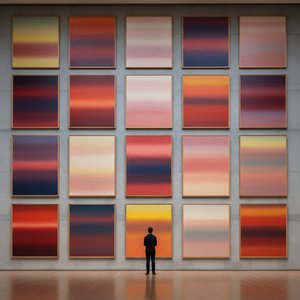
Mark Rothko: Las 25 Obras Maestras que Definen la Expresión Abstracta | ArtsDot
Descubre las 25 obras maestras de Mark Rothko, pionero del expresionismo abstracto. Explora la historia, el significado y los colores vibrantes que definen su arte emocional. Reproducciones de alta calidad en ArtsDot.com.

Kandinsky: Las 25 Obras Maestras del Pionero de la Abstracción | ArtsDot
Descubre las 25 obras maestras de Wassily Kandinsky, pionero del arte abstracto. Explora su expresionismo, composiciones únicas y la historia detrás de cada cuadro. Reproducciones de alta calidad para decorar tu hogar con arte moderno en ArtsDot.com.


