


 Ver en contexto
 Enviar
 Compartir
 Detalles

 Descargar
 Similares
 Radiografía
 Presentación de diapositivas
Una pintura abstracta


 Ver más
Reproducción al óleo hecha a mano
Óleo sobre lienzo pintado a mano en el tamaño y marco de su elección, realizado por encargo por nuestros artistas. ( Comprar impresión Comprar imagen)




P118B $10

P118H $10

P118W $10

P438Z $10

P508JH $12

P508YH $12

P805H $10

P805Z $10

P919BZ $10

P919G $10

P919XJ $10

P959ZH $10

P968JZ $12

W106C $8

W218G $10

W218JH $8

W218Y $10

W307PJ $10

W316G $10

W316PJ $8

W316Y $10

W398PJ $8

W4111J $10

W500HY $15

W500JH $15

W692G $12

W849H $8

W940BG $15

W953PJ $8




Elija entre nuestros tamaños predefinidos que respetan las proporciones originales de la obra.

Puede ingresar sus propias dimensiones para adaptarse a un marco o espacio específico. Si el tamaño seleccionado no coincide con las proporciones de la imagen original, recortaremos la obra o extenderemos la pintura con elementos adicionales pintados a mano. Se le enviará una maqueta digital para su aprobación antes de comenzar la producción.
Tenga en cuenta que la vista previa en pantalla no refleja el recorte o la extensión reales. Solo la maqueta mostrará con precisión la composición final.
Si bien existen tamaños personalizados, recomendamos seleccionar una dimensión de la lista predefinida para preservar las proporciones originales.
Tras realizar el pedido, el equipo de ArtsDot.com enviará un correo electrónico al cliente para solicitar instrucciones y proporcionarle una vista previa del boceto.
Envío a todo el mundo () en 3-4 semanas en lugar de las 5 semanas estándar. (30 agosto). Sin comprometer la calidad.

Envío exprés gratuito a todo el mundo

Lienzo de lino de alta calidad

Seguro de envío total

Garantía de reembolso de impuestos aduaneros

Garantía de fidelidad cromática exacta

Política de devolución de 60 días (solo por defectos)

Garantía de devolución del 100% del dinero

Descuento por cantidad
 La opción de vidrio solo está disponible en tamaños inferiores a 110 cm.

Una pintura abstracta
Técnica de reproducción
Dimensiones de la reproducción
-


Precio total final
$ 263
Un Reino de Contemplación Silenciosa: Explorando el Expresionismo Abstracto de Mark Rothko
Esta obra encarna los principios fundamentales del Expresionismo Abstracto y, específicamente, el estilo de la pintura de *Campos de Color* (Color Field) defendido por Mark Rothko (Marcus Rothkowitz) (1903-1970). Aunque aparentemente simple —un gran lienzo dominado por un gris profundo—, esta pieza es una poderosa exploración del color, la forma y la resonancia emocional. No se trata de *qué* se representa, sino más bien de *cómo* se siente el espectador en su presencia.Deconstruyendo la Composición
La pintura presenta una aplicación de pintura de campo completo, creando una experiencia inmersiva para el observador. Existe una ausencia deliberada de un tema discernible o un punto focal; en su lugar, se invita al ojo a vagar a través de las sutiles variaciones dentro del tono de la escala de grises. La composición se apoya en formas rectangulares básicas —el lienzo mismo y su marco— enfatizando la simplicidad y la pureza de la forma. La falta de pinceladas visibles o bordes definidos contribuye a una sensación de continuidad y calma meditativa.Técnica y Materiales
La técnica de Rothko, aunque parezca directa, fue meticulosamente considerada. Es probable que empleara pinceles o rodillos para lograr la superficie suave y uniforme, superponiendo capas de pintura para crear profundidad dentro del campo monocromático. Los materiales —lienzo y pintura al óleo o acrílica— son fundamentales para el impacto de la obra. Rothko no estaba interesado en la virtuosisidad de la pincelada; su objetivo era trascender la técnica y evocar una respuesta emocional directa únicamente a través del color.Contexto Histórico y Evolución Artística
Nacido en Letonia e inmigrando a los Estados Unidos durante su infancia, la obra temprana de Rothko evolucionó desde la pintura figurativa hacia la abstracción. Para la década de 1940, se había convertido en una figura líder del Expresionismo Abstracto, junto a artistas como Barnett Newman y Jackson Pollock. Sin embargo, Rothko divergió de la energía gestual de Pollock, centrándose en su lugar en campos de color a gran escala diseñados para envolver al espectador. Su trabajo surgió durante un período de ansiedad de posguerra y cuestionamiento existencial, reflejando una búsqueda de significado más allá de la representación.Simbolismo e Impacto Emocional
Si bien Rothko se resistió a las interpretaciones explícitas de su obra, sus pinturas están innegablemente imbuidas de un peso emocional. El tono gris sombrío en esta pieza evoca sentimientos de quietud, contemplación o incluso melancolía. La ausencia de imágenes representativas alienta a los espectadores a proyectar sus propias emociones y experiencias sobre el lienzo, creando una conexión profundamente personal. Es una invitación a la introspección: un espacio para el diálogo silencioso entre la obra de arte y el observador. Rothko aspiraba a crear pinturas que fueran “experiencias religiosas serias”, y esta obra encarna esa ambición.Consideraciones para Coleccionistas y Diseñadores
- Diseño de Interiores: La estética minimalista de esta pintura la convierte en una adición versátil para diversos estilos de interior, desde espacios modernos y contemporáneos hasta entornos más tradicionales que buscan un toque de sofisticación sutil.
- Paleta de Colores: La paleta de escala de grises complementa una amplia gama de esquemas cromáticos, sirviendo como un elemento de equilibrio o como un acento delicado.
- Atmósfera Emocional: Considere el estado de ánimo deseado para un espacio. Esta obra es ideal para áreas destinadas a la relajación, la contemplación o la conversación tranquila.
- Escala y Colocación: Las pinturas de Rothko suelen ser de gran escala y exigen una distancia de visualización amplia. Se debe prestar cuidadosa atención a su ubicación para permitir que la obra resuene plenamente.


Biografía del artista
vida temprana e influencias
Mark Rothko (Marcus Rothkowitz), un reconocido artista estadounidense, nació el 25 de septiembre de 1903 en Dvinsk, Letonia. Su familia emigró a los Estados Unidos cuando tenía solo diez años. Este cambio cultural influyó más tarde en su estilo artístico.evolución artística
La obra temprana de Rothko se caracterizó por el **expresionismo abstracto**, un estilo que enfatizaba el proceso de creación del arte más que el producto final. Sus pinturas, como No. 18 (1948) y Untitled (1948), mostraban su enfoque único del color y la forma.- **Campo de color:** El uso de campos de color rectangulares audaces por Rothko, a menudo en marcado contraste entre sí, creó una sensación de profundidad y emoción.
- **Estructura orgánica:** Sus pinturas parecían respirar vida, como si los colores fueran entidades vivientes.
obras notables y exposiciones
- No. 10 (1950), una pintura que marcó un cambio significativo en el estilo de Rothko, ahora forma parte de la colección del Museo de Arte Moderno.
- Las murales de Seagram, una serie de pinturas encargadas para el restaurante Four Seasons, mostraron la capacidad de Rothko para adaptar su estilo a diferentes entornos.
- No. 3 (1950), una pintura que ejemplifica el uso de campos de color rectangulares audaces por Rothko.
vida tardía y legado
La vida de Rothko estuvo marcada por las luchas con la salud mental y un matrimonio tumultuoso. Falleció el 25 de febrero de 1970, a los 66 años. A pesar de sus desafíos, Rothko dejó una huella imborrable en el mundo del arte. Ocre y rojo sobre rojo (campo de color), una pintura que muestra el enfoque único del color de Rothko, se puede encontrar en la colección ArtsDot.com. La página de Wikipedia de Mark Rothko proporciona más información sobre su vida y estilo artístico.
Mark Rothko
1903 - 1970 , Letonia
Datos clave
- Artistas Que Influyeron:
- Edward Hopper
- Pablo Picasso
- Fecha De Muerte: 25 de febrero de 1970
- Fecha De Nacimiento: 25 de septiembre de 1903
- Influencia En Artistas:
- Minimalismo
- Arte contemporáneo
- Lugar De Nacimiento: Daugavpils, Letonia
- Movimiento Artístico: Expresionismo Abstracto
- Nacionalidad: Estadounidense
- Nombre Completo: Mark Rothko (Marcus Rothkowitz)
- Obras Notables:
- No. 18 (1948)
- No. 10 (1950)
- Murales Seagram
- No. 3 (1950)
Artículos relacionados
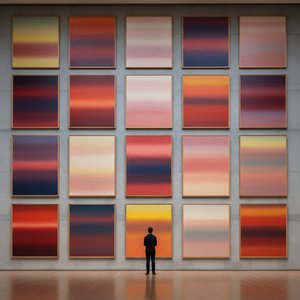
Mark Rothko: Las 25 Obras Maestras que Definen la Expresión Abstracta | ArtsDot
Descubre las 25 obras maestras de Mark Rothko, pionero del expresionismo abstracto. Explora la historia, el significado y los colores vibrantes que definen su arte emocional. Reproducciones de alta calidad en ArtsDot.com.

Expresionismo Abstracto: 10 Obras Maestras que Transformaron el Arte |
Descubre las 10 obras maestras del Expresionismo Abstracto: Pollock, Rothko y más. Explora la historia, técnica y significado de estos lienzos icónicos. Reproducciones de arte exclusivas en .

The Sublimity of Color: Exploring the Emotional Landscapes of Mark Rothko's Abstract Expressionism
Explore the profound emotional depth of Mark Rothko's abstract expressionism. Discover the history, techniques & lasting impact of this pivotal Color Field painter. Expert insights for collectors and art enthusiasts.

Atmósferas Cromáticas: Explorando los Fundamentos Filosóficos de la Pintura Color Field
Descubra la profunda filosofía y técnica detrás de la pintura Color Field. Explore las obras maestras de Rothko, Newman, Frankenthaler y más. Guía experta para coleccionistas.

Más Allá de la Representación: Explorando el Paisaje Emocional del Expresionismo Abstracto
Descubra el Expresionismo Abstracto en profundidad. Análisis de artistas clave como Rothko y Richter, su contexto histórico e inversión en arte. Guía experta para coleccionistas.



