


 Ver en contexto
 Enviar
 Compartir
 Detalles

 Descargar
 Similares
 Radiografía
 Presentación de diapositivas
 Estadísticas
Subway


 Ver más
Giclée / Impresión de arte
Impresiones giclée o en lienzo de calidad de museo con producción rápida y opciones de acabado flexibles. ( Comprar pintura hecha a mano Cambiar a imagen digital)




P118B $10

P118H $10

P118W $10

P438Z $10

P508JH $12

P508YH $12

P805H $10

P805Z $10

P919BZ $10

P919G $10

P919XJ $10

P959ZH $10

P968JZ $12

W106C $8

W218G $10

W218JH $8

W218Y $10

W307PJ $10

W316G $10

W316PJ $8

W316Y $10

W398PJ $8

W4111J $10

W500HY $15

W500JH $15

W692G $12

W849H $8

W940BG $15

W953PJ $8




Elija entre nuestros tamaños predefinidos que respetan las proporciones originales de la obra.

Puede introducir sus propias dimensiones para adaptarse a un marco o espacio específico. Si el tamaño seleccionado no coincide con las proporciones de la imagen original, recortaremos la obra de arte o extenderemos la imagen con un borde con efecto espejo o de color sólido. Se enviará una maqueta digital para su aprobación antes de que comience la producción.
Tenga en cuenta que la vista previa en pantalla no refleja el recorte o la extensión real. Solo la maqueta mostrará con precisión la composición final.
Aunque existen tamaños personalizados, recomendamos seleccionar una dimensión de la lista predefinida para preservar las proporciones originales.
Envío a todo el mundo () en 2 semanas en lugar de las 4/5 semanas estándar. (10 septiembre)

Envío exprés gratuito a todo el mundo

Lienzo de lino de alta calidad

Seguro de envío total

Garantía de reembolso de impuestos aduaneros

Garantía de fidelidad cromática exacta

Política de devolución de 100 días (solo por defectos)

Garantía de devolución del 100% del dinero

Descuento por cantidad
 La opción de vidrio solo está disponible en tamaños inferiores a 110 cm.

Subway
Giclée / Impresión de arte
Dimensiones de la reproducción
-


Precio total final
$ 62
Mark Rothko’s ‘Subway’: A Meditation on Urban Isolation
Mark Rothko's “Subway,” painted during his pivotal period of artistic development, offers a deceptively simple yet profoundly resonant depiction of human experience within the bustling anonymity of urban life. This work, characterized by its muted color palette and layered composition, transcends mere representation to become a powerful meditation on isolation, contemplation, and the search for meaning amidst the chaos of the modern world. The painting’s subject – two figures absorbed in their own worlds within a brick-lined subway station – immediately evokes a sense of detachment, mirroring the alienation often felt in densely populated environments.
- Subject Matter: The central focus is on two individuals, a man and a woman, engaged in solitary activities. The man reads a newspaper, while the woman appears to be lost in thought.
- Setting: The backdrop of a subway station, rendered with rough brick textures, contributes significantly to the painting’s atmosphere of quiet desperation and urban decay.
- Color Palette: Rothko employs his signature layering technique, utilizing deep reds, oranges, and blacks to create areas of luminous color that seem to emanate from within the canvas itself. This creates a sense of depth and emotional intensity.
The Language of Color and Form
Rothko’s mastery lies not in precise depiction but in the manipulation of color and form to evoke profound emotions. The rectangular blocks of color, characteristic of his mature style, are applied with thick layers of oil paint, creating a palpable sense of texture and depth. This technique, known as ‘groping’, involved building up the surface gradually, allowing the colors to interact and blend organically. The seemingly simple composition – the overlapping rectangles – generates a dynamic tension, drawing the viewer’s eye across the canvas and encouraging contemplation. The lack of defined edges contributes to the painting's dreamlike quality, blurring the boundaries between reality and perception.
- Technique: Rothko utilized his signature ‘groping’ technique, building up layers of color through repeated application and blending.
- Composition: The rectangular blocks are arranged to create a sense of depth and movement, drawing the viewer's eye across the canvas.
- Texture: Thick impasto creates a tactile surface that enhances the emotional impact of the work.
Historical Context and Existential Themes
"Subway" was created during a period of intense artistic experimentation, reflecting the broader shifts in 20th-century art. Rothko’s work aligns with the Expressionist movement's emphasis on subjective experience and emotional intensity, while also anticipating the rise of Abstract Expressionism. The painting’s themes – isolation, mortality, and the search for meaning – resonate deeply with Rothko’s own personal struggles and philosophical concerns. Born in Latvia to a family marked by displacement and loss, Rothko grappled with questions of identity, faith, and the human condition throughout his life. This background informs the profound sense of melancholy that permeates “Subway,” suggesting a universal experience of loneliness and uncertainty.
- Movement: The painting reflects the influence of Expressionism and anticipates the development of Abstract Expressionism.
- Themes: Rothko’s work explores existential themes such as isolation, mortality, and the search for meaning.
- Biography Connection: Rothko's personal experiences of displacement and loss are reflected in the painting's emotional intensity.
Symbolic Resonance and Emotional Impact
“Subway” is more than just a depiction of two people on a subway; it’s an invitation to contemplate the human condition. The figures, lost in their own thoughts, represent all of us – individuals struggling to find our place in a complex and often overwhelming world. The painting's muted colors evoke a sense of quiet sadness and introspection, while its monumental scale commands attention and demands engagement. This reproduction captures Rothko’s intention perfectly, offering a powerful visual statement that continues to resonate with viewers today.
Obras relacionadas


Biografía del artista
vida temprana e influencias
Mark Rothko (Marcus Rothkowitz), un reconocido artista estadounidense, nació el 25 de septiembre de 1903 en Dvinsk, Letonia. Su familia emigró a los Estados Unidos cuando tenía solo diez años. Este cambio cultural influyó más tarde en su estilo artístico.evolución artística
La obra temprana de Rothko se caracterizó por el **expresionismo abstracto**, un estilo que enfatizaba el proceso de creación del arte más que el producto final. Sus pinturas, como No. 18 (1948) y Untitled (1948), mostraban su enfoque único del color y la forma.- **Campo de color:** El uso de campos de color rectangulares audaces por Rothko, a menudo en marcado contraste entre sí, creó una sensación de profundidad y emoción.
- **Estructura orgánica:** Sus pinturas parecían respirar vida, como si los colores fueran entidades vivientes.
obras notables y exposiciones
- No. 10 (1950), una pintura que marcó un cambio significativo en el estilo de Rothko, ahora forma parte de la colección del Museo de Arte Moderno.
- Las murales de Seagram, una serie de pinturas encargadas para el restaurante Four Seasons, mostraron la capacidad de Rothko para adaptar su estilo a diferentes entornos.
- No. 3 (1950), una pintura que ejemplifica el uso de campos de color rectangulares audaces por Rothko.
vida tardía y legado
La vida de Rothko estuvo marcada por las luchas con la salud mental y un matrimonio tumultuoso. Falleció el 25 de febrero de 1970, a los 66 años. A pesar de sus desafíos, Rothko dejó una huella imborrable en el mundo del arte. Ocre y rojo sobre rojo (campo de color), una pintura que muestra el enfoque único del color de Rothko, se puede encontrar en la colección ArtsDot.com. La página de Wikipedia de Mark Rothko proporciona más información sobre su vida y estilo artístico.
Mark Rothko
1903 - 1970 , Letonia
Datos clave
- Artistas Que Influyeron:
- Edward Hopper
- Pablo Picasso
- Fecha De Muerte: 25 de febrero de 1970
- Fecha De Nacimiento: 25 de septiembre de 1903
- Influencia En Artistas:
- Minimalismo
- Arte contemporáneo
- Lugar De Nacimiento: Daugavpils, Letonia
- Movimiento Artístico: Expresionismo Abstracto
- Nacionalidad: Estadounidense
- Nombre Completo: Mark Rothko (Marcus Rothkowitz)
- Obras Notables:
- No. 18 (1948)
- No. 10 (1950)
- Murales Seagram
- No. 3 (1950)
Artículos relacionados
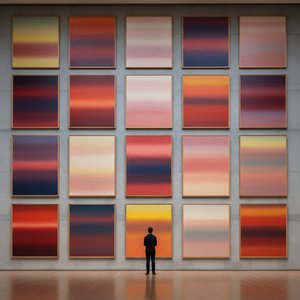
Mark Rothko: Las 25 Obras Maestras que Definen la Expresión Abstracta | ArtsDot
Descubre las 25 obras maestras de Mark Rothko, pionero del expresionismo abstracto. Explora la historia, el significado y los colores vibrantes que definen su arte emocional. Reproducciones de alta calidad en ArtsDot.com.

Expresionismo Abstracto: 10 Obras Maestras que Transformaron el Arte |
Descubre las 10 obras maestras del Expresionismo Abstracto: Pollock, Rothko y más. Explora la historia, técnica y significado de estos lienzos icónicos. Reproducciones de arte exclusivas en .

The Sublimity of Color: Exploring the Emotional Landscapes of Mark Rothko's Abstract Expressionism
Explore the profound emotional depth of Mark Rothko's abstract expressionism. Discover the history, techniques & lasting impact of this pivotal Color Field painter. Expert insights for collectors and art enthusiasts.

Más Allá de la Representación: Explorando el Paisaje Emocional del Expresionismo Abstracto
Descubra el Expresionismo Abstracto en profundidad. Análisis de artistas clave como Rothko y Richter, su contexto histórico e inversión en arte. Guía experta para coleccionistas.

Kandinsky: Las 25 Obras Maestras del Pionero de la Abstracción | ArtsDot
Descubre las 25 obras maestras de Wassily Kandinsky, pionero del arte abstracto. Explora su expresionismo, composiciones únicas y la historia detrás de cada cuadro. Reproducciones de alta calidad para decorar tu hogar con arte moderno en ArtsDot.com.


