


 Vista previa
 Compartir
 Compartir
 Ver detalles
 Guía
Guía

 Descargar
 Ver artículos similares
 Radiografía
 Presentación de diapositivas
 Estadísticas
Sin título
 Óleo sobre lienzo
- Arte de pared
- Expresionismo Abstracto
 1946
1946- Edad Moderna
 70.0 x 80.0 cm
 Leer más
La obra de arte que se muestra en esta página está protegida por las leyes de propiedad intelectual, lo que significa que no podemos crear ni vender legalmente una reproducción idéntica. Esta protección se hace cumplir en virtud de acuerdos internacionales como el Convenio de Berna y por las leyes nacionales, incluidas aquellas establecidas por el Ley de derechos de autor de los EE. UU. - Título 17.
Este método cumple plenamente con las normativas de derechos de autor, ya que no implica la copia ni la duplicación de la obra protegida. En su lugar, se trata de una reinterpretación creativa: una nueva pintura influenciada por la original, pero que no es idéntica a ella.
Giclée / Impresión de arte
Impresiones giclée o en lienzo de calidad de museo con producción rápida y opciones de acabado flexibles. ( Encargar reproducción pintada a mano Ver versión en imagen digital)




P118B €10

P118H €10

P118W €10

P438Z €10

P508JH €12

P508YH €12

P805H €10

P805Z €10

P919BZ €10

P919G €10

P919XJ €10

P959ZH €10

P968JZ €12

W106C €8

W218G €10

W218JH €8

W218Y €10

W307PJ €10

W316G €10

W316PJ €8

W316Y €10

W398PJ €8

W4111J €10

W500HY €15

W500JH €15

W692G €12

W849H €8

W940BG €15

W953PJ €8




Elija entre nuestros tamaños predefinidos que respetan las proporciones originales de la obra.

Puede introducir sus propias dimensiones para adaptarse a un marco o espacio específico. Si el tamaño seleccionado no coincide con las proporciones de la imagen original, recortaremos la obra de arte o extenderemos la imagen con un borde con efecto espejo o de color sólido. Se enviará una maqueta digital para su aprobación antes de que comience la producción.
Tenga en cuenta que la vista previa en pantalla no refleja el recorte o la extensión real. Solo la maqueta mostrará con precisión la composición final.
Aunque existen tamaños personalizados, recomendamos seleccionar una dimensión de la lista predefinida para preservar las proporciones originales.
Envío a todo el mundo () en 2 semanas en lugar de las 4/5 semanas estándar. (7 octubre)

Envío exprés gratuito a todo el mundo

Lienzo de lino de alta calidad

Seguro de envío completo

Garantía de reembolso de impuestos aduaneros

Garantía de fidelidad cromática exacta

Política de devolución de 100 días (solo por defectos)

Garantía de devolución del 100% del dinero

Oferta por volumen
 La opción de vidrio solo está disponible en tamaños inferiores a 110 cm.

Sin título
Giclée / Impresión de arte
Tamaño de la reproducción
-


Precio total
€ 53
A Window Into Rothko’s Inner World: Exploring ‘Untitled’ (1946)
This captivating work by Mark Rothko, created in 1946, exemplifies a pivotal moment in the artist's transition towards his signature Color Field style. Measuring 70 x 80 cm, ‘Untitled’ is not merely a painting; it’s an immersive experience—a visual poem rendered in layered hues and gestural abstraction. It represents a crucial step away from representational art toward a more profound engagement with emotion and perception.Deconstructing the Abstract Form
The composition eschews traditional representation, instead presenting a dynamic interplay of overlapping rectangles and amorphous shapes. Dominant shades of yellow, gray, black, and red coalesce on the canvas, creating a sense of both chaos and balance. There is no single focal point; rather, the eye wanders through the textured surface, drawn in by the visible brushstrokes and drips that speak to the physicality of its creation. Lines are implied, edges dissolving into one another, fostering a feeling of depth despite the painting’s inherent flatness. The forms range from sharply defined rectangles to softer, rounded shapes, adding to the visual complexity. This deliberate lack of focus invites contemplation and encourages viewers to actively participate in interpreting the artwork's emotional resonance.Technique & Materials: A Layered Approach
Rothko's technique in ‘Untitled’ is characterized by a meticulous layering of oil paint on canvas. This isn’t about precise application; it’s about building up surfaces, allowing previous layers to peek through and influence the final effect. The rough, uneven texture—a direct result of thick impasto and expressive brushwork—is integral to the painting's emotional resonance. This tactile quality invites close inspection and a deeper connection with the artwork. Rothko achieved this remarkable depth by applying multiple coats of pigment, allowing each layer to bleed into the preceding one, creating an illusion of luminosity and suggesting hidden depths beneath the surface. The artist’s deliberate disregard for conventional painting methods underscores his commitment to conveying feeling rather than depicting visual reality.Historical Context: Post-War Expressionism
Created in the aftermath of World War II, ‘Untitled’ reflects the anxieties and existential questioning prevalent during that era. Rothko, having immigrated to the United States from Latvia as a child, channeled his personal experiences and the collective trauma of the time into his art. He was deeply involved with the burgeoning Abstract Expressionist movement, which rejected traditional artistic conventions in favor of subjective emotional expression. This painting stands as an early example of his move away from figurative work towards the pure exploration of color and form that would define his later career—a bold declaration against the perceived emptiness of postwar society. The influence of Surrealism is palpable, hinting at subconscious anxieties and a desire to grapple with profound philosophical questions.Symbolism & Emotional Impact
While Rothko resisted prescriptive interpretations of his work, ‘Untitled’ undeniably evokes a range of emotions—contemplation, anxiety, even a sense of the sublime. The interplay of dark and light hues can be interpreted as representing opposing forces, while the ambiguous forms suggest hidden depths within the human psyche. Rothko aimed to create paintings that were not *about* something, but *were* something—direct conduits for emotional experience. He believed that color alone could communicate feelings without resorting to narrative or imagery. The painting’s power lies in its ability to resonate with viewers on a deeply personal level, prompting introspection and self-discovery. It encourages us to confront our own inner landscapes and consider the fundamental questions of existence.Integrating ‘Untitled’ into Your Space
This piece would serve as a striking focal point in a modern or minimalist interior. Its rich color palette complements neutral tones while adding depth and sophistication. Consider placing it in a quiet space—a study, living room, or bedroom—where its contemplative energy can be fully appreciated. A high-quality reproduction of ‘Untitled’ allows you to bring the emotional power of Rothko's vision into your home or office. It is particularly suited for spaces where serenity and contemplation are valued, creating an atmosphere that invites reflection and stimulates visual interest.- Style: Abstract Expressionism, Color Field Painting
- Materials: Oil on Canvas
- Dimensions: 70 x 80 cm
- Year: 1946
Preguntas y respuestas
¿Quién es el artista detrás de "Sin título"?
"Sin título" se atribuye a Mark Rothko.
¿Qué edad tenía Mark Rothko cuando creó "Sin título" en 1946?
Mark Rothko tenía 43 años cuando creó "Sin título" en 1946. La edad se calcula a partir del año de nacimiento del artista, 1903.
¿Qué temas aparecen en "Sin título" de Mark Rothko?
Los temas presentes en "Sin título" de Mark Rothko incluyen abstracto, campos de color, rothko, emoción, profundidad, en capas, geométrico, artemoderno. En conjunto, resumen la temática de la obra.
¿En qué movimiento y en qué época se sitúa "Sin título" de Mark Rothko?
"Sin título" de Mark Rothko se sitúa en el movimiento Expresionismo Abstracto, dentro de la era Edad Moderna de su creador.
¿Qué representa "Sin título" de Mark Rothko y qué atmósfera transmite?
"Sin título" muestra abstracto, campos de color, rothko, emoción, profundidad, en capas, geométrico, artemoderno, y su atmósfera es Místico.
¿Está disponible una descarga en alta resolución de "Sin título"?
Puede adquirir una imagen digital de "Sin título" de Mark Rothko en esta página: descarga de una imagen digital en alta resolución.
¿En qué año se creó "Sin título"?
"Sin título" data de 1946. La fecha sitúa la obra dentro de la trayectoria de Mark Rothko y de su época.


Biografía del artista
vida temprana e influencias
Mark Rothko (Marcus Rothkowitz), un reconocido artista estadounidense, nació el 25 de septiembre de 1903 en Dvinsk, Letonia. Su familia emigró a los Estados Unidos cuando tenía solo diez años. Este cambio cultural influyó más tarde en su estilo artístico.evolución artística
La obra temprana de Rothko se caracterizó por el **expresionismo abstracto**, un estilo que enfatizaba el proceso de creación del arte más que el producto final. Sus pinturas, como No. 18 (1948) y Untitled (1948), mostraban su enfoque único del color y la forma.- **Campo de color:** El uso de campos de color rectangulares audaces por Rothko, a menudo en marcado contraste entre sí, creó una sensación de profundidad y emoción.
- **Estructura orgánica:** Sus pinturas parecían respirar vida, como si los colores fueran entidades vivientes.
obras notables y exposiciones
- No. 10 (1950), una pintura que marcó un cambio significativo en el estilo de Rothko, ahora forma parte de la colección del Museo de Arte Moderno.
- Las murales de Seagram, una serie de pinturas encargadas para el restaurante Four Seasons, mostraron la capacidad de Rothko para adaptar su estilo a diferentes entornos.
- No. 3 (1950), una pintura que ejemplifica el uso de campos de color rectangulares audaces por Rothko.
vida tardía y legado
La vida de Rothko estuvo marcada por las luchas con la salud mental y un matrimonio tumultuoso. Falleció el 25 de febrero de 1970, a los 66 años. A pesar de sus desafíos, Rothko dejó una huella imborrable en el mundo del arte. Ocre y rojo sobre rojo (campo de color), una pintura que muestra el enfoque único del color de Rothko, se puede encontrar en la colección ArtsDot.com. La página de Wikipedia de Mark Rothko proporciona más información sobre su vida y estilo artístico.
Mark Rothko
1903 - 1970 , Letonia
Datos clave
- Artistas Que Influyeron:
- Edward Hopper
- Pablo Picasso
- Fecha De Muerte: 25 de febrero de 1970
- Fecha De Nacimiento: 25 de septiembre de 1903
- Influencia En Artistas:
- Minimalismo
- Arte contemporáneo
- Lugar De Nacimiento: Daugavpils, Letonia
- Movimiento Artístico: Expresionismo Abstracto
- Nacionalidad: Estadounidense
- Nombre Completo: Mark Rothko (Marcus Rothkowitz)
- Obras Notables:
- No. 18 (1948)
- No. 10 (1950)
- Murales Seagram
- No. 3 (1950)
Artículos relacionados

Más Allá de la Representación: Explorando el Paisaje Emocional del Expresionismo Abstracto
Descubra el Expresionismo Abstracto en profundidad. Análisis de artistas clave como Rothko y Richter, su contexto histórico e inversión en arte. Guía experta para coleccionistas.

Expresionismo Abstracto: 10 Obras Maestras que Transformaron el Arte |
Descubre las 10 obras maestras del Expresionismo Abstracto: Pollock, Rothko y más. Explora la historia, técnica y significado de estos lienzos icónicos. Reproducciones de arte exclusivas en .

The Sublimity of Color: Exploring the Emotional Landscapes of Mark Rothko's Abstract Expressionism
Explore the profound emotional depth of Mark Rothko's abstract expressionism. Discover the history, techniques & lasting impact of this pivotal Color Field painter. Expert insights for collectors and art enthusiasts.

Atmósferas Cromáticas: Explorando los Fundamentos Filosóficos de la Pintura Color Field
Descubra la profunda filosofía y técnica detrás de la pintura Color Field. Explore las obras maestras de Rothko, Newman, Frankenthaler y más. Guía experta para coleccionistas.
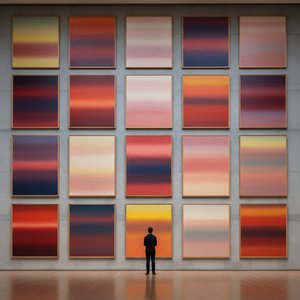
Mark Rothko: Las 25 Obras Maestras que Definen la Expresión Abstracta | ArtsDot
Descubre las 25 obras maestras de Mark Rothko, pionero del expresionismo abstracto. Explora la historia, el significado y los colores vibrantes que definen su arte emocional. Reproducciones de alta calidad en ArtsDot.com.


