


 Enviar
 Compartir
 Detalles

 Descargar
 Similares
 Presentación de diapositivas
 Stats
StatsFish-shaped Dish


 Ver más
Reproducción al óleo hecha a mano
Óleo sobre lienzo pintado a mano en el tamaño y marco de su elección, realizado por encargo por nuestros artistas. ( Switch to Print Switch to Digital Image)




































Elija entre nuestros tamaños predefinidos que respetan las proporciones originales de la obra.

Puede ingresar sus propias dimensiones para adaptarse a un marco o espacio específico. Si el tamaño seleccionado no coincide con las proporciones de la imagen original, recortaremos la obra o extenderemos la pintura con elementos adicionales pintados a mano. Se le enviará una maqueta digital para su aprobación antes de comenzar la producción.
Tenga en cuenta que la vista previa en pantalla no refleja el recorte o la extensión reales. Solo la maqueta mostrará con precisión la composición final.
Si bien existen tamaños personalizados, recomendamos seleccionar una dimensión de la lista predefinida para preservar las proporciones originales.
Tras realizar el pedido, el equipo de ArtsDot.com enviará un correo electrónico al cliente para solicitar instrucciones y proporcionarle una vista previa del boceto.
Envío a todo el mundo () en 3-4 semanas en lugar de las 5 semanas estándar. (8 septiembre). Sin comprometer la calidad.

Envío exprés gratuito a todo el mundo

Lienzo de lino de alta calidad

Seguro de envío total

Garantía de reembolso de impuestos aduaneros

Garantía de fidelidad cromática exacta

Política de devolución de 100 días (solo por defectos)

Garantía de devolución del 100% del dinero

Descuento por cantidad
 La opción de vidrio solo está disponible en tamaños inferiores a 110 cm.

Fish-shaped Dish
Técnica de reproducción
Dimensiones de la reproducción
-


Precio total final
$ 263
A Symphony of Form and Pattern: The Fish-shaped Dish
In the quiet intersection of utility and fine art lies Marieda di Stefano’s Fish-shaped Dish, a captivating relic from 1950 that breathes life into the concept of functional ceramics. At first glance, the piece presents a playful silhouette, mimicking the organic curves of a sea creature, yet it transcends mere ornamentation through its striking visual rhythm. The surface is adorned with a meticulous checkered pattern of vibrant red and deep blue, a chromatic choice that creates a rhythmic pulse across the ceramic form. This interplay of color does more than decorate; it transforms a simple object into a dynamic exploration of geometry and nature, inviting the viewer to contemplate how rigid patterns can inhabit fluid, organic shapes.
< تجربenciaModernist Echoes in Post-War Italy
To understand this piece, one must look toward the vibrant atmosphere of post-war Italy, an era defined by a profound tension between tradition and the burgeoning modernist movement. As an artist, Marieda di Stefano emerged from the Roman art scene, bringing a sensibility that favored simplicity, functionality, and expressive minimalism. The Fish-shaped Dish serves as a testament to this period's fascination with the "objecthood" of art—the idea that everyday items could carry the weight of sculptural intention. The use of bold, primary-adjacent tones and the structured grid pattern reflect the mid-century aesthetic, where the clean lines of modernism met the tactile, earthy traditions of Italian pottery.
The technique employed here speaks to a mastery of ceramic surfaces, where the glaze acts not just as a protective layer but as a medium for light and depth. The way the blue and red pigments interact on the curved edges of the dish creates an illusion of movement, as if the scales of the fish are shimmering under water. For the discerning collector or interior designer, this piece offers more than just visual interest; it provides a focal point of historical significance and sophisticated charm.
An Invitation to Curated Living
For those seeking to infuse their living spaces with character, a high-quality reproduction of this work offers a unique opportunity to bridge the gap between museum-grade history and contemporary decor. Whether placed upon a minimalist glass shelf or integrated into a curated collection of mid-century ceramics, the Fish-shaped Dish acts as a conversation starter. It evokes a sense of nostalgia for the 1950s while maintaining a timelessness that complements modern, eclectic, or even coastal interior styles.
Owning a piece inspired by di Stefano’s vision is an invitation to celebrate the beauty of the everyday. It reminds us that art is not confined to canvases on walls, but can be found in the very shapes and patterns that we hold in our hands. This work remains a poignant reminder of a time when Italian craftsmanship sought to find harmony between the structured world of man and the fluid wonders of the natural world.
Obras relacionadas


Biografía del artista
Early Life and Background
Marieda di Stefano, born in Rome in 1931, remains an artist whose personal life and professional trajectory have been largely undocumented, presenting a fascinating challenge to art historians seeking to illuminate her formative years. Details about her upbringing and early artistic inclinations are scarce, contributing to the mystique surrounding this influential sculptor of the post-war Italian art scene. Despite the lack of biographical information, her dedication to ceramics and sculpture speaks volumes about her passion for artistic expression from a young age.Artistic Contributions
Di Stefano’s distinctive style is characterized by an innovative fusion of traditional Italian ceramic techniques with contemporary modernist sensibilities. Her sculptures—though not extensively documented—are notable for their meticulous craftsmanship and subtle yet powerful visual language. They embody the spirit of the era, prioritizing simplicity and functionality while retaining a profound emotional resonance. The artist's approach reflects the broader artistic trends of her time, demonstrating an understanding of both historical precedent and experimental exploration.Style and Technique
Her sculptural style leans towards minimalism, favoring geometric forms that convey emotion through carefully considered proportions and textures. Di Stefano skillfully employs materials like terracotta and stoneware, manipulating them with precision to achieve remarkable detail and expressive impact. This technique aligns perfectly with the aesthetic principles of the post-war period—a reaction against ornamentation and a renewed focus on fundamental artistic concepts—establishing her as a pivotal figure in shaping Italian ceramic art.Influences and Connections
Marieda di Stefano’s work resonates with echoes of masters like Cimabue and Giovanni di Paolo, demonstrating an awareness of the Trecento tradition and its enduring legacy. These influences are evident in her use of color palettes reminiscent of Byzantine mosaics and her exploration of expressive gestures that hark back to Gothic sculpture. Furthermore, Di Stefano's artistic vision aligns with broader currents within Surrealism, reflecting a desire to transcend representational conventions and delve into subconscious realms.Legacy and Recognition
Although Marieda di Stefano’s oeuvre hasn’t achieved widespread acclaim—a testament to the difficulty of quantifying artistic impact—her contribution to Italian sculpture is undeniable. Her work continues to inspire artists today, encouraging experimentation with form and material while upholding a commitment to conveying profound emotional truths. You can explore her sculptures on ArtsDot.com: ArtsDot Marieda. For insights into European art collections, consider visiting La collezione Bonello (Malta).
Marieda Di Stefano
1931 - 2010 , Italia
Datos clave
- Artistic Movement Or Style: Cerámica y Escultura Moderna
- Date Of Birth: 1931
- Full Name: Marieda di Stefano
- Nationality: Italiana
- Notable Artworks: ['Cristo crucificado entre las santas vírgenes María Magdalena']
- Place Of Birth: Roma, Italia
Artículos relacionados

Las 10 Obras Maestras del Azul Pizarra: Arte, Historia y Decoración
Descubre las 10 pinturas más famosas dominadas por el azul pizarra. Explora la historia, técnica y belleza de Monet, Van Gogh y otros maestros. Encuentra reproducciones de arte exclusivas para decorar tu hogar en .

Azure Visions: Exploring Representations of the Blue Dress in Western Art History
Explore the rich history of the blue dress in Western art! Discover its symbolism, from Renaissance masterpieces to modern interpretations by artists like Martin & Schiele. Uncover cultural meanings and artistic techniques.
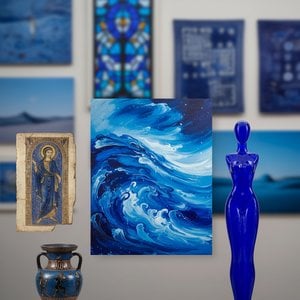
The Allure of Azure: Exploring the Symbolic & Aesthetic Depths of Blue in Art History
Explore the rich history of blue in art! Discover its symbolism, from ancient pigments to modern masterpieces by Kandinsky & Seurat. Uncover the psychological impact and cultural meanings behind this captivating hue.

The Alchemy of Clay: A Collector's Guide to the Mastery, Texture, and Timeless Form of Ceramic Art
Discover the profound beauty of ceramic art. Our expert guide explores the alchemy of clay, texture, and glaze, offering collectors deep insights into mastering earth and fire to create timeless, sculptural masterpieces for any curated collection.

Crimson Threads of Narrative: Exploring Symbolism & Representation in Artworks Featuring the Red Dress
Explore the rich symbolism of the red dress in art history! From ancient power displays to iconic portraits like Cézanne’s 'Madame Cezanne', discover the cultural and artistic significance behind this captivating color. Expert analysis & insights.