

 Ver en contexto
 Enviar
 Compartir
 Detalles
 Guía
Guía

 Descargar
 Similares
 Radiografía
 Presentación de diapositivas
 Preguntas y respuestas
 Estadísticas
Clown with flowers

- 32.0 x 24.0 cm


 Ver más
La obra de arte que se muestra en esta página está protegida por las leyes de propiedad intelectual, lo que significa que no podemos crear ni vender legalmente una reproducción idéntica. Esta protección se hace cumplir en virtud de acuerdos internacionales como el Convenio de Berna y por las leyes nacionales, incluidas aquellas establecidas por el Ley de derechos de autor de los EE. UU. - Título 17.
Este método cumple plenamente con las normativas de derechos de autor, ya que no implica la copia ni la duplicación de la obra protegida. En su lugar, se trata de una reinterpretación creativa: una nueva pintura influenciada por la original, pero que no es idéntica a ella.
Giclée / Impresión de arte
Impresiones giclée o en lienzo de calidad de museo con producción rápida y opciones de acabado flexibles. ( Comprar pintura hecha a mano Cambiar a imagen digital)




P118B €10

P118H €10

P118W €10

P438Z €10

P508JH €12

P508YH €12

P805H €10

P805Z €10

P919BZ €10

P919G €10

P919XJ €10

P959ZH €10

P968JZ €12

W106C €8

W218G €10

W218JH €8

W218Y €10

W307PJ €10

W316G €10

W316PJ €8

W316Y €10

W398PJ €8

W4111J €10

W500HY €15

W500JH €15

W692G €12

W849H €8

W940BG €15

W953PJ €8




Elija entre nuestros tamaños predefinidos que respetan las proporciones originales de la obra.

Introduzca el ancho y el alto que necesite para adaptarse a su marco o pared. Una impresión solo puede recortarse, nunca hacerse más grande que la imagen original, por lo que un tamaño con una forma distinta perderá parte de la obra. Le enviaremos una maqueta digital para su aprobación antes de realizar cualquier impresión. La imagen que se muestra en esta página no refleja el recorte real; solo la maqueta lo hace.
Envío a todo el mundo () en 2 semanas en lugar de las 4/5 semanas estándar. (4 noviembre)

Envío exprés gratuito a todo el mundo

Lienzo de lino de alta calidad

Seguro de envío total

Garantía de reembolso de aranceles aduaneros

Garantía de fidelidad cromática exacta

Política de devolución de 100 días (solo por defectos)

Garantía de devolución del 100% del dinero

Descuento por cantidad
 La opción de vidrio solo está disponible en tamaños inferiores a 110 cm.

Clown with flowers
Giclée / Impresión de arte
Dimensiones de la reproducción
-


Precio total final
€ 56
A Symphony of Dreams: Exploring Marc Chagall’s “Clown with Flowers”
The painting "Clown with Flowers," created in 1963 by the celebrated Belarusian-born artist Marc Chagall, transcends mere representation; it embodies a profound exploration of memory, folklore, and the boundless realm of imagination—characteristics that define Chagall's distinctive artistic legacy. This captivating artwork isn’t simply a visual spectacle but rather an invitation into a world where reality blends seamlessly with fantasy, mirroring the artist’s own deeply rooted connection to his Vitebsk homeland.Subject Matter and Composition
At its core lies a woman adorned in a dress, her face transformed into that of a clown—a deliberate juxtaposition designed to evoke both humor and melancholy. She cradles flowers delicately in her hand, symbolizing beauty, fragility, and perhaps the ephemeral nature of joy. Surrounding her are two horses – one prominent on the right side, appearing almost ethereal against the backdrop, and another positioned further back on the left, grounding the composition while simultaneously suggesting movement and aspiration. Above her head floats a bird, adding to the dreamlike atmosphere and hinting at freedom and transcendence. The artist’s masterful arrangement of figures and elements contributes to an overall sense of narrative richness, prompting viewers to contemplate themes of innocence, transformation, and the enduring power of nature.Style and Technique: Cubism Meets Surrealism
Chagall's artistic style is undeniably complex, blending influences from Cubism and Surrealism—a testament to his intellectual curiosity and willingness to experiment with innovative approaches. While acknowledging the geometric precision of Cubist principles – evident in the angular lines of the horse’s silhouette – Chagall abandons strict spatial realism in favor of flattened perspectives and distorted forms. This stylistic choice isn't merely decorative; it serves as a conduit for conveying emotion and psychological depth. The artist employs vibrant, saturated colors—characteristic of his Vitebsk palette—to imbue the canvas with an otherworldly luminescence. Thick impasto brushstrokes create textural surfaces that capture the immediacy of feeling, reinforcing the painting’s dreamlike quality.Historical Context: Vitebsk and Artistic Rebellion
“Clown with Flowers” emerged during a pivotal period in Chagall's artistic life—a time marked by fervent engagement with Jewish folklore and a defiant rejection of prevailing artistic conventions. Following the tumultuous events surrounding the Vitebsk Biennial of 1917, where Chagall’s work was censored for its perceived antisemitic undertones, he embarked on a courageous journey toward artistic liberation. This period witnessed an increasing preoccupation with biblical narratives and Jewish traditions—themes that permeate his oeuvre. The painting reflects this intellectual fervor and embodies the artist's determination to express his inner vision without compromise. It stands as a symbol of Vitebsk’s cultural dynamism and Chagall’s unwavering commitment to artistic integrity.Symbolism: Flowers, Horses, Birds – Layers of Meaning
The flowers themselves represent not only beauty but also remembrance—a poignant reminder of Chagall's childhood memories and the traditions of his Jewish heritage. The horses symbolize nobility, strength, and spiritual aspiration, mirroring Chagall’s belief in transcendence and connecting to ancient myths and legends. Similarly, the bird embodies freedom, hope, and divine grace—suggesting a yearning for liberation from earthly constraints. Collectively, these symbols contribute to a multilayered narrative that speaks to universal themes of faith, longing, and the transformative power of imagination.Emotional Impact: A Window into Chagall’s Soul
Ultimately, “Clown with Flowers” resonates deeply with viewers due to its ability to evoke profound emotional responses. The juxtaposition of clownish visage and delicate flowers creates a captivating tension—a visual paradox that captures the bittersweet complexities of human experience. Chagall's masterful use of color and texture invites contemplation and encourages viewers to immerse themselves in the artist’s dreamlike world. It is a painting that lingers in the mind long after viewing, prompting reflection on themes of innocence, vulnerability, and the enduring beauty of imagination—a testament to Chagall’s unparalleled capacity for conveying emotion through art.Preguntas y respuestas
¿Qué lugar ocupa "Clown with flowers" entre los temas recurrentes de Marc Chagall?
"Clown with flowers" representa flowers, woman, clown face, horses, biblical symbolism, fantasy, dreams, mientras que los temas recurrentes de Marc Chagall son biblical imagery, folklore traditions, dreamlike vision, symbolic narrative, chagall’s legacy. Al comparar ambos, se observa cómo la obra se relaciona con los temas habituales del artista.
¿En qué técnica está ejecutada "Clown with flowers" de Marc Chagall?
"Clown with flowers" está realizada en Acrylic.
¿Es "Clown with flowers" de Marc Chagall de dominio público?
"Clown with flowers" de Marc Chagall es de aún protegido por derechos de autor. Este estado determina cómo se puede reproducir la imagen de la obra.
Obras relacionadas


Biografía del artista
Marc Chagall: Una Vida en Color e Imaginación
Primeros Años e Influencias
- Nacimiento y Origen: Marc Zakharovich Chagall nació el 6 de julio de 1887 (O.S. 24 de junio) en Liozna, cerca de Vitebsk, Bielorrusia, dentro de una familia judía hasidica.
- El Impacto de Vitebsk: Su infancia en Vitebsk, conocida como la “Toledo rusa”, moldeó profundamente su visión artística. La ciudad, con su mezcla única de culturas y su pintoresco paisaje – iglesias, sinagogas, bulliciosos mercados – se convirtió en motivos recurrentes en su obra.
- Tendencia Artística Temprana: A pesar de los modestos recursos de su familia, Chagall mostró un talento temprano para el arte, aprendiendo inicialmente de un pintor de letreros local antes de seguir una formación formal.
Desarrollo Artístico y Estilo
- Formación Temprana: Estudió en San Petersburgo con Léon Bakst y más tarde en París en la Academia de la Grande Chaumière, donde se encontró con movimientos vanguardistas.
- Fusión de Estilos: El estilo de Chagall es una síntesis única de diversas influencias. Absorbió elementos del Cubismo, el Simbolismo y el Fauvismo, pero nunca se adhirió por completo a un solo movimiento, forjando su propio camino distintivo.
- Características Clave: Su obra se caracteriza por colores vibrantes, imágenes oníricas, criaturas fantásticas y una sensación de nostalgia por su infancia en Vitebsk. A menudo presenta figuras flotantes, perspectivas distorsionadas y representaciones simbólicas.
Obras Maestras y Logros
- Maestros Tempranos: Pinturas como “Yo y el Pueblo” (1911) demuestran su exploración temprana de la memoria, la identidad y la relación entre el individuo y la comunidad.
- Revolución Rusa y Regreso a Vitebsk: Después de la Revolución Rusa, Chagall regresó a Vitebsk y se involucró en iniciativas culturales, estableciendo una escuela de arte. Sin embargo, pronto se desilusionó con las restricciones impuestas por el nuevo régimen.
- Reconocimiento Internacional: Eventualmente dejó Rusia y se estableció en Francia, donde su carrera floreció. Obras notables de este período incluyen “Sobre Vitebsk” (1920-1922) y numerosas pinturas inspiradas en las historias bíblicas como “El Sueño de Jacob.”
- Comisiones Tardías: Chagall recibió importantes comisiones más tarde en la vida, incluyendo el techo del Opera de París (1964), vidrieras para el sinagoga del Hospital Hebreo Hadassah en Jerusalén y la Catedral de Reims.
Influencias y Legado
- Influencias Artísticas: Fue influenciado por artistas como Vladimir Lukich Borovikovsky, cuyo retrato admiraba, así como por las corrientes más amplias del modernismo temprano.
- Impacto en Artistas Posteriores: El trabajo de Chagall ha inspirado a generaciones de artistas con su calidad lírica, profundidad emocional y poder imaginativo. Su influencia se puede ver en el Surrealismo y otros movimientos que adoptaron la fantasía y el simbolismo.
- Significado Histórico: Se considera uno de los personajes más importantes del arte del siglo XX, conectando el modernismo europeo con la identidad cultural judía. Su capacidad para sintetizar la experiencia personal, las leyendas y los temas universales continúa resonando entre audiencias en todo el mundo.
- El “Artista Judío Quintesencial”: Chagall es a menudo llamado el “artista judío quintesencial del siglo XX” debido a su exploración frecuente de temas, tradiciones y experiencias judías en su arte.
Muerte y Remembrance
- Últimos Años: Marc Chagall continuó pintando y creando hasta su muerte el 28 de marzo de 1985, a la edad de 97 años, en Saint-Paul-de-Vence, Francia.
- Legado Duradero: Su obra se exhibe en importantes museos alrededor del mundo, asegurando que su visión vibrante e imaginativa continúe inspirando y cautivando a los amantes del arte por generaciones venideras.
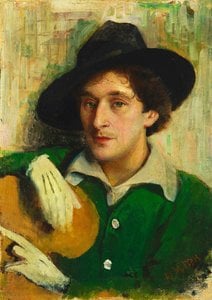
Marc Chagall
1887 - 1985 , belarus
Datos clave
- Artistas Influenciados: ['Surrealismo']
- Artistas Que Influyeron: ['Vladimir Lukich Borovikovsky']
- Fecha De Muerte: 28 de marzo de 1985
- Fecha De Nacimiento: 6 de julio de 1887
- Lugar De Nacimiento: Liozna, Bielorrusia
- Movimiento Artístico:
- Cubismo
- Simbolismo
- Fauvismo
- Nacionalidad: Ruso-Francés
- Nombre Completo: Marc Chagall (Moishe Shagal)
- Obras Notables:
- Yo y el Pueblo
- Sobre Vitebsk
- El Sueño de Jacob
- Liberación
- La Promenada
- Recién casados con París
- Pliushkin trata a Tchtchikov
- Bajo la nieve
- En el cielo sobre la Ópera
- La Mujer y las Rosas
- El pintor alado
- Pareja sobre un Fondo Rojo
- José ha sido reconocido
Artículos relacionados

Los 10 Maestros del Surrealismo: Obras que Revolucionaron el Arte y la Decoración
Descubre los 10 lienzos surrealistas más influyentes de artistas como Dalí y Magritte. Explora la historia, el simbolismo y las técnicas del movimiento surrealista. Encuentra reproducciones de arte de museo en ArtsDot.com.

Los 10 Maestros del Surrealismo: Obras que Desafían la Realidad | ArtsDot
Descubre los 10 cuadros surrealistas más influyentes de artistas como Dalí y Magritte. Explora la historia, el simbolismo y las técnicas del movimiento surrealista. Encuentra reproducciones de arte de museo en ArtsDot.com.

Vladimir Makovsky: Realism, Social Commentary & Russian Life in Late 19th-Century Painting
Explore the captivating world of Vladimir Makovsky, a leading Russian realist painter. Discover his insightful depictions of 19th-century life, social commentary & legacy with ArtsDot.

Victor Vasnetsov: Myth, Nationalism & the Revival of Russian Fairy Tale Painting
Explore the captivating world of Victor Vasnetsov, a co-founder of Russian folklorist painting. Discover his iconic works, influence on national identity, and lasting legacy in this expert guide.

Ivan Bilibin: A Synthesis of Folklore, Modernism & National Identity in Russian Illustration
Explore the enchanting world of Ivan Bilibin, a master Russian illustrator who synthesized folklore, Art Nouveau & national identity. Discover his iconic fairy tale illustrations and legacy with ArtsDot.


