


 Ver en contexto
 Enviar
 Compartir
 Detalles

 Descargar
 Similares
 Radiografía
 Presentación de diapositivas
Dada Portrait


 Ver más
Giclée / Impresión de arte
Impresiones giclée o en lienzo de calidad de museo con producción rápida y opciones de acabado flexibles. ( Comprar pintura hecha a mano Comprar imagen)




P118B $10

P118H $10

P118W $10

P438Z $10

P508JH $12

P508YH $12

P805H $10

P805Z $10

P919BZ $10

P919G $10

P919XJ $10

P959ZH $10

P968JZ $12

W106C $8

W218G $10

W218JH $8

W218Y $10

W307PJ $10

W316G $10

W316PJ $8

W316Y $10

W398PJ $8

W4111J $10

W500HY $15

W500JH $15

W692G $12

W849H $8

W940BG $15

W953PJ $8




Elija entre nuestros tamaños predefinidos que respetan las proporciones originales de la obra.

Puede introducir sus propias dimensiones para adaptarse a un marco o espacio específico. Si el tamaño seleccionado no coincide con las proporciones de la imagen original, recortaremos la obra de arte o extenderemos la imagen con un borde con efecto espejo o de color sólido. Se enviará una maqueta digital para su aprobación antes de que comience la producción.
Tenga en cuenta que la vista previa en pantalla no refleja el recorte o la extensión real. Solo la maqueta mostrará con precisión la composición final.
Aunque existen tamaños personalizados, recomendamos seleccionar una dimensión de la lista predefinida para preservar las proporciones originales.
Envío a todo el mundo () en 2 semanas en lugar de las 4/5 semanas estándar. (23 agosto)

Envío exprés gratuito a todo el mundo

Lienzo de lino de alta calidad

Seguro de envío total

Garantía de reembolso de impuestos aduaneros

Garantía de fidelidad cromática exacta

Política de devolución de 60 días (solo por defectos)

Garantía de devolución del 100% del dinero

Descuento por cantidad
 La opción de vidrio solo está disponible en tamaños inferiores a 110 cm.

Dada Portrait
Giclée / Impresión de arte
Dimensiones de la reproducción
-


Precio total final
$ 62
Descripción de la pieza
Dada Portrait: An Exploration of Fragmentation and Surrealist Vision
The American artist Man Ray (1890-1976) irrevocably altered the perception of photography, elevating it from mere documentation to a fully realized artistic expression. His trajectory began in New York with paintings—a deliberate nod to European Impressionism—but his encounter with Dadaism and Marcel Duchamp’s provocative ideas in 1915 fundamentally reshaped his creative sensibilities. Recognizing the movement's rejection of traditional aesthetics, Ray swiftly embraced the ready-made concept championed by Dadaists, exemplified by “The Gift,” a meticulously assembled flatiron adorned with tacks (1921). This audacious gesture signaled not merely an artistic technique but a profound philosophical stance—a questioning of established norms and a celebration of chance. Paris became Ray’s crucible for experimentation across diverse mediums, including cinema. It was during his period as a portraitist and fashion photographer that he honed his photographic skills, delving into techniques that would firmly situate him within the Surrealist canon. His approach wasn't simply about capturing likeness; it was about manipulating visual elements to evoke emotion and explore subconscious realms—a characteristic evident in “Dada Portrait,” his seminal work of 1923. This portrait confronts us with a starkly contrasting black-and-white palette, overlaid with a deliberate grid pattern that disrupts the image’s conventional clarity. The composition is vertically oriented, prioritizing the subject's face and torso—a framing choice that emphasizes introspection and subtly distancing him from the viewer. The grid overlay isn’t merely decorative; it functions as a symbolic device, mirroring the fragmentation inherent in Dadaist thought and reflecting the broader anxieties of the era concerning identity and perception. Lines converge at right angles, fracturing the image into rectangular shapes and diminishing any sense of depth—a stylistic decision consistent with Surrealism's rejection of illusionistic representation. Ray’s meticulous attention to detail extended beyond compositional considerations; he skillfully employed diffused lighting to create a studio atmosphere that underscored the controlled precision of his process. Furthermore, the texture of the print itself contributes to the artwork’s overall impact—smooth yet subtly disrupted by the grid pattern, suggesting layers of visual complexity beneath the surface. The portrait's gaze holds a quiet intensity, conveying a sense of detachment and prompting contemplation about the nature of self-representation. Ultimately, “Dada Portrait” transcends its formal elements to embody the spirit of Dadaism and Surrealism—movements united by their unwavering commitment to challenging conventions and probing the depths of human consciousness. It stands as a testament to Man Ray’s pioneering vision and his enduring legacy as one of the most influential artists of the 20th century, inviting viewers to engage in a dialogue about perception, identity, and the transformative power of artistic experimentation.- Artist: Man Ray
- Born Year: 1890
- Death Year: 1976
- Medium: Silver Gelatin Print
- Style: Surrealism & Dadaism


Biografía del artista
Una vida iluminada por las sombras
Emmanuel Radnitzky, conocido en todo el mundo como Man Ray, fue un espíritu inquieto que desafió cualquier categorización sencilla. Nacido en 1890 en Filadelfia, hijo de padres inmigrantes judíos rusos, su viaje desde aspirante a pintor hasta pionero de la fotografía y el cine encarna el radical fermento artístico de principios del siglo XX. El cambio de “Manny” Radnitzencia al enigmático “Man Ray” dice mucho de un artista decidido a forjar una nueva identidad, una libre de convenciones. La mudanza de su familia a la ciudad de Nueva York resultó crucial, exponiéndolo a la floreciente escena modernista e instilándole una fascinación de por vida por la experimentación. Sus primeras influencias incluyeron la vanguardia europea exhibida en la galería 291 de Alfred Stieglitz y el crudo realismo de la Escuela Ashcan, una mezcla que influiría sutilmente en su obra posterior. Aunque inicialmente se dedicó a la pintura, fue la fotografía lo que finalmente se convirtió en el medio más potente de Ray para explorar los límites de la percepción y la realidad. No se limitaba a capturar imágenes; estaba inventando nuevas formas de *ver*. Sus primeros esfuerzos artísticos estuvieron marcados por el deseo de romper con los estilos tradicionales, influenciados por su contacto tanto con el modernismo europeo como con la energía pura de la vida neoyorquina. El Centro Ferrer, con sus tendencias anarquistas y su énfasis en la libre expresión, resultó particularmente formativo durante este periodo, fomentando un entorno donde la experimentación no solo era alentada, sino esperada.Dadá, Surrealismo y la búsqueda de lo imposible
La trayectoria artística de Man Ray dio un giro dramático con su encuentro con Marcel Duchamp en Nueva York alrededor de 1915. Este encuentro despertó una fascinación compartida por desafiar las nociones tradicionales del arte, conduciendo a exploraciones de los “ready-mades”: objetos manufacturados ordinarios elevados al estatus de obra de arte. Este espíritu rebelde impulsó a Ray hacia el corazón del movimiento Dada, una protesta antiarte nacida del desencanto de la Primera Guerra Mundial. En 1921, tomó la trascendental decisión de trasladarse a París, convirtiéndose en una figura central tanto en los círía Dadá como en los Surrealistas que florecían allí. Aunque nunca se alineó plenamente con ningún dogma artístico rígido, Ray abrazó la exploración surrealista de la mente inconsciente, los sueños y lo irracional. Su trabajo durante este periodo se caracteriza por una cualidad onírica, a menudo inquietante pero innegablemente cautivadora. No le interesaba representar la realidad tal como *es*, sino más bien como se *siente*: fragmentada, distorsionada e imbuida de significados ocultos. Este abrazo a lo subconsciente le permitió ir más allá de la mera representación hacia una exploración de los estados psicológicos y la resonancia emocional dentro de su arte. Sus colaboraciones con otros artistas surrealistas, como Salvador Dalí, consolidaron aún más su posición dentro del movimiento, aunque siempre mantuvo un grado de independencia en su visión artística.Rayogramas y la alquimia de la luz
Quizás Man Ray sea más celebrado por su invención del “rayograma”, una técnica fotográfica sin cámara que descubrió casi por accidente. Estas imágenes —creadas al colocar objetos directamente sobre papel sensible a la luz y exponerlos a la iluminación— dieron como resultado composiciones etéreas y fantasmales que desafiaban la representación fotográfica convencional. El rayograma no era simplemente un método alternativo; era una declaración filosófica sobre la naturaleza de la propia fotografía. Al eliminar la lente de la cámara, Ray despojó la ilusión de objetividad, revelando la subjetividad inherente al medio. No eran representaciones *de* las cosas, sino rather impresiones directas *de* ellas, impregnadas de un sentido de misterio y de otro mundo. Más allá de los rayogramas, sus retratos fotográficos —particularmente aquellos de artistas como Lee Miller (quien se convertiría tanto en su musa como en su colaboradora)— son reconocidos por sus composiciones impactantes y su profundidad psicológica. Experimentó incansablemente con la solarización, las exposiciones múltiples y la manipulación en el cuarto oscuro, empujando los límites de lo que la fotografía podía lograr. La solarización, en particular, se convirtió en una técnica distintiva, creando reversiones dramáticas de tono que añadían un elemento de extrañeza a sus retratos.Más allá de la quietud: El cine y un legado perdurable
La curiosidad artística de Man Ray se extendió más allá de las imágenes fijas hacia el reino de la cinematografía. Sus películas experimentales, como *Le Retour à la Raison* (1923) y *L'Étoile de Mer* (1928), se caracterizarte por su imaginería surrealista, técnicas de montaje poco convencionales y el rechazo a las convenciones narrativas. No eran historias contadas en un sentido tradicional; eran poemas visuales, exploraciones de la forma, el ritmo y lo subconsciente. A menudo empleaba técnicas innovadoras como la animación stop-motion y la superposición para crear efectos desorientadores y oníricos. Aunque su obra cinematográfica fue relativamente pequeña en volumen, tuvo una influencia profunda en las generaciones posteriores de cineastas de vanguardia. A lo largo de su larga carrera, Man Ray continuó desafiando las normas artísticas, negándose a ser confinado por etiquetas o expectativas. Murió en París en 1976, dejando tras de sí un cuerpo de trabajo que continúa inspirando y provocando. Su legado reside no solo en sus innovaciones técnicas, sino también en su compromiso inquebrantable con la libertad artística y su búsqueda incansable de lo imposible: un verdadero pionero que alteró para siempre nuestra percepción del arte y la realidad. Su influencia puede verse en diversas disciplinas, desde la fotografía y el cine contemporáneos hasta la moda y el diseño, demostrando el poder perdurable de su visión.Una influencia continua
- Fotografía: Las técnicas de Man Ray, particularmente el rayograma y la solarización, siguen siendo exploradas por fotógrafos contemporáneos.
- Surrealismo: Sus contribuciones consolidaron el lenguaje visual del movimiento e inspiraron a innumerables artistas de diversas disciplinas.
- Cine Experimental: Su trabajo pionero en el cine sentó las bases para las futuras generaciones de cineastas de vanguardia.
- Fotografía de Moda: El enfoque innovador de Ray hacia el retrato y la composición influyó en el desarrollo de la fotografía de moda moderna.

Man Ray
1890 - 1976 , Estados Unidos
Datos clave
- Artistic Movement Or Style: Dada, Surrealism
- Artists Or Movements Influenced By This Artist: ['Surrealism']
- Artists Who Influenced This Artist: ['Marcel Duchamp']
- Date Of Birth: August 27, 1890
- Date Of Death: November 18, 1976
- Full Name: Emmanuel Radnitzky
- Nationality: American
- Notable Artworks:
- Rayographs
- Le Retour à la Raison
- L'Étoile de Mer
- Place Of Birth: Philadelphia, USA
Artículos relacionados

Beyond the Lens: Photography's Enduring Influence on Modern & Contemporary Art
Explore photography's pivotal role in shaping modern & contemporary art. Discover key movements, influential artists like Stieglitz, and expert collecting advice from ArtsDot.

Mikhail Larionov: Rayonism, Primitivism & the Dawn of Russian Avant-Garde Painting
Explore the revolutionary art of Mikhail Larionov & the Russian Avant-Garde. Discover Rayonism, Primitivism's influence, and his lasting impact on modern painting. Expert insights for collectors.

Monochrome Visions: Exploring the Aesthetic & Historical Significance of Black & White Photography
Explore the rich history & artistic power of black and white photography. From early techniques to iconic masters like Ansel Adams, discover why monochrome continues to captivate art lovers today. Expert insights for collectors.

Pictorialismo: La Búsqueda del Alma de la Fotografía Artística – Estética, Técnicas y Legado
Descubre el Pictorialismo, un movimiento clave en la historia de la fotografía artística. Explora sus técnicas, figuras emblemáticas y su legado perdurable. Guía experta para coleccionistas y amantes del arte.
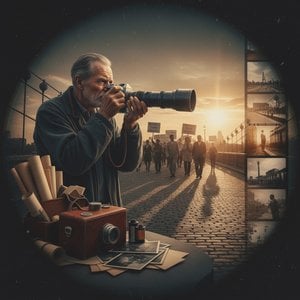
Witnessing History Through Lens & Light: Documentary Photography's Enduring Legacy
Explore the powerful history of documentary photography – from its origins to contemporary masters like Gordon Parks & W. Eugene Smith. Discover how this art form shapes our understanding of society and witness pivotal moments in time.



