Ver en contexto
 Enviar
 Compartir
 Detalles
 Guía
Guía

 Descargar
 Similares
 Radiografía
 Presentación de diapositivas
 Preguntas y respuestas
 Estadísticas
The Lafayette

- 77.0 x 91.0 cm


 Ver más
Giclée / Impresión de arte
Impresiones giclée o en lienzo de calidad de museo con producción rápida y opciones de acabado flexibles. ( Comprar pintura hecha a mano Cambiar a imagen digital)




P118B €10

P118H €10

P118W €10

P438Z €10

P508JH €12

P508YH €12

P805H €10

P805Z €10

P919BZ €10

P919G €10

P919XJ €10

P959ZH €10

P968JZ €12

W106C €8

W218G €10

W218JH €8

W218Y €10

W307PJ €10

W316G €10

W316PJ €8

W316Y €10

W398PJ €8

W4111J €10

W500HY €15

W500JH €15

W692G €12

W849H €8

W940BG €15

W953PJ €8




Elija entre nuestros tamaños predefinidos que respetan las proporciones originales de la obra.

Introduzca el ancho y el alto que necesite para adaptarse a su marco o pared. Una impresión solo puede recortarse, nunca hacerse más grande que la imagen original, por lo que un tamaño con una forma distinta perderá parte de la obra. Le enviaremos una maqueta digital para su aprobación antes de realizar cualquier impresión. La imagen que se muestra en esta página no refleja el recorte real; solo la maqueta lo hace.
Envío a todo el mundo () en 2 semanas en lugar de las 4/5 semanas estándar. (14 noviembre)

Envío exprés gratuito a todo el mundo

Lienzo de lino de alta calidad

Seguro de envío total

Garantía de reembolso de aranceles aduaneros

Garantía de fidelidad cromática exacta

Política de devolución de 100 días (solo por defectos)

Garantía de devolución del 100% del dinero

Descuento por cantidad
 La opción de vidrio solo está disponible en tamaños inferiores a 110 cm.

The Lafayette
Giclée / Impresión de arte
Dimensiones de la reproducción
-


Precio total final
€ 56
La esencia de la vida urbana
La pintura The Lafayette de John Sloan, creada en 1927, constituye una representación quintesencial de la vida urbana durante los albores del siglo XX. Esta obra al óleo sobre lienzo, que mide 77 x 91 cm, se encuentra actualmente custodiada en The Metropolitan Museum of Art en la ciudad de Nueva York.
Para comprender la magnitud de esta pieza, es necesario sumergirse en su contexto artístico. John Sloan fue una figura prominente de la Ashcan School, un grupo de artistas realistas estadounidenses que centraron su mirada en retratar la cotidianidad de los entornos urbanos. El término "Ashcan School" fue acuñado precisamente por su énfasis en capturar las realidades crudas y vibrantes de la vida en la ciudad, aspectos que a menudo eran ignorados por otros movimientos artísticos de la época.
Composición y Detalles
La pintura retrata la entrada al Hotel Lafayette, situado en la intersección de la calle 9 y University Place en Greenwich Village. Un grupo de personas desciende por las escaleras del hotel, protegidas por un doble toldo, sumergidas en animadas conversaciones de cena mientras un portero hace señas a un distintivo taxi Checker amarillo de Nueva York. La escena se desarrolla en una tarde lluviosa, lo que aporta una sensación de calidez y acogimiento a la atmósfera. El lienzo de Sloan plasma la esencia misma de la vida de barrio, capturando las interacciones y las rutinas de la gente común. Su uso de colores cálidos y una iluminación suave crea un ambiente hospitalario, atrayendo al espectador hacia el corazón palpitante de la ciudad.Significado Histórico
La importancia de The Lafayette trasciende su valor estético, pues su trayectoria está intrínsecamente ligada al apoyo vital que recibió para la carrera del artista. En 1927, la obra fue adquirida por Juliana Force, secretaria privada de Gertrude Vanderbilt Whitney, con el propósito fundamental de brindar apoyo financiero a Sloan. Este gesto de mecenazgo permitió que la pieza alcanzara un destino de prestigio internacional, siendo donada a The Metropolitan Museum of Art en enero de 1928. Con esta incorporación, la obra se convirtió en la segunda pieza de Sloan en formar parte de la prestigiosa colección del museo, siguiendo los pasos de su antecesora, Dust Storm, Fifth Avenue.
Estilo artístico e influencia
El estilo de John Sloan se distingue por su extraordinaria capacidad para capturar la esencia misma de la vida urbana. Sus lienzos suelen retratar escenas cotidianas, elevando la belleza de las actividades más mundanas a la categoría de arte. Como integrante fundamental de la Ashcan School, Sloan recibió la profunda influencia de figuras como Robert Henri y Thomas Eakins, ambos fervientes defensores de una representación realista y honesta de la vida moderna.Conclusión
The Lafayette es una representación cautivadora de la vida urbana durante los albores del siglo XX. La capacidad de John Sloan para capturar la esencia de las interacciones vecinales y las rutinas cotidianas convierte a esta pintura en una obra trascendental de la historia del arte estadounidense. Para aquellos interesados en explorar más obras de John Sloan, vale la pena visitar el Westport House Museum y a Giorgio Cavallon. Para profundizar en el legado de John Sloan y el movimiento de la Ashcan School, puede consultar John Sloan - Wikipedia y John Sloan | The Lafayette | American - The Metropolitan Museum of Art.
Preguntas y respuestas
¿Qué nivel de contraste presenta "The Lafayette" de John French Sloan?
El contraste entre luces y sombras de "The Lafayette" se registra como Audaz. El contraste describe la intensidad con la que difieren las zonas claras y oscuras.
¿Se puede descargar la imagen de "The Lafayette"?
Puede descargar "The Lafayette" de John French Sloan desde la página de Descargar imagen digital de la obra, como descarga de una imagen digital en alta resolución.
¿De qué país es la obra del Escuela Ashcan "The Lafayette"?
La obra de Escuela Ashcan "The Lafayette" fue realizada por un artista nacido en Estados Unidos.
Obras relacionadas


Biografía del artista
Early Life and Artistic Awakening
John French Sloan, born August 2, 1871, in Lock Haven, Pennsylvania, emerged from humble beginnings that profoundly shaped his artistic vision. His childhood was marked by a familial need for support; his father’s struggles with mental health necessitated young John taking on responsibilities beyond his years. This early exposure to the realities of working-class life—a world often overlooked by the established art circles—would become a defining characteristic of his oeuvre. He moved with his family to Philadelphia, where he honed his skills initially not through formal academic training, but as an assistant cashier at Porter and Coates, a bookstore brimming with prints and illustrations. This environment proved formative; it allowed him to study masters like Dürer and Rembrandt, fostering a deep appreciation for draftsmanship and etching techniques. It was here, amidst the commerce of printed images, that Sloan began creating his own art, quietly developing a style rooted in observation and meticulous detail. His early work wasn’t born from privilege or leisure, but from necessity and a keen eye for the world around him—a foundation upon which he would build a remarkable career.The Ashcan School and Urban Realism
Sloan's trajectory shifted dramatically with his encounter with Robert Henri, a charismatic painter who championed artistic independence and a commitment to portraying everyday life. This connection led Sloan to the heart of what became known as the Ashcan School—a group of artists dedicated to depicting the gritty realities of turn-of-the-century New York City. Alongside William Glackens, George Luks, Everett Shinn, and others, Sloan rejected the idealized landscapes and portraits favored by many of their contemporaries, instead turning their attention to the bustling streets, crowded tenements, and vibrant social life of the city’s poorer neighborhoods. His work became a visual chronicle of this often-ignored world—capturing scenes from McSorley's Bar to women drying their hair on rooftops. Sloan wasn’t merely documenting; he was imbuing these scenes with a sense of empathy and dignity, elevating the lives of ordinary people onto the canvas. He possessed an uncanny ability to capture the *essence* of neighborhood life, the subtle gestures and fleeting moments that revealed the character of a place and its inhabitants. This commitment to realism wasn’t simply aesthetic; it was also informed by his socialist leanings, though he always maintained a distinction between his art and his political beliefs.Style and Influences
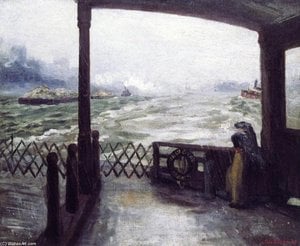
Sloan's artistic style is characterized by a distinctive blend of influences. While rooted in realism, his work wasn’t devoid of stylistic nuance. He employed dark, rich hues—often emphasizing the contrast between light and shadow—to create a sense of drama and atmosphere. His compositions were carefully constructed, often utilizing strong diagonals to draw the viewer's eye into the scene. The influence of etching is evident in his precise linework and attention to detail, even in his paintings. Beyond Henri, Sloan drew inspiration from European masters like Edgar Degas and Honoré Daumier, admiring their ability to capture movement and social commentary. However, he forged a uniquely American voice, one that resonated with the energy and dynamism of New York City. His work wasn’t about grand narratives or historical events; it was about the small moments, the everyday experiences that constituted the fabric of urban life. He found beauty in the mundane, transforming ordinary scenes into compelling works of art. Wake of the Ferry, for example, exemplifies his ability to imbue a seemingly simple scene with emotional depth and symbolic resonance.Legacy and Lasting Impact
John French Sloan’s legacy extends far beyond his contributions to the Ashcan School. He was a prolific artist who worked in various mediums—painting, etching, lithography, drawing—and consistently explored themes of urban life, social justice, and human connection. His commitment to portraying the realities of working-class America paved the way for future generations of artists who sought to challenge conventional artistic norms and engage with social issues. He was a dedicated teacher, sharing his knowledge and passion with countless students throughout his career. Even as artistic tastes evolved, Sloan remained true to his vision, continuing to paint scenes that reflected his deep connection to New York City and its people. His work continues to resonate today, offering a poignant glimpse into a bygone era and reminding us of the enduring power of art to illuminate the human condition. His paintings are not merely historical documents; they are timeless portraits of life, love, and loss. Sloan’s influence can be seen in the works of subsequent realist painters and continues to inspire artists who seek to find beauty and meaning in the everyday world.
John French Sloan
1871 - 1951 , Estados Unidos
Datos clave
- Artistic Movement Or Style: Ashcan School, Realism
- Artists Or Movements Influenced By This Artist: ['Future generations']
- Artists Who Influenced This Artist: ['Robert Henri']
- Date Of Birth: August 2, 1871
- Full Name: John French Sloan
- Nationality: American
- Notable Artworks:
- Wake of the Ferry
- McSorley’s Bar
- Place Of Birth: Lock Haven, USA
Artículos relacionados

La Escuela del Cubo de Basura: Realismo Urbano y la Democratización del Arte Americano
Exploramos la Escuela del Cubo de Basura y el realismo urbano americano. Descubre cómo este movimiento artístico revolucionó la representación de la sociedad, democratizando el arte y desafiando las convenciones estéticas tradicionales.

John Sloan: Capturing the Soul of American Urban Life – A Realist Master
Explore the life & art of John Sloan, a key figure of American Realism and the Ashcan School. Discover his evocative NYC scenes, socialist influences, and lasting impact on modern art. Learn more at ArtsDot.

Los 10 Maestros Impresionistas que Revolucionaron el Arte | ArtsDot
Descubre los 10 cuadros impresionistas más influyentes de Monet, Renoir y Degas. Explora la historia, técnica y colores vibrantes del impresionismo. Encuentra reproducciones de arte exclusivas en ArtsDot.com.

Echoes of an Era: Exploring Themes & Techniques in 19th-Century Painting
Explore the captivating world of 19th-century painting! Discover Realism & Impressionism's revolutionary techniques, key artists like Manet and Monet, and their lasting impact. A comprehensive guide for art enthusiasts.

Echoes of Change: Exploring Themes & Techniques in 19th-Century Painting
Explore the captivating world of 19th-century painting! Discover Realism, Impressionism & beyond with expert insights into techniques, history & lasting influence. Elevate your art appreciation.