


 Ver en contexto
 Enviar
 Compartir
 Detalles

 Descargar
 Similares
 Radiografía
 Presentación de diapositivas
Watson and the Shark


 Ver más
Reproducción al óleo hecha a mano
Óleo sobre lienzo pintado a mano en el tamaño y marco de su elección, realizado por encargo por nuestros artistas. ( Comprar impresión Comprar imagen)




P118B $10

P118H $10

P118W $10

P438Z $10

P508JH $12

P508YH $12

P805H $10

P805Z $10

P919BZ $10

P919G $10

P919XJ $10

P959ZH $10

P968JZ $12

W106C $8

W218G $10

W218JH $8

W218Y $10

W307PJ $10

W316G $10

W316PJ $8

W316Y $10

W398PJ $8

W4111J $10

W500HY $15

W500JH $15

W692G $12

W849H $8

W940BG $15

W953PJ $8




Elija entre nuestros tamaños predefinidos que respetan las proporciones originales de la obra.

Puede ingresar sus propias dimensiones para adaptarse a un marco o espacio específico. Si el tamaño seleccionado no coincide con las proporciones de la imagen original, recortaremos la obra o extenderemos la pintura con elementos adicionales pintados a mano. Se le enviará una maqueta digital para su aprobación antes de comenzar la producción.
Tenga en cuenta que la vista previa en pantalla no refleja el recorte o la extensión reales. Solo la maqueta mostrará con precisión la composición final.
Si bien existen tamaños personalizados, recomendamos seleccionar una dimensión de la lista predefinida para preservar las proporciones originales.
Tras realizar el pedido, el equipo de ArtsDot.com enviará un correo electrónico al cliente para solicitar instrucciones y proporcionarle una vista previa del boceto.
Envío a todo el mundo () en 3-4 semanas en lugar de las 5 semanas estándar. (27 agosto). Sin comprometer la calidad.

Envío exprés gratuito a todo el mundo

Lienzo de lino de alta calidad

Seguro de envío total

Garantía de reembolso de impuestos aduaneros

Garantía de fidelidad cromática exacta

Política de devolución de 60 días (solo por defectos)

Garantía de devolución del 100% del dinero

Descuento por cantidad
 La opción de vidrio solo está disponible en tamaños inferiores a 110 cm.

Watson and the Shark
Técnica de reproducción
Dimensiones de la reproducción
-


Precio total final
$ 263
Descripción de la obra
A Tempestuous Rescue: John Singleton Copley’s “Watson and the Shark”
John Singleton Copley's "Watson and the Shark," painted in 1778, isn’t merely a depiction of a maritime rescue; it’s a meticulously crafted tableau brimming with layered narratives – a testament to colonial ambition, the brutal realities of transatlantic trade, and the enduring human spirit. The painting, now residing within the hallowed halls of the Metropolitan Museum of Art, immediately commands attention with its dynamic composition and dramatic lighting. Copley, a pivotal figure bridging the worlds of Anglo-American art, masterfully captures a moment suspended between terror and triumph, forever etching itself into the annals of American artistic history.
At first glance, the scene unfolds with startling immediacy: a young man, Brook Watson, clings desperately to the jaw of a colossal shark, his face contorted in a mixture of fear and determination. The chaos of the churning water is rendered with remarkable detail – the spray, the foam, the frantic gestures of the rescue party. However, beneath this surface drama lies a complex web of historical context. Copley wasn’t simply recording an isolated incident; he was responding to a commission from Watson himself, a man who had risen to prominence through his involvement in the lucrative slave trade – a stark reminder that even within scenes of heroic rescue, the shadows of exploitation and injustice lingered.
The Anatomy of a Masterpiece: Technique and Style
Copley’s technical prowess is immediately evident. He employs a dramatic chiaroscuro—a bold contrast between light and dark—to heighten the sense of urgency and drama. The figures are sculpted with meticulous attention to detail, their musculature rendered with anatomical precision. Notice how Copley subtly shifts the focus; Watson's face, pale and vulnerable, is illuminated while the shark’s form remains partially obscured in shadow, emphasizing its predatory menace. The brushwork itself is remarkably loose and expressive, particularly in depicting the turbulent water – a departure from the more rigid conventions of portraiture prevalent at the time.
Furthermore, Copley's choice of composition draws heavily on classical precedents. The central figure, Watson, echoes the heroic poses found in ancient sculptures, while the rescue party mirrors the dynamic groupings seen in Renaissance paintings. The inclusion of a Black sailor, positioned prominently at the apex of the scene, is particularly noteworthy. This deliberate placement challenges conventional representations of race and highlights the diverse population that fueled the colonial economy – a subtle yet powerful statement for its time.
Symbolism and Historical Resonance
Beyond the immediate depiction of the rescue, “Watson and the Shark” resonates with deeper symbolic meanings. The shark itself can be interpreted as a metaphor for the dangers and uncertainties of life, while Watson’s struggle represents the triumph of human resilience in the face of adversity. The painting also subtly critiques the moral compromises inherent in colonial society – a society built upon exploitation and fueled by the transatlantic slave trade. Copley doesn't shy away from depicting this uncomfortable truth; instead, he integrates it seamlessly into the narrative.
Interestingly, the composition is heavily influenced by classical art. The pose of Watson mirrors that of the Borghese Gladiator, a Roman statue known for its heroic stance and dynamic energy. The inclusion of a Black sailor, positioned prominently at the apex of the scene, is particularly noteworthy. This deliberate placement challenges conventional representations of race and highlights the diverse population that fueled the colonial economy – a subtle yet powerful statement for its time.
A Timeless Image: Emotional Impact and Reproduction
"Watson and the Shark" continues to captivate viewers centuries after its creation, evoking a potent mix of emotions—fear, hope, admiration, and perhaps even discomfort. Copley’s masterful use of light, shadow, and composition creates an intensely dramatic scene that draws us into the heart of the action. The painting's enduring appeal lies in its ability to simultaneously celebrate human courage and expose the darker realities of colonial history.
Reproductions of this iconic work offer a remarkable opportunity to bring Copley’s vision into any setting, from grand salons to intimate study spaces. A high-quality reproduction captures the painting's rich textures, dramatic lighting, and nuanced symbolism, allowing viewers to appreciate its artistic merit and historical significance for generations to come.
Obras relacionadas


Biografía del artista
Un Pionero de la Pintura Angloamericana (1738-1815)
John Singleton Copley, un renombrado pintor angloamericano, dejó una huella imborrable en el mundo del arte con sus cautivadores retratos y paisajes. Nacido en Boston, Massachusetts, para Richard y Mary Singleton Copley, ambos de ascendencia angloirlandesa, el viaje artístico de John es un testimonio de su talento innato y dedicación.Vida Temprana y Formación
Aunque hay información limitada sobre la educación formal de John, se cree que fue en gran medida autodidacta, con una inclinación hacia el arte desde temprana edad. Su padrastro, Peter Pelham, un grabador y pintor, pudo haberle brindado alguna orientación, pero la mayor parte de su desarrollo artístico puede atribuirse a su propia perseverancia.Contribuciones Artísticas
El trabajo de John Singleton Copley se caracteriza por:- Retratismo: Sus retratos de figuras influyentes en Nueva Inglaterra colonial son notables por su atención al detalle y la incorporación de artefactos que reflejan las vidas de los sujetos.
- Estilo Innovador: La tendencia de Copley a representar a sujetos de clase media con un enfoque en sus vidas cotidianas fue una desviación del retrato tradicional de su época.
- Amplio Rango Artístico: Desde autorretratos hasta escenas históricas, la obra de John muestra su versatilidad y habilidad para capturar una amplia gama de temas.
Obras Notables y su Significado
Algunas de las obras más notables de John Singleton Copley incluyen:- El colapso del Conde de Chatham en la Cámara de los Lores (Galería Tate (Londres, Reino Unido), óleo sobre lienzo), una representación conmovedora de un momento crucial en la historia británica.
- Sr. y Sra. Ralph Izard (Alice Delancey) (Museo de Bellas Artes (Boston, Estados Unidos), óleo sobre lienzo), un retrato ejemplar que muestra la atención al detalle de John y su capacidad para capturar la esencia de sus sujetos.
- Watson y el Tiburón (Óleo sobre lienzo), una obra dramática que representa un rescate audaz.
Legado e Influencia
El impacto de John Singleton Copley en el mundo del arte es innegable. Su enfoque innovador al retrato y sus contribuciones a la pintura angloamericana han influenciado a generaciones de artistas. Para una comprensión más profunda del trabajo de John y su significado, visite la página de John Singleton Copley en ArtsDot, que presenta una extensa colección de sus obras de arte.Lecturas Adicionales
Para obtener más información sobre la historia de la pintura y su evolución, consulte Wikipedia's historia de la pintura. Para explorar la vasta colección de ArtsDot, que incluye obras de varios períodos y estilos, navegue por Burghley House (Stamford, Estados Unidos) - Un tesoro oculto del arte americano y Descubriendo las obras de arte del St Hilda's College, Oxford, Reino Unido.
John Singleton Copley
1738 - 1815 , Reino Unido
Datos clave
- Artistas Influyentes: ['Joseph Blackburn']
- Estilo Artístico: Retrato, historicismo
- Fecha De Muerte: 9 de septiembre de 1815
- Fecha De Nacimiento: 3 de julio de 1738
- Influencia En Artistas: Generaciones de artistas
- Lugar De Nacimiento: Boston, Reino Unido
- Nacionalidad: Anglo-americano
- Nombre Completo: John Singleton Copley
- Obras Notables:
- El colapso del Conde de Chatham
- Sr. y Sra. Ralph Izard
- Watson y el tiburón
Artículos relacionados

Las 25 Obras Maestras del MFA Boston: Arte, Historia y Decoración Exclusiva
Descubre las 25 obras maestras del Museo de Bellas Artes Boston. Explora la historia, el arte y las emociones detrás de Sargent, Monet, Degas y más. Reproducciones de alta calidad para tu hogar en ArtsDot.com.

Robert W. Salmon: Navigating the Currents of Maritime Painting & American Realism
Explore the captivating maritime paintings of Robert W. Salmon, a pioneer of American Luminism. Discover his Boston Harbor scenes, legacy, and collecting guide at ArtsDot.
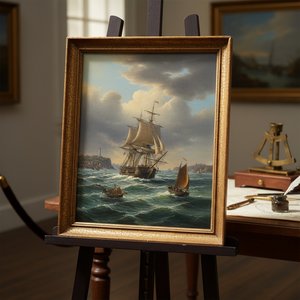
Samuel Walters: Capturing Victorian Maritime Life with Precision & Artistry
Explore the exquisite maritime paintings of Samuel Walters (1811-1882). Discover his mastery of detail, historical scenes & influence on Victorian art. Learn about collecting his works and find high-quality reproductions at ArtsDot.

Abraham Hulk Senior: Pioneering Maritime Topography of the Dutch Golden Age
Explore the captivating seascapes of Abraham Hulk Senior, a leading Anglo-Dutch marine painter of the 19th century. Discover his signature style, family legacy & collectable artworks at ArtsDot.

Willem van de Velde the Elder: Master of Maritime Painting & Chronicler of the Dutch Golden Age
Discover the captivating maritime paintings of Willem van de Velde the Elder, a master chronicler of the Dutch Golden Age. Explore his unparalleled realism and lasting influence on naval art history.



