

 Ver en contexto
 Enviar
 Compartir
 Detalles
 Guía
Guía

 Descargar
 Similares
 Radiografía
 Presentación de diapositivas
 Preguntas y respuestas
 Estadísticas
Madre


 Ver más
Giclée / Impresión de arte
Impresiones giclée o en lienzo de calidad de museo con producción rápida y opciones de acabado flexibles. ( Comprar pintura hecha a mano Cambiar a imagen digital)




P118B €10

P118H €10

P118W €10

P438Z €10

P508JH €12

P508YH €12

P805H €10

P805Z €10

P919BZ €10

P919G €10

P919XJ €10

P959ZH €10

P968JZ €12

W106C €8

W218G €10

W218JH €8

W218Y €10

W307PJ €10

W316G €10

W316PJ €8

W316Y €10

W398PJ €8

W4111J €10

W500HY €15

W500JH €15

W692G €12

W849H €8

W940BG €15

W953PJ €8




Elija entre nuestros tamaños predefinidos que respetan las proporciones originales de la obra.

Introduzca el ancho y el alto que necesite para adaptarse a su marco o pared. Una impresión solo puede recortarse, nunca hacerse más grande que la imagen original, por lo que un tamaño con una forma distinta perderá parte de la obra. Le enviaremos una maqueta digital para su aprobación antes de realizar cualquier impresión. La imagen que se muestra en esta página no refleja el recorte real; solo la maqueta lo hace.
Envío a todo el mundo () en 2 semanas en lugar de las 4/5 semanas estándar. (8 noviembre)

Envío exprés gratuito a todo el mundo

Lienzo de lino de alta calidad

Seguro de envío total

Garantía de reembolso de aranceles aduaneros

Garantía de fidelidad cromática exacta

Política de devolución de 100 días (solo por defectos)

Garantía de devolución del 100% del dinero

Descuento por cantidad
 La opción de vidrio solo está disponible en tamaños inferiores a 110 cm.

Madre
Giclée / Impresión de arte
Dimensiones de la reproducción
-


Precio total final
€ 56
A Portrait Steeped in Tranquility: Sorolla’s Reverie
Joaquín Sorolla y Bastida (1863 – 1923), a Valencian painter whose canvases shimmer with the golden hues of Mediterranean summers, stands as one of Spain's foremost Impressionists. His artistic vision wasn’t merely about capturing visual appearances; it was about distilling emotion into pigment—a feat achieved through masterful observation and an unwavering devotion to light. Sorolla’s life itself mirrored this preoccupation with ephemeral beauty: orphaned young, he navigated hardship with resilience and pursued his passion for art relentlessly, ultimately establishing himself as a celebrated figure in the European artistic landscape.- Subject Matter & Composition: The painting depicts a woman lying peacefully in bed with her infant daughter. Sorolla’s deliberate positioning of the figures—the mother turned towards her child, heads emerging from a sea of white—creates an intimate tableau that transcends mere representation. It's less about documenting reality and more about conveying a profound sense of serenity and maternal tenderness.
- Style & Technique: Sorolla’s signature style is undeniably Impressionistic, albeit infused with elements of Luminism – a technique championed by Ilya Repin and Vasily Surikov that prioritizes capturing the effects of light on surfaces. He employed loose brushstrokes layered upon one another to achieve an ethereal luminosity, skillfully blending colours to create subtle gradations and shimmering highlights. The use of white pigment—particularly prominent in the bedding—amplifies this effect, symbolizing purity and innocence.
Historical Context: Valencia’s Belle Époque Embrace
Sorolla's artistic output flourished during Spain’s Belle Époque (roughly 1870-1900), a period of cultural optimism fueled by industrial progress and burgeoning bourgeois aspirations. Valencia, Sorolla’s birthplace, experienced considerable urban development and artistic revival during this era—a context that undoubtedly influenced his creative sensibilities. The painting reflects the prevailing mood of quiet contemplation and domestic harmony characteristic of upper-middle-class life in Spain at the time.- Symbolism: The white bedding serves as a powerful symbol of maternal purity and spiritual grace—a deliberate choice reflecting Sorolla’s humanist convictions. Furthermore, the gaze exchanged between mother and daughter embodies unconditional love and connection—themes recurrent throughout Sorolla's oeuvre.
Emotional Impact & Artistic Legacy
Sorolla’s ability to evoke palpable emotion through his art is undeniable. The painting transcends mere visual pleasure; it invites contemplation on themes of motherhood, vulnerability, and the beauty of everyday life. Critics have lauded Sorolla's masterful handling of light—particularly its diffusion across the white bedding—as capturing “the very soul” of his subject matter. His influence extends far beyond his own lifetime, inspiring generations of artists who sought to emulate his luminous palette and expressive brushwork. Sorolla’s legacy continues to resonate today, reminding us that art possesses the capacity to illuminate not only what we see but also what we feel.- Interior Design Inspiration: Sorolla's aesthetic—characterized by its airy lightness and understated elegance—offers valuable insights for interior designers seeking to create spaces imbued with tranquility and warmth. Consider incorporating pale hues, textured fabrics, and strategically placed mirrors to achieve a similar luminous effect.
Reproductions & Preservation Considerations
High-quality reproductions of Sorolla’s paintings are available through reputable art dealers and online platforms—allowing collectors worldwide to experience the artist's unparalleled mastery of light and colour. However, it is crucial to acknowledge that Sorolla’s original canvases remain fragile artifacts of history, necessitating careful preservation practices to safeguard their enduring beauty for future generations.Preguntas y respuestas
¿Puedo ver "Madre" como una presentación de diapositivas a pantalla completa?
Puede ver "Madre" de Joaquín Sorolla y Bastida en formato de diapositivas en la página de Galería de imágenes de la obra.
¿A qué etapa de la trayectoria de Joaquín Sorolla y Bastida pertenece "Madre"?
Dentro de la trayectoria de Joaquín Sorolla y Bastida, "Madre" pertenece al Periodo de madurez. Esta etapa permite compararla con otras obras del artista.
¿Qué colores predominan en "Madre" de Joaquín Sorolla y Bastida?
"Madre" se define por una paleta de Tonos neutros con predominio del Marrón rosado (#a19c88).
Obras relacionadas


Biografía del artista
Primeros años y formación
Joaquín Sorolla y Bastida, un renombrado pintor español, nació el 27 de febrero de 1863 en Valencia, España. Era hijo mayor de Joaquín Sorolla, comerciante, y Concepción Bastida. Tras quedar huérfano a los dos años, fue criado por su tía materna y su tío. Su vocación artística se manifestó temprano, recibiendo sus primeras lecciones de arte a la edad de nueve años en su ciudad natal. Posteriormente estudió bajo la tutela de Cayetano Capuz, Salustiano Asenjo y José Benlliure en Roma. Una beca de cuatro años le permitió estudiar pintura en Roma, Italia, donde se vio influenciado por Francisco Pradilla.Desarrollo Artístico y Estilo
El estilo artístico de Sorolla evolucionó desde una formación académica hacia un enfoque más luminoso e impresionista. Aunque inicialmente pintó obras con temas históricos y religiosos para complacer a las academias, pronto desarrolló su propio lenguaje visual caracterizado por la captura magistral de la luz mediterránea y el movimiento. Su habilidad para representar escenas cotidianas, especialmente aquellas relacionadas con la playa y los niños jugando, lo convirtió en un artista único. Su técnica se basaba en pinceladas rápidas y vibrantes que transmitían una sensación de espontaneidad y vitalidad.Obras Destacadas y Logros
Sorolla dejó un legado impresionante de obras maestras. Entre ellas destacan:- Italian Girl with Flowers (Niña Italiana con Flores), una obra que ejemplifica su habilidad para capturar la esencia de sus sujetos.
- Bathing Time (Tiempo de Baño), demostrando su dominio del equilibrio entre luz y color, especialmente en escenas marinas.
- White Slave Trade (Trata de Blancas), un ejemplo raro de realismo social en su obra, abordando temas importantes de la época.
- Numerosas pinturas costumbristas que retratan la vida en las playas españolas, con figuras vibrantes y llenas de energía.
Influencia e Importancia Histórica
Joaquín Sorolla es considerado uno de los máximos exponentes del luminismo español y un precursor del impresionismo en España. Su capacidad para capturar la luz y el color con una técnica innovadora lo distingue de otros artistas de su época. Su obra ha influido a generaciones de pintores españoles, y su legado continúa siendo apreciado por su vitalidad, optimismo y representación fiel de la vida cotidiana. El Museo Sorolla en Madrid es un testimonio de su importancia histórica y una fuente invaluable para el estudio de su arte. Su habilidad para plasmar la alegría y la belleza del Mediterráneo lo ha convertido en un icono de la pintura española. Su obra, caracterizada por la luminosidad y la bravura, sigue inspirando a artistas hoy en día.
Joaquín Sorolla y Bastida
1863 - 1923 , España
Datos clave
- Artistas Influyentes: ['Francisco Pradilla']
- Estilo Artístico: Realismo, Luminismo
- Fecha De Fallecimiento: 23 de agosto de 1923
- Fecha De Nacimiento: 27 de febrero de 1863
- Lugar De Nacimiento: Valencia, España
- Nacionalidad: Española
- Nombre Completo: Joaquín Sorolla y Bastida
- Obras Notables:
- Italian Girl with Flowers
- Bathing Time
- White Slave Trade
Artículos relacionados

Impresionismo: 10 Obras Maestras que Capturan la Luz y el Momento
Descubre 10 obras maestras del impresionismo de Monet, Renoir y Degas. Explora la luz, el color y las historias detrás de estos icónicos cuadros. Reproducciones de arte en ArtsDot.com para decorar tu hogar con estilo.

Los 10 Maestros del Impresionismo: Obras que Revolucionaron el Arte y la Decoración
Descubre los 10 cuadros más emblemáticos del Impresionismo con Monet, Renoir y Degas. Explora la historia, técnica y belleza de estas obras maestras. Reproducciones de arte en para decorar tu hogar con estilo.

Manuel Benedito Vives: A Study of Light, Color & Emotional Resonance in Contemporary Spanish Painting
Explore the captivating world of Manuel Benedito Vives, a celebrated Spanish painter influenced by Sorolla. Discover his masterful portraits, luminous landscapes & enduring legacy – a favorite of the Spanish Royal Family. Art collectors will appreciate this in-depth study.
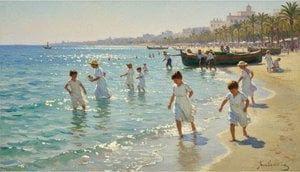
Joaquín Sorolla: Capturing Spanish Light & Life – A Legacy of Impressionism
Explore the luminous world of Joaquín Sorolla, Spanish master of Impressionism. Discover his life, techniques & legacy – a guide for art collectors and enthusiasts. Invest in timeless beauty.

Maestría y Forma: Las 25 Mejores Obras de Paul Cézanne
Explora las 25 obras maestras de Paul Cézanne y su legado postimpresionista. ¡Descubre toda la colección en ArtsDot.com!


