
- Inicio

- Reproducción al óleo
- Joan Miró
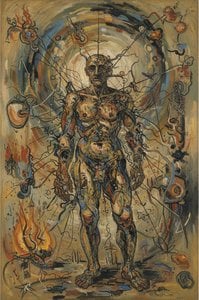
- Untitled

 Comprar impresión Comprar imagen en alta resolución
 Enviar
 Compartir
 Detalles
 Añadir a favoritos

 Descargar
 Similares
 Radiografía
 Presentación de diapositivas
Untitled

 Ver más
Reproducción al óleo hecha a mano
Óleo sobre lienzo pintado a mano en el tamaño y marco de su elección, realizado por encargo por nuestros artistas.




P118B $10

P118H $10

P118W $10

P438Z $10

P508JH $12

P508YH $12

P805H $10

P805Z $10

P919BZ $10

P919G $10

P919XJ $10

P959ZH $10

P968JZ $12

W106C $8

W218G $10

W218JH $8

W218Y $10

W307PJ $10

W316G $10

W316PJ $8

W316Y $10

W398PJ $8

W4111J $10

W500HY $15

W500JH $15

W692G $12

W849H $8

W940BG $15

W953PJ $8




Elija entre nuestros tamaños predefinidos que respetan las proporciones originales de la obra.

Puede ingresar sus propias dimensiones para adaptarse a un marco o espacio específico. Si el tamaño seleccionado no coincide con las proporciones de la imagen original, recortaremos la obra o extenderemos la pintura con elementos adicionales pintados a mano. Se le enviará una maqueta digital para su aprobación antes de comenzar la producción.
Tenga en cuenta que la vista previa en pantalla no refleja el recorte o la extensión reales. Solo la maqueta mostrará con precisión la composición final.
Si bien existen tamaños personalizados, recomendamos seleccionar una dimensión de la lista predefinida para preservar las proporciones originales.
Tras realizar el pedido, el equipo de ArtsDot.com enviará un correo electrónico al cliente para solicitar instrucciones y proporcionarle una vista previa del boceto.
Entrega mundial () en 3-4 semanas en lugar de las 5 semanas estándar. (22 julio). Sin compromisos con la calidad.

Envío exprés gratuito a todo el mundo

Lienzo de lino de alta calidad

Seguro de envío total

Garantía de reembolso de impuestos aduaneros

Garantía de fidelidad de color

Política de devolución de 60 días (solo por defectos)

Garantía de devolución del 100% del dinero

Descuento por pedido múltiple
 La opción de vidrio solo está disponible en tamaños inferiores a 110 cm.

Untitled
Técnica de reproducción
Tamaño de la reproducción
-


Precio total final
-
Descripción de la obra
A Catalan Visionary: The Life and Art of Joan Miró
Joan Miró i Ferrà, born in Barcelona in 1893, stands as one of the most significant figures in 20th-century art. His journey was not merely a progression through styles but an exploration of inner worlds, translating dreams, memories, and Catalan identity onto canvas with a uniquely poetic visual language. From humble beginnings marked by illness and initial parental reservations about his artistic pursuits, Miró persevered, driven by an innate need to express the intangible—the emotions, sensations, and subconscious currents that lie beneath the surface of reality. His early life was steeped in the traditions of Barcelona, a city brimming with architectural marvels thanks to Antoni Gaudí, whose organic forms would subtly influence Miró’s later abstractions. The goldsmithing profession of his father instilled an appreciation for meticulous craftsmanship, while the rugged Catalan landscape became a recurring motif and source of inspiraEarly Influences and Artistic Development
Miró's formative years were profoundly shaped by Barcelona itself—a city pulsating with artistic fervor thanks to Gaudí’s groundbreaking designs. This fascination with organic forms would permeate his oeuvre, manifesting in swirling lines and fantastical creatures that defy conventional representation. Despite initial familial concerns regarding his artistic inclinations, Miró possessed an unwavering determination to pursue his passion, fueled by a deep connection to Catalan folklore and mythology. His early experiments encompassed drawing and etching, honing skills that would prove invaluable as he transitioned towards painting—a medium he embraced with fervor and innovation.The Surrealist Period and Beyond
Miró’s artistic breakthrough arrived during the Surrealist movement of the 1920s, though he resisted categorization within established stylistic frameworks. Embracing automatism—the spontaneous creation of images without conscious control—he tapped into the realm of subconscious thought, producing canvases brimming with dreamlike imagery and symbolic references. Recurring motifs included birds, animals, and geometric shapes, each imbued with layers of meaning rooted in Catalan culture and personal experience. While Surrealist critics often debated his adherence to the movement’s principles, Miró maintained a distinctive artistic voice—one characterized by lyrical abstraction and an unwavering commitment to conveying emotional depth.Technique and Style: A Celebration of Color and Line
Miró's technique was remarkably consistent throughout his prolific career, prioritizing color and line as primary expressive tools. He favored tempera paint on canvas—a medium known for its luminosity and durability—allowing him to achieve vibrant hues and bold textural contrasts. His brushstrokes were loose and gestural, conveying movement and spontaneity while simultaneously capturing the essence of his inner vision. The artist’s meticulous attention to detail was balanced by a willingness to embrace randomness—introducing accidental marks and textures that enriched the overall composition. This approach resulted in canvases that possess an arresting immediacy—drawing viewers into a captivating dance between observation and imagination.Symbolism and Emotional Resonance
Throughout his artwork, Miró employed symbolism extensively—drawing upon Catalan folklore, mythology, and personal memories to convey profound emotional resonance. Recurring figures like birds represented freedom and aspiration, while animals embodied instinctual behavior and primal forces. Geometric shapes—circles, squares, triangles—served as anchors of stability amidst the swirling chaos of abstraction, symbolizing universal truths and underlying harmonies. The artist’s canvases are not merely visual representations but conduits for conveying feelings of wonder, melancholy, and joy—inviting contemplation and fostering a connection between the viewer and the artist's innermost self.Legacy and Influence
Joan Miró’s enduring legacy extends far beyond his own lifetime, influencing generations of artists across diverse disciplines. His pioneering approach to abstraction paved the way for subsequent movements—such as Pop Art and Minimalism—demonstrating the transformative potential of liberating oneself from conventional artistic constraints. More importantly, Miró instilled a profound appreciation for imagination and intuition—encouraging viewers to embrace ambiguity and explore the hidden dimensions of consciousness. Today, his artwork continues to inspire creativity and provoke dialogue—serving as a testament to the power of art to transcend boundaries and illuminate the human condition.


Biografía del artista
**vida temprana y carrera**
joan miró, un renombrado pintor, escultor y ceramista español, nació el 20 de abril de 1893 en Barcelona, España. Su familia, de raíces judías (marrano o converso), tuvo una influencia significativa en su vida temprana. El padre de Miró, Miquel Miró Adzerias, era orfebre y relojero, lo que pudo haber inspirado el interés del artista por los detalles intrincados.**desarrollo artístico**
Miró comenzó clases de dibujo a los siete años en una escuela privada en Barcelona. Posteriormente, se matriculó en la Academia de Bellas Artes La Llotja, a pesar de la desaprobación de su padre. Esto marcó el comienzo del viaje artístico de Miró, que eventualmente lo llevaría a convertirse en pionero del surrealismo y el arte abstracto.**obras notables y colaboraciones**
* la granja (1922), una pintura que muestra la transición de Miró a un estilo más individual, con cualidades nacionalistas. * Colaboración con Max Ernst en diseños para el ballet de Sergei Diaghilev en 1926, pionero en la técnica del grattage. * los interiores holandeses (1928), una serie de pinturas inspiradas en Hendrik Martenszoon Sorsh y Jan Steen, que muestra el estilo único de Miró.**museos y legado**
* La Fundación Joan Miró en Barcelona, establecida en 1975, dedicada a mostrar las obras de Miró. * La Fundación Pilar i Joan Miró en Palma de Mallorca, establecida en 1981, que consolida aún más el legado de Miró.**obras clave y su significado**
- pintura (1933), una pintura al óleo abstracta, ejemplificando la visión surrealista de Miró.
- pintura 11, otra obra notable y abstracta, que muestra el estilo único de Miró.
- la mazorca (37 x 46 cm), una obra surrealista, que presenta detalles intrincados.
- el nacimiento del día, una obra de arte abstracta, que consolida aún más las contribuciones de Miró al arte abstracto.
**conclusión**
El legado de Joan Miró como pionero del surrealismo y el arte abstracto es innegable. Sus obras, exhibidas en varios museos, incluida la Fundación Joan Miró, continúan inspirando a artistas y entusiastas del arte por igual. Para obtener más información sobre las obras de Miró, visite [https://ArtsDot.com/@/joan-miro](https://ArtsDot.com/@/joan-miro) o explore sus notables obras en [https://ArtsDot.com/@@/8ewky5-joan-miro-painting](https://ArtsDot.com/@@/8ewky5-joan-miro-painting).- ver más obras de Joan Miró en ArtsDot.com
- descubra el museo Fundación Joan Miró en Barcelona, España
- explore la biografía del artista y sus obras notables en [https://en.wikipedia.org/wiki/joan_mir%c3%b3](https://en.wikipedia.org/wiki/joan_mir%c3%b3)

Joan Miró
1893 - 1983 , España
Datos clave
- Artistas Que Influyeron:
- Vincent van Gogh
- Paul Cézanne
- Estilo Artístico: Surrealismo, Arte Abstracto
- Fecha De Muerte: 1983
- Fecha De Nacimiento: 20 de abril de 1893
- Lugar De Nacimiento: Barcelona, España
- Nacionalidad: Española
- Nombre Completo: Joan Miró i Ferrà
- Obras Notables:
- La Granja
- Interiores Holandeses
- Pintura (1933)
- El Nacimiento del Mundo
Artículos relacionados
André Masson: Automatism, Surrealism & Primal Expression in 20th-Century Art
Explore the revolutionary art of André Masson – pioneer of automatism & Surrealist expression. Discover his powerful imagery, innovative techniques, and lasting influence on modern art. Learn more at ArtsDot.
Max Ernst: Las 25 Obras Maestras del Surrealismo para Decorar tu Hogar con Arte
Descubre las 25 obras maestras de Max Ernst, el rey del surrealismo. Explora su arte onírico, técnicas innovadoras y simbolismo profundo. Reproducciones de alta calidad para decorar tu hogar con estilo en ArtsDot.com

Joan Miró: Las 25 Obras Maestras del Genio Catalán | Arte y Decoración
Descubre las 25 obras maestras de Joan Miró, el genio del surrealismo catalán. Explora su arte abstracto, colores vibrantes y la historia detrás de cada cuadro. Reproducciones de alta calidad en ArtsDot.com para transformar tu hogar con arte original.

Surrealismo: 10 Obras Maestras que Transformaron el Arte y la Decoración
Descubre las 10 obras maestras del Surrealismo con Dalí, Magritte y Miró. Explora la historia, el simbolismo y la técnica de estos íconos del arte moderno. Encuentra reproducciones de alta calidad para tu hogar en .

Los 10 Maestros del Surrealismo: Obras que Desafían la Realidad | ArtsDot
Descubre los 10 cuadros surrealistas más influyentes de artistas como Dalí y Magritte. Explora la historia, el simbolismo y las técnicas del movimiento surrealista. Encuentra reproducciones de arte de museo en ArtsDot.com.



