

 Vista previa
 Compartir
 Compartir
 Ver detalles

 Descargar
 Ver similares
 Radiografía
 Presentación de diapositivas
Painting


 Leer más
Giclée / Impresión de arte
Impresiones giclée o en lienzo de calidad de museo con producción rápida y opciones de acabado flexibles. ( Cambiar a pintura hecha a mano Cambiar a imagen)




P118B $10

P118H $10

P118W $10

P438Z $10

P508JH $12

P508YH $12

P805H $10

P805Z $10

P919BZ $10

P919G $10

P919XJ $10

P959ZH $10

P968JZ $12

W106C $8

W218G $10

W218JH $8

W218Y $10

W307PJ $10

W316G $10

W316PJ $8

W316Y $10

W398PJ $8

W4111J $10

W500HY $15

W500JH $15

W692G $12

W849H $8

W940BG $15

W953PJ $8




Elija entre nuestros tamaños predefinidos que respetan las proporciones originales de la obra.

Puede introducir sus propias dimensiones para adaptarse a un marco o espacio específico. Si el tamaño seleccionado no coincide con las proporciones de la imagen original, recortaremos la obra de arte o extenderemos la imagen con un borde con efecto espejo o de color sólido. Se enviará una maqueta digital para su aprobación antes de que comience la producción.
Tenga en cuenta que la vista previa en pantalla no refleja el recorte o la extensión real. Solo la maqueta mostrará con precisión la composición final.
Aunque existen tamaños personalizados, recomendamos seleccionar una dimensión de la lista predefinida para preservar las proporciones originales.
Envío a todo el mundo () en 2 semanas en lugar de las 4/5 semanas estándar. (11 agosto)

Envío exprés gratuito a todo el mundo

Lienzo de lino de alta calidad

Seguro de envío completo

Garantía de reembolso de aranceles aduaneros

Garantía de fidelidad cromática exacta

Política de devolución de 60 días (solo por defectos)

Garantía de devolución del 100% del dinero

Oferta por volumen
 La opción de vidrio solo está disponible en tamaños inferiores a 110 cm.

Painting
Giclée / Impresión de arte
Tamaño de la reproducción
-


Precio total
$ 62
Descripción de la pieza
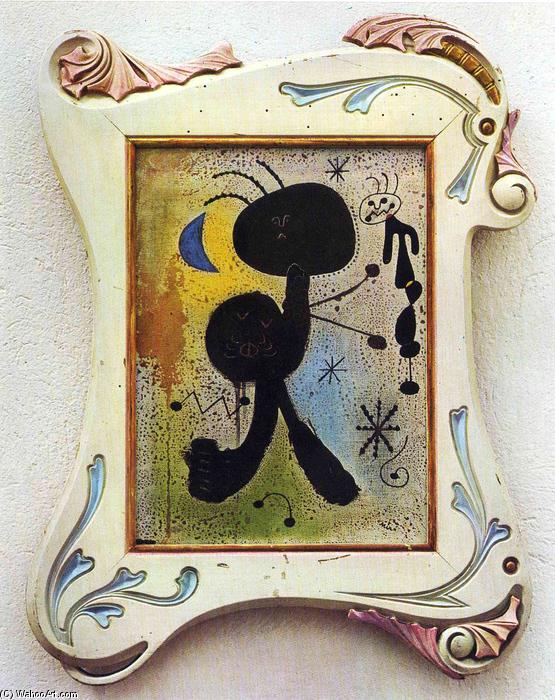
A Reflection Within Reflections: Joan Miró’s ‘Painting’ (1943)
Joan Miró's “Painting,” created in 1943, is more than simply a depiction of a frame and its contents; it’s an intricate meditation on perception, memory, and the layered nature of artistic representation itself. This captivating work, rendered in a stark black and white palette, immediately draws the viewer into a world where boundaries blur and meaning shifts with every glance. The image presents a painting within a picture frame, a classic motif that Miró masterfully exploits to create a sense of infinite regression – an invitation to question what is ‘real’ and what is merely a constructed illusion.
- Subject Matter: At the heart of this piece lies a solitary female figure, presented in a dynamic pose with outstretched arms. This evocative gesture suggests movement, action, or perhaps even a yearning – emotions that resonate deeply within the viewer’s own experience.
- Style & Technique: Miró's signature style is powerfully evident here. The work leans heavily into his mature period, characterized by biomorphic forms, playful abstraction, and a deliberate rejection of representational accuracy. The application of paint is loose and gestural, creating a textured surface that adds to the painting’s tactile quality. The use of black and white amplifies this effect, stripping away any distraction from the core shapes and allowing for a heightened focus on form and composition.
Historical Context & Catalan Identity
Created in 1943, during a period of significant upheaval – including the Second World War – “Painting” reflects Miró’s ongoing engagement with themes of displacement and resilience. Born in Barcelona in 1893, Miró was deeply rooted in Catalan culture and identity, which he consistently explored through his art. The influence of Antoni Gaudí's organic architectural forms is subtly present, suggesting a connection to the rich artistic heritage of Catalonia. This piece can be seen as a quiet assertion of cultural pride amidst global conflict, a testament to the enduring power of local traditions.
- Miró’s Barcelona: Miró's early life in Barcelona was formative, exposing him to the city’s vibrant artistic scene and its unique architectural style. This influence is palpable in his work, particularly in the use of curved lines and organic shapes.
- Thematic Resonance: The image’s exploration of movement and gesture aligns with Miró's broader concerns about human experience – the search for meaning, the struggle against adversity, and the importance of intuition.
Symbolism & Emotional Impact
The nested frames within “Painting” are laden with symbolic weight. They represent not just a picture within a picture, but also layers of interpretation, memory, and consciousness. The central female figure can be interpreted as an archetype – a representation of the feminine principle, a symbol of hope, or perhaps even a self-portrait reflecting Miró’s own artistic journey. The stark monochrome palette contributes to the work's emotional intensity, evoking feelings of introspection, mystery, and quiet contemplation. The overall effect is one of profound stillness, inviting viewers to lose themselves in its intricate details.
- Infinite Regression: The repeated framing creates a sense of infinite regression, prompting questions about the nature of reality and the limits of perception.
- Emotional Resonance: The work’s ambiguity allows for multiple interpretations, fostering a deeply personal connection between the viewer and the artwork.
A Timeless Masterpiece – A ArtsDot Reproduction
This exceptional reproduction captures every nuance of Miró's original vision, utilizing archival-quality materials and meticulous hand-painting techniques to ensure lasting beauty and authenticity. Whether adorning a gallery wall or enhancing your interior design, this artwork offers a unique opportunity to own a piece of art history – a testament to Joan Miró’s genius and his profound exploration of the human condition. Contact ArtsDot today to commission your bespoke reproduction.
Obras relacionadas


Biografía del artista
**vida temprana y carrera**
joan miró, un renombrado pintor, escultor y ceramista español, nació el 20 de abril de 1893 en Barcelona, España. Su familia, de raíces judías (marrano o converso), tuvo una influencia significativa en su vida temprana. El padre de Miró, Miquel Miró Adzerias, era orfebre y relojero, lo que pudo haber inspirado el interés del artista por los detalles intrincados.**desarrollo artístico**
Miró comenzó clases de dibujo a los siete años en una escuela privada en Barcelona. Posteriormente, se matriculó en la Academia de Bellas Artes La Llotja, a pesar de la desaprobación de su padre. Esto marcó el comienzo del viaje artístico de Miró, que eventualmente lo llevaría a convertirse en pionero del surrealismo y el arte abstracto.**obras notables y colaboraciones**
* la granja (1922), una pintura que muestra la transición de Miró a un estilo más individual, con cualidades nacionalistas. * Colaboración con Max Ernst en diseños para el ballet de Sergei Diaghilev en 1926, pionero en la técnica del grattage. * los interiores holandeses (1928), una serie de pinturas inspiradas en Hendrik Martenszoon Sorsh y Jan Steen, que muestra el estilo único de Miró.**museos y legado**
* La Fundación Joan Miró en Barcelona, establecida en 1975, dedicada a mostrar las obras de Miró. * La Fundación Pilar i Joan Miró en Palma de Mallorca, establecida en 1981, que consolida aún más el legado de Miró.**obras clave y su significado**
- pintura (1933), una pintura al óleo abstracta, ejemplificando la visión surrealista de Miró.
- pintura 11, otra obra notable y abstracta, que muestra el estilo único de Miró.
- la mazorca (37 x 46 cm), una obra surrealista, que presenta detalles intrincados.
- el nacimiento del día, una obra de arte abstracta, que consolida aún más las contribuciones de Miró al arte abstracto.
**conclusión**
El legado de Joan Miró como pionero del surrealismo y el arte abstracto es innegable. Sus obras, exhibidas en varios museos, incluida la Fundación Joan Miró, continúan inspirando a artistas y entusiastas del arte por igual. Para obtener más información sobre las obras de Miró, visite [https://ArtsDot.com/@/joan-miro](https://ArtsDot.com/@/joan-miro) o explore sus notables obras en [https://ArtsDot.com/@@/8ewky5-joan-miro-painting](https://ArtsDot.com/@@/8ewky5-joan-miro-painting).- ver más obras de Joan Miró en ArtsDot.com
- descubra el museo Fundación Joan Miró en Barcelona, España
- explore la biografía del artista y sus obras notables en [https://en.wikipedia.org/wiki/joan_mir%c3%b3](https://en.wikipedia.org/wiki/joan_mir%c3%b3)

Joan Miró
1893 - 1983 , España
Datos clave
- Artistas Que Influyeron:
- Vincent van Gogh
- Paul Cézanne
- Estilo Artístico: Surrealismo, Arte Abstracto
- Fecha De Muerte: 1983
- Fecha De Nacimiento: 20 de abril de 1893
- Lugar De Nacimiento: Barcelona, España
- Nacionalidad: Española
- Nombre Completo: Joan Miró i Ferrà
- Obras Notables:
- La Granja
- Interiores Holandeses
- Pintura (1933)
- El Nacimiento del Mundo
Artículos relacionados

Joan Miró: Las 25 Obras Maestras del Genio Catalán | Arte y Decoración
Descubre las 25 obras maestras de Joan Miró, el genio del surrealismo catalán. Explora su arte abstracto, colores vibrantes y la historia detrás de cada cuadro. Reproducciones de alta calidad en ArtsDot.com para transformar tu hogar con arte original.

Blanco Sublime: Los 10 Cuadros Más Famosos Dominados por la Luz y el Color
Descubre los 10 cuadros blancos más emblemáticos de la historia del arte. Explora Monet, Van Gogh y Klimt, y su magistral uso de la luz y el color. Encuentra reproducciones de alta calidad e inspírate para tu decoración en .

Los 10 Maestros del Surrealismo: Obras que Revolucionaron el Arte y la Decoración
Descubre los 10 lienzos surrealistas más influyentes de artistas como Dalí y Magritte. Explora la historia, el simbolismo y las técnicas del movimiento surrealista. Encuentra reproducciones de arte de museo en ArtsDot.com.

Giclée Prints: Archival Quality & Aesthetic Nuances for the Discerning Collector
Explore the world of giclée prints with ArtsDot. Learn about archival quality, aesthetic nuances & investment potential. Expert guidance for discerning art collectors seeking museum-quality reproductions and lasting value.

Las 10 Pinturas Más Famosas Dominadas por el Negro | Arte y Decoración
Descubre las 10 pinturas más impactantes dominadas por el negro. Explora obras maestras de Rembrandt, Goya y Rothko, su historia y significado. Encuentra reproducciones de arte exclusivas para transformar tu hogar en .



