


 Ver en contexto
 Enviar
 Compartir
 Detalles

 Descargar
 Similares
 Radiografía
 Presentación de diapositivas
St Jerome en oración


 Ver más
Reproducción al óleo hecha a mano
Óleo sobre lienzo pintado a mano en el tamaño y marco de su elección, realizado por encargo por nuestros artistas. ( Comprar impresión Comprar imagen)




P118B $10

P118H $10

P118W $10

P438Z $10

P508JH $12

P508YH $12

P805H $10

P805Z $10

P919BZ $10

P919G $10

P919XJ $10

P959ZH $10

P968JZ $12

W106C $8

W218G $10

W218JH $8

W218Y $10

W307PJ $10

W316G $10

W316PJ $8

W316Y $10

W398PJ $8

W4111J $10

W500HY $15

W500JH $15

W692G $12

W849H $8

W940BG $15

W953PJ $8




Elija entre nuestros tamaños predefinidos que respetan las proporciones originales de la obra.

Puede ingresar sus propias dimensiones para adaptarse a un marco o espacio específico. Si el tamaño seleccionado no coincide con las proporciones de la imagen original, recortaremos la obra o extenderemos la pintura con elementos adicionales pintados a mano. Se le enviará una maqueta digital para su aprobación antes de comenzar la producción.
Tenga en cuenta que la vista previa en pantalla no refleja el recorte o la extensión reales. Solo la maqueta mostrará con precisión la composición final.
Si bien existen tamaños personalizados, recomendamos seleccionar una dimensión de la lista predefinida para preservar las proporciones originales.
Tras realizar el pedido, el equipo de ArtsDot.com enviará un correo electrónico al cliente para solicitar instrucciones y proporcionarle una vista previa del boceto.
Envío a todo el mundo () en 3-4 semanas en lugar de las 5 semanas estándar. (31 agosto). Sin comprometer la calidad.

Envío exprés gratuito a todo el mundo

Lienzo de lino de alta calidad

Seguro de envío total

Garantía de reembolso de impuestos aduaneros

Garantía de fidelidad cromática exacta

Política de devolución de 60 días (solo por defectos)

Garantía de devolución del 100% del dinero

Descuento por cantidad
 La opción de vidrio solo está disponible en tamaños inferiores a 110 cm.

St Jerome en oración
Técnica de reproducción
Dimensiones de la reproducción
-


Precio total final
$ 288
St Jerome in Prayer: A Vision of Suffering and Spiritual Reflection
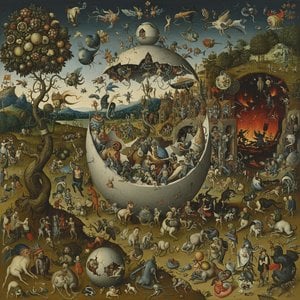
Hieronymus Bosch’s “St Jerome in Prayer,” completed around 1505, stands as an arresting testament to the anxieties and spiritual preoccupations of the High Renaissance. More than just a depiction of Saint Jerome—a revered biblical scholar known for translating the Vulgate into Latin—this painting transcends mere religious iconography, plunging viewers into a landscape of unsettling beauty and profound psychological complexity.
The artwork’s dominant palette is characterized by earthy greens and browns punctuated by stark whites and grays. These muted tones contribute to an atmosphere of melancholy and decay, mirroring the saint's inner turmoil. Bosch employs a masterful chiaroscuro technique—the dramatic interplay of light and shadow—to sculpt the figures and landscape with remarkable precision, emphasizing the emotional intensity of the scene.
- Composition: The painting’s layered structure draws attention to both Jerome’s central figure and the surrounding environment. Diagonal lines dominate the composition, conveying instability and dynamism, while curving lines delineate the contours of animals and foliage, creating a harmonious yet unsettling visual rhythm.
- Color Palette: Bosch’s color choices are deliberately subdued, reflecting the saint's contemplative state and hinting at the pervasive influence of mortality. The dominant hues—greens symbolizing hope amidst despair—are juxtaposed with browns representing earthly concerns and whites embodying purity tainted by sorrow.
- Lines: Strong diagonal lines create a sense of movement and tension, mirroring Jerome’s struggle against temptation. Curved lines soften the harshness of the landscape, offering a counterpoint to the saint's solemn posture.
- Shapes: Bosch utilizes a diverse range of shapes—organic forms representing animals and plants—geometric elements symbolizing architectural structures—and amorphous shadows conveying psychological unease—to enrich the visual narrative.
- Texture: Visible brushstrokes imbue the canvas with palpable texture, capturing the roughness of stone and foliage alike. This tactile quality enhances the painting’s dramatic impact and invites contemplation on its materiality.
The scene depicts Saint Jerome seated beneath a rocky overhang, illuminated by an ethereal glow emanating from a distant building—a subtle allusion to Jerusalem, symbolizing divine grace amidst earthly hardship. Surrounding him are symbolic animals: a dead deer representing fallen innocence; a hare embodying cunning and deceit; and birds signifying spiritual aspiration yet also vulnerability. These creatures underscore the pervasive presence of temptation and suffering within Jerome’s inner landscape.
Bosch's stylistic hallmark—Mannerism—is evident in the elongated figures, distorted perspective, and heightened emotional expression characteristic of his oeuvre. The artist deliberately abandons Renaissance ideals of harmony and proportion, prioritizing psychological realism over idealized beauty. This deliberate distortion serves to amplify the painting’s unsettling atmosphere and provoke contemplation on the complexities of human experience.
“St Jerome in Prayer” is more than simply a portrait of a saint; it's an exploration of existential anxieties—a meditation on faith, doubt, and the confrontation with death. Bosch’s masterful technique and evocative imagery continue to captivate audiences today, cementing his place as one of the most influential artists of the Renaissance.
This monumental reproduction captures the essence of Bosch’s vision—a haunting depiction of spiritual struggle rendered with unparalleled artistry and detail. Ideal for enriching any interior space or inspiring artistic appreciation.
Obras relacionadas


Biografía del artista
vida y carrera
Hieronymus Bosch, un pintor holandés/niederlandés destacado de Brabante, nació alrededor de 1450 en ‘s-Hertogenbosch, Países Bajos. Su vida permanece envuelta en misterio, con solo unos pocos registros de su existencia. A pesar de la falta de información biográfica, el arte de Bosch ha tenido un impacto profundo en el arte europeo del norte, particularmente en el siglo XVI.estilo artístico e influencias
El estilo único de Bosch, caracterizado por **representaciones surrealistas e imaginativas de temas religiosos**, ha sido ampliamente influyente. Sus pinturas al óleo sobre madera, a menudo que presentan **visiones inquietantes y de pesadilla del infierno**, han sido objeto de numerosas interpretaciones. El Triptico del Juicio Final (c. 1480-1490) y el Jardín de las Delicias (c. 1490-1510) son dos de sus obras más celebradas, que muestran su maestría en el medio.obras notables y colecciones
* Ascenso de los Benditos (renacimiento del norte, óleo sobre tabla): un ejemplo raro del trabajo de Bosch, que presenta una escena onírica y otrosa. * Epifanía (c. 1495, Museo Prado, Madrid): Un triptico que demuestra el uso innovador de óleo sobre madera por parte de Bosch. * Cabeza de un Halbedero (Museo Prado, Madrid): Un buen ejemplo de la pintura al óleo de retrato de Bosch, que muestra su atención al detalle.museos y colecciones que exhiben el trabajo de Bosch
* El Museo Prado, Madrid: Hogar de algunas de las obras más famosas de Bosch, incluyendo la Epifanía y el Triptico del Juicio Final. * El Museo de Arte de Filadelfia, Filadelfia: Presenta una versión de la Epifanía, ofreciendo una perspectiva única sobre el estilo artístico de Bosch.- Explore más obras de Hieronymus Bosch en https://ArtsDot.com/@/hieronymus-bosch
- Descubra el movimiento del arte flamenco temprano y sus figuras clave, incluyendo a Jan van Eyck y Pieter Bruegel el Viejo, en https://ArtsDot.com/@@/a@d3cpaf-the-erly-netherlandish-art-movement
- Aprenda más sobre la vida y obra de Pieter Bruegel el Viejo en https://en.wikipedia.org/wiki/pieter_bruegel_the_elder
legado
El estilo enigmático de Hieronymus Bosch ha cautivado a los entusiastas del arte durante siglos, y su influencia aún se puede ver en la obra de numerosos artistas. Su combinación única de **surrealismo e ideas profundas sobre la condición humana** ha solidificado su lugar como maestro de la pintura flamenco.
Jerónimo Bosch
1450 - 1516 , Países Bajos
Datos clave
- Artistas Influenciados: ['Pieter Bruegel el Viejo']
- Fecha De Muerte: 1516
- Fecha De Nacimiento: c. 1450
- Lugar De Nacimiento: 's-Hertogenbosch, Países Bajos
- Movimiento Artístico: Primitivos Flamencos
- Nacionalidad: Holandés
- Nombre Completo: Jerónimo Bosch
- Obras Notables:
- El Jardín de las Delicias
- Tríptico del Juicio Final
- Ascenso de los Benditos
- Epifanía
Artículos relacionados
Hieronymus Bosch: Las 25 Obras Maestras del Genio Medieval | Arte y Decoración
Descubre las 25 obras maestras de Hieronymus Bosch, el enigmático pintor medieval. Explora 'El Jardín de las Delicias' y su simbolismo único. Reproducciones de arte de alta calidad para tu hogar en ArtsDot.com.

Hieronymus Bosch: Decoding the Visions of a Netherlandish Master
Explore the captivating world of Hieronymus Bosch! Delve into the symbolism, religious context, and artistic innovation of this Netherlandish master with ArtsDot's expert analysis. Discover his iconic paintings & lasting influence.

Las 25 Obras Maestras del Prado: Arte Español e Inspiración para tu Hogar
Descubre las 25 obras maestras del Museo del Prado: Velázquez, Goya, El Greco y más. Explora la historia, técnica y belleza de cada cuadro español. Encuentra reproducciones de arte exclusivas e inspira tu hogar con ArtsDot.com.

El Óleo sobre Lienzo: Historia, Técnica y la Persistencia de un Medio Artístico Atemporal
Descubre la historia y técnica del óleo sobre lienzo. Explora reproducciones fieles hechas a mano, personalización artística y consejos de expertos con ArtsDot. ¡Colecciona arte con confianza!

The Enduring Legacy of Oil on Canvas: Technique, History & Aesthetic Impact
Explore the rich history & techniques of oil painting – from Renaissance masters to Impressionism. Discover pigments, layering methods, and why this timeless medium endures. Expert insights for artists & art enthusiasts.



