


 Vista previa
 Compartir
 Compartir
 Ver detalles
 Guía
Guía

 Descargar
 Ver artículos similares
 Radiografía
 Presentación de diapositivas
 Estadísticas
Ascenso al Paraíso


 Leer más
Reproducción al óleo hecha a mano
Óleo sobre lienzo pintado a mano en el tamaño y marco de su elección, realizado por encargo por nuestros artistas. ( Cambiar a formato impreso Ver versión en imagen digital)




P118B $10

P118H $10

P118W $10

P438Z $10

P508JH $12

P508YH $12

P805H $10

P805Z $10

P919BZ $10

P919G $10

P919XJ $10

P959ZH $10

P968JZ $12

W106C $8

W218G $10

W218JH $8

W218Y $10

W307PJ $10

W316G $10

W316PJ $8

W316Y $10

W398PJ $8

W4111J $10

W500HY $15

W500JH $15

W692G $12

W849H $8

W940BG $15

W953PJ $8




Elija entre nuestros tamaños predefinidos que respetan las proporciones originales de la obra.

Puede ingresar sus propias dimensiones para adaptarse a un marco o espacio específico. Si el tamaño seleccionado no coincide con las proporciones de la imagen original, recortaremos la obra o extenderemos la pintura con elementos adicionales pintados a mano. Se le enviará una maqueta digital para su aprobación antes de comenzar la producción.
Tenga en cuenta que la vista previa en pantalla no refleja el recorte o la extensión reales. Solo la maqueta mostrará con precisión la composición final.
Si bien existen tamaños personalizados, recomendamos seleccionar una dimensión de la lista predefinida para preservar las proporciones originales.
Tras realizar el pedido, el equipo de ArtsDot.com enviará un correo electrónico al cliente para solicitar instrucciones y proporcionarle una vista previa del boceto.
Envío a todo el mundo () en 3-4 semanas en lugar de las 5 semanas estándar. (26 septiembre). Sin comprometer la calidad.

Envío exprés gratuito a todo el mundo

Lienzo de lino de alta calidad

Seguro de envío completo

Garantía de reembolso de impuestos aduaneros

Garantía de fidelidad cromática exacta

Política de devolución de 100 días (solo por defectos)

Garantía de devolución del 100% del dinero

Oferta por volumen
 La opción de vidrio solo está disponible en tamaños inferiores a 110 cm.

Ascenso al Paraíso
Técnica de reproducción
Tamaño de la reproducción
-


Precio total
$ 263
Paradise, Ascent of the Blessed
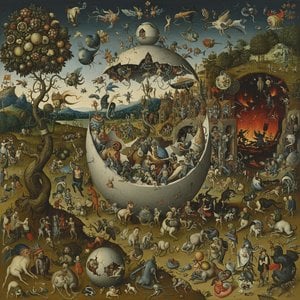
Hieronymus Bosch’s “Paradise, Ascent of the Blessed” stands as an unparalleled testament to the artistic genius of the Early Netherlandish Renaissance, captivating viewers with its unsettling beauty and profound theological contemplation. Created after 1490 and housed in the Palazzo Ducale di Venezia, Italy, this monumental polyptych—one of Bosch’s most celebrated works—continues to fascinate scholars and inspire artists alike. Its intricate composition and masterful execution exemplify the artist's distinctive blend of Christian mysticism and meticulous observation of nature.The Composition: A Journey Through Eternity
At first glance, “Paradise, Ascent of the Blessed” presents a deceptively serene landscape – a verdant Eden bathed in ethereal light. However, beneath this tranquil surface lies an astonishing complexity. Bosch meticulously arranges thirteen figures within the scene, each engaged in a symbolic ascent towards divine grace. Dominating the composition is a colossal tunnel—a gateway to the afterlife—surrounded by angelic and demonic entities. This dynamic interplay of forces underscores the central theme: humanity’s eternal struggle between salvation and damnation. The careful positioning of these figures creates a visual narrative that draws the viewer into Bosch's visionary world, prompting reflection on mortality and redemption.Symbolism and Interpretation
Bosch’s genius resided in his ability to infuse every element of his paintings with layered symbolism—a hallmark of Netherlandish art during the Renaissance. The tunnel itself represents the path to heaven, but it is not a straightforward ascent; demons actively impede the progress of those striving for spiritual enlightenment. Recurring motifs such as serpents and grotesque creatures symbolize temptation and evil, mirroring the biblical narrative of Adam and Eve’s fall from grace. Bosch's meticulous attention to detail—from the delicate blossoms adorning the tunnel walls to the tormented expressions of the figures—serves not merely to depict a scene but to convey profound theological ideas about human nature and divine judgment.Artistic Style: A Blend of Renaissance and Netherlandish Influence
“Paradise, Ascent of the Blessed” showcases Bosch’s mastery of oil painting techniques, firmly rooted in the traditions of the Renaissance while simultaneously embracing the expressive dynamism characteristic of the Dutch school. The artist skillfully employs glazing—a technique that builds up translucent layers of pigment—to achieve remarkable luminosity and depth, capturing the subtle nuances of light and shadow. Furthermore, Bosch's meticulous rendering of textures—from the velvety moss covering the tunnel floor to the glistening dew drops clinging to petals—demonstrates an unparalleled level of realism. This fusion of stylistic approaches resulted in a visual language that transcends mere representation, communicating emotion and spiritual significance with breathtaking precision.Reproductions at ArtsDot.com
For those seeking to experience the grandeur and evocative beauty of Bosch’s “Paradise, Ascent of the Blessed” firsthand, ArtsDot.com offers exceptional reproductions crafted by skilled artisans. These handmade oil paintings faithfully recreate the original’s luminous palette and intricate detail, ensuring that each piece embodies Bosch's enduring legacy—a masterpiece destined to inspire generations of art lovers. Explore the captivating world of Hieronymus Bosch and bring a timeless vision into your home.- Artist: Hieronymus Bosch
- Painting Title: Paradise, Ascent of the Blessed
- Museum: Palazzo Ducale, Venice, Italy
- Style: Renaissance, Oil on panel
Obras relacionadas


Biografía del artista
vida y carrera
Hieronymus Bosch, un pintor holandés/niederlandés destacado de Brabante, nació alrededor de 1450 en ‘s-Hertogenbosch, Países Bajos. Su vida permanece envuelta en misterio, con solo unos pocos registros de su existencia. A pesar de la falta de información biográfica, el arte de Bosch ha tenido un impacto profundo en el arte europeo del norte, particularmente en el siglo XVI.estilo artístico e influencias
El estilo único de Bosch, caracterizado por **representaciones surrealistas e imaginativas de temas religiosos**, ha sido ampliamente influyente. Sus pinturas al óleo sobre madera, a menudo que presentan **visiones inquietantes y de pesadilla del infierno**, han sido objeto de numerosas interpretaciones. El Triptico del Juicio Final (c. 1480-1490) y el Jardín de las Delicias (c. 1490-1510) son dos de sus obras más celebradas, que muestran su maestría en el medio.obras notables y colecciones
* Ascenso de los Benditos (renacimiento del norte, óleo sobre tabla): un ejemplo raro del trabajo de Bosch, que presenta una escena onírica y otrosa. * Epifanía (c. 1495, Museo Prado, Madrid): Un triptico que demuestra el uso innovador de óleo sobre madera por parte de Bosch. * Cabeza de un Halbedero (Museo Prado, Madrid): Un buen ejemplo de la pintura al óleo de retrato de Bosch, que muestra su atención al detalle.museos y colecciones que exhiben el trabajo de Bosch
* El Museo Prado, Madrid: Hogar de algunas de las obras más famosas de Bosch, incluyendo la Epifanía y el Triptico del Juicio Final. * El Museo de Arte de Filadelfia, Filadelfia: Presenta una versión de la Epifanía, ofreciendo una perspectiva única sobre el estilo artístico de Bosch.- Explore más obras de Hieronymus Bosch en https://ArtsDot.com/@/hieronymus-bosch
- Descubra el movimiento del arte flamenco temprano y sus figuras clave, incluyendo a Jan van Eyck y Pieter Bruegel el Viejo, en https://ArtsDot.com/@@/a@d3cpaf-the-erly-netherlandish-art-movement
- Aprenda más sobre la vida y obra de Pieter Bruegel el Viejo en https://en.wikipedia.org/wiki/pieter_bruegel_the_elder
legado
El estilo enigmático de Hieronymus Bosch ha cautivado a los entusiastas del arte durante siglos, y su influencia aún se puede ver en la obra de numerosos artistas. Su combinación única de **surrealismo e ideas profundas sobre la condición humana** ha solidificado su lugar como maestro de la pintura flamenco.
Jerónimo Bosch
1450 - 1516 , Países Bajos
Datos clave
- Artistas Influenciados: ['Pieter Bruegel el Viejo']
- Fecha De Muerte: 1516
- Fecha De Nacimiento: c. 1450
- Lugar De Nacimiento: 's-Hertogenbosch, Países Bajos
- Movimiento Artístico: Primitivos Flamencos
- Nacionalidad: Holandés
- Nombre Completo: Jerónimo Bosch
- Obras Notables:
- El Jardín de las Delicias
- Tríptico del Juicio Final
- Ascenso de los Benditos
- Epifanía
Artículos relacionados

Hieronymus Bosch: Decoding the Visions of a Netherlandish Master
Explore the captivating world of Hieronymus Bosch! Delve into the symbolism, religious context, and artistic innovation of this Netherlandish master with ArtsDot's expert analysis. Discover his iconic paintings & lasting influence.
Hieronymus Bosch: Las 25 Obras Maestras del Genio Medieval | Arte y Decoración
Descubre las 25 obras maestras de Hieronymus Bosch, el enigmático pintor medieval. Explora 'El Jardín de las Delicias' y su simbolismo único. Reproducciones de arte de alta calidad para tu hogar en ArtsDot.com.

Jacopo Tintoretto: Las 25 Obras Maestras del Genio Veneciano | Arte y Decoración en ArtsDot
Descubre las 25 obras maestras de Jacopo Tintoretto, el genio veneciano del Renacimiento. Explora su arte dramático, composiciones innovadoras y paleta vibrante. Reproducciones de alta calidad en ArtsDot.com para transformar tu hogar.

Las 25 Obras Maestras del Prado: Arte Español e Inspiración para tu Hogar
Descubre las 25 obras maestras del Museo del Prado: Velázquez, Goya, El Greco y más. Explora la historia, técnica y belleza de cada cuadro español. Encuentra reproducciones de arte exclusivas e inspira tu hogar con ArtsDot.com.

Unveiling Hidden Meanings: Allegory in Western Art History
Explore the rich history of allegory in Western art! Discover hidden meanings in masterpieces from Giotto to Bosch & beyond. Expert insights for collectors and enthusiasts at ArtsDot.


