
 Oil On Canvas
- WallArt
- Dutch Golden Age
 1650
1650 47.0 x 59.0 cm
 Museo Wallraf-Richartz

The picture follows your choices: , .
Descripción del objeto
Discover ‘Calm’ by Jan van de Cappelle – a serene 1650 Dutch Golden Age marine painting. Admire its light, detail & atmospheric perspective at the Wallraf-Richartz Museum.
 Ver más
Biografía del artista
Jan van de Cappelle (1626-1679) fue un pintor holandés del Siglo de Oro conocido por sus paisajes marinos y escenas invernales serenas que reflejan el cielo. Su estilo único fusionó arte e industria, destacándose por obras luminosas como "Barcos Anclados en Mar Tranquilo". Descubre la belleza y maestría técnica de este artista excepcional!
Reproducción al óleo hecha a mano
Óleo sobre lienzo pintado a mano en el tamaño y marco de su elección, realizado por encargo por nuestros artistas. ( Cambiar a impresiones Cambiar a imagen digital)
More about this painting
 Ver en contexto
 Enviar
 Compartir
 Detalles
 Guía
Guía

 Descargar
 Similares
 Radiografía
 Presentación de diapositivas
 Q&A
Q&A Estadísticas
Order your painting in four simple steps
Take your time. You can change any answer; the price in your order card follows each choice.
1 Step one of four
Which size would you like?
These sizes keep the proportions of the original painting. The drawing shows your choice on a wall, above a two-metre sofa.
Or give your own measurements
Elija entre nuestros tamaños predefinidos que respetan las proporciones originales de la obra.

Indique el ancho y el alto que necesite para adaptarse a su marco o pared. Al tratarse de una obra pintada a mano, si requiere un tamaño con una proporción distinta, el artista puede pintar un poco más alrededor de la imagen o recortarla ligeramente; usted elige. Le enviaremos una maqueta digital para su aprobación antes de comenzar la pintura. La imagen que se muestra en esta página no refleja el resultado real; solo la maqueta lo hace.
2 Step two of four
How should it be prepared: rolled, stretched or framed?
The prices below are for the size you chose in step one.
Choose the edges of the stretched canvas
Choose your frame

White €1

Blurside €1

Extended €1

P118B €10

P118H €10

P118W €10

P438Z €10

P508JH €12

P508YH €12

P805H €10

P805Z €10

P919BZ €10

P919G €10

P919XJ €10

P959ZH €10

P968JZ €12

W106C €8

W218G €10

W218JH €8

W218Y €10

W307PJ €10

W316G €10

W316PJ €8

W316Y €10

W398PJ €8

W4111J €10

W500HY €15

W500JH €15

W692G €12

W849H €8

W940BG €15

W953PJ €8

H24-GOLD €30

H24-SILVER €30

H36-GOLD €45

H36-SILVER €45
Con marco
Moulding: . Overall size with the frame: .
3 Step three of four
Would you like anything changed in the painting?
Most people answer no. Because each painting is made by hand, our artist can also adapt it for you.
After order, ArtsDot.com team will email client for instructions and provide a mockup preview
4 Step four of four
A few finishing options
All of them are optional. The answers already selected cost nothing extra.
Who paints it?
Envío a todo el mundo () en 3-4 semanas en lugar de las 5 semanas estándar. (31 octubre). Sin comprometer la calidad.
A nameplate, as in a museum?
Detalles de la placa de bronce grabada
This elegant plaque features the artist's name and the title of the artwork, finely engraved for a timeless presentation.
It is made from bronze with a refined, elegant finish. The text is precisely laser-engraved for a sharp and permanent result. Measuring 9x2 cm, the plaque is compact yet easy to read. It's built to be durable and scratch-resistant, offering a professional, museum-quality look. Mounting is simple thanks to the included adhesive backing.
Detalles de la placa de acrílico transparente
The plaque includes essential engraved details such as the artist's name, the title of the artwork, the date it was created, the type of media used-like oil on canvas or watercolor-a brief description of the piece, and a QR code that links to the complete artwork information.
It is crafted from clear acrylic, offering a sleek, modern appearance. The text is UV-engraved in black to ensure strong visual contrast. With a size of 10x15 cm, it ensures optimal readability. It comes equipped with two metal hooks for secure wall mounting. The plaque is designed to be weather-resistant, making it suitable for various environments, and it includes interactive features that work seamlessly with smartphone scanning.
Detalles de la placa de acrílico negro
This elegant plaque includes engraved information such as the artist's name, the title of the artwork, the date it was created, the type of media used (like oil on canvas or watercolor), a short description of the artwork, and a QR code for quick access to more information.
The plaque itself is made from refined black acrylic with a premium finish. The text is laser-engraved in white for high contrast and readability. Its size is 10x15 cm, designed to be easy to read. It comes with two metal hooks for professional mounting. The design is sleek and fits any interior style. It is also weather-resistant and durable, with built-in digital integration for mobile compatibility.
A protective varnish?
When do you need it?
✓ Check and order
Your painting, as you ordered it

Calm
Técnica de reproducción
Dimensiones de la reproducción
-

Selección de artistas premium
Mayor nivel de detalle, delicadeza y tiempo de producción adicional
-

Enmarcado de reproducción
-
-
Para obras de arte o reproducciones que midan más de 105 cm (aproximadamente 41 pulgadas) en cualquiera de sus lados, el marco se enviará como un kit desmontado. Este método garantiza una entrega segura y evita daños durante el transporte.
Se requiere montaje profesional: este no es un producto para hacer usted mismo (DIY).
El kit debe ser ensamblado y el lienzo tensado por un enmarcador profesional con experiencia, utilizando cola para madera (no incluida), una tenaza para tensar lienzos y sargentos para mantener los bastidores alineados mientras la cola se seca. Un montaje incorrecto o una tensión desigual del lienzo pueden dañar la obra de arte de forma permanente y no están cubiertos por nuestra garantía.
 Para obras de arte o reproducciones que midan más de 105 cm (aproximadamente 41 pulgadas) en cualquiera de sus lados, el marco se enviará como un kit desmontado. Este método garantiza una entrega segura y evita daños durante el transporte.
Se incluyen todos los listones de madera maciza, cortados con precisión según las medidas.
Se ensambla con los tornillos incluidos, además de cola para madera para las uniones de las esquinas, la cual no se incluye y debe ser proporcionada por su enmarcador.
Se requieren herramientas profesionales que no están incluidas: un alicate para tensar lienzos (tensor) y abrazaderas para mantener los bastidores alineados mientras se seca el pegamento.
Importante:
Las uniones de las esquinas requieren cola para madera, los listones deben sujetarse con prensas hasta que la cola esté completamente seca, y para tensar el lienzo en el bastidor ensamblado se requiere una pinza para tensar lienzos. Ninguno de estos elementos está incluido en el kit. Por favor, contacte con un profesional del enmarcado con experiencia antes de realizar un pedido de este tamaño.

Cartela
-
-

Barniz protector
Barniz brillante (realza los colores y protege contra la luz y la humedad)
-

Personalizar mi obra
Ejemplos de lo que se puede personalizar: sustituir el rostro por una foto del cliente; añadir una mascota (por ejemplo, cambiar un gato por un perro); incluir un mensaje oculto en el fondo; cambiar el paisaje o los elementos del fondo.
-

Envío urgente
Envío a todo el mundo () en 3 o 4 semanas, en lugar de las 5 semanas habituales. (31 octubre). Sin comprometer la calidad.
-
Envío urgente
Envío internacional () en 5 semanas. (7 noviembre).
Incluido
Precio total final
€ 233
La opción de vidrio solo está disponible en tamaños inferiores a 110 cm.
Included with every order
- Envío exprés gratuito a todo el mundo
- Lienzo de lino de alta calidad
- Seguro de envío total
- Garantía de reembolso de aranceles aduaneros
- Garantía de fidelidad cromática exacta
- Política de devolución de 100 días (solo por defectos)
- Garantía de devolución del 100% del dinero
- Descuento por cantidad


A Stillness Captured: Jan van de Cappelle’s “Calm”
Jan van de Cappelle's "Calm," painted in 1650, isn’t merely a depiction of a coastal scene; it’s an invitation to a profound moment of tranquility. Often overlooked amidst the dramatic seascapes favored by his contemporaries, this work reveals a quieter, more introspective side to the artist’s remarkable talent. It's a painting that speaks not just of the visual beauty of a Dutch waterway but also of a carefully cultivated state of mind – a stillness reflected in every brushstroke and subtle hue.
The scene unfolds along a broad, gently curving river, its surface rendered with an almost unsettling smoothness. The water is devoid of visible waves or currents, mirroring the overcast sky above with remarkable fidelity. This isn’t the turbulent drama of a storm; it's a deliberate choice by van de Cappelle to evoke a sense of profound peace and contemplation. The composition is remarkably balanced, drawing the eye across the canvas towards a solitary fisherman wading into the shallow water on the right side of the frame. He stands as a small, almost insignificant figure against the vastness of the landscape, yet his presence anchors the scene and invites us to share in this quiet moment.
The Language of Light and Shadow
Van de Cappelle’s mastery lies not just in capturing the visual appearance of the water but also in conveying its atmosphere through a masterful use of light and shadow. The painting is bathed in a diffused, almost ethereal light – neither bright nor dark, but rather a soft, muted glow that seems to emanate from within the canvas itself. This subtle illumination creates an incredible sense of depth and volume, as if we could step directly into the scene and feel the cool dampness of the air. The artist employs a technique known as *chiaroscuro*, skillfully contrasting areas of light with deep shadows to heighten the drama and create a three-dimensional effect.
Notice how the distant boats are rendered in paler, almost ghostly tones – a deliberate device by van de Cappelle to suggest their distance and the atmospheric haze that softens their outlines. The foreground elements, particularly the fisherman and the boats closest to the viewer, are painted with greater detail and richness of color, drawing our attention and anchoring us within the scene. The brushwork itself is remarkably smooth and blended, contributing to the overall sense of serenity and stillness.
A Window into 17th-Century Dutch Life
"Calm" offers a fascinating glimpse into the daily life of 17th-century Holland – a society deeply connected to its waterways. The presence of fishing boats, the solitary figure of the fisherman, and the overall atmosphere of quiet industry all speak to this reality. However, van de Cappelle doesn’t simply depict a snapshot of everyday life; he elevates it into something more profound. He captures not just *what* is happening but also *how* it feels – the sense of peace, contentment, and connection with nature that characterized so many Dutch lives during that era.
Interestingly, van de Cappelle’s background as a textile merchant profoundly influenced his artistic vision. His intimate knowledge of color, texture, and pattern—skills honed in the demanding world of dyeing fabrics—translated seamlessly into his paintings. He sought to create works that were not just visually appealing but also emotionally resonant, evoking feelings of tranquility and contemplation.
Symbolism and Emotional Resonance
Beyond its technical brilliance, “Calm” is imbued with a subtle sense of symbolism. The stillness of the water can be interpreted as a metaphor for inner peace – a state of mind free from turmoil and anxiety. The solitary fisherman represents humanity’s connection to nature, reminding us of our place within the larger world. And the overcast sky, rather than suggesting gloom, evokes a feeling of quiet contemplation and introspection.
Ultimately, “Calm” is a painting that invites us to slow down, breathe deeply, and appreciate the beauty of stillness. It’s a testament to van de Cappelle's extraordinary talent and his ability to capture not just the visual appearance of the world but also its profound emotional essence. A reproduction of this work offers a chance to bring this sense of serenity into any space, serving as a constant reminder of the importance of finding moments of peace in our own lives.
Preguntas y respuestas
¿Cuándo y con qué técnica se realizó "Calm"?
"Calm" fue creada en 1650 mediante la técnica de Oil On Canvas. El material y la fecha describen cómo y cuándo se realizó la obra original.
¿Dónde puedo ver la obra original "Calm" de Jan Van De Cappelle?
La obra original "Calm" de Jan Van De Cappelle se encuentra en Museo Wallraf-Richartz, Colonia, Alemania. Una reproducción permite que la obra se exhiba en su hogar.
¿A qué etapa de la trayectoria de Jan Van De Cappelle pertenece "Calm" (1650)?
La fecha de 1650 sitúa a "Calm" en el Mature Period del desarrollo de Jan Van De Cappelle.
Obras relacionadas


Jan Van De Cappelle
1624 - 1679, Países Bajos
Biografía del artista
El Espejo de la Tranquilidad: La Vida y el Legado de Jan van de Cappelle
Jan van de Cappelle se erige como una figura singular y luminosa dentro del panteón de la Edad de Oro holandesa, un artista cuya presencia en el canon de la historia del arte está definida por una quietud profunda y meditativa. A diferencia de muchos de sus contemporáneos, que produjeron vastas cantidades de obra, la producción de Cappelle permanece notablemente reducida; sin embargo, cada pieza reclama una distincción extraordinaria. No era simplemente un pintor del mar; era un hombre de gran relevancia terrenal, un titán industrial vinculado inextricablemente al corazón económico de Ámsterdam. Como figura exitosa en la industria textil y coleccionista de gran gusto, su vida fue una dualidad única entre la destreza comercial y la sensibilidad artística. Esta intersección entre riqueza y visión le permitió cultivar un estilo que no solo representa el mundo marítimo, sino que captura su propia alma: una calma que refleja tanto la superficie del agua como los infinitos cielos que la coronan.
Nacido en Ámsterdam en 1624, Jan van de Cappelle siguió un camino poco convencional hacia la maestría artística. Mientras que muchos maestros de su época fueron forjados en el rigor de los gremios y la formación formal, Cappelle fue, en gran medida, autodidacta, un hecho que quizás contribuyó a la cualidad singular y sin artificios de su visión. Su crianza estuvo impregnada de las complejidades técnicas de la industria; su padre, Franchoy van de Cappelle, dirigía una importante tintorería especializada en la producción de tinte carmesí. Este entorno, que exigía precisión y un conocimiento íntimo del color y la química, probablemente proporcionó a Jan una base invaluable para sus posteriores exploraciones de la luz y la atmósfera. Aunque pudo haber estado influenciado por la sensibilidad estilística de Simon de Vlieger, cuyas composiciones comparten una cierta afinidad estructural con las suyas, la obra de Cappelle terminó trascendiendo la mera influencia para alcanzar un estado de pura gracia atmosférica.
Maestría de la Luz y Perspectiva Atmosférica
El verdadero genio de Jan van de리가 reside en su capacidad para manipular los elementos del aire y el agua con el fin de crear una sensación de profunda profundidad emocional. A menudo es celebrado como el pintor marino más destacado de la Holanda del siglo XVII, un título ganado a través de su inigualable dominio de la perspectiva atmosférica. Su técnica se manifiesta de forma más célebre en la manera en que refleja las formaciones celestes sobre superficies acuáticas calmadas y cristalinas. En obras como Barcos Anclados en Mar Tranquilo, el espectador no solo contempla una escena marítima, sino que es invitado a un momento de animación suspendida. Las sutiles gradaciones de luz y la meticulosa representación de las nubes crean una sensación de espacio inmenso, donde el límite entre el mar y el cielo se desvanece con una belleza sublime.
Su lenguaje artístico bebe de la inspiración del realismo de Willem van de Velde el Viejo, pero posee una suavidad que es exclusivamente suya. Mientras otros podrían centrarse en la energía caótica del combate naval o en la rudeza de la tormenta, Cappelle buscaba la quietud que se encuentra tras el movimiento o en su anticipación. Sus composiciones suelen presentar:
- El juego entre la luz y la sombra: capturando los momentos fugaces en que la luz del sol atraviesa la capa de nubes para iluminar una sola embarcación.
- Superficies reflectantes: utilizando el agua como un espejo para duplicar la majestuosidad del cielo holandés, creando una sensación de simetría y paz.
- Matices atmosféricos: un manejo delicado de la niebla, la bruma y la claridad que otorga a sus paisajes una sensación palpable de temperatura y humedad.
Significado Histórico e Impacto Duradero
La importancia histórica de Jan van de Cappelle se extiende más allá de la belleza estética de sus lienzos. Él representa la cúspide de la capacidad de la Edad de Oro holandesa para hallar lo extraordinario dentro de lo cotidiano. A través de sus representaciones de barcos de vela, escenas fluviales y paisajes invernales, documentó la identidad marítima de una nación que era, en aquel entonces, el centro del comercio mundial. Incluso en sus obras más dinámicas, como La Barca de Estado Saludada por la Flota Nacional, persiste un sentido subyacente de orden y dignidad que refleja la prosperidad estructurada de su época.
Aunque su vida terminó en 1679, dejando tras de sí una colección limitada de obras maestras, su impacto en el género del arte marino es inconmensurable. Enseñó a las generaciones posteriores a pintar no solo lo que se ve, sino lo que se siente: el peso del aire, la quietud de la marea y la majestuosa calma del horizonte. Hoy en día, sus obras siguen siendo referentes esenciales para cualquiera que busque comprender el delicado equilibrio entre el hombre, la naturaleza y la luz que los une. Su legado es uno de serenidad, un testimonio perdurable de un artista que logró encontrar lo infinito dentro de la tranquilidad.
Artículos relacionados

Los 10 Maestros del Siglo de Oro Holandés: Arte, Historia y Decoración Exclusiva
Descubre los 10 imprescindibles del Siglo de Oro Holandés: Rembrandt, Vermeer y más. Explora la historia, técnica y belleza de estos lienzos clásicos. Encuentra reproducciones de arte exclusivas para decorar tu hogar en .

Pieter de Hooch: Illuminating Dutch Domestic Life & Golden Age Charm
Explore the captivating world of Pieter de Hooch, a master of Dutch Golden Age painting. Discover his innovative use of light, intimate domestic scenes, and lasting influence on art history. Learn more at ArtsDot.
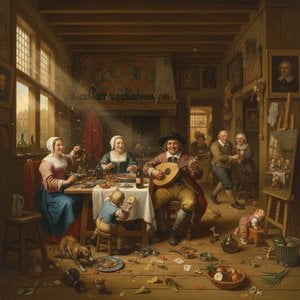
Jan Steen: A Master of Dutch Genre Painting & the Golden Age
Explore the life & art of Jan Steen, a leading Dutch Golden Age painter renowned for his humorous genre scenes & insightful social commentary. Discover his techniques, legacy, and collecting tips.