

 Ver en contexto
 Enviar
 Compartir
 Detalles
 Guía
Guía

 Descargar
 Similares
 Radiografía
 Presentación de diapositivas
 Preguntas y respuestas
 Estadísticas
Skarga`s Sermon

- 224.0 x 397.0 cm


 Ver más
Giclée / Impresión de arte
Impresiones giclée o en lienzo de calidad de museo con producción rápida y opciones de acabado flexibles. ( Comprar pintura hecha a mano Cambiar a imagen digital)




P118B €10

P118H €10

P118W €10

P438Z €10

P508JH €12

P508YH €12

P805H €10

P805Z €10

P919BZ €10

P919G €10

P919XJ €10

P959ZH €10

P968JZ €12

W106C €8

W218G €10

W218JH €8

W218Y €10

W307PJ €10

W316G €10

W316PJ €8

W316Y €10

W398PJ €8

W4111J €10

W500HY €15

W500JH €15

W692G €12

W849H €8

W940BG €15

W953PJ €8




Elija entre nuestros tamaños predefinidos que respetan las proporciones originales de la obra.

Introduzca el ancho y el alto que necesite para adaptarse a su marco o pared. Una impresión solo puede recortarse, nunca hacerse más grande que la imagen original, por lo que un tamaño con una forma distinta perderá parte de la obra. Le enviaremos una maqueta digital para su aprobación antes de realizar cualquier impresión. La imagen que se muestra en esta página no refleja el recorte real; solo la maqueta lo hace.
Envío a todo el mundo () en 2 semanas en lugar de las 4/5 semanas estándar. (4 noviembre)

Envío exprés gratuito a todo el mundo

Lienzo de lino de alta calidad

Seguro de envío total

Garantía de reembolso de aranceles aduaneros

Garantía de fidelidad cromática exacta

Política de devolución de 100 días (solo por defectos)

Garantía de devolución del 100% del dinero

Descuento por cantidad
 La opción de vidrio solo está disponible en tamaños inferiores a 110 cm.

Skarga`s Sermon
Giclée / Impresión de arte
Dimensiones de la reproducción
-


Precio total final
€ 56
A Dramatic Encounter in 17th-Century Poland
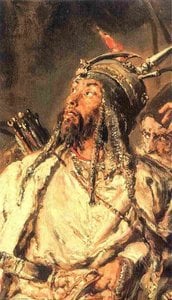
In the grand tapestry of Polish Romanticism, few works command the room with as much gravity and historical weight as Jan Matejko’s masterpiece, Skarga's Sermon. Created in 1864, this monumental oil on canvas serves as a window into a pivotal moment of spiritual and political tension. The scene captures a gathering of souls within a dimly lit room, where the air seems thick with the weight of impending change. At the heart of this composition is the Jesuit priest Piotr Skarga, whose powerful sermon acts as the catalyst for the profound emotions displayed by those gathered around him. Through his commanding presence, Matej and the artist invites us to witness not just a religious service, but a moment of intense national reflection.
The painting is a triumph of narrative depth, where every figure contributes to a larger story of duty and dissent. Dressed in the intricate, old-fashioned attire of the 17th century, the individuals present—some standing in rapt attention, others lost in somber thought—embody the various facets of a society at a crossroads. The artist masterfully utilizes body language and facial expressions to convey the underlying tensions of an era marked by upheaval. It is a scene that transcends mere historical documentation, offering instead a visceral experience of the psychological landscape of Poland during a time of great turmoil.
Mastery of Light, Color, and Texture
Technically, Skarga's Sermon is a testament to Matejko’s extraordinary skill in handling large-scale oil painting. The artist employs a somber and dramatic color palette, dominated by deep browns, heavy blacks, and striking reds. This choice of tones does more than just set the historical stage; it creates a chiaroscuro effect that pulls the viewer into the very center of the congregation. The light seems to struggle against the shadows, highlighting the textures of fine fabrics, the glint of metal, and the weathered skin of the listeners, lending an almost tactile quality to the canvas.
For the discerning collector or interior designer, this work offers an unparalleled sense of prestige and intellectual depth. The composition is dense and layered, rewarding repeated viewings with new discoveries—from the subtle interplay of light on a dining table to the quiet, brooding presence of figures tucked into the periphery. A high-quality reproduction of such a piece brings more than just decoration to a space; it introduces a profound sense of history and a sophisticated, dramatic atmosphere that can serve as the definitive focal point of a curated gallery or an elegant study.
A Legacy of National Identity
Beyond its aesthetic brilliance, Skarga's Sermon carries a heavy symbolic burden. As a work of historical painting, it was designed to stir the soul and remind the viewer of the complexities of the Polish spirit. The sermon itself, delivered by Skarga, is a metaphor for the call to conscience and the necessity of unity in the face of external threats. This emotional resonance is what has allowed the painting to endure as one of Jan Matejko's most celebrated achievements, housed within the prestigious National Museum in Warsaw.
To possess or display a reproduction of this work is to engage with a piece of cultural heritage that speaks of resilience and introspection. It is an ideal choice for those who appreciate art that tells a story, offering a sophisticated blend of historical accuracy and Romantic passion. Whether viewed as a study in light and shadow or as a profound historical narrative, Skarga's Sermon remains an enduring icon of artistic and national importance.
Preguntas y respuestas
¿Qué tamaño de impresión de "Skarga`s Sermon" de Jan Matejko se adapta mejor a la habitación recomendada?
La combinación recomendada para "Skarga`s Sermon" de Jan Matejko: una impresión de Large en un/a Hotel Lobby.
¿Cuándo se creó "Skarga`s Sermon" y a qué movimiento pertenece?
"Skarga`s Sermon" de Jan Matejko data de 1864 y pertenece al Romanticism.
¿Qué elementos de la obra de Jan Matejko se encuentran en "Skarga`s Sermon"?
Dentro de la producción de Jan Matejko, "Skarga`s Sermon" se enmarca en el estilo Romanticism, junto a los temas de romanticism influence, polish historical narrative, counter reformation themes, political rebuke of elite, national identity preservation, key early masterpiece.
Obras relacionadas


![La Batalla De Grunwald [tannenberg] — Jan Matejko, Pintura Histórica Romántica](/media/artworks/images-thumb/76/63/7663bffc0e03f3032abe818c6c091ed6.jpg)


Biografía del artista
Primeros años y educación
Jan alojzy matejko, un renombrado pintor polaco, nació el 24 de junio de 1838 en krakúv, polonia. Su padre, franciszek ksawery matejko, era un tutor y maestro de música nacido en chequia. La vida temprana de jan se vio marcada por la revolución de krakúv de 1846 y el sitio de 1848 de krakúv por los austriacos, eventos que más tarde influirían en sus temas artísticos. Matejko asistió a la escuela secundaria st. ann pero abandonó en 1851 debido a su mal rendimiento académico. Sin embargo, demostró un talento excepcional para el arte desde una edad temprana. Estudió en la escuela de bellas artes de krakúv de 1852 a 1858, especializándose en pintura histórica bajo la tutela de wojciech korneli stattler y włodysław łuszczkiewicz.Carrera artística
El primer trabajo importante de matejko, los zares shuyski ante zygmunt iii, se completó en 1853. Comenzó a exhibir sus pinturas históricas en la sociedad de amigos de las bellas artes de krakúv en 1855. Obras notables incluyen:- Rejtan (1866): una gran pintura al óleo sobre lienzo que representa un momento crucial en la historia polaca.
- Unión de lublin (1869): una pieza significativa que muestra la habilidad de matejko para capturar eventos históricos.
- Batalla de grunwald (1878): una obra maestra que destaca su capacidad para transmitir la intensidad de las escenas de batalla.
Influencias y desarrollo artístico
El estilo de matejko estuvo profundamente influenciado por el romanticismo europeo, particularmente por artistas como eugène delacroix. Sin embargo, también se inspiró en el arte polaco anterior, especialmente en los trabajos de jan matthew gutenmacher. A medida que su carrera avanzaba, matejko desarrolló un enfoque distintivo caracterizado por composiciones grandiosas, una atención meticulosa al detalle histórico y un uso dramático del color y la luz. Sus pinturas a menudo representan momentos clave de la historia polaca, enfatizando el patriotismo y el orgullo nacional.Logros importantes y legado
Matejko pasó la mayor parte de su vida en krakúv, convirtiéndose finalmente en director de la academia de bellas artes jan matejko, anteriormente conocida como la academia de bellas artes de krakúv. Sus alumnos incluyeron a pintores destacados como maurycy gottlieb, jacek malczewski, józef mehoffer y stanisław wyspiański. Obras notables disponibles en ArtsDot:- Jan matejko: varna (romanticismo)
- Jan matejko: bodegón (romanticismo)
- Jan matejko: la unión de lublin (298 x 512 cm, romanticismo, óleo sobre lienzo)
Referencias:
descubriendo las obras maestras del muzeum narodowe krakúv, polonia (wikipedia.org)
Jan Matejko
1838 - 1893 , Polonia
Datos clave
- Artistas Influenciados:
- Maurycy Gottlieb
- Jacek Malczewski
- Artistas Que Influyeron:
- Wojciech Korneli Stattler
- Władysław Łuszczkiewicz
- Fecha De Fallecimiento: 1 de noviembre de 1893
- Fecha De Nacimiento: 24 de junio de 1838
- Lugar De Nacimiento: Kraków, Polonia
- Movimiento Artístico: Romanticismo
- Nacionalidad: Polaco
- Nombre Completo: Jan Alojzy Matejko
- Obras Notables:
- Rejtan (1866)
- Unión de Lublin (1869)
- Batalla de Grunwald (1878)
Artículos relacionados

The Evocative Brushstroke: Exploring Emotion, Individuality & the Sublime in Romanticism's Artistic Landscape
Explore the passionate world of Romanticism! Discover masterpieces by Friedrich & Goya, delve into the sublime, and understand the movement's lasting impact on art history. Expert analysis & insights at ArtsDot.

Jan Gossaert (Mabuse): Pioneering Renaissance Style & the Birth of Netherlandish Antiquity
Explore the groundbreaking art of Jan Gossaert (Mabuse), a pioneer of Renaissance painting in the Low Countries. Discover his Romanist style, stunning portraits, and influence on Northern European art history.

Jan Matejko: Historical Narrative & National Identity in 19th-Century Polish Painting
Explore the powerful historical paintings of Jan Matejko, Poland's national artist. Discover his iconic works & learn how he shaped Polish identity in the 19th century. High-quality reproductions available.

Romanticismo: 10 Obras Maestras que Definieron una Era |
Descubre las 10 obras maestras del Romanticismo que marcaron una época. Explora la historia de Delacroix, Goya y más. Reproducciones de arte en para decorar tu hogar con belleza y emoción. ¡Explora la colección online!

Stanisław Wyspiański: Symbolism, National Identity & the Polish Secession
Explore the life & work of Stanisław Wyspiański, a pivotal figure in Polish Symbolism and the Young Poland movement. Discover his iconic paintings, dramas, and stained glass designs reflecting national identity & artistic innovation.

