- Inicio

- Impresión en lienzo
- James Ensor
- Le marche a Ostende

 Encargar reproducción Comprar imagen en alta resolución
 Enviar
 Compartir
 Detalles
 Añadir a favoritos

 Descargar
 Similares
 Radiografía
 Presentación de diapositivas
Le marche a Ostende


 Ver más
Giclée / Impresión de arte
Impresión giclée o en lienzo de calidad de museo con producción rápida y opciones de acabado flexibles.




P118B $10

P118H $10

P118W $10

P438Z $10

P508JH $12

P508YH $12

P805H $10

P805Z $10

P919BZ $10

P919G $10

P919XJ $10

P959ZH $10

P968JZ $12

W106C $8

W218G $10

W218JH $8

W218Y $10

W307PJ $10

W316G $10

W316PJ $8

W316Y $10

W398PJ $8

W4111J $10

W500HY $15

W500JH $15

W692G $12

W849H $8

W940BG $15

W953PJ $8




Elija entre nuestros tamaños predefinidos que respetan las proporciones originales de la obra.

Puede introducir sus propias dimensiones para adaptarse a un marco o espacio específico. Si el tamaño seleccionado no coincide con las proporciones de la imagen original, recortaremos la obra de arte o extenderemos la imagen con un borde con efecto espejo o de color sólido. Se enviará una maqueta digital para su aprobación antes de que comience la producción.
Tenga en cuenta que la vista previa en pantalla no refleja el recorte o la extensión real. Solo la maqueta mostrará con precisión la composición final.
Aunque existen tamaños personalizados, recomendamos seleccionar una dimensión de la lista predefinida para preservar las proporciones originales.
Entrega mundial () en 2 semanas en lugar de las 4/5 semanas estándar. (18 julio)

Envío exprés gratuito a todo el mundo

Lienzo de lino de alta calidad

Seguro de envío total

Garantía de reembolso de impuestos aduaneros

Garantía de fidelidad de color

Política de devolución de 60 días (solo por defectos)

Garantía de devolución del 100% del dinero

Descuento por pedido múltiple
 La opción de vidrio solo está disponible en tamaños inferiores a 110 cm.

Le marche a Ostende
Giclée / Impresión de arte
Tamaño de la reproducción
-


Precio total final
-
Descripción de la obra
A World Masked: James Ensor’s “Le Marche a Ostende”
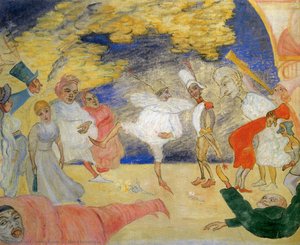
James Ensor's "Le Marche a Ostende" – "The Market at Ostend" – isn’t merely a depiction of a Belgian seaside town; it’s a meticulously constructed psychological landscape, a vibrant tableau brimming with unsettling detail and profound social commentary. Painted in 1883, this oil on canvas offers a glimpse into the heart of Ostend, Ensor's birthplace and lifelong home, but filtered through an intensely personal and often darkly humorous lens. The scene unfolds along a bustling street, populated by figures caught in moments of quiet contemplation, hurried movement, and veiled observation – all rendered with a distinctive palette and a masterful command of form that firmly establishes Ensor as a pioneer of Expressionism. The painting’s power lies not just in its visual richness but in the palpable sense of unease it evokes, hinting at hidden anxieties and the complexities of human interaction beneath the surface of everyday life.The Artist's Context: Ostend and the Carnival Spirit
Ensor’s artistic development was inextricably linked to his upbringing in Ostend, a town renowned for its annual carnival – a riot of masks, costumes, and theatrical spectacle. His parents operated a souvenir shop overflowing with these very objects, providing him with an unparalleled visual vocabulary and a lifelong fascination with disguise and the performative aspects of identity. This constant exposure to the paraphernalia of carnival profoundly shaped his artistic vision, informing his choice of subject matter – particularly masks – and influencing his distinctive style. The painting itself can be seen as a distillation of this carnival atmosphere, capturing not just the physical setting but also its underlying spirit of illusion and hidden meanings. The figures in "Le Marche a Ostende" are themselves wearing metaphorical masks, concealing their true emotions and intentions behind carefully constructed facades.A Symphony of Color and Form: Ensor’s Technique
Ensor's technique is immediately recognizable – bold, expressive brushstrokes layered upon one another to create a textured surface that seems to vibrate with energy. He employs a deliberately flattened perspective, pushing figures forward into the foreground while simultaneously creating a sense of depth through carefully considered color relationships and subtle variations in tone. The palette is rich and saturated, dominated by deep blues, greens, and reds, punctuated by flashes of brighter hues – yellows, oranges, and pinks – that draw the eye to key elements within the composition. Notice how he uses impasto—thickly applied paint—to emphasize certain areas, particularly the faces of the figures, lending them a heightened sense of presence and emotional intensity. The use of contrasting colors and textures creates a dynamic visual experience, mirroring the chaotic energy of the bustling market scene.Symbolism and Social Commentary: Unmasking Ostend
Beyond its immediate visual appeal, "Le Marche a Ostende" is laden with symbolic meaning. The two principal figures – one gazing down at an unseen object, the other walking away – represent a fundamental disconnect between individuals, a sense of isolation within a crowd. The bench occupied by the seated couple suggests a fleeting moment of connection amidst the anonymity of the market. The presence of skeletons subtly hints at mortality and the ephemeral nature of human existence. More broadly, the painting can be interpreted as a critique of Ostend’s burgeoning bourgeois society – a society obsessed with appearances and preoccupied with superficial displays of wealth and status. Ensor's use of masks, both literal and figurative, serves to expose the hidden anxieties and contradictions that lie beneath the veneer of respectability. The painting is not simply a record of a street scene; it’s an invitation to delve deeper into the complexities of human nature and the social dynamics of a rapidly changing world.Bringing “Le Marche a Ostende” Home: A ArtsDot Reproduction
ArtsDot offers meticulously crafted, hand-painted reproductions of James Ensor's "Le Marche a Ostende," allowing you to experience this iconic artwork in stunning detail and vibrant color. Our skilled artists replicate Ensor’s distinctive brushwork and nuanced palette with the utmost precision, ensuring that your reproduction captures the painting’s original emotional impact. We offer various framing options to complement your personal style and décor, from classic wooden frames to contemporary metal designs. Invest in a ArtsDot reproduction of "Le Marche a Ostende" – not just an image, but a tangible connection to one of the most important figures in modern art. Explore our selection today and bring Ensor’s unsettling yet captivating vision into your home.Obras similares


Biografía del artista
vida temprana y trayectoria artística
James Sidney Edouard, Baron Ensor, un destacado pintor y grabador belga, nació el 13 de abril de 1860 en Ostend, Bélgica. Su vida temprana estuvo marcada por un trasfondo cultural diverso, con un padre inglés, James Frederic Ensor, y una madre belga, María Caterina Haegheman. Falta de interés en los estudios académicos tradicionales, Ensor abandonó la escuela a los quince años para dedicarse al arte, recibiendo formación con pintores locales y posteriormente estudiando en la Academia Real de Bellas Artes en Bruselas.Estilo artístico y temas
El estilo artístico de Ensor se caracterizó por su exploración de la mente inconsciente e imágenes oníricas, lo que influyó significativamente en el expresionismo y el surrealismo. Sus pinturas a menudo presentaban asuntos extraños, incluyendo carnavales, máscaras, teatro de marionetas, esqueletos y alegorías fantásticas. Obras notables incluyen Las Máscaras Escandalizadas (1883) y Esqueletos luchando por un ahorcado (1891), que muestran su mezcla única de lo grotesco y lo fantástico.Reconocimiento y legado
A pesar de la resistencia inicial, la obra de Ensor ganó gradualmente aceptación y elogios. Para 1920, era el tema de importantes exposiciones; en 1929, fue nombrado barón por el rey Alberto, y en 1933, recibió la Legión de Honor. Su legado como figura pionera en el arte moderno es evidente en su influencia en movimientos artísticos posteriores, incluyendo el expresionismo y el surrealismo.Obras clave y exposiciones
* La Intriga (90 x 150 cm, Museo Real de Bellas Artes, Amberes, Bélgica) * Tribulaciones de San Antonio (1887, ahora en la colección del Museo de Arte Moderno, Nueva York)- Descubra más sobre la vida y obra de James Ensor en ArtsDot: James Ensor
- Explore el Museo Mu.Zee en Ostend, Bélgica, que presenta una colección de arte belga desde 1830 en ArtsDot: Descubra el Museo Mu.Zee en Ostend, Bélgica
- Aprenda más sobre la pintura simbolista y su influencia en el expresionismo y el surrealismo en Wikipedia: Pintura Simbolista

James Ensor
1860 - 1949 , Bélgica
Datos clave
- Artistas Influenciados Por Este Artista:
- Expresionismo
- Surrealismo
- Artistas Que Influyeron:
- Pieter Bruegel el Viejo
- Francisco Goya
- Fecha De Muerte: 19 de noviembre de 1949
- Fecha De Nacimiento: 13 de abril de 1860
- Lugar De Nacimiento: Ostend, Bélgica
- Movimiento Artístico: Expresionismo, Surrealismo
- Nacionalidad: Belga
- Nombre Completo: James Ensor
- Obras Notables:
- Las Máscaras Escandalizadas
- Esqueletos luchando
- Tribulaciones de San Antonio
- Cristo entrando en Bruselas
Artículos relacionados

Surrealismo Expresionista: 10 Obras Maestras que Transformaron el Arte | ArtsDot
Descubre las 10 obras maestras del Surrealismo Expresionista con ArtsDot. Explora la historia de Dalí, Magritte y Miró, su técnica y significado. Encuentra reproducciones de arte exclusivas para transformar tu hogar. ¡Explora la colección completa en ArtsDot.com!

Más allá de los muros de la galería: El auge del arte urbano contemporáneo
Descubre el fascinante mundo del arte urbano contemporáneo. Explora su historia, artistas y cómo llevar esta expresión creativa a tu hogar con .

Más Allá del Graffiti: Evolución e Impacto Cultural del Arte Callejero para Coleccionistas
Descubre la evolución del arte urbano y su impacto en el coleccionismo. Análisis de artistas clave, técnicas innovadoras e inversión en obras de street art. Guía experta para coleccionistas.
Cubismo Expresionista: 10 Obras Maestras que Transformaron el Arte | ArtsDot
Descubre las 10 obras maestras del Cubismo Expresionista con ArtsDot. Explora la historia de Picasso, Braque y otros artistas clave. Encuentra reproducciones de arte exclusivas para transformar tu hogar. ¡Explora la colección completa en ArtsDot.com!

Echoes of Urban Life: A Visual Exploration of Street Scenes in Art History
Explore the captivating world of realism in art history! Discover iconic street scenes & genre paintings from masters like Courbet & Brown. Expert analysis & museum-quality reproductions at ArtsDot.