


 Compartir
 Compartir
 Ver detalles
 Guía
Guía

 Descargar
 Ver artículos similares
 Presentación de diapositivas
 Estadísticas
Figure


 Leer más
Giclée / Impresión de arte
Impresiones giclée o en lienzo de calidad de museo con producción rápida y opciones de acabado flexibles. ( Encargar reproducción pintada a mano Ver versión en imagen digital)




































Elija entre nuestros tamaños predefinidos que respetan las proporciones originales de la obra.

Puede introducir sus propias dimensiones para adaptarse a un marco o espacio específico. Si el tamaño seleccionado no coincide con las proporciones de la imagen original, recortaremos la obra de arte o extenderemos la imagen con un borde con efecto espejo o de color sólido. Se enviará una maqueta digital para su aprobación antes de que comience la producción.
Tenga en cuenta que la vista previa en pantalla no refleja el recorte o la extensión real. Solo la maqueta mostrará con precisión la composición final.
Aunque existen tamaños personalizados, recomendamos seleccionar una dimensión de la lista predefinida para preservar las proporciones originales.
Envío a todo el mundo () en 2 semanas en lugar de las 4/5 semanas estándar. (3 octubre)

Envío exprés gratuito a todo el mundo

Lienzo de lino de alta calidad

Seguro de envío completo

Garantía de reembolso de impuestos aduaneros

Garantía de fidelidad cromática exacta

Política de devolución de 100 días (solo por defectos)

Garantía de devolución del 100% del dinero

Oferta por volumen
 La opción de vidrio solo está disponible en tamaños inferiores a 110 cm.

Figure
Giclée / Impresión de arte
Tamaño de la reproducción
-


Precio total
€ 53
A Fragmented Vision of Humanity
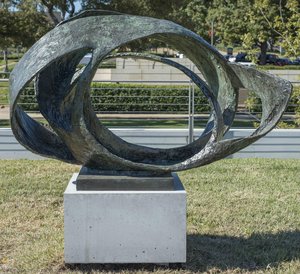
Jacques Lipchitz's "Figure," sculpted in 1930, stands as a profound testament to the transformative power of Cubism and its enduring fascination with exploring the fundamental concepts of form and perception. This bronze masterpiece transcends mere representation; it invites a deep, meditative contemplation on the very essence of human existence through a deliberately abstracted aesthetic. In an era defined by rapid societal shifts, Lipchitz utilized a fragmented language to capture the complexity of the modern soul. The sculpture presents a captivating interplay of geometric precision and organic fluidity, where the human form is not merely depicted but reconstructed through a lens of intellectual rigor and emotional depth.
The composition is a masterclass in the Cubist approach, pioneered by luminaries such as Picasso and Braque. Rather than striving for a realistic or anatomical depiction, Lipchitz dismantles the human figure into interlocking planes, presenting multiple viewpoints simultaneously. The head is rendered with striking simplicity—two oval eyes positioned above a small, triangular nose—which disrupts traditional notions of facial harmony to create a sense of enigmatic presence. Below this stylized visage, undulating vertical forms intersect with curved openings, creating a rhythmic tension between movement and stillness. This structural complexity ensures that the viewer's eye is constantly traveling across the surface, discovering new contours and depths within the bronze.
The Alchemy of Bronze and Form
The materiality of the piece is essential to its enduring impact. The choice of bronze allows for an exquisite level of detail and a rich, tactile quality that stone or wood could not achieve. Through the intricate process of bronze casting, Lipchitz was able to capture subtle variations in surface texture, from the sharp, clean edges of his geometric planes to the softer, more rounded contours of the figure's limbs. The rough, uneven patina resulting from natural oxidation lends the sculpture an ancient, weathered character, suggesting a sense of permanence and historical weight. This textured surface catches the light in a way that emphasizes the sculpture's three-dimensionality, making it a dynamic object that changes appearance depending on the surrounding illumination.
For the discerning collector or interior designer, "Figure" offers an unparalleled opportunity to introduce a piece of art history into a contemporary space. The sculpture’s neutral, earthy tones and sophisticated silhouette allow it to integrate seamlessly into various high-end environments, from minimalist modern galleries to richly textured classical studies. It serves as a powerful focal point, commanding attention through its structural integrity and the quiet strength of its presence. Owning a high-quality reproduction of this work is not merely about acquiring an object; it is about bringing a piece of the avant-garde revolution into one's personal sanctuary, fostering an atmosphere of intellectual curiosity and timeless elegance.
Preguntas y respuestas
¿Dónde puedo ver una vista previa de "Figure"?
Puedes ver una vista previa de "Figure" de Jacques Lipchitz en la página de Vista previa de la obra.
¿Es "Figure" de Jacques Lipchitz de dominio público y por qué?
El estado de los derechos de autor de "Figure" - aún protegido por derechos de autor - se deriva del fallecimiento del artista en 1973.
¿A qué artista se le atribuye "Figure"?
"Figure" fue creada por Jacques Lipchitz. La información en esta página describe la obra original de Jacques Lipchitz.
¿En qué año se creó "Figure"?
"Figure" de Jacques Lipchitz fue creada en 1930.
¿Es "Figure" de Jacques Lipchitz una obra de tonos claros u oscuros?
La luminosidad percibida de "Figure" de Jacques Lipchitz es brilliant. Puede armonizarse con la luz del espacio destinado.
¿A qué edad creó Jacques Lipchitz "Figure"?
Jacques Lipchitz realizó "Figure" a la edad de 39. El artista nació en 1891 y la obra data de 1930.
¿Cómo equilibra la luz y la sombra "Figure"?
Los valores registrados para "Figure" de Jacques Lipchitz son: brilliant de brillo y Luminous de luminancia.
Obras relacionadas




Biografía del artista
A Life Sculpted by Change: The Journey of Jacques Lipchitz
Jacques Lipchitz, born Chaim Jacob Lipschitz in Druskininkai (Lithuania), on August 22nd, 1891, embarked upon an artistic odyssey marked by profound transformations – from initial explorations of engineering to a lifelong devotion to sculpture and the exploration of existential themes. His formative years were steeped in Lithuanian Jewish culture, where his father practiced as a builder, shaping early influences that would permeate his subsequent creative endeavors. However, a burgeoning passion for art propelled him toward Paris in 1909 – a city brimming with artistic ferment at the dawn of the century—where he enrolled at the École des Beaux-Arts and the Académie Julian.The Genesis of Cubism: Early Influences and Artistic Exploration
It was within Montmartre’s bohemian landscape that Lipchitz encountered kindred spirits, including Juan Gris, Pablo Picasso, and Amedeo Modigliani – artists who would profoundly shape his artistic vision. These connections fostered an embrace of Cubism, a revolutionary movement spearheaded by Picasso and Braque that challenged traditional representational conventions. Unlike Picasso's more fragmented approach, Lipchitz retained a discernible element of figuration in his sculptures up to around 1915-16—a deliberate decision to imbue abstract forms with emotional resonance. His early works demonstrated an acute sensitivity to geometric abstraction while simultaneously hinting at recognizable subjects, reflecting the influence of Cézanne and African sculpture. Pieces like “Acrobat on Horseback” exemplify this initial phase, showcasing a masterful manipulation of form and texture that foreshadowed his later stylistic developments.The Crystallization of Form: Lipchitz and Cubist Sculpture
Lipchitz didn’t merely translate painting into three dimensions; he *sculpted* Cubism. While deeply influenced by Picasso and Braque’s fractured perspectives, Lipchitz retained a remarkable degree of figuration in his work up to around 1915-16—a deliberate decision to imbue abstract forms with emotional resonance. His sculptures weren’t entirely abstract; they hinted at recognizable forms, imbued with a sense of emotional weight. This evolved into what became known as “Crystal Cubism,” a style characterized by faceting and transparency – an attempt to capture multiple viewpoints simultaneously within a single form. He experimented with fracturing space, creating dynamic compositions that seemed to shimmer with inner light. His 1920 solo exhibition at Léonce Rosenberg’s Galerie L'Effort Moderne in Paris cemented his position as a leading figure of the School of Paris and showcased this unique sculptural language. Works like “Instruments de musique” exemplify this period, showcasing fragmented forms that still manage to convey a sense of playful energy and human presence. He wasn’t merely deconstructing form; he was rebuilding it according to a new visual logic.Exile and Reinvention: A New World, A Renewed Vision
The Second World War irrevocably altered Lipchitz's trajectory. Forced to flee France amidst the escalating horrors of Nazi persecution—a harrowing experience underscored by the deportation of countless Jewish families—he sought refuge in the United States with the invaluable assistance of journalist Varian Fry. This relocation fueled a surge of creativity, propelling him toward monumental sculptures like “Birth of the Muses” (1944-1950), commissioned in memory of Jerome Wiesner – works that powerfully conveyed his mastery of bronze and his ability to express profound emotion through abstract forms. He continued to refine his artistic technique, embracing influences from Surrealism and Expressionism while maintaining a steadfast commitment to exploring spiritual dimensions—a devotion intensified by his embrace of Jewish ritual observance and guided by the teachings of Rabbi Menachem Schneerson.Late Reflections: Legacy and Artistic Synthesis
Lipchitz’s final years were characterized by a deepening engagement with Judaism and a return to Pietrasanta, Italy – where he cultivated enduring friendships with fellow sculptors like Fiore de Henriquez. His autobiography, co-authored with H. Harvard Arnason in 1972 alongside an exhibition at the Metropolitan Museum of Art, offered a poignant chronicle of his life’s journey—a testament to artistic resilience and the transformative power of experience. Jacques Lipchitz passed away peacefully in Capri, Italy, on May 16th, 1973, but his body was repatriated to Jerusalem – an act symbolizing his profound connection to his ancestral homeland. His villa Bozio now serves as a Jewish summer camp, ensuring that his artistic legacy continues to inspire future generations and reminding us of the enduring beauty found within both form and faith.
Jacques Lipchitz
1891 - 1973 , Lituania
Datos clave
- Artistic Movement Or Style: Cubismo Cristalino
- Artists Who Influenced This Artist:
- Pablo Picasso
- Juan Gris
- Date Of Birth: 1891
- Date Of Death: 1973
- Full Name: Chaim Jacob Lipschitz
- Nationality: Lituanio-Francés-Americano
- Notable Artworks:
- Acrobata sobre caballo
- Instrumentos musicales
- El guitarrista
- El nacimiento de las musas
- Place Of Birth: Druskininkai, Lituania
Artículos relacionados

The Enduring Legacy of Bronze: History, Technique & Artistic Expression for the Collector
Explore the rich history & enduring appeal of bronze sculpture with expert insights for collectors at ArtsDot. Learn about casting techniques, iconic artists, and collecting tips.

Esculturas de Bronce Legendarias: 10 Obras Maestras que Transformaron el Arte | ArtsDot
Descubre las 10 esculturas de bronce más legendarias que revolucionaron el arte. Explora la historia de Rodin, Degas y otros maestros del bronce. Encuentra reproducciones de alta calidad e inspiración para tu hogar en ArtsDot.com.

The Enduring Legacy of Bronze Sculpture: A Collector's Guide to Form & Cultural Significance
Explore the rich history & enduring appeal of bronze sculpture with expert insights for collectors at ArtsDot. Learn about casting techniques, iconic artists, and collecting tips to build a discerning art collection.

Las 10 Obras Maestras de Bronce que Revolucionaron la Historia del Arte | ArtsDot
Descubre las 10 esculturas de bronce más influyentes de la historia del arte. Explora obras maestras de Rodin, Degas y otros genios. Encuentra reproducciones de arte de calidad museo en ArtsDot.com.

The Enduring Legacy of Bronze: A Historical & Artistic Exploration for the Collector
Explore the rich history & enduring appeal of bronze sculpture with expert insights for collectors at ArtsDot. Learn about casting techniques, iconic artists, collecting tips & contemporary interpretations.
