


 Ver en contexto
 Enviar
 Compartir
 Detalles
 Guía
Guía

 Descargar
 Similares
 Radiografía
 Presentación de diapositivas
 Estadísticas
The Cabbalist
 Acrylic On Canvas
- WallArt
- Realism
 1910
1910- 19th Century
 44.0 x 35.0 cm
 El Museo Judío
 Ver más
Reproducción al óleo hecha a mano
Óleo sobre lienzo pintado a mano en el tamaño y marco de su elección, realizado por encargo por nuestros artistas. ( Cambiar a impresiones Cambiar a imagen digital)




P118B €10

P118H €10

P118W €10

P438Z €10

P508JH €12

P508YH €12

P805H €10

P805Z €10

P919BZ €10

P919G €10

P919XJ €10

P959ZH €10

P968JZ €12

W106C €8

W218G €10

W218JH €8

W218Y €10

W307PJ €10

W316G €10

W316PJ €8

W316Y €10

W398PJ €8

W4111J €10

W500HY €15

W500JH €15

W692G €12

W849H €8

W940BG €15

W953PJ €8




Elija entre nuestros tamaños predefinidos que respetan las proporciones originales de la obra.

Indique el ancho y el alto que necesite para adaptarse a su marco o pared. Al tratarse de una obra pintada a mano, si requiere un tamaño con una proporción distinta, el artista puede pintar un poco más alrededor de la imagen o recortarla ligeramente; usted elige. Le enviaremos una maqueta digital para su aprobación antes de comenzar la pintura. La imagen que se muestra en esta página no refleja el resultado real; solo la maqueta lo hace.
Tras realizar el pedido, el equipo de ArtsDot.com enviará un correo electrónico al cliente para solicitar instrucciones y proporcionarle una vista previa del boceto.
Envío a todo el mundo () en 3-4 semanas en lugar de las 5 semanas estándar. (27 octubre). Sin comprometer la calidad.

Envío exprés gratuito a todo el mundo

Lienzo de lino de alta calidad

Seguro de envío total

Garantía de reembolso de aranceles aduaneros

Garantía de fidelidad cromática exacta

Política de devolución de 100 días (solo por defectos)

Garantía de devolución del 100% del dinero

Descuento por cantidad
 La opción de vidrio solo está disponible en tamaños inferiores a 110 cm.

The Cabbalist
Técnica de reproducción
Dimensiones de la reproducción
-


Precio total final
€ 231
Isidor Kaufmann’s ‘The Cabbalist’: A Window into Eastern European Jewish Life
ArtsDot presents a meticulously crafted hand-painted reproduction of Isidor Kaufmann's “The Cabbalist,” an arresting portrait painted in 1910 that offers a rare and intimate glimpse into the world of Hasidic scholarship. Measuring 44 x 35 cm, this work transcends a simple likeness; it’s a carefully constructed tableau brimming with symbolic weight and reflecting the profound spiritual life of a community largely untouched by the sweeping changes of the early 20th century.
- Subject & Composition: The painting centers on a man – presumably a ‘Cabbalist,’ as the title suggests – seated in what appears to be a study. His weathered face, framed by a neatly trimmed beard and a worn hat, speaks of years spent immersed in contemplation and learning. The arrangement of books surrounding him isn’t merely decorative; it's a deliberate composition that underscores his intellectual pursuits and connection to ancient wisdom.
- Artistic Style & Technique: Kaufmann’s style is firmly rooted in the traditions of Austro-Hungarian genre painting, characterized by its realism and attention to detail. The brushwork is precise yet imbued with a subtle warmth, suggesting a deep understanding of his subject's character and environment. He employs a muted color palette – predominantly browns, grays, and ochres – which contributes to the painting’s solemn and contemplative mood.
A Portrait of Faith: Historical Context & Kaufmann’s Vision
Painted in 1910, “The Cabbalist” captures a pivotal moment in the history of Hasidic Judaism. Isidor Kaufmann (1853-1921), born in Arad, Romania, dedicated his artistic career to documenting the lives and traditions of these communities, primarily in Poland and Romania. His work emerged during a period of significant social and religious change, as traditional Jewish life faced increasing pressure from modernity. Kaufmann’s portraits weren't simply representations; they were acts of preservation, meticulously recording a way of life on the verge of disappearing.
Born to Hungarian Jewish parents, Kaufmann initially pursued commerce before discovering his true calling in painting. His training at the Landes-Zeichenschule in Budapest and subsequent studies at the Vienna Academy of Fine Arts – though initially met with rejection – ultimately shaped his distinctive artistic voice. He was profoundly influenced by Professor Trenkwald, who guided him toward a more focused approach to depicting Jewish life.
Symbolism & Interpretation
The inclusion of numerous books is laden with symbolic meaning within the context of Kabbalah, the mystical branch of Judaism. These volumes represent not just knowledge but also a connection to generations of scholarship and spiritual tradition. The man’s posture – seated, absorbed in his studies – embodies the contemplative nature of this pursuit. The hat, a traditional Jewish head covering, further reinforces his identity and religious devotion. Kaufmann's ability to capture such nuanced details speaks volumes about his deep respect for his subject and his commitment to portraying authentic Jewish life.
Emotional Impact & Collecting
"The Cabbalist" is more than just a beautiful painting; it’s a poignant reminder of a vanishing world. This hand-painted reproduction offers collectors and interior designers alike the opportunity to own a piece of art history, imbued with spiritual significance and artistic merit. Its evocative depiction of scholarly devotion will undoubtedly add depth and character to any space, serving as a constant source of contemplation and appreciation for the rich tapestry of human culture.
Preguntas y respuestas
¿A qué corriente artística pertenece "The Cabbalist" de Isidor Kaufmann?
"The Cabbalist" es una obra de Realism. El movimiento indica la tradición artística a la que pertenece la obra.
¿Qué tipo de obra es "The Cabbalist" de Isidor Kaufmann?
En el catálogo, "The Cabbalist" de Isidor Kaufmann está clasificado como WallArt. Esta categoría permite localizar obras similares.
¿Dónde se encuentra actualmente en exposición "The Cabbalist" de Isidor Kaufmann?
"The Cabbalist" de Isidor Kaufmann se encuentra en exhibición en El Museo Judío, Nueva York, Estados Unidos de América. La información del museo se refiere a la obra original, no a reproducciones.
Obras relacionadas


Biografía del artista
El cronista de un mundo desaparecido
Isidor Kaufmann se erige como una figura singular en la historia del arte austrohúngaro, reconocido por sus conmovedoras pinturas de género que retratan la vida cotidiana y las tradiciones espirituales de las comunidades hasídicas en Polonia y Rumania. Nacido en Arad, Hungría —actual parte de Rumania— de padres judíos húngaros en 1853, la trayectoria artística de Kaufmann estuvo marcada por circunstancias fortuitas que, en última instancia, lo impulsaron a convertirse en uno de los cronistas más destacados de la cultura judía a finales del siglo XIX. Aunque inicialmente buscó una carrera comercial, su verdadera vocación emergió tras un breve periodo de estudios en la Landes-Zeichenschule de Budapest. Esta chispa temprana encendió una pasión de por vida que lo conduciría a la prestigiosa Academia de Bellas लas Artes de Viena, donde, a pesar de los reveses iniciales, perfeccionó sus habilidades bajo la rigurosa tutela del profesor Trenkwald.
Al establecerse como un hábil retratista en la vibrante atmósfera de Viena, Kaufmann absorbió las influencias estilísticas de luminarias como Joseph Matthäus Aigner. Su obra comenzó a reflejar una sofisticada mezcla de tradición académica y el realismo emergente defendido por el impresionismo. Esta base técnica única le permitió trascender la mera representación, permitiéndole capturar la profunda profundidad psicológica y el peso espiritual de sus sujetos. Su maestría del chiaroscuro —el dramático juego entre la luz y la sombra— se convirtió en un sello distintivo de su estilo, otorgando una atmósfera casi sagrada a sus representaciones del estudio religioso y el ritual comunitario.
Una obra maestra de reconocimiento imperial
El punto de inflexión en la carrera de Kaufmann llegó con el monumental encargo de “Der Besuch des Rabbi” (La visita del rabino), una obra tan significativa que fue comisionada por el emperador Francisco José I para el Kunsthistorisches Museum. Esta pintura sirve como un testimonio definitivo de su capacidad para entrelazar detalles meticulosos con una profunda resonancia emocional. A través de este lienzo, Kaufmann demostró que no era simplemente un observador de la tradición, sino un maestro capaz de capturar la esencia misma de la experiencia humana dentro de contextos culturales específicos. El éxito de esta obra consolidó su reputación en toda Europa, marcándolo como un artista capaz de elevar la temática etnográfica a las cumbres del gran arte.
Su producción artística se caracteriza por una mirada íntima al corazón de la vida judía en Europa del Este. Ya sea retratando la quietud contemplativa de un erudito o la intensa serenidad de la juventud, las pinturas de Kaufmann funcionan como ventanas a un mundo que atravesaba profundos cambios históricos. Sus obras más notables incluyen:
- Schachspieler (Jugadores de ajedrez): Una cautivadora representación de un momento contemplativo de juego ritual, que muestra su habilidad para encontrar la belleza en las interacciones comunitarias cotidianas.
- <The Cabbalist (El cabalista): Un retrato de 1910 que captura a un erudito judío profundamente inmerso en estudios místicos, ilustrando la destreza del artista para representar la devoción espiritual.
- <Portrait of a Young Man (Retrato de un joven): Una íntima pintura de género de 1901 que utiliza una mirada intensa para ofrecer un vislumbre de la identidad cultural de la época.
- <Portrait of Isidor Gewitsch (Retrato de Isidor Gewitsch): Un ejemplo magistral de realismo académico, que captura la dignidad y la tranquila contemplación de un anciano con una elegancia atemporal.
Legado y trascendencia histórica
La importancia histórica de Isidor Kaufmann reside en su papel como historiador visual. Sus pinturas sirven como un registro vital y evocador de la vida hasídica y las tradiciones judías durante sus últimos y vibrantes años en Europa del Este, antes de las convulsiones del siglo XX. A través de su pincel, las texturas de los pesados abrigos negros, el resplandor de la luz de las velas sobre textos antiguos y la solemnidad del ritual religioso se preservan con una claridad casi táctil. Kaufmann no se limitó a pintar escenas; capturó el alma de una cultura, asegurando que la dignidad, el intelecto y la riqueza espiritual de estas comunidades permanezcan grabados para siempre en los anales de la historia del arte.
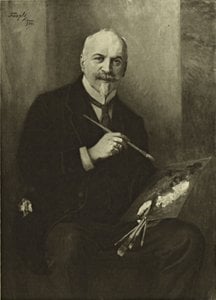
Isidor Kaufmann
1853 - 1921 , Rumania
Datos clave
- Artistic Movement Or Style: Pintura de género
- Artists Or Movements Influenced By This Artist: ['Baron Königswarter Künstler-Preis']
- Artists Who Influenced This Artist: ['Joseph Matthäus Aigner']
- Date Of Birth: 1853
- Full Name: Isidor Kaufmann
- Nationality: Austrohúngaro
- Notable Artworks:
- Retrato de Isidor Gewitsch
- Retrato de un joven judío
- Place Of Birth: Arad, Rumania
Artículos relacionados

Echoes of Time: Exploring the Enduring Appeal & Historical Context of Vintage Art Prints
Explore the captivating world of vintage art prints! Discover their history, collecting tips & enduring appeal. Expert insights on chromolithography and building a legacy collection with ArtsDot.

The Enduring Legacy of Woodblock Printmaking: Technique, History & Artistic Expression
Explore the rich history of woodblock printmaking – from ancient techniques to Ukiyo-e masterpieces. Discover expert insights on collecting, preserving & appreciating this enduring art form.

The Enduring Legacy of Printmaking: Techniques, Themes & Artistic Innovation Across Centuries
Explore the rich history of printmaking with ArtsDot. Discover techniques from intaglio to lithography, learn about collecting valuable prints & find museum-quality reproductions. Expert insights for art enthusiasts and collectors.

Giclée Prints: Archival Quality & Aesthetic Nuances for the Discerning Collector
Explore the world of giclée prints with ArtsDot. Learn about archival quality, aesthetic nuances & investment potential. Expert guidance for discerning art collectors seeking museum-quality reproductions and lasting value.

The Enduring Legacy of Fine Art Prints: Technique, History & Aesthetic Impact
Explore the rich history & techniques of fine art prints. Discover investment potential, assess authenticity, and learn how to preserve your collection with expert guidance. Trusted insights for discerning collectors.