

 Ver en contexto
 Enviar
 Compartir
 Detalles
 Guía
Guía

 Descargar
 Similares
 Radiografía
 Presentación de diapositivas
 Preguntas y respuestas
 Estadísticas
Block-front Desk

- 38.0 x 30.0 cm

 Ver más
La obra de arte que se muestra en esta página está protegida por las leyes de propiedad intelectual, lo que significa que no podemos crear ni vender legalmente una reproducción idéntica. Esta protección se hace cumplir en virtud de acuerdos internacionales como el Convenio de Berna y por las leyes nacionales, incluidas aquellas establecidas por el Ley de derechos de autor de los EE. UU. - Título 17.
Este método cumple plenamente con las normativas de derechos de autor, ya que no implica la copia ni la duplicación de la obra protegida. En su lugar, se trata de una reinterpretación creativa: una nueva pintura influenciada por la original, pero que no es idéntica a ella.
Giclée / Impresión de arte
Impresiones giclée o en lienzo de calidad de museo con producción rápida y opciones de acabado flexibles. ( Comprar pintura hecha a mano Cambiar a imagen digital)




































Elija entre nuestros tamaños predefinidos que respetan las proporciones originales de la obra.

Introduzca el ancho y el alto que necesite para adaptarse a su marco o pared. Una impresión solo puede recortarse, nunca hacerse más grande que la imagen original, por lo que un tamaño con una forma distinta perderá parte de la obra. Le enviaremos una maqueta digital para su aprobación antes de realizar cualquier impresión. La imagen que se muestra en esta página no refleja el recorte real; solo la maqueta lo hace.
Envío a todo el mundo () en 2 semanas en lugar de las 4/5 semanas estándar. (15 noviembre)

Envío exprés gratuito a todo el mundo

Lienzo de lino de alta calidad

Seguro de envío total

Garantía de reembolso de aranceles aduaneros

Garantía de fidelidad cromática exacta

Política de devolución de 100 días (solo por defectos)

Garantía de devolución del 100% del dinero

Descuento por cantidad
 La opción de vidrio solo está disponible en tamaños inferiores a 110 cm.

Block-front Desk
Giclée / Impresión de arte
Dimensiones de la reproducción
-


Precio total final
€ 56
Obras relacionadas


Biografía del artista
Harry Eduardovich Eisman
American, active c. 1935 Harry Eduardovich Eisman (1913-1979) stands as a compelling figure in the annals of Soviet and American art history—a testament to resilience, artistic conviction, and an unwavering commitment to social justice. Born in Chișinău, Moldova, into a Jewish family grappling with profound hardship following the Russian Revolution, Eisman’s early life was irrevocably shaped by tragedy: orphaned at seven years old, he embarked on a journey marked by displacement and formative experiences that would ultimately fuel his artistic vision.Early Life and Emigration
Following his heartbreaking loss of parents, Harry Eduardovich Eisman emigrated to New York City to reside with his eldest brother Alexander and their three sisters. This pivotal relocation served as the catalyst for his burgeoning artistic career and solidified his dedication to advocating for marginalized communities. The vibrant cultural landscape of Harlem and the Bronx profoundly impacted him, fostering an acute awareness of social inequities—a sensibility that would permeate his oeuvre throughout his life.Rise to Prominence in New York’s Art Scene
Eisman swiftly ascended within New York's artistic circles during adolescence, becoming deeply involved with the activities of the Young Pioneers of America (YPA), a communist youth organization. This engagement wasn’t merely social; it was intellectual—a fervent embrace of Marxist ideology that would inform his worldview and propel him toward literary pursuits. His contributions to *Young Comrade*, the YPA's children’s pamphlet, and *The Daily Worker*, the communist newspaper, cemented his position as a vocal critic of racial segregation in the United States. These publications showcased not only his journalistic prowess but also his unwavering moral compass—a characteristic that would define his artistic endeavors.Notable Activism and Artworks
Eisman’s activism extended beyond the realm of print media; he actively participated in protests against racial injustice, notably in April 1929, organizing demonstrations in Harlem and the Bronx following the assassination of Henry Clarke—a thirteen-year-old African American victim of police brutality. This event galvanized his commitment to social reform and served as inspiration for numerous artistic explorations. His involvement with the Hawthorne Reformatory School further underscored his dedication to confronting societal injustices head-on. Though documentation of Eisman’s artistic output remains somewhat sparse, his paintings—primarily watercolors and gouaches—reflect a distinctive style characterized by meticulous detail and imbued with symbolic resonance. Pieces like “Knife and Spoon Box” exemplify his ability to convey complex narratives through deceptively simple compositions. Furthermore, collaborations with Isidore Sovensky on “Hanging Corner Cupboard” demonstrate an artistic partnership rooted in shared ideological convictions.Later Life and Artistic Contributions
Despite facing considerable obstacles—including imprisonment for activism and a stint at Hawthorne Reformatory—Eisman persevered in his artistic pursuits, establishing himself as a respected educator at the Joe Kubert School of Cartoon and Graphic Art in New Jersey. His legacy extends beyond individual artworks; he fostered a generation of aspiring artists committed to using their creative talents as instruments of social commentary. Eisman’s unwavering belief in the transformative potential of art—particularly its capacity to challenge prevailing norms and inspire empathy—continues to resonate today, securing his place as an enduring figure within the history of Soviet and American artistic expression. His story serves as a poignant reminder that true artistry transcends mere technical skill; it demands courage, conviction, and an unwavering dedication to upholding ethical values.
Harry Eduardovich Eisman
1913 - 1979 , Moldavia
Datos clave
- Artistic Movement Or Style: Social Realism
- Date Of Birth: 1913
- Full Name: Harry Eduardovich Eisman
- Nationality: Moldovan
- Notable Artworks:
- Knife and Spoon Box
- Painting by 'Julien Levy' | Julien Levy:Frida Kahlo
- Place Of Birth: Chisinau, Moldova
Artículos relacionados
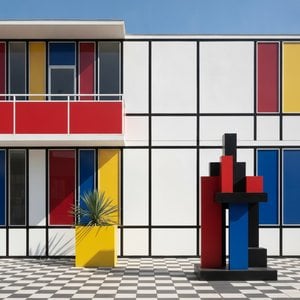
De Stijl Explained: The Bold Art Movement That Redefined Modern Design and Universal Harmony
Discover the profound beauty of De Stijl. Explore how masters like Piet Mondrian used geometric abstraction and primary colors to seek universal harmony. Perfect for art enthusiasts looking to bring bold, modern sophistication into their home decor through timeless abstract mastery.