


The picture follows your choices: , .
Descripción del objeto
A poignant religious scene of Jesus Christ surrounded by mourners in Guido da Siena's 1270 Entombment, capturing the profound emotion of the late medieval period and inviting you to explore this sacred masterpiece.
 Ver más
Biografía del artista
Descubre a Guido da Siena (c.1230-1290), pintor sienés clave conocido por su estilo bizantino y tablas. Explora obras como 'La huida a Egipto' y 'Virgen con el Niño'. #SienaArt #ItalianPainting
Reproducción al óleo hecha a mano
Óleo sobre lienzo pintado a mano en el tamaño y marco de su elección, realizado por encargo por nuestros artistas. ( Cambiar a impresiones Cambiar a imagen digital)
More about this painting
 Ver en contexto
 Enviar
 Compartir
 Detalles
 Guía
Guía

 Descargar
 Similares
 Radiografía
 Presentación de diapositivas
 Q&A
Q&A Estadísticas
Order your painting in four simple steps
Take your time. You can change any answer; the price in your order card follows each choice.
1 Step one of four
Which size would you like?
These sizes keep the proportions of the original painting. The drawing shows your choice on a wall, above a two-metre sofa.
Or give your own measurements
Elija entre nuestros tamaños predefinidos que respetan las proporciones originales de la obra.

Indique el ancho y el alto que necesite para adaptarse a su marco o pared. Al tratarse de una obra pintada a mano, si requiere un tamaño con una proporción distinta, el artista puede pintar un poco más alrededor de la imagen o recortarla ligeramente; usted elige. Le enviaremos una maqueta digital para su aprobación antes de comenzar la pintura. La imagen que se muestra en esta página no refleja el resultado real; solo la maqueta lo hace.
2 Step two of four
How should it be prepared: rolled, stretched or framed?
The prices below are for the size you chose in step one.
Choose the edges of the stretched canvas
Choose your frame

White €1

Blurside €1

Extended €1

P118B €10

P118H €10

P118W €10

P438Z €10

P508JH €12

P508YH €12

P805H €10

P805Z €10

P919BZ €10

P919G €10

P919XJ €10

P959ZH €10

P968JZ €12

W106C €8

W218G €10

W218JH €8

W218Y €10

W307PJ €10

W316G €10

W316PJ €8

W316Y €10

W398PJ €8

W4111J €10

W500HY €15

W500JH €15

W692G €12

W849H €8

W940BG €15

W953PJ €8

H24-GOLD €30

H24-SILVER €30

H36-GOLD €45

H36-SILVER €45
Con marco
Moulding: . Overall size with the frame: .
3 Step three of four
Would you like anything changed in the painting?
Most people answer no. Because each painting is made by hand, our artist can also adapt it for you.
After order, ArtsDot.com team will email client for instructions and provide a mockup preview
4 Step four of four
A few finishing options
All of them are optional. The answers already selected cost nothing extra.
Who paints it?
Envío a todo el mundo () en 3-4 semanas en lugar de las 5 semanas estándar. (1 noviembre). Sin comprometer la calidad.
A nameplate, as in a museum?
Detalles de la placa de bronce grabada
This elegant plaque features the artist's name and the title of the artwork, finely engraved for a timeless presentation.
It is made from bronze with a refined, elegant finish. The text is precisely laser-engraved for a sharp and permanent result. Measuring 9x2 cm, the plaque is compact yet easy to read. It's built to be durable and scratch-resistant, offering a professional, museum-quality look. Mounting is simple thanks to the included adhesive backing.
Detalles de la placa de acrílico transparente
The plaque includes essential engraved details such as the artist's name, the title of the artwork, the date it was created, the type of media used-like oil on canvas or watercolor-a brief description of the piece, and a QR code that links to the complete artwork information.
It is crafted from clear acrylic, offering a sleek, modern appearance. The text is UV-engraved in black to ensure strong visual contrast. With a size of 10x15 cm, it ensures optimal readability. It comes equipped with two metal hooks for secure wall mounting. The plaque is designed to be weather-resistant, making it suitable for various environments, and it includes interactive features that work seamlessly with smartphone scanning.
Detalles de la placa de acrílico negro
This elegant plaque includes engraved information such as the artist's name, the title of the artwork, the date it was created, the type of media used (like oil on canvas or watercolor), a short description of the artwork, and a QR code for quick access to more information.
The plaque itself is made from refined black acrylic with a premium finish. The text is laser-engraved in white for high contrast and readability. Its size is 10x15 cm, designed to be easy to read. It comes with two metal hooks for professional mounting. The design is sleek and fits any interior style. It is also weather-resistant and durable, with built-in digital integration for mobile compatibility.
A protective varnish?
When do you need it?
✓ Check and order
Your painting, as you ordered it

Entombment
Técnica de reproducción
Dimensiones de la reproducción
-

Selección de artistas premium
Mayor nivel de detalle, delicadeza y tiempo de producción adicional
-

Enmarcado de reproducción
-
-
Para obras de arte o reproducciones que midan más de 105 cm (aproximadamente 41 pulgadas) en cualquiera de sus lados, el marco se enviará como un kit desmontado. Este método garantiza una entrega segura y evita daños durante el transporte.
Se requiere montaje profesional: este no es un producto para hacer usted mismo (DIY).
El kit debe ser ensamblado y el lienzo tensado por un enmarcador profesional con experiencia, utilizando cola para madera (no incluida), una tenaza para tensar lienzos y sargentos para mantener los bastidores alineados mientras la cola se seca. Un montaje incorrecto o una tensión desigual del lienzo pueden dañar la obra de arte de forma permanente y no están cubiertos por nuestra garantía.
 Para obras de arte o reproducciones que midan más de 105 cm (aproximadamente 41 pulgadas) en cualquiera de sus lados, el marco se enviará como un kit desmontado. Este método garantiza una entrega segura y evita daños durante el transporte.
Se incluyen todos los listones de madera maciza, cortados con precisión según las medidas.
Se ensambla con los tornillos incluidos, además de cola para madera para las uniones de las esquinas, la cual no se incluye y debe ser proporcionada por su enmarcador.
Se requieren herramientas profesionales que no están incluidas: un alicate para tensar lienzos (tensor) y abrazaderas para mantener los bastidores alineados mientras se seca el pegamento.
Importante:
Las uniones de las esquinas requieren cola para madera, los listones deben sujetarse con prensas hasta que la cola esté completamente seca, y para tensar el lienzo en el bastidor ensamblado se requiere una pinza para tensar lienzos. Ninguno de estos elementos está incluido en el kit. Por favor, contacte con un profesional del enmarcado con experiencia antes de realizar un pedido de este tamaño.

Cartela
-
-

Barniz protector
Barniz brillante (realza los colores y protege contra la luz y la humedad)
-

Personalizar mi obra
Ejemplos de lo que se puede personalizar: sustituir el rostro por una foto del cliente; añadir una mascota (por ejemplo, cambiar un gato por un perro); incluir un mensaje oculto en el fondo; cambiar el paisaje o los elementos del fondo.
-

Envío urgente
Envío a todo el mundo () en 3 o 4 semanas, en lugar de las 5 semanas habituales. (1 noviembre). Sin comprometer la calidad.
-
Envío urgente
Envío internacional () en 5 semanas. (8 noviembre).
Incluido
Precio total final
€ 234
La opción de vidrio solo está disponible en tamaños inferiores a 110 cm.
Included with every order
- Envío exprés gratuito a todo el mundo
- Lienzo de lino de alta calidad
- Seguro de envío total
- Garantía de reembolso de aranceles aduaneros
- Garantía de fidelidad cromática exacta
- Política de devolución de 100 días (solo por defectos)
- Garantía de devolución del 100% del dinero
- Descuento por cantidad


A Sacred Descent: The Poignant Grace of Guido da Siena’s Entombment
In the quiet, hallowed atmosphere of the late thirteenth century, a profound moment of human and divine sorrow was captured by the hand of Guido da Siena. His Entombment serves as a breathtaking window into the spiritual heart of the Sienese school, a period where art began to breathe with a new, tender vitality. The painting presents us with the heavy, somber reality of Christ’s lifeless body, positioned at the center of a deeply moving composition. As we gaze upon the scene, we are not merely observers of a historical event, but witnesses to a communal grief that transcends time. The figures surrounding the central figure of Jesus are arranged in a way that draws the eye inward, creating a rhythmic movement of sorrow that guides the viewer through the landscape of loss.
The technique employed by Guido reflects the exquisite transition from the rigid Byzantine traditions toward the more emotive and fluid styles that would eventually define the Italian Renaissance. Through delicate brushwork and a masterful use of color, the artist imbues the scene with a sense of weight and texture. The backdrop of rugged mountains provides more than just a setting; it acts as a silent, eternal witness to the tragedy, adding a layer of monumental scale to the intimate human drama unfolding in the foreground. This interplay between the earthly landscape and the divine subject matter creates a tension that is both grounding and transcendent, making the piece an ideal focal point for any space dedicated to contemplation and profound beauty.
Symbolism and the Language of Devotion
Every element within this masterpiece is steeped in symbolic significance, designed to evoke a visceral response from the faithful. The positioning of the figures—some standing in quiet mourning, others leaning in with palpable anguish—creates a hierarchy of grief that mirrors the complexity of human emotion. The light, though subtle, seems to emanately from the very essence of the sacred subject, casting soft shadows that define the contours of the mourners' faces and the folds of their garments. This use of light serves as a metaphor for the lingering presence of the divine even in the depths of death. For collectors and enthusiasts of sacred art, the Entombment offers a rich tapestry of iconography that rewards repeated study and deep meditation.
For those looking to integrate such a powerful work into a curated interior, this reproduction offers an unparalleled opportunity to introduce a sense of historical depth and spiritual serenity. Whether placed in a grand gallery or a quiet study, the painting’s ability to command attention through its emotional gravity is unmatched. It is more than a mere decoration; it is an invitation to reflect on themes of sacrifice, memory, and the enduring strength of the human spirit. Owning a piece that captures such a pivotal moment in art history allows one to surround themselves with the timeless elegance and profound narrative power of the Sienese masters.
Preguntas y respuestas
¿Qué paleta de colores y qué emoción evocan "Entombment"?
"Entombment" de Guido Da Siena combina una paleta de Dark con un tono Somber.
¿Qué tan luminosa es "Entombment" en su conjunto?
La luminosidad percibida de "Entombment" de Guido Da Siena es balanced. Puede armonizarse con la luz del espacio destinado.
¿Quién es el artista detrás de "Entombment"?
"Entombment" fue creada por Guido Da Siena. La información en esta página describe la obra original de Guido Da Siena.
Obras relacionadas


Guido Da Siena
1230 - 1290, Italia
Biografía del artista
Villard de Honnecourt: El cuaderno del arquitecto y el amanecer del diseño renacentista
Villard de Honnecourt, una figura envuelta en un intrigante misterio, se erige como uno de los artistas más significativos y, a la vez, enigmáticos de la Francia del siglo XIII. Nacido alrededor de 1230 en Picardía —una región reconocida por su vibrante actividad artística durante este periodo—, el legado de Villard descansa casi por completo sobre un extraordinario “cuaderno de bocetos”, o album, que hoy se conserva en la Bibliothèque nationale de France en París. Este manuscrito meticulosamente elaborado, que contiene aproximadamente 250 dibujos y diseños que abarcan una asombrosa variedad de temas —desde planos arquitectónicos y dispositivos mecánicos hasta representaciones de figuras humanas y formas animales—, ofrece una visión sin precedentes de la mente de un artista e ingeniero verdaderamente innovador. Su vida permanece, en gran medida, sin documentar, lo que añade un aura de fascinación a esta figura crucial en la historia del arte europeo. El cuaderno superviviente revela a un hombre profundamente inmerso tanto en el conocimiento antiguo como en las prácticas contemporáneas de su época. Se cree que Villard no era un simple artesano, sino que poseía una comprensión sofisticada de la geometría, la proporción y las técnicas de construcción; principios arraigados en la antigüedad clásica pero adaptados con maestría a su tiempo. El manuscrito es una fusión fascinante de estas influencias, incorporando instrucciones detalladas junto a representaciones artísticas, lo que sugiere un manual práctico destinado a guiar a constructores y artesanos. Aunque las interpretaciones iniciales veían en Villard a un simple arquitecto, los estudios recientes sugieren un papel más matizado: un ingeniero experto, quizás incluso un agente encargado de procurar reliquias para instituciones religiosas, utilizando su talento artístico para documentar y difundir el conocimiento. La inclusión de dibujos que representan Hungría, donde pasó “muchos días”, insinúa posibles deberes diplomáticos o administrativos realizados durante sus viajes. El cuaderno en sí es un artefacto extraordinario: una colección de hojas de pergamino encuadernadas de forma algo azarosa, lo que refleja tal vez la manera en que fue compilado por el propio Villard o por un escriba posterior. Sus contenidos son notablemente diversos, mostrando a un artista con la misma destreza para diseñar catedrales góticas imponentes, intrincados dispositivos mecánicos (incluyendo un fascinante diseño para un reloj de agua) y estudios detallados de anatomía humana y formas animales. Los dibujos demuestran un ojo observador agudo y un dominio de la perspectiva, una habilidad que cobraría una importancia creciente en los siglos venideros. Resulta particularmente intrigante la afirmación de Villard de haber ejecutado muchos de sus dibujos “al natural” (al vif), lo que sugiere una práctica artística poco común para el periodo y apunta a un nivel de observación directa y compromiso con el mundo que le rodeaba.Influencias arquitectónicas y el estilo gótico
La obra de Villard está inextricablemente ligada al floreciente movimiento arquitectónico gótico que transformaba Europa durante el siglo XIII. El cuaderno contiene dibujos detallados de catedrales significativas, incluyendo las torres de la fachada oeste de la Catedral de Laon y las capillas radiales y la nave principal de la Catedral de Reims; estructuras que personifican las alturas vertiginosas, la ornamentación intrincada y las soluciones estructurales innovadoras características del diseño gótico. Estos dibujos no son meras copias; demuestran una comprensión profunda de los principios que sustentan estos magníficos edificios —el uso de arcos apuntados, bóvedas de crucería, arbotantes y vidrieras— y reflejan el deseo de Villard de documentar y replicar estas innovaciones. Su meticulosa atención al detalle, especialmente al representar elementos arquitectónicos, revela un profundo aprecio por la belleza y la complejidad de la arquitectura gótica.Más allá de la arquitectura: diseños mecánicos y técnicas artísticas
Si bien sus dibujos arquitectónicos son sin duda el aspecto más famoso de su obra, el cuaderno también alberga una riqueza de diseños para dispositivos mecánicos, testimonio de su espíritu inventivo y sus habilidades de ingeniería. Estos incluyen planos para relojes de agua, poleas, palancas y otros ingeniosos mecanismos, haciendo gala de un conocimiento práctico de la mecánica y un deseo de mejorar la vida cotidiana. Además, el cuaderno está repleto de estudios de figuras humanas y animales, demostrando el dominio de Villard sobre la anatomía y su capacidad para representar formas realistas. También incluyó instrucciones detalladas sobre técnicas para crear patrones decorativos, mosaicos y otros adornos artísticos, convirtiéndose en un recurso valioso para artesanos y maestros de toda Europa.Significado histórico y legado
El legado de Villard de Honnecourt no reside en grandes monumentos o obras maestras celebradas, sino en su extraordinario cuaderno de bocetos: un documento único que ofrece una visión inigualable del mundo intelectual y artístico de la Francia del siglo XIII. Él representa una figura clave que tiende un puente entre la artesanía medieval y la innovación renacentista. Su meticulosa documentación de técnicas arquitectónicas, diseños mecánicos y prácticas artísticas sirvió como un recurso invaluable para generaciones de artesanos e ingenieros. El cuaderno mismo es considerado uno de los ejemplos más importantes que sobreviven de la ilustración temprana de manuscritos, demostrando un nivel de habilidad técnica y sofisticación artística raramente visto en las obras contemporáneas. La influencia de Villard puede rastrearse a través de artistas y arquitectos posteriores que se inspiraron en sus diseños y técnicas, contribuyendo al desarrollo continuo de la arquitectura gótica y a la difusión de las ideas renacentistas por toda Europa. Su obra nos recuerda que la innovación a menudo no surge de grandes proclamas o teorías revolucionarias, sino de la dedicada labor silenciosa de artesanos expertos que documentan meticulosamente su oficio.Recursos adicionales


Artículos relacionados

10 Obras Maestras Medievales que Definen el Arte (y tu Hogar)
Descubre 10 obras maestras del arte medieval, desde Duccio a Van Eyck. Explora la historia, simbolismo y belleza de Giotto, Simone Martini y más. Encuentra reproducciones de alta calidad para decorar tu hogar en ArtsDot.com.
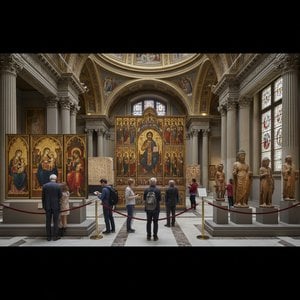
Sacred Narratives Embodied: A Comprehensive Exploration of Religious Iconography in Art History
Explore the rich history of religious iconography in art! Discover symbolism, movements & masterpieces from Byzantine to Renaissance periods. Expert insights for collectors and enthusiasts at ArtsDot.

Las 10 Obras Maestras del Alto Medieval: Arte, Historia y Decoración Exclusiva
Descubre las 10 obras maestras del Alto Medieval. Explora la historia, el simbolismo y la belleza de la pintura románica y gótica. Reproducciones exclusivas en ArtsDot.com para decorar tu hogar con arte atemporal.