
- Inicio

- Impresión en lienzo
- Giorgio Vasari
- Interor view

 Encargar reproducción Comprar imagen en alta resolución
 Enviar
 Compartir
 Detalles
 Añadir a favoritos

 Descargar
 Similares
 Radiografía
 Presentación de diapositivas
Interor view


 Ver más
Giclée / Impresión de arte
Impresión giclée o en lienzo de calidad de museo con producción rápida y opciones de acabado flexibles.




P118B $10

P118H $10

P118W $10

P438Z $10

P508JH $12

P508YH $12

P805H $10

P805Z $10

P919BZ $10

P919G $10

P919XJ $10

P959ZH $10

P968JZ $12

W106C $8

W218G $10

W218JH $8

W218Y $10

W307PJ $10

W316G $10

W316PJ $8

W316Y $10

W398PJ $8

W4111J $10

W500HY $15

W500JH $15

W692G $12

W849H $8

W940BG $15

W953PJ $8




Elija entre nuestros tamaños predefinidos que respetan las proporciones originales de la obra.

Puede introducir sus propias dimensiones para adaptarse a un marco o espacio específico. Si el tamaño seleccionado no coincide con las proporciones de la imagen original, recortaremos la obra de arte o extenderemos la imagen con un borde con efecto espejo o de color sólido. Se enviará una maqueta digital para su aprobación antes de que comience la producción.
Tenga en cuenta que la vista previa en pantalla no refleja el recorte o la extensión real. Solo la maqueta mostrará con precisión la composición final.
Aunque existen tamaños personalizados, recomendamos seleccionar una dimensión de la lista predefinida para preservar las proporciones originales.
Entrega mundial () en 2 semanas en lugar de las 4/5 semanas estándar. (13 julio)

Envío exprés gratuito a todo el mundo

Lienzo de lino de alta calidad

Seguro de envío total

Garantía de reembolso de impuestos aduaneros

Garantía de fidelidad de color

Política de devolución de 60 días (solo por defectos)

Garantía de devolución del 100% del dinero

Descuento por pedido múltiple
 La opción de vidrio solo está disponible en tamaños inferiores a 110 cm.

Interor view
Giclée / Impresión de arte
Tamaño de la reproducción
-


Precio total final
-
Descripción de la obra
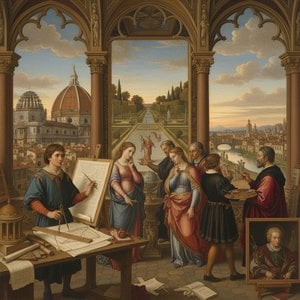
A Glimpse into Florentine Grandeur: The Interor View by Giorgio Vasari
Within the imposing walls of the Palazzo Vecchio in Florence resides a breathtaking fresco, “Interor View” by Giorgio Vasari – a masterpiece that transcends mere decoration and offers a profound window into the artistic and cultural heart of the Renaissance. Completed around 1555, this monumental work isn’t simply a depiction of a room; it's an immersive experience, a carefully constructed illusion designed to evoke a sense of timeless elegance and civic pride. Vasari, already a celebrated artist and historian, was commissioned by the Medici family to embellish the palace, solidifying his position as a key figure in shaping Florentine art and its legacy.
The painting itself is a testament to Vasari’s mastery of *trompe-l'oeil*, or “fooling the eye.” He employs frescoes – a technique favored during this era for its ability to create vibrant, enduring surfaces – to meticulously recreate an interior space. The scene unfolds within a grand chamber, dominated by a towering ceiling adorned with intricate coffers and classical motifs. Below, a substantial wooden table anchors the room, suggesting a setting for important meetings or formal gatherings. Antique busts of Greek philosophers flank the table, subtly reinforcing the intellectual atmosphere, while two chairs invite contemplation. Vasari’s skill isn't merely in replicating form; he captures light, shadow, and texture with remarkable precision, creating an illusion of depth that draws the viewer directly into the scene.
The Language of Renaissance Symbolism
Beyond its technical brilliance, “Interor View” is rich in symbolic meaning. The figures depicted within the fresco are not merely decorative; they represent key values and ideals of the Renaissance. Classical allegorical figures engage in activities that speak to virtue, wisdom, and justice – a deliberate nod to the classical heritage that Vasari so admired. The careful arrangement of these figures suggests a harmonious balance between earthly pursuits and divine inspiration. Note the subtle references to Roman mythology woven throughout the composition; these allusions were not merely aesthetic choices but served as potent reminders of the enduring legacy of ancient Rome, which Renaissance thinkers sought to revive.
The use of color is equally deliberate. Vasari masterfully employs a palette of rich reds, blues, and golds – colors associated with power, wealth, and divinity – to heighten the sense of grandeur and importance. The vibrant hues contrast beautifully with the muted tones of the architectural elements, creating a dynamic visual interplay that captivates the eye.
Vasari: A Renaissance Polymath
Understanding “Interor View” requires appreciating Giorgio Vasari himself. He was more than just an artist; he was a prolific writer and historian, best known for his monumental "Lives of the Most Excellent Painters, Sculptors, and Architects." This biographical work not only documented the lives of Renaissance masters but also shaped our understanding of art history itself. Vasari’s own artistic style reflected this multifaceted nature – he seamlessly blended painting, architecture, and historical scholarship. His meticulous attention to detail, combined with his deep knowledge of classical antiquity, made him a truly exceptional figure of the Renaissance.
A Legacy of Artistic Innovation
“Interor View” stands as a remarkable achievement in Renaissance art, showcasing Vasari’s technical skill, artistic vision, and profound understanding of symbolism. It's a testament to the power of illusion and a celebration of Florentine civic pride. Reproductions of this iconic fresco offer a unique opportunity to bring a piece of Renaissance grandeur into any setting – whether as a focal point in a grand salon or a subtle enhancement to a more intimate space. The painting’s enduring appeal lies not only in its beauty but also in its ability to transport the viewer back in time, offering a glimpse into the vibrant world of 16th-century Florence.
Obras similares


Biografía del artista
Primeros años y formación
Giorgio Vasari, un renombrado pintor, arquitecto, escritor e historiador italiano, nació el 30 de julio de 1511 en Arezzo, Toscana. Comenzó su viaje artístico como discípulo de Guglielmo da Marsiglia, un hábil pintor de vidrieras. A los dieciséis años, Vasari se unió al círculo de Andrea del Sarto y sus alumnos, Rosso Fiorentino y Jacopo Pontormo, en Florencia.Carrera artística
Las propias pinturas manieristas de Vasari fueron muy admiradas durante su vida. En 1529, visitó Roma, donde estudió las obras de Rafael y otros artistas del Alto Renacimiento romano. Algunas de sus obras notables incluyen:- El taller del pintor (fresco, 1548), ubicado en Casa Vasari, Arezzo, Italia (ver en ArtsDot)
- El Juicio Final (fresco, 1572), en la cúpula de la catedral de Florencia
- La Adoración de los Magos (pintura al óleo, 1566), en la iglesia de Santa Croce, Florencia (más en ArtsDot)
Contribuciones arquitectónicas
Los logros arquitectónicos de Vasari incluyen:- La logia del Palazzo degli Uffizi, Florencia, que funciona como una plaza pública
- El Corredor de Vasari, que conecta los Uffizi con el Palazzo Pitti en Florencia (explorar en ArtsDot)
- La renovación de iglesias medievales, como Santa Maria Novella y Santa Croce
Legado
Vasari a menudo se le llama "el primer historiador del arte" debido a su libro Vidas de los más excelentes pintores, escultores y arquitectos italianos, que sigue siendo un texto fundamental en la escritura histórico-artística. Murió el 27 de junio de 1574 en Florencia, Gran Ducado de Toscana, a la edad de 62 años. Descubre más sobre la vida y obra de Giorgio Vasari en ArtsDot: Giorgio Vasari | 72 obras de arte
Giorgio Vasari
1511 - 1574 , Italia
Datos clave
- Artistas Que Influyeron:
- Rafael
- Miguel Ángel
- Estilo Artístico: Manierismo
- Fecha De Muerte: 27 de junio de 1574
- Fecha De Nacimiento: 30 de julio de 1511
- Lugar De Nacimiento: Arezzo, Italia
- Nacionalidad: Italiana
- Nombre Completo: Giorgio Vasari
- Obras Notables:
- El taller del pintor
- El Juicio Final
- La Adoración de los Magos
Artículos relacionados

El Fresco Moderno en Techo: Un Cielo Interior para Diseñadores de Hotel
Descubre el arte del fresco moderno para hoteles. Expertos en diseño mural y restauración. te ofrece soluciones personalizadas, calidad superior y un legado artístico único.

El Florecimiento del Humanismo Italiano: Un Viaje Artístico al Renacimiento
Descubre el florecimiento del Humanismo Italiano y su impacto en el arte renacentista. Análisis profundo de Da Vinci, Miguel Ángel y Rafael. Explora técnicas innovadoras y el legado cultural que perdura hasta hoy.

Masaccio: Revolutionizing Renaissance Painting Through Innovation & Emotional Realism
Explore the revolutionary art of Masaccio, the first great Italian Renaissance painter. Discover his groundbreaking techniques in perspective, realism & emotional depth – a pivotal figure shaping Western art history.
The Dawn of a New Vision: Exploring Themes & Innovations in Early Renaissance Art (c. 1400-1500)
Explore the groundbreaking innovations & humanist ideals of Early Renaissance art (c. 1400-1500). Discover masterpieces by Botticelli, Fra Angelico & more. A deep dive for art enthusiasts.

Paolo Uccello: Pioneering Perspective & the Renaissance Pursuit of Visual Truth
Explore the revolutionary art of Paolo Uccello, a Florentine Renaissance master who pioneered perspective. Discover his iconic paintings like 'St. George & The Dragon' and learn about his lasting influence on art history.



