


 Ver en contexto
 Enviar
 Compartir
 Detalles

 Descargar
 Similares
 Radiografía
 Presentación de diapositivas
 Estadísticas
Masks


 Ver más
Reproducción al óleo hecha a mano
Óleo sobre lienzo pintado a mano en el tamaño y marco de su elección, realizado por encargo por nuestros artistas. ( Cambiar a Impresión Cambiar a imagen digital)




P118B $10

P118H $10

P118W $10

P438Z $10

P508JH $12

P508YH $12

P805H $10

P805Z $10

P919BZ $10

P919G $10

P919XJ $10

P959ZH $10

P968JZ $12

W106C $8

W218G $10

W218JH $8

W218Y $10

W307PJ $10

W316G $10

W316PJ $8

W316Y $10

W398PJ $8

W4111J $10

W500HY $15

W500JH $15

W692G $12

W849H $8

W940BG $15

W953PJ $8




Elija entre nuestros tamaños predefinidos que respetan las proporciones originales de la obra.

Puede ingresar sus propias dimensiones para adaptarse a un marco o espacio específico. Si el tamaño seleccionado no coincide con las proporciones de la imagen original, recortaremos la obra o extenderemos la pintura con elementos adicionales pintados a mano. Se le enviará una maqueta digital para su aprobación antes de comenzar la producción.
Tenga en cuenta que la vista previa en pantalla no refleja el recorte o la extensión reales. Solo la maqueta mostrará con precisión la composición final.
Si bien existen tamaños personalizados, recomendamos seleccionar una dimensión de la lista predefinida para preservar las proporciones originales.
Tras realizar el pedido, el equipo de ArtsDot.com enviará un correo electrónico al cliente para solicitar instrucciones y proporcionarle una vista previa del boceto.
Envío a todo el mundo () en 3-4 semanas en lugar de las 5 semanas estándar. (10 septiembre). Sin comprometer la calidad.

Envío exprés gratuito a todo el mundo

Lienzo de lino de alta calidad

Seguro de envío total

Garantía de reembolso de impuestos aduaneros

Garantía de fidelidad cromática exacta

Política de devolución de 100 días (solo por defectos)

Garantía de devolución del 100% del dinero

Descuento por cantidad
 La opción de vidrio solo está disponible en tamaños inferiores a 110 cm.

Masks
Técnica de reproducción
Dimensiones de la reproducción
-


Precio total final
$ 263
A Haunting Reverie: De Chirico’s “Masks” – An Exploration of Surrealist Disquiet
Giorgio de Chirico's "Masks" is not merely a painting; it’s an immersion into the unsettling subconscious, a meticulously crafted dreamscape born from the anxieties and intellectual currents of early 20th-century Europe. Executed with the precision characteristic of his mature style, this surrealist masterpiece immediately confronts the viewer with a disquieting tableau – two figures, rendered in stark contrasts of red and white, stand poised on the precipice of an unknown reality. The painting’s power lies not just in its visual impact but in the profound sense of alienation and psychological unease it evokes, a feeling deeply rooted in de Chirico's engagement with philosophical ideas and his fascination with classical antiquity.
- Subject Matter: The central figures – one masked and wearing a hat, the other possessing a clock for a head – are archetypal symbols of deception, time, and perhaps even the loss of identity. Their proximity amplifies this sense of disorientation.
- Style & Technique: De Chirico’s technique is defined by precise draftsmanship, meticulous detail, and a deliberate use of perspective to create an unsettling spatial ambiguity. The sharp lines, flattened forms, and unnatural juxtapositions are hallmarks of his “metaphysical painting,” designed to trigger a visceral response in the viewer.
Echoes of Antiquity and Philosophical Angst
De Chirico’s artistic trajectory was profoundly shaped by the intellectual climate of Munich at the turn of the century. Influenced heavily by artists like Arnold Böcklin, known for his evocative symbolic landscapes, and Max Klinger's emotionally charged engravings, de Chirico sought to capture a sense of timeless melancholy and psychological depth. However, it was the writings of philosophers such as Friedrich Nietzsche, Arthur Schopenhauer, and Otto Weininger that truly informed his artistic vision. These thinkers explored themes of existentialism – the inherent meaninglessness of existence – irrationality, and the subjective nature of reality, concepts which he translated into a visual language of unsettling juxtapositions and symbolic imagery. The painting’s atmosphere is saturated with this intellectual weight, reflecting a world grappling with rapid social change and a growing sense of disillusionment.
Symbolism Unveiled: Masks, Time, and the Fragmented Self
The symbolism within “Masks” operates on multiple levels. The masks themselves represent concealment, deception, and the performance of identity – themes central to de Chirico’s exploration of human psychology. The clock for a head is perhaps the most striking element, symbolizing the relentless march of time, the illusion of control, and the potential disintegration of the self. The scattered smaller figures, some holding musical instruments, could represent fleeting moments of joy or distraction within this desolate landscape, further emphasizing the theme of temporal distortion. Even the umbrella in the background contributes to the overall sense of disorientation and vulnerability.
Emotional Impact and Artistic Legacy
"Masks" remains a powerfully evocative work, demonstrating de Chirico’s mastery of creating unsettling and thought-provoking imagery. It exemplifies his contribution to the development of surrealism, anticipating many of the movement's key concerns. This painting is more than just a reproduction; it’s an opportunity to own a piece of art history, a tangible connection to one of the 20th century’s most influential and enigmatic artists. Its haunting beauty and profound psychological depth continue to resonate with viewers today, solidifying de Chirico's place as a pioneer of modern art.
Obras relacionadas


Biografía del artista
vida temprana e influencias
giorgio de chirico, un artista italiano reconocido, nació el 10 de julio de 1888 en Volos, Grecia, a una madre genovesa y un padre siciliano. Su vida temprana estuvo marcada por el estudio del arte en la Politécnica de Atenas bajo la guía de pintores griegos influyentes como Georgios Roulos y Georgios Jakobides. Esta base sentaría las bases para su estilo artístico único.el movimiento artístico metafísico
En 1910, de Chirico pionero el movimiento artístico metafísico, que influyó profundamente a los surrealistas. Sus obras de este período, caracterizadas por estados de ánimo inquietantes y escenarios oníricos, se ejemplifican en pinturas como las vexaciones del pensador (disponible en ArtsDot) y el enigma de la hora (visible en ArtsDot). Estas obras evocan una sensación de misterio, a menudo con contrastes agudos de luz y sombra.período post-metafísico
Después de 1919, el interés de de Chirico se desplazó hacia las técnicas pictóricas tradicionales, adoptando un estilo neoclásico o neo-barroco. Este cambio es evidente en sus obras posteriores, que, aunque no recibieron el mismo aplauso crítico que sus primeras piezas, demuestran una evolución madura en su enfoque artístico.legado e influencia
El impacto de de Chirico en el movimiento surrealista es innegable, con artistas como André Breton influenciados por sus pinturas metafísicas. Aunque su obra posterior no fue tan ampliamente aclamada, de Chirico sigue siendo una figura clave en la historia del arte moderno. Su legado continúa inspirando, con sus obras que forman parte de colecciones de todo el mundo, incluyendo el museo de giorgio de chirico, que ahora se encuentra cerca de las escaleras de la Plaza España en Roma.- explora más obras de giorgio de chirico en ArtsDot
- descubre el movimiento artístico metafísico y su influencia en el surrealismo a través de este artículo perspicaz en ArtsDot
- aprende más sobre la vida y obra de de Chirico en wikipedia

Giorgio de Chirico
1888 - 1978 , Grecia
Datos clave
- Artistas Influenciados:
- Surrealismo
- André Breton
- Artistas Que Influyeron:
- Arnold Böcklin
- Max Klinger
- Friedrich Nietzsche
- Fecha De Nacimiento: 10 de julio de 1888
- Lugar De Nacimiento: Volos, Grecia
- Movimiento Artístico: Arte metafísico
- Nacionalidad: Italiana
- Nombre Completo: Giorgio de Chirico
- Obras Notables:
- Las vexaciones del pensador
- El enigma de la hora
- La canción del amor
Artículos relacionados

The Enduring Legacy of Fine Art Prints: Technique, History & Aesthetic Impact
Explore the rich history & techniques of fine art prints. Discover investment potential, assess authenticity, and learn how to preserve your collection with expert guidance. Trusted insights for discerning collectors.

Goya: Las 25 Obras Maestras del Genio Español | Reproducciones de Arte en ArtsDot
Descubre las 25 obras maestras de Goya, el genio español. Explora retratos icónicos, 'Los Caprichos' y 'Las Pinturas Negras'. Reproducciones de arte en lienzo de alta calidad para decorar tu hogar con estilo. ¡Encuentra tu obra favorita en ArtsDot.com!

Acerca de nosotros
Descubre nuestra historia! Llevamos el arte de clase mundial a tu vida gracias a una selección experta, creaciones personalizadas y vistas previas gratuitas. Aprobado por particulares y empresas desde el año 2000.
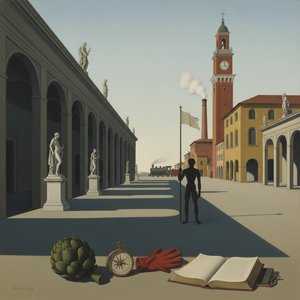
Giorgio de Chirico: Metaphysical Realities & the Poetics of Absence
Explore the captivating world of Giorgio de Chirico and his groundbreaking Metaphysical painting movement. Discover the philosophical depths & surreal imagery that influenced generations of artists. Learn more at ArtsDot.

Giclée Prints: Archival Quality & Aesthetic Nuances for the Discerning Collector
Explore the world of giclée prints with ArtsDot. Learn about archival quality, aesthetic nuances & investment potential. Expert guidance for discerning art collectors seeking museum-quality reproductions and lasting value.


