

 Ver en contexto
 Enviar
 Compartir
 Detalles
 Guía
Guía

 Descargar
 Similares
 Radiografía
 Presentación de diapositivas
 Preguntas y respuestas
 Estadísticas
Two Trees


 Ver más
Giclée / Impresión de arte
Impresiones giclée o en lienzo de calidad de museo con producción rápida y opciones de acabado flexibles. ( Comprar pintura hecha a mano Cambiar a imagen digital)




































Elija entre nuestros tamaños predefinidos que respetan las proporciones originales de la obra.

Introduzca el ancho y el alto que necesite para adaptarse a su marco o pared. Una impresión solo puede recortarse, nunca hacerse más grande que la imagen original, por lo que un tamaño con una forma distinta perderá parte de la obra. Le enviaremos una maqueta digital para su aprobación antes de realizar cualquier impresión. La imagen que se muestra en esta página no refleja el recorte real; solo la maqueta lo hace.
Envío a todo el mundo () en 2 semanas en lugar de las 4/5 semanas estándar. (8 noviembre)

Envío exprés gratuito a todo el mundo

Lienzo de lino de alta calidad

Seguro de envío total

Garantía de reembolso de aranceles aduaneros

Garantía de fidelidad cromática exacta

Política de devolución de 100 días (solo por defectos)

Garantía de devolución del 100% del dinero

Descuento por cantidad
 La opción de vidrio solo está disponible en tamaños inferiores a 110 cm.

Two Trees
Giclée / Impresión de arte
Dimensiones de la reproducción
-


Precio total final
€ 56
Artistic Style and Technique
Gilbert Munger's style is characterized by his use of soft brushstrokes and vivid colors, which bring the natural world to life. In Two Trees, the artist's technique is evident in the way the light filters through the leaves of the trees, casting dappled shadows on the ground. The people in the scene are also noteworthy, as they add a sense of scale and humanity to the painting.- The use of oil on canvas allows for a depth and richness of color that is not easily achievable with other mediums.
- The composition of the painting, with the two trees prominently featured, creates a sense of balance and harmony.
- The inclusion of people in the scene adds a sense of movement and energy to the painting.
Preguntas y respuestas
¿Con qué otros nombres se conoce a Gilbert Munger?
Gilbert Munger también es conocido por los nombres Gilbert Davis Munger.
¿Se puede reproducir libremente la imagen de "Two Trees" de Gilbert Munger?
Información sobre los derechos de autor de "Two Trees" de Gilbert Munger: la obra es en el dominio público: sus derechos de autor han expirado. Esto determina si las reproducciones de la imagen pueden realizarse libremente.
¿Es "Two Trees" de Gilbert Munger una composición en formato vertical, horizontal o cuadrado?
"Two Trees" de Gilbert Munger tiene un formato Portrait. El formato describe las proporciones de la composición.
Obras relacionadas


Biografía del artista
Early Life and Artistic Training
Gilbert Davis Munger (April 14, 1837 – January 27, 1903) emerged from Connecticut’s Madison County as a child captivated by artistic pursuits. Born to Sherman and Lucretia Benton Munger—the last of five children—his family recognized his innate talent and fostered it through an apprenticeship with William H. Dougal, senior engraver at the Smithsonian Institution at just thirteen years old. This formative experience instilled in him not only technical proficiency but also a profound appreciation for meticulous observation—skills that would define his artistic vision throughout his life. Notably, Munger’s distant cousin was George Munger, another artist who explored similar themes of landscape and scientific inquiry. Early influences included the luminism championed by John Ruskin and the pioneering painters of the Hudson River School, whose emphasis on atmospheric light and tonal gradation profoundly shaped Munger's artistic sensibilities. He showed interest and talent in art early in life. His family allowed him to follow this inclination by sending him at age 13 to Washington, D.C., where he apprenticed to William H. Dougal, who worked for various firms and agencies there. Munger worked at this craft for about ten years, producing plates for various U.S. Government reports. During this apprenticeship Munger not only gained accurate drawing skills and a technical understanding of composition, but also a taste for the unexplored wonders of the American west. He became good friends with landscape painter John Ross Key; the pair would often take sketching trips together to the Virginian countryside. Through these associations and his own efforts he taught himself to draw and paint. Sherman Munger, a farmer, instilled in Gilbert a love for nature and craftsmanship. Lucretia Benton Munger supported Gilbert’s artistic ambitions with unwavering encouragement. William H. Dougal provided invaluable training in engraving and fostered an appreciation for detailed rendering.Engraving Commissions and Scientific Observation
Munger's initial professional endeavors centered on engraving, primarily for government reports documenting geological expeditions led by Clarence King. These commissions demanded precision and accuracy—skills honed during his apprenticeship—and exposed him to the burgeoning field of geology. He meticulously reproduced illustrations of animals, plants, and rock formations, reflecting the scientific fervor of the era and demonstrating a commitment to representing nature with unwavering fidelity. His work for the Smithsonian Institution showcased his engraving skills and deepened his understanding of scientific concepts. Collaborations with Clarence King’s Geological Survey fostered an appreciation for geological observation and artistic representation.The Hudson River School Influence and Early Landscapes
Gilbert Munger's artistic style was decisively shaped by the Hudson River School, a movement characterized by its romantic idealism and masterful depiction of American landscapes bathed in luminous light. Artists like John Ruskin served as inspiration for Munger who studied their techniques—particularly their use of tonal gradation to convey mood and atmosphere. Ruskin’s advocacy for tonal harmony influenced Munger's approach to color and composition. The Hudson River School painters established a precedent for capturing the grandeur of American wilderness with emotional resonance.Service in the Civil War and Artistic Development
During the tumultuous years of the Civil War, Munger served as a military engineer assisting in the defense of Washington D.C., demonstrating courage and dedication alongside his fellow soldiers. He enlisted in the Union Army during the war. His involvement in the Union Army provided him with firsthand experience of American society during wartime. The challenges posed by the war spurred artistic innovation and refined his observational skills.Western Landscapes and Recognition
Gilbert Munger’s most celebrated achievements lie in his breathtaking landscapes of the American West—particularly those created during Clarence King's Fortieth Parallel Survey. Collaborating closely with photographer Timothy H. O’Sullivan, he captured iconic vistas such as Yosemite Valley and Donner Pass, meticulously documenting geological formations and conveying their sublime beauty. His partnership with Timothy H. O’Sullivan resulted in groundbreaking photographic landscapes that cemented Munger’s reputation as a pioneer of Western art. Ten chromolithographs produced from his survey paintings gained widespread acclaim and established him as one of the foremost landscape painters of his generation. He maintained a studio in New York City and St.\nPaul, Minnesota, where his brothers had settled. In 1866, Munger exhibited two paintings at the National Academy of Design, marking his official entrance into the art world. During this period he became good friends with John Mix Stanley and John Ross Key; the pair would often take sketching trips together to the Virginian countryside. He was greatly influenced by the light-filled scenes of the Hudson River School, and his earliest paintings show similar luminous effects as found in works by contemporary leading artists such as Sanford Robinson Gifford, John Frederick Kensett, and Frederic Edwin Church.
Gilbert Munger
1837 - 1903 , Estados Unidos
Datos clave
- Artistic Movement Or Style: Hudson River School
- Artists Or Movements Influenced By This Artist: ['Albert Bierstadt']
- Artists Who Influenced This Artist:
- John Ruskin
- William H. Dougal
- Date Of Birth: April 14, 1837
- Date Of Death: January 27, 1903
- Full Name: Gilbert Davis Munger
- Nationality: American
- Notable Artworks:
- Niagara Horseshoe Falls with Rainbow
- Niagara Falls
- Place Of Birth: Madison, Connecticut
Artículos relacionados

Los 10 Maestros del Paisaje Impresionista: Obras que Cambiaron la Historia del Arte
Descubre los 10 lienzos impresionistas que revolucionaron el arte. Monet, Renoir y más… Explora la historia, técnica y belleza de cada obra maestra. Encuentra reproducciones de alta calidad para tu hogar en ArtsDot.com.

Maestría y Forma: Las 25 Mejores Obras de Paul Cézanne
Explora las 25 obras maestras de Paul Cézanne y su legado postimpresionista. ¡Descubre toda la colección en ArtsDot.com!

Evocations of Place: A Historical Journey Through Landscape Art
Explore the rich history of landscape art with ArtsDot. Discover renowned artists, movements like Impressionism & Romanticism, and expert guidance for collecting timeless pieces. Find your perfect serene escape today!

Arboreal Echoes: A Historical & Artistic Exploration of Trees in Painting
Explore the rich history of trees in painting! Discover symbolism, Romantic masterpieces by Caspar David Friedrich & beyond. A curated journey for art enthusiasts.
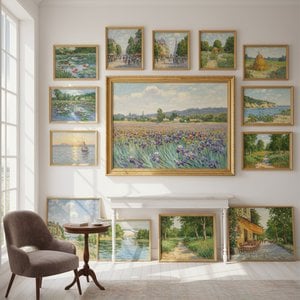
Los 10 Maestros del Paisaje Impresionista: Obras que Cambiaron la Historia del Arte
Descubre los 10 lienzos impresionistas que revolucionaron el arte. Explora la historia de Monet, Van Gogh y Renoir, sus técnicas y colores vibrantes. Encuentra reproducciones de alta calidad para decorar tu hogar en ArtsDot.com
