

 Vista previa
 Compartir
 Compartir
 Ver detalles

 Descargar
 Ver similares
 Radiografía
 Presentación de diapositivas
Untitled (D2X7PJ)
 Oil On Canvas
- WallArt
- Northern Renaissance
 1510
1510 88.0 x 30.0 cm
 Museo Metropolitano de Arte
 Leer más
Adquiera una imagen digital de alta resolución y optimizada, muy superior a la vista previa en línea.
Cada archivo es preparado meticulosamente por nuestros especialistas internos mediante el uso de herramientas avanzadas y un experto retoque manual. Nos aseguramos de que cada imagen posea una claridad excepcional, una precisión cromática impecable y un detalle minucioso.
El archivo final se entrega por correo electrónico en un plazo de 72 horas, optimizado para su uso inmediato en entornos profesionales, editoriales y de impresión. Esta es la misma calidad en la que confían los estudios de diseño, las editoriales y las galerías de primer nivel.
Imagen Digital
Descarga un archivo de alta resolución para exhibición personal, impresión y proyectos creativos. ( Pedir impresión Encargar reproducción pintada a mano)
Incluido en cada compra de imágenes digitales
Entrega digital experta, garantizada.
Al elegir ArtsDot.com, no solo está adquiriendo una imagen; está recibiendo una obra de arte digital mejorada profesionalmente, elaborada con precisión y respaldada por una garantía de satisfacción. Esto es todo lo que incluye su pedido, automáticamente:

Entrega rápida por email
Recibirá su archivo de imagen digital en alta resolución por correo electrónico en un plazo de 72 horas tras realizar su pedido, listo para su uso inmediato.

Archivo digital optimizado por IA
Su obra de arte se optimiza profesionalmente mediante herramientas avanzadas de IA y edición manual, garantizando el máximo detalle, claridad y precisión cromática.

Reenvío gratuito de por vida
¿Has borrado o perdido tu archivo por error? No te preocupes: te lo volveremos a enviar en cualquier momento, sin coste adicional.

Sin gastos de importación, siempre
Disfrute de su obra de arte al instante sin aduanas, aranceles ni gastos de envío; las descargas digitales siempre están libres de impuestos.

Garantía de precisión de color
Garantizamos que su imagen digital refleje los colores originales con la mayor fidelidad posible, mediante el uso de herramientas profesionales y gestión del color.

Garantía de satisfacción de 60 días
Si no está satisfecho con su imagen digital, la revisaremos o le reembolsaremos el 100% en un plazo de 60 días, sin preguntas.

100% Garantía de devolución de dinero
¿No está satisfecho? Obtenga un reembolso completo dentro de los 60 días posteriores a la recepción de su archivo digital, sin necesidad de explicaciones.

Descuentos por volumen
Compra 3 imágenes, ahorra 10% - Compra 5, ahorra 15% - Compra 10+, ahorra 20%. Ideal para proyectos creativos, galerías y agencias.
Descripción del coleccionable
A Glimpse into the Soul of Early Netherlandish Painting
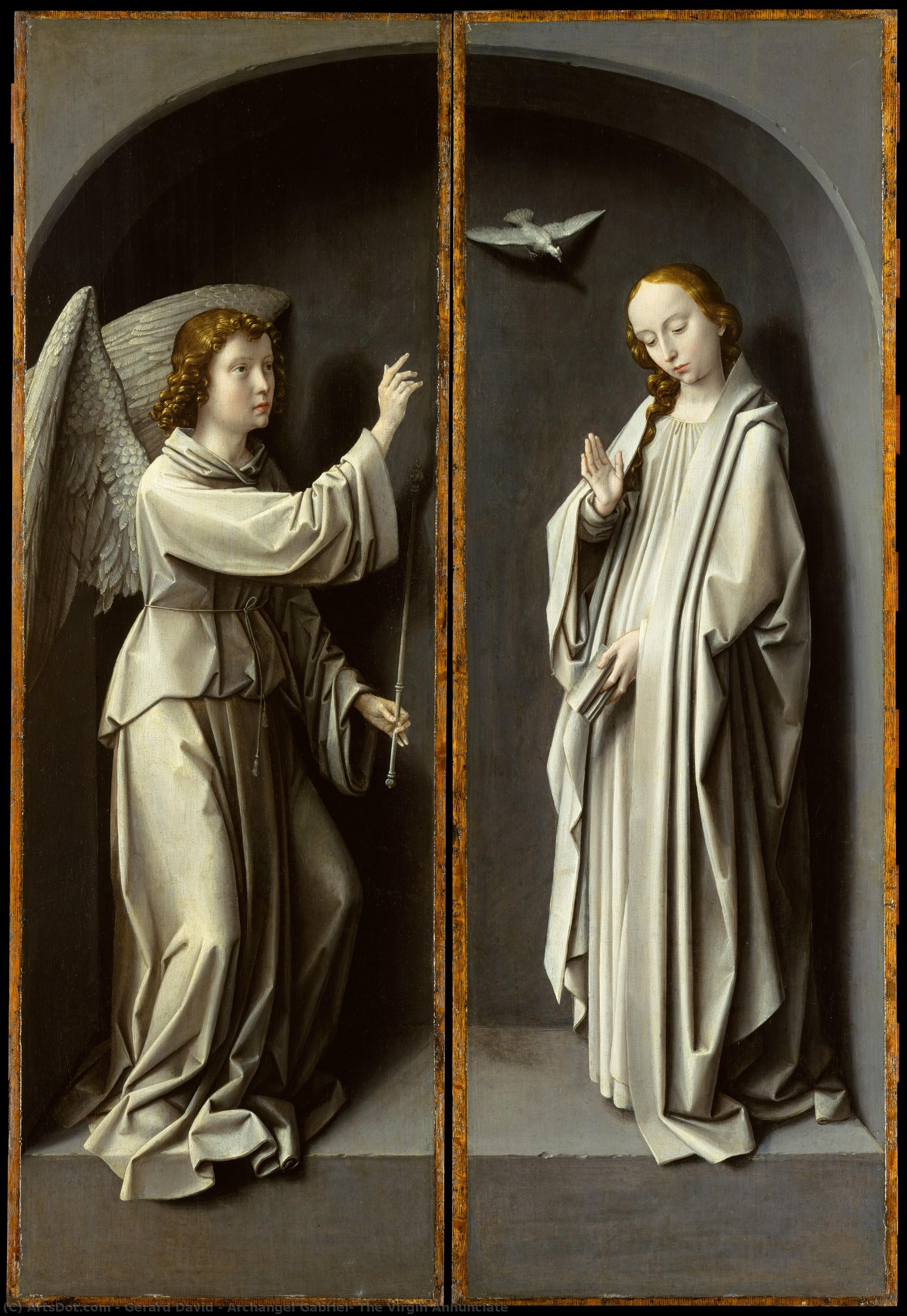
Gerard David’s “Untitled (D2X7PJ),” a captivating religious scene rendered in oil on panel around 1510, offers more than just a visual experience; it's a portal into the contemplative heart of early Renaissance Flanders. Born in Oudewater and trained under Albert van Oudewater, David quickly established himself as a leading figure in Bruges’ vibrant artistic community, inheriting and refining the traditions of his predecessors while simultaneously forging a uniquely personal style. This particular work, often referred to simply as “The Angel Gabriel Announcing the Virgin,” exemplifies this delicate balance – a masterful synthesis of meticulous detail, luminous color, and profound spiritual depth.
The painting depicts a serene moment within the Annunciation narrative: the Archangel Gabriel appears before the Virgin Mary, delivering the momentous news that she will conceive and bear the Son of God. David’s approach diverges subtly from the more rigidly formal depictions prevalent at the time. While retaining elements of late medieval iconography – the carefully positioned halos, the symbolic gestures – he imbues the scene with a remarkable sense of intimacy and naturalism. The figures are not presented as distant deities but rather as human beings caught in a profound exchange, their expressions conveying both surprise and acceptance.
The Language of Light and Color
David’s genius lies primarily in his manipulation of light and color. He eschews the stark contrasts favored by some of his contemporaries, opting instead for a subtle, almost ethereal illumination that permeates the entire composition. This “Flemish Light,” as it's often called, creates an atmosphere of quiet reverence and imbues the scene with a sense of otherworldly beauty. The palette is restrained yet remarkably rich – deep blues and purples dominate the background, contrasted by the warm, creamy tones of Mary’s robes and the radiant glow surrounding Gabriel. Notice how he uses layering of translucent glazes to build up depth and luminosity, capturing the delicate textures of fabric and skin with astonishing precision.
The artist's attention to detail is equally remarkable. The folds of Mary’s garments are rendered with meticulous care, each crease and pleat conveying a sense of volume and movement. Gabriel’s wings, depicted in shimmering gold leaf, seem to radiate light, while the delicate details of the angel’s face – his serene expression, the subtle curve of his lips – reveal a profound understanding of human anatomy and emotion.
Symbolism and Spiritual Resonance
Beyond its aesthetic beauty, “Untitled (D2X7PJ)” is rich in symbolic meaning. The dove, hovering above the scene, represents the Holy Spirit, while the lilies adorning Mary’s hands symbolize purity and virginity. The carefully chosen gestures of both figures – Gabriel’s outstretched hand offering the message, Mary’s receptive posture – underscore the central theme of divine grace and human humility. This is not merely a depiction of an event; it's a meditation on faith, obedience, and the profound mystery of God’s plan.
Furthermore, David’s choice to portray this pivotal moment with such quiet contemplation reflects the prevailing spiritual currents of his time – a shift away from the more overtly dramatic representations of religious subjects that had characterized earlier periods. He invites the viewer not just to observe but to participate in the scene, fostering a sense of personal connection and spiritual reflection.
A Timeless Masterpiece for Today
“Untitled (D2X7PJ)” stands as a testament to Gerard David’s artistic genius and his enduring legacy. Reproduced faithfully by ArtsDot.com, this painting continues to captivate audiences with its beauty, serenity, and profound spiritual resonance. Whether adorning a private residence or gracing the walls of a museum, it serves as a poignant reminder of the power of art to transcend time and connect us to something larger than ourselves. Its subtle colors and evocative imagery create an atmosphere of peace and contemplation – a perfect addition to any space seeking beauty, depth, and a touch of timeless grace.
Obras relacionadas


Biografía del artista
Vida y Carrera
Gerard David, una figura destacada del movimiento pictórico neerlandés temprano, dejó una huella imborrable en el mundo del arte con su brillante uso del color. Nacido alrededor de 1460 en Oudewater, Países Bajos, la vida de David está envuelta en misterio, con solo un esbozo básico de su biografía que ha sobrevivido.- Es posible que haya sido Meester Gheraet van Brugghe, quien se convirtió en maestro del gremio de Amberes en 1515.
- David fue increíblemente exitoso durante su vida, probablemente dirigiendo dos talleres en Amberes y Brujas.
- Su reputación disminuyó en el siglo XVII pero fue redescubierto en el siglo XIX.
Estilo Artístico y Obras Notables
El enfoque innovador de David hacia el paisaje y su magistral uso de la luz y la sombra caracterizan su obra. Algunas de sus piezas más notables incluyen:- El Matrimonio de Santa Catalina en la Galería Nacional, Londres.
- El tríptico de La Virgen Encoronada con Santos en la colección Brignole-Sale, Génova.
- La Virgen entre las Vírgenes, ahora en el museo de Rouen, que donó a las monjas carmelitas de Sion en Brujas.
Influencias y Desarrollo Artístico
El arte de Gerard David se desarrolló dentro del contexto del movimiento neerlandés temprano, influenciado por artistas como Jan van Eyck y Rogier van der Weyden. Sin embargo, David desarrolló un estilo distintivo caracterizado por:- Un uso vibrante del color: A diferencia de la paleta más sombría de algunos contemporáneos, David empleó colores ricos y luminosos para crear una atmósfera de vitalidad y belleza.
- Paisajes detallados: Sus paisajes son notablemente realistas y atmosféricos, a menudo incorporando detalles minuciosos que añaden profundidad y complejidad a sus composiciones.
- Narrativa clara: David era un maestro en contar historias visuales, utilizando gestos y expresiones faciales para transmitir emociones y significado.
Legado e Importancia Histórica
El impacto de Gerard David en el mundo del arte es innegable. Su estilo único y su enfoque del color han influenciado a numerosos artistas, y su obra continúa siendo celebrada en varios museos y colecciones.- Transición artística: Representa una transición importante entre los primeros maestros neerlandeses y las generaciones posteriores de pintores flamencos.
- Popularidad duradera: Su arte fue muy apreciado durante su vida, y su popularidad ha continuado hasta nuestros días.
Museos y Colecciones que Exhiben la Obra de Gerard David
- Explora la extensa colección de pinturas de Gerard David en ArtsDot, incluyendo La Adoración de los Magos.
- Museo Groeninge, Brujas, Bélgica: Este museo municipal presenta una impresionante colección de pinturas flamencas y belgas, incluyendo obras de Gerard David.

Gerard David
1450 - 1523 , Países Bajos
Datos clave
- Estilo Artístico: Renacimiento flamenco temprano
- Fecha De Muerte: 1523
- Fecha De Nacimiento: c. 1460
- Lugar De Nacimiento: Oude Woerden, Países Bajos
- Nacionalidad: Neerlandés
- Nombre Completo: Gerard David
- Obras Notables:
- El matrimonio de Santa Catalina
- La Virgen entre las vírgenes
- Tríptico de la Madonna

