

 Ver en contexto
 Enviar
 Compartir
 Detalles
 Guía
Guía

 Descargar
 Similares
 Radiografía
 Presentación de diapositivas
 Q&A
Q&A Estadísticas
Bring your death out!


 Ver más
La obra de arte que se muestra en esta página está protegida por las leyes de propiedad intelectual, lo que significa que no podemos crear ni vender legalmente una reproducción idéntica. Esta protección se hace cumplir en virtud de acuerdos internacionales como el Convenio de Berna y por las leyes nacionales, incluidas aquellas establecidas por el Ley de derechos de autor de los EE. UU. - Título 17.
Este método cumple plenamente con las normativas de derechos de autor, ya que no implica la copia ni la duplicación de la obra protegida. En su lugar, se trata de una reinterpretación creativa: una nueva pintura influenciada por la original, pero que no es idéntica a ella.
Giclée / Impresión de arte
Impresiones giclée o en lienzo de calidad de museo con producción rápida y opciones de acabado flexibles. ( Comprar pintura hecha a mano Cambiar a imagen digital)




P118B €10

P118H €10

P118W €10

P438Z €10

P508JH €12

P508YH €12

P805H €10

P805Z €10

P919BZ €10

P919G €10

P919XJ €10

P959ZH €10

P968JZ €12

W106C €8

W218G €10

W218JH €8

W218Y €10

W307PJ €10

W316G €10

W316PJ €8

W316Y €10

W398PJ €8

W4111J €10

W500HY €15

W500JH €15

W692G €12

W849H €8

W940BG €15

W953PJ €8




Elija entre nuestros tamaños predefinidos que respetan las proporciones originales de la obra.

Introduzca el ancho y el alto que necesite para adaptarse a su marco o pared. Una impresión solo puede recortarse, nunca hacerse más grande que la imagen original, por lo que un tamaño con una forma distinta perderá parte de la obra. Le enviaremos una maqueta digital para su aprobación antes de realizar cualquier impresión. La imagen que se muestra en esta página no refleja el recorte real; solo la maqueta lo hace.
Envío a todo el mundo () en 2 semanas en lugar de las 4/5 semanas estándar. (2 noviembre)

Envío exprés gratuito a todo el mundo

Lienzo de lino de alta calidad

Seguro de envío total

Garantía de reembolso de aranceles aduaneros

Garantía de fidelidad cromática exacta

Política de devolución de 100 días (solo por defectos)

Garantía de devolución del 100% del dinero

Descuento por cantidad
 La opción de vidrio solo está disponible en tamaños inferiores a 110 cm.

Bring your death out!
Giclée / Impresión de arte
Dimensiones de la reproducción
-


Precio total final
€ 55
A Visceral Encounter with Mortality
In the hauntingly profound charcoal drawing "Bring Your Death Out!", Georges Rouault invites the viewer into a somber realm where the boundaries between life and decay dissolve. Created in 1946, as the shadows of World War II were only just beginning to recede, this work serves as a visceral embodiment of existential dread and spiritual reckoning. The scene is dominated by skeletal figures, their forms etched with an unsettling energy that transcends mere anatomical study. Rather than presenting a clinical view of death, Rouault captures the psychological weight of mortality, using the starkness of the medium to mirror the profound anxiety and loss felt by a world recovering from unprecedented conflict. It is not merely a depiction of the end of life, but an immersive experience into the artist’s deeply felt spiritual convictions and his unflinching gaze upon human suffering.
The composition is masterfully orchestrated through a pyramidal arrangement, a classical technique that Rouault subverts to create a sense of rising tension. The viewer's eye is drawn upward, following the jagged, expressive lines of the skeletal forms toward a central figure that commands the space with dramatic gesture. There is no stillness here; instead, there is a rhythmic, unsettling dynamism created by the overlapping limbs and the diagonal thrust of bones and ribs. This structural complexity ensures that the gaze never rests, mirroring the restless, searching nature of the human soul when confronted with the inevitable. For the collector or designer, this piece offers a powerful focal point—a work that demands attention through its sheer emotional gravity and sophisticated structural balance.
The Mastery of Shadow and Line
Rouault’s technical prowess is most evident in his command over light and shadow, a skill likely honed during his early years as an apprentice in stained glass restoration. In this work, he employs meticulous hatching and cross-hatching to sculpt the skeletal figures out of the darkness. The lines are not merely outlines; they are thick, bold, and pulsating with life, acting as heavy contours that delineate the fragility of the bones against a muted, atmospheric background. This dramatic use of chiaroscuro creates deep, engulfing shadows that swallow portions of the figures, emphasizing their vulnerability and suggesting that the confrontation with darkness is an unavoidable facet of the human condition.
The monochromatic palette—a disciplined range of blacks, grays, and whites—strips away the distractions of color to focus entirely on texture and form. The rough, tactile quality of the charcoal creates a surface that feels as weathered and ancient as the subject matter itself. This emphasis on texture adds a layer of visceral impact, making the decay feel tangible to the observer. For those seeking to incorporate fine art into a sophisticated interior, the monochromatic elegance of this piece provides a versatile yet profound aesthetic, capable of anchoring a room with its intense, brooding presence and timeless artistic merit.
Symbolism and the Spiritual Legacy
Beyond its striking visual impact, "Bring Your Century Out!" is steeped in symbolic resonance. The skeletal figures serve as universal symbols of mortality, yet within Rouault’s specific theological framework, they also represent a form of spiritual purification. The presence of figures in clerical garb suggests a critique or perhaps a profound commentary on the role of organized religion amidst human catastrophe. There is an inherent tension between the grotesque nature of the decay and the underlying search for compassion and faith that characterized Rouault's entire oeuvre.
To possess a reproduction of this work is to hold a piece of history that speaks to the resilience of the human spirit in the face of despair. It is a work that resonates with anyone moved by the themes of empathy, suffering, and the eternal struggle between light and dark. As an investment in fine art, it offers more than just decoration; it provides a window into the soul of one of the 20th century's most poignant Expressionists, making it an invaluable addition to any collection dedicated to works of deep emotional and historical significance.
Preguntas y respuestas
¿Cuánta luz parecen reflejar los colores de "Bring your death out!"?
Los colores de "Bring your death out!" presentan una luminancia de Gentle Luminance.
¿Puedo usar la realidad aumentada para ver "Bring your death out!" de Georges Rouault en mi habitación?
Puedes visualizar "Bring your death out!" de Georges Rouault en tu propia pared con la página de Vista previa en RA de la obra, utilizando realidad aumentada en un dispositivo compatible.
¿Se puede descargar la imagen de "Bring your death out!"?
Puede descargar "Bring your death out!" de Georges Rouault desde la página de Descargar imagen digital de la obra, como descarga de una imagen digital en alta resolución.
Obras relacionadas


Biografía del artista
Primeros años y formación
Georges Henri Rouault, un pintor, dibujante e impresor francés, nació en París el 27 de mayo de 1871, en una familia humilde. Su madre fomentó su amor por las artes, y a los 14 años comenzó un aprendizaje como vidrieros y restaurador, que duró hasta 1890. Esta experiencia temprana probablemente influyó en su estilo pictórico maduro, caracterizado por el contorneado negro intenso y los colores brillantes, reminiscente del vidrio emplomado.Trayectoria artística
Durante su aprendizaje, Rouault asistió a clases nocturnas en la Escuela de Bellas Artes y posteriormente ingresó en la École des Beaux-Arts en 1891, donde estudió bajo Gustave Moreau. Los primeros trabajos de Rouault muestran un simbolismo en el uso del color, reflejando la influencia de Moreau. Tras la muerte de Moreau en 1898, Rouault fue nombrado curador del Museo Moreau en París.Fauvismo y Expresionismo
Rouault conoció a artistas notables como Henri Matisse, Albert Marquet, Henri Manguin y Charles Camoin, lo que le llevó al movimiento fauvista, con Matisse como su líder. Su uso de contrastes marcados y emotividad estuvo influenciado por Vincent van Gogh. Sus caracterizaciones de personalidades grotescas exageradas inspiraron a los pintores expresionistas.Obras destacadas y exposiciones
- En 1891, Rouault pintó *El camino del Calvario*.
- A partir de 1895, participó en importantes exhibiciones públicas, incluido el Salon d'Automne, que ayudó a fundar.
- En 1907, Rouault comenzó una serie de pinturas dedicadas a cortes, payasos y prostitutas, interpretadas como crítica moral y social.
Post-Impresionismo y Legado
Georges Rouault se dedicó a la pintura desde 1917, con la fe cristiana informando su obra. Creó diseños para el ballet *El hijo pródigo* de Diaghilev en 1929. En 1930, comenzó a exponer en países extranjeros, principalmente en Londres, Nueva York y Chicago. Rouault murió en París el 13 de febrero de 1958, dejando atrás un legado como uno de los artistas cristianos más apasionados del siglo XX. Importante: Al final de su vida, Rouault quemó 300 de sus cuadros, estimados en más de quinientos millones de francos hoy en día.
Georges Rouault
1871 - 1958 , Francia
Datos clave
- Artistas Que Influyeron:
- Gustave Moreau
- Vincent van Gogh
- Fecha De Fallecimiento: 13 de febrero de 1958
- Fecha De Nacimiento: 27 de mayo de 1871
- Influenciado Artistas: ['Expresionistas']
- Lugar De Nacimiento: París, Francia
- Movimiento Artístico: Expresionismo, Fauvismo
- Nacionalidad: Francesa
- Nombre Completo: Georges Rouault
- Obras Notables:
- El camino a Calvario
- Retratos de cortesanos
Artículos relacionados

Georges Seurat: Las 25 Obras Maestras del Pionero Puntillista | ArtsDot
Descubre las 25 obras maestras de Georges Seurat, el innovador del puntillismo. Explora su técnica única, colores vibrantes y legado artístico en ArtsDot.com. Reproducciones de arte de museo para tu hogar.

Unlocking Emotion: A Beginner's Guide to the Raw Power of Symbolic Expressionism Art
Discover the raw emotion of Symbolic Expressionism. Our expert guide explores how masters like Munch use color and form to convey inner feelings, offering inspiration for collectors looking to bring powerful, soulful art into their modern homes.
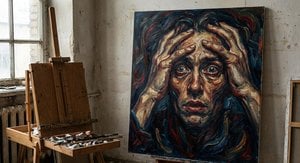
Expresionismo Figurado: Intensidad Emocional y Realidad Subjetiva en el Arte del Siglo XX
Explora la intensidad emocional del Expresionismo Figurado alemán. Descubre sus orígenes, artistas clave como Munch y Kirchner, y su legado en el arte moderno. Análisis experto y profundo.
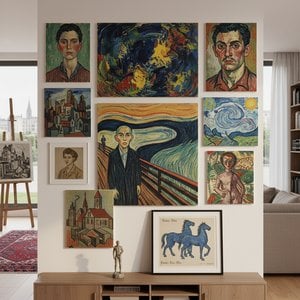
Expresionismo: 10 Obras Maestras que Revolucionaron el Arte |
Descubre las 10 obras maestras del Expresionismo que marcaron un hito en la historia del arte. Explora a Munch, Kirchner y Kandinsky en . Reproducciones de arte de museo para transformar tu hogar.

Maestría Cubista: Las 25 mejores obras de Georges Braque
Explora las 25 obras maestras de Georges Braque y el cubismo. Encuentra reproducciones de museo en ArtsDot.com.


