


 Vista previa
 Compartir
 Compartir
 Ver detalles
 Guía
Guía

 Descargar
 Ver artículos similares
 Radiografía
 Presentación de diapositivas
 Estadísticas
Violin On Palette


 Leer más
Adquiera una imagen digital de alta resolución y optimizada, muy superior a la vista previa en línea.
Cada archivo es preparado meticulosamente por nuestros especialistas internos mediante el uso de herramientas avanzadas y un experto retoque manual. Nos aseguramos de que cada imagen posea una claridad excepcional, una precisión cromática impecable y un detalle minucioso.
El archivo final se entrega por correo electrónico en un plazo de 72 horas, optimizado para su uso inmediato en entornos profesionales, editoriales y de impresión. Esta es la misma calidad en la que confían los estudios de diseño, las editoriales y las galerías de primer nivel.
Imagen Digital
Descarga un archivo de alta resolución para exhibición personal, impresión y proyectos creativos. ( Cambiar a formato impreso Encargar reproducción pintada a mano)
Incluido en cada pedido de imágenes digitales
Entrega digital experta, garantizada.
Al elegir ArtsDot.com, no solo está adquiriendo una imagen; está recibiendo una obra de arte digital mejorada profesionalmente, elaborada con precisión y respaldada por una garantía de satisfacción. Esto es todo lo que incluye su pedido, automáticamente:

Entrega inmediata por email
Recibirá su archivo de imagen digital en alta resolución por correo electrónico en un plazo de 72 horas tras realizar su pedido, listo para su uso inmediato.

Archivo digital optimizado por IA
Su obra de arte se optimiza profesionalmente mediante herramientas avanzadas de IA y edición manual, garantizando el máximo detalle, claridad y precisión cromática.

Reenvío gratuito de por vida
¿Has borrado o perdido tu archivo por error? No te preocupes: te lo volveremos a enviar en cualquier momento, sin coste adicional.

Sin gastos de importación, siempre
Disfrute de su obra de arte al instante sin aduanas, aranceles ni gastos de envío; las descargas digitales siempre están libres de impuestos.

Garantía de precisión de color
Garantizamos que su imagen digital refleje los colores originales con la mayor fidelidad posible, mediante el uso de herramientas profesionales y gestión del color.

Garantía de satisfacción de 100 días
Si no está satisfecho con su imagen digital, la revisaremos o le reembolsaremos el 100% en un plazo de 100 días, sin preguntas.

100% Garantía de devolución de dinero
¿No está satisfecho? Obtenga un reembolso completo dentro de los 100 días posteriores a la recepción de su archivo digital, sin preguntas.

Descuentos por volumen
Compra 3 imágenes, ahorra 10% - Compra 5, ahorra 15% - Compra 10+, ahorra 20%. Ideal para proyectos creativos, galerías y agencias.
Georges Braque’s Violin On Palette: A Fragmented Symphony of Color and Form
The painting “Violin On Palette,” executed by Georges Braque in 1909, stands as a cornerstone of Cubist art—a movement that irrevocably altered the course of artistic expression at the dawn of the century. More than just an image of a violin resting upon a painter’s palette; it embodies a radical rethinking of representation itself, reflecting the intellectual fervor and aesthetic experimentation characteristic of its time. Examining this artwork reveals not only Braque's masterful technique but also profound insights into the philosophical underpinnings of Cubism and its enduring legacy in contemporary art.The Style of Fragmentation: Deconstructing Reality
Cubist theory, championed by Picasso and Braque alongside Pablo Cézanne, rejected the illusionistic conventions of Impressionism and Post-Impressionism. Instead, artists sought to depict objects from multiple viewpoints simultaneously—a concept brilliantly realized in “Violin On Palette.” The violin itself is dissected into geometric planes—cubes, rectangles, and triangles—that overlap and intersect, creating a disconcerting yet compelling sense of spatial depth. These fractured forms aren’t merely stylistic choices; they represent Braque's attempt to capture the totality of an object’s essence by presenting it as seen from various angles simultaneously. This deliberate distortion mirrors the fragmented experience of perception itself, mirroring the anxieties and uncertainties of the era.Technique: Visible Brushstrokes and Textured Surfaces
Braque employed a technique that prioritized visible brushstrokes—a conscious departure from the smooth surfaces favored by earlier artists. Thick impasto—the application of paint in raised ridges—dominates the canvas, lending textural richness to the depiction of both the violin and the palette. These textured surfaces aren’t simply decorative; they contribute to the artwork's expressive power, conveying a palpable sense of physicality and immediacy. The artist meticulously layered pigments onto the canvas, building up color gradations and creating subtle variations in tone—a testament to Braque’s unwavering commitment to capturing the nuances of visual experience.Historical Context: Artistic Responses to Modernity
“Violin On Palette” emerged during a period of intense intellectual debate concerning the nature of reality and artistic representation. Cézanne's groundbreaking explorations into geometric abstraction had paved the way for Cubism, prompting artists to question traditional notions of perspective and illusion. The painting reflects the broader cultural preoccupation with scientific advancements—particularly Einstein’s theory of relativity—which challenged Newtonian physics and undermined the certainty of visual perception. Braque’s work stands as a defiant assertion of artistic autonomy in the face of these transformative developments, demonstrating that art could offer alternative ways of engaging with the world around us.Symbolism: Musical Resonance Beyond Representation
Beyond its formal innovations, “Violin On Palette” possesses symbolic resonance that extends beyond mere visual depiction. The violin itself—a symbol of musical artistry and emotion—represents Braque’s fascination with music as a source of inspiration and intellectual stimulation. Its fragmented form mirrors the fractured nature of artistic expression, suggesting that true beauty lies not in flawless imitation but in capturing the essence of experience through unconventional means. The palette—the artist's tool—further reinforces this symbolic connection, symbolizing creativity and transformation—a visual metaphor for Braque’s own artistic process.Emotional Impact: A Quiet Intensity
Despite its apparent simplicity—characterized by muted earth tones— “Violin On Palette” exudes a quiet intensity that captivates the viewer. The artwork invites contemplation rather than immediate gratification, prompting viewers to engage in a dialogue with its fractured forms and subtle textures. It speaks to a deeper yearning for understanding—a desire to grasp the totality of experience through artistic representation. Ultimately, Braque’s masterpiece transcends mere visual spectacle, resonating with an emotional core that embodies the spirit of Cubist art—a testament to its enduring power to provoke thought and inspire wonder.Obras relacionadas


Biografía del artista
**vida temprana y formación**
georges braque, un destacado pintor francés, collageador, dibujante, grabador y escultor, nació el 13 de mayo de 1882 en Argelo, Val-d'Oise. Creció en Le Havre y inicialmente se formó para ser pintor de casas y decorador, como su padre y abuelo. Sin embargo, las inclinaciones artísticas de Braque lo llevaron a estudiar pintura en la École des Beaux-Arts en Le Havre de 1897 a 1899.**evolución artística y fauvismo**
En 1902, después de completar su aprendizaje con un decorador en París, Braque asistió a la Academia Humbert hasta 1904. Este período marcó su introducción al fauvismo, un estilo caracterizado por colores vibrantes y respuestas emocionales. Influenciado por las obras de henri matisse y andré derain, Braque adoptó un enfoque fauvista, como se ve en su pintura the patience (fauvismo, óleo sobre lienzo).**contribución al cubismo**
La colaboración de Braque con pablo picasso desde 1908 hasta 1912 llevó al desarrollo del cubismo. Sus obras cubistas analíticas, como georges braque: the patience y pablo picasso: clarinet(cubismo analítico, óleo sobre lienzo), se consideran hitos en la historia del arte.**legado y obras notables**
* Houses at l'Estaque: un testimonio del uso innovador de la geometría y la perspectiva simultánea de Braque. * The Patience(fauvismo, óleo sobre lienzo): demuestra el estilo fauvista de Braque. * Clarinet(cubismo analítico, óleo sobre lienzo): una obra cubista colaborativa con Picasso.**museos y colecciones**
* Musée d'Orsay: presenta una extensa colección de arte impresionista y postimpresionista, incluyendo obras de Braque. * Musée de l'Orangerie: exhibe una amplia gama de obras de arte, incluyendo las de Braque y otros artistas notables.- Descubra más sobre la vida y obra de Georges Braque en ArtsDot.com
- Explore la colección del Musée d'Orsay, que presenta obras de Braque y otros artistas, en Musée d'Orsay - Wikipedia
- Aprenda más sobre el fauvismo y su influencia en el desarrollo del cubismo con el movimiento artístico fauvista en ArtsDot.com
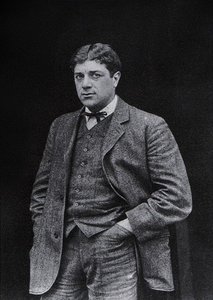
Georges Braque
1882 - 1963 , Francia
Datos clave
- Artistas Influenciados Por Este Artista: ['Pablo Picasso']
- Artistas Que Influyeron:
- Henri Matisse
- André Derain
- Paul Cézanne
- Fecha De Muerte: 31 de agosto de 1963
- Fecha De Nacimiento: 13 de mayo de 1882
- Lugar De Nacimiento: Argenteuil, Francia
- Movimiento Artístico: Cubismo, Fauvismo
- Nacionalidad: Francés
- Nombre Completo: Georges Braque
- Obras Notables:
- Casas en L'Estaque
- La paciencia (Fauvismo)
- Violin y Paleta
- Mandola