
- Inicio

- Impresión en lienzo
- Georges Braque
- The Yellow Tablecloth

 Vista previa
 Compartir
 Compartir
 Ver detalles

 Descargar
 Ver similares
 Radiografía
 Presentación de diapositivas
The Yellow Tablecloth

 Leer más
Giclée / Impresión de arte
Impresiones giclée o en lienzo de calidad de museo con producción rápida y opciones de acabado flexibles. ( Cambiar a pintura hecha a mano Cambiar a imagen)




P118B $10

P118H $10

P118W $10

P438Z $10

P508JH $12

P508YH $12

P805H $10

P805Z $10

P919BZ $10

P919G $10

P919XJ $10

P959ZH $10

P968JZ $12

W106C $8

W218G $10

W218JH $8

W218Y $10

W307PJ $10

W316G $10

W316PJ $8

W316Y $10

W398PJ $8

W4111J $10

W500HY $15

W500JH $15

W692G $12

W849H $8

W940BG $15

W953PJ $8




Elija entre nuestros tamaños predefinidos que respetan las proporciones originales de la obra.

Puede introducir sus propias dimensiones para adaptarse a un marco o espacio específico. Si el tamaño seleccionado no coincide con las proporciones de la imagen original, recortaremos la obra de arte o extenderemos la imagen con un borde con efecto espejo o de color sólido. Se enviará una maqueta digital para su aprobación antes de que comience la producción.
Tenga en cuenta que la vista previa en pantalla no refleja el recorte o la extensión real. Solo la maqueta mostrará con precisión la composición final.
Aunque existen tamaños personalizados, recomendamos seleccionar una dimensión de la lista predefinida para preservar las proporciones originales.
Envío a todo el mundo () en 2 semanas en lugar de las 4/5 semanas estándar. (3 agosto)

Envío exprés gratuito a todo el mundo

Lienzo de lino de alta calidad

Seguro de envío completo

Garantía de reembolso de aranceles aduaneros

Garantía de fidelidad cromática exacta

Política de devolución de 60 días (solo por defectos)

Garantía de devolución del 100% del dinero

Oferta por volumen
 La opción de vidrio solo está disponible en tamaños inferiores a 110 cm.

The Yellow Tablecloth
Giclée / Impresión de arte
Tamaño de la reproducción
-


Precio total
$ 62
Descripción de la pieza
Georges Braque’s “The Yellow Tablecloth”: A Study in Simplicity and Cubist Revelation
Georges Braque's "The Yellow Tablecloth," painted around 1956, isn’t merely a still life; it’s a distilled essence of form, color, and the burgeoning revolutionary spirit of Cubism. This deceptively simple composition – an arrangement of ripe fruit against a vibrant yellow backdrop – belies a profound exploration of perception and representation, firmly rooted in Braque's pivotal role alongside Pablo Picasso in dismantling traditional artistic conventions. The painting’s power lies not in dramatic subject matter or elaborate detail, but in its carefully constructed geometry and the deliberate flattening of space, hallmarks of the Cubist movement that was reshaping the very language of art at the time. Notice how the table itself seems to dissolve into a series of interlocking planes, mirroring the fragmentation of objects as seen from multiple viewpoints – a core principle of Braque’s approach. The yellow cloth isn't just a background; it actively participates in the composition, creating a warm, almost luminous atmosphere that subtly alters our perception of the fruits within.The Language of Cubism and its Roots in Everyday Life
Braque’s exploration of geometric abstraction began with his early work alongside Picasso, particularly during their “Blue Period” and subsequent “Rose Period.” However, it was in the 1920s that he truly embraced the tenets of Cubism, developing a distinct style characterized by fractured forms, multiple perspectives, and an emphasis on the underlying structure of objects. "The Yellow Tablecloth" exemplifies this evolution. Unlike the more overtly analytical Cubism of Picasso, Braque’s approach is often described as “synthetic,” favoring a more muted palette and a greater integration of collage elements – though not present in this particular work, the influence is undeniable. The painting reflects a shift towards a more internalized exploration of form, moving away from direct imitation of reality and instead focusing on capturing the *essence* of an object through its constituent shapes and planes. The choice of everyday objects—apples, oranges, bananas – elevates the mundane to the level of artistic contemplation, mirroring a broader trend in modern art that sought to find beauty and significance in the ordinary.Color as a Defining Element: The Significance of Yellow
The dominant presence of yellow is not accidental; it’s a deliberate and carefully considered element within the composition. Yellow, historically associated with optimism, warmth, and even madness, carries a complex symbolic weight. In Braque's work, it acts as both a visual anchor and a subtle emotional cue. It creates a sense of intimacy and comfort, drawing the viewer into the scene while simultaneously suggesting an underlying tension or instability – perhaps reflecting the inherent ambiguity of Cubist representation. The intensity of the yellow also contrasts sharply with the muted tones of the fruit, further emphasizing their fragmented forms and highlighting Braque’s focus on shape over color. Interestingly, this particular use of yellow echoes elements found in earlier works by Braque, suggesting a consistent exploration of its expressive potential.A Legacy of Innovation: Braque's Enduring Influence
Georges Braque’s "The Yellow Tablecloth" stands as a testament to his groundbreaking contributions to modern art. It’s a deceptively simple painting that encapsulates the revolutionary spirit of Cubism and demonstrates Braque’s ability to transform ordinary subjects into profound explorations of form, space, and perception. His work paved the way for subsequent movements like Surrealism and Abstract Expressionism, leaving an indelible mark on the history of art. Reproductions of this piece offer a unique opportunity to experience firsthand the intellectual rigor and artistic vision of one of the 20th century’s most influential figures. Consider how the painting's clarity and geometric precision translate into interior design – its clean lines and bold color scheme can be incorporated into contemporary spaces to create a sense of sophisticated minimalism and understated elegance.Obras relacionadas


Biografía del artista
**vida temprana y formación**
georges braque, un destacado pintor francés, collageador, dibujante, grabador y escultor, nació el 13 de mayo de 1882 en Argelo, Val-d'Oise. Creció en Le Havre y inicialmente se formó para ser pintor de casas y decorador, como su padre y abuelo. Sin embargo, las inclinaciones artísticas de Braque lo llevaron a estudiar pintura en la École des Beaux-Arts en Le Havre de 1897 a 1899.**evolución artística y fauvismo**
En 1902, después de completar su aprendizaje con un decorador en París, Braque asistió a la Academia Humbert hasta 1904. Este período marcó su introducción al fauvismo, un estilo caracterizado por colores vibrantes y respuestas emocionales. Influenciado por las obras de henri matisse y andré derain, Braque adoptó un enfoque fauvista, como se ve en su pintura the patience (fauvismo, óleo sobre lienzo).**contribución al cubismo**
La colaboración de Braque con pablo picasso desde 1908 hasta 1912 llevó al desarrollo del cubismo. Sus obras cubistas analíticas, como georges braque: the patience y pablo picasso: clarinet(cubismo analítico, óleo sobre lienzo), se consideran hitos en la historia del arte.**legado y obras notables**
* Houses at l'Estaque: un testimonio del uso innovador de la geometría y la perspectiva simultánea de Braque. * The Patience(fauvismo, óleo sobre lienzo): demuestra el estilo fauvista de Braque. * Clarinet(cubismo analítico, óleo sobre lienzo): una obra cubista colaborativa con Picasso.**museos y colecciones**
* Musée d'Orsay: presenta una extensa colección de arte impresionista y postimpresionista, incluyendo obras de Braque. * Musée de l'Orangerie: exhibe una amplia gama de obras de arte, incluyendo las de Braque y otros artistas notables.- Descubra más sobre la vida y obra de Georges Braque en ArtsDot.com
- Explore la colección del Musée d'Orsay, que presenta obras de Braque y otros artistas, en Musée d'Orsay - Wikipedia
- Aprenda más sobre el fauvismo y su influencia en el desarrollo del cubismo con el movimiento artístico fauvista en ArtsDot.com

Georges Braque
1882 - 1963 , Francia
Datos clave
- Artistas Influenciados Por Este Artista: ['Pablo Picasso']
- Artistas Que Influyeron:
- Henri Matisse
- André Derain
- Paul Cézanne
- Fecha De Muerte: 31 de agosto de 1963
- Fecha De Nacimiento: 13 de mayo de 1882
- Lugar De Nacimiento: Argenteuil, Francia
- Movimiento Artístico: Cubismo, Fauvismo
- Nacionalidad: Francés
- Nombre Completo: Georges Braque
- Obras Notables:
- Casas en L'Estaque
- La paciencia (Fauvismo)
- Violin y Paleta
- Mandola
Artículos relacionados
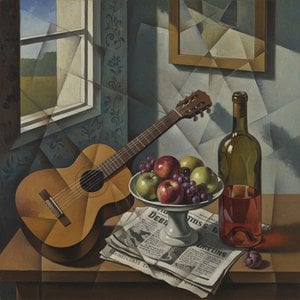
Deconstructing Reality: A Comprehensive Exploration of Cubist Still Life
Explore the revolutionary world of Cubist Still Life with ArtsDot. Discover Picasso & Braque's groundbreaking techniques, its philosophical roots, and lasting impact on modern art. Expert insights for collectors.

The Bountiful Still Life: Symbolism & Artistic Representation of Fruit Across Art History
Explore the rich history of still life painting & the symbolism of fruit across art movements. Discover masterpieces from Caravaggio to Cézanne with ArtsDot – expert guidance & museum-quality reproductions.
The Enduring Appeal of Still Life: A Historical & Contemporary Exploration
Explore the rich history & symbolism of still life painting with ArtsDot. Discover masterpieces from the Dutch Golden Age, learn about vanitas art, and find expert guidance for collecting timeless artworks.

Severin Roesen: Evoking National Identity Through American Still Life Painting
Explore the captivating world of Severin Roesen, a major American still life painter influenced by Dutch masters. Discover his lush compositions and the symbolism within his art – a window into 19th-century America.

De la Naturaleza Muerta Clásica a la Abstracción Contemporánea: Elevando los Espacios de Entretenimiento en Villas a Través de Reproducciones Artísticas
Descubre la evolución del bodegón y cómo integrar reproducciones artísticas de alta calidad en tu villa. Expertos en arte, selección exclusiva y asesoramiento personalizado.



