


 Vista previa
 Compartir
 Compartir
 Ver detalles

 Descargar
 Ver similares
 Radiografía
 Presentación de diapositivas
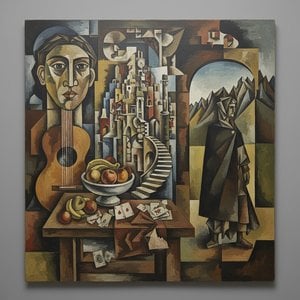
The Chariot II

 Leer más
Reproducción al óleo hecha a mano
Óleo sobre lienzo pintado a mano en el tamaño y marco de su elección, realizado por encargo por nuestros artistas. ( Cambiar a impresión Cambiar a imagen)




































Elija entre nuestros tamaños predefinidos que respetan las proporciones originales de la obra.

Puede ingresar sus propias dimensiones para adaptarse a un marco o espacio específico. Si el tamaño seleccionado no coincide con las proporciones de la imagen original, recortaremos la obra o extenderemos la pintura con elementos adicionales pintados a mano. Se le enviará una maqueta digital para su aprobación antes de comenzar la producción.
Tenga en cuenta que la vista previa en pantalla no refleja el recorte o la extensión reales. Solo la maqueta mostrará con precisión la composición final.
Si bien existen tamaños personalizados, recomendamos seleccionar una dimensión de la lista predefinida para preservar las proporciones originales.
Tras realizar el pedido, el equipo de ArtsDot.com enviará un correo electrónico al cliente para solicitar instrucciones y proporcionarle una vista previa del boceto.
Envío a todo el mundo () en 3-4 semanas en lugar de las 5 semanas estándar. (11 agosto). Sin comprometer la calidad.

Envío exprés gratuito a todo el mundo

Lienzo de lino de alta calidad

Seguro de envío completo

Garantía de reembolso de aranceles aduaneros

Garantía de fidelidad cromática exacta

Política de devolución de 60 días (solo por defectos)

Garantía de devolución del 100% del dinero

Oferta por volumen
 La opción de vidrio solo está disponible en tamaños inferiores a 110 cm.

The Chariot II
Técnica de reproducción
Tamaño de la reproducción
-


Precio total
$ 263
Descripción de la obra
Georges Braque: A Fragmented Vision of Reality
Georges Braque (1882-1963) stands as an undeniable titan amongst the architects of modern art, inextricably linked with Pablo Picasso in the genesis of Cubism – a movement that irrevocably altered artistic perception and challenged conventions established for centuries. Born in Argenteuil, France, his formative years were steeped in the atmosphere of Impressionism, nurtured by familial connections to house painters, fostering an early appreciation for meticulous observation and textural nuance. However, Braque swiftly transcended these influences, embarking on a daring intellectual voyage that propelled him toward radical experimentation and ultimately cemented his legacy as one of the most influential artists of the 20th century. His artistic trajectory began with formal training at the École des Beaux-Arts in Le Havre, where he honed his technical skills alongside fellow luminaries like Marie Laurencin and Francis Picabia – a cohort destined to reshape the visual landscape. Yet it was Paris, arriving in 1902, that truly ignited his creative fervor, immersing him within the burgeoning artistic dynamism of the Belle Époque. Here, amidst the avant-garde currents swirling through Montmartre and Montparnasse, he encountered Picasso, initiating a collaborative partnership that would yield masterpieces like “Les Demoiselles d’Avignon,” arguably the cornerstone of Cubist innovation. ### The Birth of Cubism: Deconstructing Perspective The conceptual bedrock of Braque's artistic endeavors was fundamentally rooted in a profound dissatisfaction with traditional representational art—specifically, the illusionistic techniques championed by Renaissance painters. Rejecting the single viewpoint perspective that dominated Western painting for centuries, Braque and Picasso embarked on a revolutionary project: to dismantle pictorial space and reconstruct it from multiple perspectives simultaneously. This approach, termed Analytical Cubism (roughly 1908-1912), involved fracturing objects into geometric planes—often cubes—and presenting them alongside each other on the canvas, creating an unsettling yet intellectually stimulating visual experience. The resulting images appeared flattened, devoid of depth, prioritizing form and structure over realistic depiction. Consider “Houses at L’Estaque,” painted in 1908. The scene depicts a Provençal hillside village bathed in hazy sunlight. However, Braque abandons conventional perspective entirely. Instead, he renders the buildings as fragmented planes—rectangles and triangles—overlapping and intersecting to convey not just what is visible but also how it *feels*. The muted palette—dominated by shades of ochre, gray, and brown—further enhances this sense of spatial ambiguity, mirroring the artist’s preoccupation with capturing the essence of a place rather than its literal appearance. ### Beyond Fragmentation: Synthetic Cubism and Collage As Braque continued to refine his artistic vision, he moved beyond the purely geometric explorations of Analytical Cubism toward Synthetic Cubism (roughly 1912-1914), incorporating elements of collage—the pasting together of disparate materials onto a canvas—into his compositions. This technique represented a significant departure from established artistic practices and signaled Braque’s embrace of new expressive possibilities. Influenced by the burgeoning interest in nonrepresentational art and inspired by the pioneering experiments of artists like Kazimir Malevich, he began to experiment with textures and patterns derived from everyday objects – newspaper fragments, burlap sacks, wood grain—creating visually arresting juxtapositions that challenged viewers' preconceptions about artistic materiality. “Guitar” exemplifies Synthetic Cubism’s innovative spirit. Painted in 1914, the artwork depicts a guitar rendered as a series of interlocking planes and geometric shapes. However, Braque introduces a striking element of collage – a piece of burlap fabric adhered to the canvas—creating a textural contrast that adds depth and complexity to the image. The muted color palette remains consistent with Braque’s stylistic preferences, emphasizing form and texture over chromatic vibrancy. This deliberate incorporation of non-traditional materials underscores Braque's commitment to pushing artistic boundaries and exploring new avenues for visual expression. ### Legacy and Emotional Resonance Georges Braque’s contribution to the history of art transcends mere stylistic innovation; it represents a fundamental rethinking of how artists perceive and represent reality. His unwavering dedication to experimentation—from Analytical Cubism’s geometric fragmentation to Synthetic Cubism's textural collage—established him as a pivotal figure in shaping the trajectory of modern art. More than simply replicating what is seen, Braque sought to convey an inner vision—a distillation of emotion and intellect—expressed through meticulously crafted compositions that continue to captivate audiences today. His enduring influence can be discerned not only in his own oeuvre but also in the works of countless subsequent artists who embraced Cubist principles as a springboard for their own creative endeavors.Obras relacionadas


Biografía del artista
**vida temprana y formación**
georges braque, un destacado pintor francés, collageador, dibujante, grabador y escultor, nació el 13 de mayo de 1882 en Argelo, Val-d'Oise. Creció en Le Havre y inicialmente se formó para ser pintor de casas y decorador, como su padre y abuelo. Sin embargo, las inclinaciones artísticas de Braque lo llevaron a estudiar pintura en la École des Beaux-Arts en Le Havre de 1897 a 1899.**evolución artística y fauvismo**
En 1902, después de completar su aprendizaje con un decorador en París, Braque asistió a la Academia Humbert hasta 1904. Este período marcó su introducción al fauvismo, un estilo caracterizado por colores vibrantes y respuestas emocionales. Influenciado por las obras de henri matisse y andré derain, Braque adoptó un enfoque fauvista, como se ve en su pintura the patience (fauvismo, óleo sobre lienzo).**contribución al cubismo**
La colaboración de Braque con pablo picasso desde 1908 hasta 1912 llevó al desarrollo del cubismo. Sus obras cubistas analíticas, como georges braque: the patience y pablo picasso: clarinet(cubismo analítico, óleo sobre lienzo), se consideran hitos en la historia del arte.**legado y obras notables**
* Houses at l'Estaque: un testimonio del uso innovador de la geometría y la perspectiva simultánea de Braque. * The Patience(fauvismo, óleo sobre lienzo): demuestra el estilo fauvista de Braque. * Clarinet(cubismo analítico, óleo sobre lienzo): una obra cubista colaborativa con Picasso.**museos y colecciones**
* Musée d'Orsay: presenta una extensa colección de arte impresionista y postimpresionista, incluyendo obras de Braque. * Musée de l'Orangerie: exhibe una amplia gama de obras de arte, incluyendo las de Braque y otros artistas notables.- Descubra más sobre la vida y obra de Georges Braque en ArtsDot.com
- Explore la colección del Musée d'Orsay, que presenta obras de Braque y otros artistas, en Musée d'Orsay - Wikipedia
- Aprenda más sobre el fauvismo y su influencia en el desarrollo del cubismo con el movimiento artístico fauvista en ArtsDot.com

Georges Braque
1882 - 1963 , Francia
Datos clave
- Artistas Influenciados Por Este Artista: ['Pablo Picasso']
- Artistas Que Influyeron:
- Henri Matisse
- André Derain
- Paul Cézanne
- Fecha De Muerte: 31 de agosto de 1963
- Fecha De Nacimiento: 13 de mayo de 1882
- Lugar De Nacimiento: Argenteuil, Francia
- Movimiento Artístico: Cubismo, Fauvismo
- Nacionalidad: Francés
- Nombre Completo: Georges Braque
- Obras Notables:
- Casas en L'Estaque
- La paciencia (Fauvismo)
- Violin y Paleta
- Mandola
Artículos relacionados

De Pósters a Paletas: El Ascenso del Fan Art Pintado a Mano y la Redefinición de la Colección Apasionada
Descubre el auge del fan art pintado a mano. Encuentra artistas talentosos y obras únicas personalizadas. Guías expertas, calidad garantizada y una nueva forma de coleccionar arte.

Los 10 Maestros del Cubismo: Obras que Revolucionaron el Arte | ArtsDot
Descubre los 10 lienzos cubistas que revolucionaron el arte moderno. Explora las obras maestras de Picasso, Braque y Gris en ArtsDot.com. Reproducciones de alta calidad para tu hogar.

Las 10 Obras Maestras que Definen el Arte Moderno | ArtsDot
Descubre las 10 obras maestras del arte moderno que revolucionaron el mundo. Explora la historia de Picasso, Van Gogh y Dalí, sus técnicas y paletas únicas. Encuentra lienzos decorativos y reproduce tus favoritos en ArtsDot.com.

Los 10 Maestros del Cubismo: Obras que Revolucionaron el Arte |
Descubre los 10 lienzos cubistas que revolucionaron el arte moderno. Explora la historia de Picasso, Braque y otros maestros del cubismo en . Reproducciones de alta calidad para tu hogar.
Los 10 Maestros del Cubismo Expresionista: Obras que Transformaron el Arte | ArtsDot
Descubre los 10 lienzos cubistas más influyentes de Picasso, Braque y otros maestros. Explora la historia, técnica y significado del movimiento artístico que revolucionó el arte moderno. Reproducciones de alta calidad en ArtsDot.com.



