


 Vista previa
 Compartir
 Compartir
 Ver detalles
 Guía
Guía

 Descargar
 Ver artículos similares
 Radiografía
 Presentación de diapositivas
 Estadísticas
Pitchet, Glass And Lemons

 Leer más
Reproducción al óleo hecha a mano
Óleo sobre lienzo pintado a mano en el tamaño y marco de su elección, realizado por encargo por nuestros artistas. ( Cambiar a formato impreso Ver versión en imagen digital)




P118B $10

P118H $10

P118W $10

P438Z $10

P508JH $12

P508YH $12

P805H $10

P805Z $10

P919BZ $10

P919G $10

P919XJ $10

P959ZH $10

P968JZ $12

W106C $8

W218G $10

W218JH $8

W218Y $10

W307PJ $10

W316G $10

W316PJ $8

W316Y $10

W398PJ $8

W4111J $10

W500HY $15

W500JH $15

W692G $12

W849H $8

W940BG $15

W953PJ $8




Elija entre nuestros tamaños predefinidos que respetan las proporciones originales de la obra.

Puede ingresar sus propias dimensiones para adaptarse a un marco o espacio específico. Si el tamaño seleccionado no coincide con las proporciones de la imagen original, recortaremos la obra o extenderemos la pintura con elementos adicionales pintados a mano. Se le enviará una maqueta digital para su aprobación antes de comenzar la producción.
Tenga en cuenta que la vista previa en pantalla no refleja el recorte o la extensión reales. Solo la maqueta mostrará con precisión la composición final.
Si bien existen tamaños personalizados, recomendamos seleccionar una dimensión de la lista predefinida para preservar las proporciones originales.
Tras realizar el pedido, el equipo de ArtsDot.com enviará un correo electrónico al cliente para solicitar instrucciones y proporcionarle una vista previa del boceto.
Envío a todo el mundo () en 3-4 semanas en lugar de las 5 semanas estándar. (22 septiembre). Sin comprometer la calidad.

Envío exprés gratuito a todo el mundo

Lienzo de lino de alta calidad

Seguro de envío completo

Garantía de reembolso de impuestos aduaneros

Garantía de fidelidad cromática exacta

Política de devolución de 100 días (solo por defectos)

Garantía de devolución del 100% del dinero

Oferta por volumen
 La opción de vidrio solo está disponible en tamaños inferiores a 110 cm.

Pitchet, Glass And Lemons
Técnica de reproducción
Tamaño de la reproducción
-


Precio total
$ 263
The Genesis of Fragmentation: Georges Braque's "Pitchet, Glass and Lemons"
Georges Braque’s 1942 painting, “Pitchet, Glass and Lemons,” isn’t merely a depiction of everyday objects; it’s a profound exploration of perception itself. Born in Argenteuil, France, in 1882, Braque’s artistic journey was deeply rooted in the practicalities of his upbringing – his father and grandfather were house painters and decorators – yet he possessed an innate understanding of form and structure that transcended mere craft. This foundational knowledge, combined with rigorous academic training at the École des Beaux-Arts, provided him with a unique lens through which to deconstruct traditional artistic conventions, ultimately leading him to pioneer Cubism alongside Pablo Picasso.
The painting’s genesis lies within the burgeoning artistic landscape of post-World War I Europe. Braque, like many artists of his generation, was grappling with the shifting realities of a world irrevocably altered by conflict and technological advancement. This period witnessed a rejection of representational art in favor of new modes of expression – an impulse powerfully embodied in Cubism. “Pitchet, Glass and Lemons” exemplifies this shift; it’s not about faithfully recreating a still life, but rather presenting a fragmented, multi-faceted view of the objects within it.
Deconstructing Reality: The Language of Cubism
The painting's style is undeniably Cubist. Braque employs a technique characterized by geometric simplification and multiple viewpoints simultaneously presented on a single canvas. The pitcher, central to the composition, isn’t rendered as a solid, unified form; instead, it’s broken down into interlocking planes of color and shape, suggesting its volume from various angles at once. The lemons, scattered around the table, are similarly fragmented, their curves and contours dissolved into geometric shards. This deliberate distortion challenges our conventional understanding of space and perspective – forcing us to actively engage with the image and reconstruct it mentally.
- Geometric Abstraction: Braque reduces objects to their essential geometric components, emphasizing form over realistic representation.
- Multiple Perspectives: The simultaneous presentation of different viewpoints creates a dynamic and unsettling effect, disrupting traditional notions of depth and space.
- Monochromatic Palette: The muted color scheme – primarily browns, ochres, and yellows – contributes to the painting’s sense of austerity and intellectual rigor. It directs attention to the interplay of shapes and planes rather than distracting with vibrant hues.
Symbolism and Emotional Resonance
Beyond its formal innovations, “Pitchet, Glass and Lemons” carries a subtle symbolic weight. The pitcher itself, often associated with nourishment and domesticity, is presented in a fragmented state, perhaps reflecting the disruption of traditional values following the war. The lemons, symbols of brightness and vitality, are juxtaposed against the muted tones of the background, suggesting a lingering sense of melancholy or uncertainty. The scattered eggs add to this feeling of fragility and impermanence.
Despite its fragmented nature, the painting evokes a quiet contemplation. It’s not an emotionally charged work in the traditional sense; rather, it invites the viewer to engage in a process of intellectual interpretation – to piece together the fragments of reality presented before them. Braque's masterful use of light and shadow further enhances this effect, creating a sense of solidity amidst the apparent chaos.
A Legacy of Innovation: Braque’s Enduring Influence
“Pitchet, Glass and Lemons” stands as a pivotal work in the development of Cubism and a testament to Braque's profound impact on 20th-century art. His collaboration with Picasso revolutionized painting, paving the way for countless subsequent artistic movements. Reproductions of this iconic piece offer a unique opportunity to experience firsthand the intellectual rigor and aesthetic innovation of one of history’s most influential artists. Whether displayed in a modern interior or studied within an academic setting, “Pitchet, Glass and Lemons” continues to challenge our perceptions and inspire new ways of seeing the world.
Obras relacionadas


Biografía del artista
**vida temprana y formación**
georges braque, un destacado pintor francés, collageador, dibujante, grabador y escultor, nació el 13 de mayo de 1882 en Argelo, Val-d'Oise. Creció en Le Havre y inicialmente se formó para ser pintor de casas y decorador, como su padre y abuelo. Sin embargo, las inclinaciones artísticas de Braque lo llevaron a estudiar pintura en la École des Beaux-Arts en Le Havre de 1897 a 1899.**evolución artística y fauvismo**
En 1902, después de completar su aprendizaje con un decorador en París, Braque asistió a la Academia Humbert hasta 1904. Este período marcó su introducción al fauvismo, un estilo caracterizado por colores vibrantes y respuestas emocionales. Influenciado por las obras de henri matisse y andré derain, Braque adoptó un enfoque fauvista, como se ve en su pintura the patience (fauvismo, óleo sobre lienzo).**contribución al cubismo**
La colaboración de Braque con pablo picasso desde 1908 hasta 1912 llevó al desarrollo del cubismo. Sus obras cubistas analíticas, como georges braque: the patience y pablo picasso: clarinet(cubismo analítico, óleo sobre lienzo), se consideran hitos en la historia del arte.**legado y obras notables**
* Houses at l'Estaque: un testimonio del uso innovador de la geometría y la perspectiva simultánea de Braque. * The Patience(fauvismo, óleo sobre lienzo): demuestra el estilo fauvista de Braque. * Clarinet(cubismo analítico, óleo sobre lienzo): una obra cubista colaborativa con Picasso.**museos y colecciones**
* Musée d'Orsay: presenta una extensa colección de arte impresionista y postimpresionista, incluyendo obras de Braque. * Musée de l'Orangerie: exhibe una amplia gama de obras de arte, incluyendo las de Braque y otros artistas notables.- Descubra más sobre la vida y obra de Georges Braque en ArtsDot.com
- Explore la colección del Musée d'Orsay, que presenta obras de Braque y otros artistas, en Musée d'Orsay - Wikipedia
- Aprenda más sobre el fauvismo y su influencia en el desarrollo del cubismo con el movimiento artístico fauvista en ArtsDot.com

Georges Braque
1882 - 1963 , Francia
Datos clave
- Artistas Influenciados Por Este Artista: ['Pablo Picasso']
- Artistas Que Influyeron:
- Henri Matisse
- André Derain
- Paul Cézanne
- Fecha De Muerte: 31 de agosto de 1963
- Fecha De Nacimiento: 13 de mayo de 1882
- Lugar De Nacimiento: Argenteuil, Francia
- Movimiento Artístico: Cubismo, Fauvismo
- Nacionalidad: Francés
- Nombre Completo: Georges Braque
- Obras Notables:
- Casas en L'Estaque
- La paciencia (Fauvismo)
- Violin y Paleta
- Mandola
Artículos relacionados

Deconstruyendo la Realidad: El Impacto Revolucionario del Cubismo en el Arte del Siglo XX
Descubra el revolucionario impacto del Cubismo en el arte del siglo XX. Análisis profundo de Picasso, Braque y su legado. Guía para coleccionistas apasionados e inversores.

Georges Seurat: Las 25 Obras Maestras del Pionero Puntillista | ArtsDot
Descubre las 25 obras maestras de Georges Seurat, el innovador del puntillismo. Explora su técnica única, colores vibrantes y legado artístico en ArtsDot.com. Reproducciones de arte de museo para tu hogar.

Georges Braque: Las 25 Obras Maestras del Cubismo y su Legado en el Arte Moderno
Descubre las 25 obras maestras de Georges Braque, pionero del cubismo. Explora su innovadora técnica, colores y el legado del arte moderno francés. Reproducciones de alta calidad en ArtsDot.com. ¡Encuentra tu inspiración!
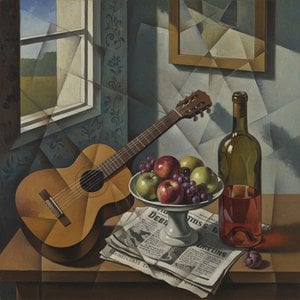
Deconstructing Reality: A Comprehensive Exploration of Cubist Still Life
Explore the revolutionary world of Cubist Still Life with ArtsDot. Discover Picasso & Braque's groundbreaking techniques, its philosophical roots, and lasting impact on modern art. Expert insights for collectors.

Georges Braque: Pioneering Cubism & the Evolution of Modern Form
Explore the revolutionary art of Georges Braque, a pioneer of Cubism alongside Picasso. Discover his artistic evolution, key works, and lasting impact on modern art. A guide for discerning collectors.


