


 Ver en contexto
 Enviar
 Compartir
 Detalles

 Descargar
 Similares
 Radiografía
 Presentación de diapositivas
Carafe And Fish


 Ver más
Giclée / Impresión de arte
Impresiones giclée o en lienzo de calidad de museo con producción rápida y opciones de acabado flexibles. ( Comprar pintura hecha a mano Comprar imagen)




P118B $10

P118H $10

P118W $10

P438Z $10

P508JH $12

P508YH $12

P805H $10

P805Z $10

P919BZ $10

P919G $10

P919XJ $10

P959ZH $10

P968JZ $12

W106C $8

W218G $10

W218JH $8

W218Y $10

W307PJ $10

W316G $10

W316PJ $8

W316Y $10

W398PJ $8

W4111J $10

W500HY $15

W500JH $15

W692G $12

W849H $8

W940BG $15

W953PJ $8




Elija entre nuestros tamaños predefinidos que respetan las proporciones originales de la obra.

Puede introducir sus propias dimensiones para adaptarse a un marco o espacio específico. Si el tamaño seleccionado no coincide con las proporciones de la imagen original, recortaremos la obra de arte o extenderemos la imagen con un borde con efecto espejo o de color sólido. Se enviará una maqueta digital para su aprobación antes de que comience la producción.
Tenga en cuenta que la vista previa en pantalla no refleja el recorte o la extensión real. Solo la maqueta mostrará con precisión la composición final.
Aunque existen tamaños personalizados, recomendamos seleccionar una dimensión de la lista predefinida para preservar las proporciones originales.
Envío a todo el mundo () en 2 semanas en lugar de las 4/5 semanas estándar. (27 agosto)

Envío exprés gratuito a todo el mundo

Lienzo de lino de alta calidad

Seguro de envío total

Garantía de reembolso de impuestos aduaneros

Garantía de fidelidad cromática exacta

Política de devolución de 60 días (solo por defectos)

Garantía de devolución del 100% del dinero

Descuento por cantidad
 La opción de vidrio solo está disponible en tamaños inferiores a 110 cm.

Carafe And Fish
Giclée / Impresión de arte
Dimensiones de la reproducción
-


Precio total final
$ 62
Descripción de la pieza
A Fragment of Cubist Still Life: Georges Braque’s ‘Bottle and Fishes’
Georges Braque’s “Bottle and Fishes,” created around 1910-12, stands as a cornerstone of Analytical Cubism—a movement that irrevocably altered the course of modern art. More than just a depiction of everyday objects, this deceptively simple composition embodies the radical rethinking of perspective and representation championed by Braque alongside Pablo Picasso.
- Subject Matter: The artwork presents a meticulously rendered bottle and two fish positioned against a muted monochrome backdrop. These seemingly mundane subjects were transformed into vehicles for exploring geometric abstraction.
- Style & Technique: Analytical Cubism distinguishes itself from its successor, Synthetic Cubism, through its relentless dissection of form. Braque employs fractured planes—overlapping cubes and cylinders—to reconstruct the visual world in a way that defies traditional illusionistic space. The subtle tonal variations contribute to the artwork’s depth without resorting to conventional shading techniques.
- Historical Context: Produced during the burgeoning artistic fervor of Paris at the turn of the century, “Bottle and Fishes” reflects the intellectual currents surrounding Einstein's theory of relativity—a movement that questioned established notions of space and time. Artists like Braque sought to capture not just what was seen but how it *felt*, prioritizing conceptual exploration over mere visual accuracy.
Decoding Geometric Harmony: The Language of Cubism
The artist’s masterful manipulation of geometric forms isn't merely decorative; it serves as a deliberate challenge to Western artistic conventions inherited from Renaissance perspective. Each cube and cylinder is rendered with painstaking precision, yet simultaneously destabilized by overlapping planes—creating an unsettling sense of simultaneity that compels the viewer to actively engage in interpreting the image.
- Color Palette: The monochrome palette—primarily shades of gray—emphasizes structural clarity and minimizes distractions. This deliberate restraint allows the viewer’s eye to focus on the interplay of shapes and textures, furthering the artwork's conceptual impact.
- Compositional Arrangement: Braque arranges the bottle and fish in a carefully considered manner, creating a dynamic equilibrium that balances visual tension with formal harmony. The placement of the smaller fish at the top left corner adds an element of surprise and reinforces the artwork’s overall complexity.
Symbolism Beyond Representation: Exploring Perception
"Bottle and Fishes" transcends its literal subject matter to delve into deeper philosophical questions about perception and representation. The fragmented forms mirror the fractured nature of experience itself—suggesting that reality is not a unified whole but rather a collection of interconnected viewpoints.
- Bowl as Container: The bowl symbolizes containment, yet simultaneously represents openness and vulnerability. It frames the fish, highlighting their fragility within the larger geometric framework.
- Fish Symbolism: Fish have long held symbolic significance across cultures—representing fertility, abundance, and spiritual renewal. In Braque’s artwork, they serve as emblems of vitality amidst the austere geometry, prompting contemplation on themes of life and transformation.
Emotional Resonance: A Quiet Intensity
Despite its understated aesthetic, “Bottle and Fishes” possesses a palpable emotional resonance—a subtle tension born from the juxtaposition of stillness and dynamism. The artwork invites viewers to consider not just what is seen but how it is felt—capturing the essence of Cubist thought in a deceptively tranquil visual experience.
Obras relacionadas


Biografía del artista
**vida temprana y formación**
georges braque, un destacado pintor francés, collageador, dibujante, grabador y escultor, nació el 13 de mayo de 1882 en Argelo, Val-d'Oise. Creció en Le Havre y inicialmente se formó para ser pintor de casas y decorador, como su padre y abuelo. Sin embargo, las inclinaciones artísticas de Braque lo llevaron a estudiar pintura en la École des Beaux-Arts en Le Havre de 1897 a 1899.**evolución artística y fauvismo**
En 1902, después de completar su aprendizaje con un decorador en París, Braque asistió a la Academia Humbert hasta 1904. Este período marcó su introducción al fauvismo, un estilo caracterizado por colores vibrantes y respuestas emocionales. Influenciado por las obras de henri matisse y andré derain, Braque adoptó un enfoque fauvista, como se ve en su pintura the patience (fauvismo, óleo sobre lienzo).**contribución al cubismo**
La colaboración de Braque con pablo picasso desde 1908 hasta 1912 llevó al desarrollo del cubismo. Sus obras cubistas analíticas, como georges braque: the patience y pablo picasso: clarinet(cubismo analítico, óleo sobre lienzo), se consideran hitos en la historia del arte.**legado y obras notables**
* Houses at l'Estaque: un testimonio del uso innovador de la geometría y la perspectiva simultánea de Braque. * The Patience(fauvismo, óleo sobre lienzo): demuestra el estilo fauvista de Braque. * Clarinet(cubismo analítico, óleo sobre lienzo): una obra cubista colaborativa con Picasso.**museos y colecciones**
* Musée d'Orsay: presenta una extensa colección de arte impresionista y postimpresionista, incluyendo obras de Braque. * Musée de l'Orangerie: exhibe una amplia gama de obras de arte, incluyendo las de Braque y otros artistas notables.- Descubra más sobre la vida y obra de Georges Braque en ArtsDot.com
- Explore la colección del Musée d'Orsay, que presenta obras de Braque y otros artistas, en Musée d'Orsay - Wikipedia
- Aprenda más sobre el fauvismo y su influencia en el desarrollo del cubismo con el movimiento artístico fauvista en ArtsDot.com

Georges Braque
1882 - 1963 , Francia
Datos clave
- Artistas Influenciados Por Este Artista: ['Pablo Picasso']
- Artistas Que Influyeron:
- Henri Matisse
- André Derain
- Paul Cézanne
- Fecha De Muerte: 31 de agosto de 1963
- Fecha De Nacimiento: 13 de mayo de 1882
- Lugar De Nacimiento: Argenteuil, Francia
- Movimiento Artístico: Cubismo, Fauvismo
- Nacionalidad: Francés
- Nombre Completo: Georges Braque
- Obras Notables:
- Casas en L'Estaque
- La paciencia (Fauvismo)
- Violin y Paleta
- Mandola
Artículos relacionados

Georges Braque: Las 25 Obras Maestras del Cubismo y su Legado en el Arte Moderno
Descubre las 25 obras maestras de Georges Braque, pionero del cubismo. Explora su innovadora técnica, colores y el legado del arte moderno francés. Reproducciones de alta calidad en ArtsDot.com. ¡Encuentra tu inspiración!

Georges Seurat: Las 25 Obras Maestras del Pionero Puntillista | ArtsDot
Descubre las 25 obras maestras de Georges Seurat, el innovador del puntillismo. Explora su técnica única, colores vibrantes y legado artístico en ArtsDot.com. Reproducciones de arte de museo para tu hogar.

Georges Braque: Pioneering Cubism & the Evolution of Modern Form
Explore the revolutionary art of Georges Braque, a pioneer of Cubism alongside Picasso. Discover his artistic evolution, key works, and lasting impact on modern art. A guide for discerning collectors.
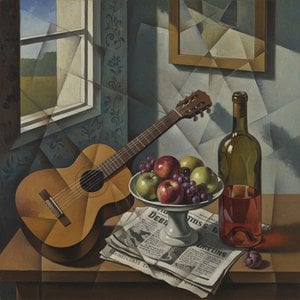
Deconstructing Reality: A Comprehensive Exploration of Cubist Still Life
Explore the revolutionary world of Cubist Still Life with ArtsDot. Discover Picasso & Braque's groundbreaking techniques, its philosophical roots, and lasting impact on modern art. Expert insights for collectors.

The Enduring Legacy of Oil on Canvas: Technique, History & Aesthetic Impact
Explore the rich history & techniques of oil painting – from Renaissance masters to Impressionism. Discover pigments, layering methods, and why this timeless medium endures. Expert insights for artists & art enthusiasts.



