


 Vista previa
 Compartir
 Compartir
 Ver detalles
 Guía
Guía

 Descargar
 Ver artículos similares
 Radiografía
 Presentación de diapositivas
 Estadísticas
Apple On Black Background

 Leer más
Giclée / Impresión de arte
Impresiones giclée o en lienzo de calidad de museo con producción rápida y opciones de acabado flexibles. ( Encargar reproducción pintada a mano Ver versión en imagen digital)




P118B $10

P118H $10

P118W $10

P438Z $10

P508JH $12

P508YH $12

P805H $10

P805Z $10

P919BZ $10

P919G $10

P919XJ $10

P959ZH $10

P968JZ $12

W106C $8

W218G $10

W218JH $8

W218Y $10

W307PJ $10

W316G $10

W316PJ $8

W316Y $10

W398PJ $8

W4111J $10

W500HY $15

W500JH $15

W692G $12

W849H $8

W940BG $15

W953PJ $8




Elija entre nuestros tamaños predefinidos que respetan las proporciones originales de la obra.

Puede introducir sus propias dimensiones para adaptarse a un marco o espacio específico. Si el tamaño seleccionado no coincide con las proporciones de la imagen original, recortaremos la obra de arte o extenderemos la imagen con un borde con efecto espejo o de color sólido. Se enviará una maqueta digital para su aprobación antes de que comience la producción.
Tenga en cuenta que la vista previa en pantalla no refleja el recorte o la extensión real. Solo la maqueta mostrará con precisión la composición final.
Aunque existen tamaños personalizados, recomendamos seleccionar una dimensión de la lista predefinida para preservar las proporciones originales.
Envío a todo el mundo () en 2 semanas en lugar de las 4/5 semanas estándar. (25 septiembre)

Envío exprés gratuito a todo el mundo

Lienzo de lino de alta calidad

Seguro de envío completo

Garantía de reembolso de impuestos aduaneros

Garantía de fidelidad cromática exacta

Política de devolución de 100 días (solo por defectos)

Garantía de devolución del 100% del dinero

Oferta por volumen
 La opción de vidrio solo está disponible en tamaños inferiores a 110 cm.

Apple On Black Background
Giclée / Impresión de arte
Tamaño de la reproducción
-


Precio total
$ 62
A Simplicity of Form: Exploring Georges Braque’s ‘Apple On Black Background’
Georges Braque's “Apple On Black Background,” a deceptively simple composition, offers a profound meditation on perception and the nature of representation. Painted around 1954 – though the exact date remains elusive, as with many works from this period – it exemplifies Braque’s mature style, a masterful synthesis of Cubist principles and a deeply felt emotional resonance. The painting immediately commands attention not through vibrant color or dramatic gesture, but through its stark contrast: the luminous, almost sculptural form of the apple against the enveloping darkness of the background. This deliberate reduction to essential elements – shape, volume, and shadow – is characteristic of Braque’s later work, a move away from the more fractured explorations of his early Cubist years.
The photograph itself reveals the painting's meticulous construction. The apple, rendered with a careful attention to modeling and texture, isn’t a photographic imitation; instead, it’s an abstracted representation, broken down into geometric planes that suggest its three-dimensionality without resorting to traditional perspective. Notice how Braque subtly manipulates light and shadow, creating the illusion of volume and depth within this limited palette. The apple appears almost suspended in space, anchored by the dark background which simultaneously contains and isolates it.
The Roots of Cubism: Braque’s Dialogue with Cézanne
To fully appreciate “Apple On Black Background,” one must understand its lineage within the broader context of early 20th-century art. Braque's artistic journey began in Argenteuil, France, where he learned the craft of house painting alongside his father – a grounding that instilled an appreciation for materials and structure. This practical foundation proved invaluable as he later dismantled and reimagined traditional artistic conventions, ultimately becoming a pivotal figure in the development of Cubism. His early work was heavily influenced by Paul Cézanne, whose emphasis on geometric forms and multiple viewpoints profoundly shaped Braque’s thinking. As evidenced in paintings like “Houses at l'Estaque,” Braque meticulously analyzed Cézanne’s approach to depicting space and form, translating these principles into his own distinctive style.
The period between 1908 and 1912 witnessed a particularly intense dialogue between Braque and Pablo Picasso. They worked in close collaboration, each building upon the other's ideas, resulting in a shared exploration of Cubist techniques. This collaborative spirit is evident in works like “Apple On Black Background,” where the influence of both artists can be discerned – a testament to their mutual intellectual and artistic exchange.
Symbolism and Emotional Depth
While seemingly straightforward, "Apple On Black Background" carries a subtle weight of symbolism. The apple itself has long been associated with themes of knowledge, temptation, and mortality—a potent visual metaphor. Its placement against the dark background suggests isolation, contemplation, or perhaps even a sense of vulnerability. Braque’s deliberate use of muted tones – predominantly browns and blacks – contributes to this atmosphere of quiet introspection. The painting isn't about depicting an apple; it’s about evoking a feeling, a mood—a moment of stillness and observation.
Furthermore, the simplicity of the composition invites the viewer to engage actively with the artwork, prompting questions about perception, representation, and the relationship between form and space. It's a painting that rewards repeated viewing, revealing new nuances and subtleties with each encounter.
A Reproduction for Your Collection
ArtsDot offers meticulously crafted hand-painted reproductions of Georges Braque’s “Apple On Black Background,” capturing the essence of this iconic work. Our skilled artists replicate Braque's nuanced modeling, subtle shading, and masterful use of light with exceptional precision. Whether you are an art collector, interior designer seeking a sophisticated accent piece, or simply someone captivated by the beauty of modern art, our reproduction provides an authentic and enduring representation of this seminal artwork. Explore our range of sizes and canvas options to find the perfect addition to your collection – a timeless testament to Braque’s artistic genius.
Obras relacionadas


Biografía del artista
**vida temprana y formación**
georges braque, un destacado pintor francés, collageador, dibujante, grabador y escultor, nació el 13 de mayo de 1882 en Argelo, Val-d'Oise. Creció en Le Havre y inicialmente se formó para ser pintor de casas y decorador, como su padre y abuelo. Sin embargo, las inclinaciones artísticas de Braque lo llevaron a estudiar pintura en la École des Beaux-Arts en Le Havre de 1897 a 1899.**evolución artística y fauvismo**
En 1902, después de completar su aprendizaje con un decorador en París, Braque asistió a la Academia Humbert hasta 1904. Este período marcó su introducción al fauvismo, un estilo caracterizado por colores vibrantes y respuestas emocionales. Influenciado por las obras de henri matisse y andré derain, Braque adoptó un enfoque fauvista, como se ve en su pintura the patience (fauvismo, óleo sobre lienzo).**contribución al cubismo**
La colaboración de Braque con pablo picasso desde 1908 hasta 1912 llevó al desarrollo del cubismo. Sus obras cubistas analíticas, como georges braque: the patience y pablo picasso: clarinet(cubismo analítico, óleo sobre lienzo), se consideran hitos en la historia del arte.**legado y obras notables**
* Houses at l'Estaque: un testimonio del uso innovador de la geometría y la perspectiva simultánea de Braque. * The Patience(fauvismo, óleo sobre lienzo): demuestra el estilo fauvista de Braque. * Clarinet(cubismo analítico, óleo sobre lienzo): una obra cubista colaborativa con Picasso.**museos y colecciones**
* Musée d'Orsay: presenta una extensa colección de arte impresionista y postimpresionista, incluyendo obras de Braque. * Musée de l'Orangerie: exhibe una amplia gama de obras de arte, incluyendo las de Braque y otros artistas notables.- Descubra más sobre la vida y obra de Georges Braque en ArtsDot.com
- Explore la colección del Musée d'Orsay, que presenta obras de Braque y otros artistas, en Musée d'Orsay - Wikipedia
- Aprenda más sobre el fauvismo y su influencia en el desarrollo del cubismo con el movimiento artístico fauvista en ArtsDot.com

Georges Braque
1882 - 1963 , Francia
Datos clave
- Artistas Influenciados Por Este Artista: ['Pablo Picasso']
- Artistas Que Influyeron:
- Henri Matisse
- André Derain
- Paul Cézanne
- Fecha De Muerte: 31 de agosto de 1963
- Fecha De Nacimiento: 13 de mayo de 1882
- Lugar De Nacimiento: Argenteuil, Francia
- Movimiento Artístico: Cubismo, Fauvismo
- Nacionalidad: Francés
- Nombre Completo: Georges Braque
- Obras Notables:
- Casas en L'Estaque
- La paciencia (Fauvismo)
- Violin y Paleta
- Mandola
Artículos relacionados
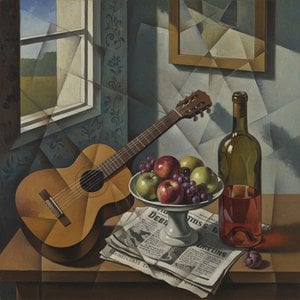
Deconstructing Reality: A Comprehensive Exploration of Cubist Still Life
Explore the revolutionary world of Cubist Still Life with ArtsDot. Discover Picasso & Braque's groundbreaking techniques, its philosophical roots, and lasting impact on modern art. Expert insights for collectors.

Georges Braque: Pioneering Cubism & the Evolution of Modern Form
Explore the revolutionary art of Georges Braque, a pioneer of Cubism alongside Picasso. Discover his artistic evolution, key works, and lasting impact on modern art. A guide for discerning collectors.

Las 10 Pinturas Más Famosas Dominadas por el Negro | Arte y Decoración
Descubre las 10 pinturas más impactantes dominadas por el negro. Explora obras maestras de Rembrandt, Goya y Rothko, su historia y significado. Encuentra reproducciones de arte exclusivas para transformar tu hogar en .

Georges Braque: Las 25 Obras Maestras del Cubismo y su Legado en el Arte Moderno
Descubre las 25 obras maestras de Georges Braque, pionero del cubismo. Explora su innovadora técnica, colores y el legado del arte moderno francés. Reproducciones de alta calidad en ArtsDot.com. ¡Encuentra tu inspiración!

Georges Seurat: Las 25 Obras Maestras del Pionero Puntillista | ArtsDot
Descubre las 25 obras maestras de Georges Seurat, el innovador del puntillismo. Explora su técnica única, colores vibrantes y legado artístico en ArtsDot.com. Reproducciones de arte de museo para tu hogar.


