

 Ver en contexto
 Enviar
 Compartir
 Detalles
 Guía
Guía

 Descargar
 Similares
 Radiografía
 Presentación de diapositivas
 Q&A
Q&A Estadísticas
The Trappers


 Ver más
Giclée / Impresión de arte
Impresiones giclée o en lienzo de calidad de museo con producción rápida y opciones de acabado flexibles. ( Comprar pintura hecha a mano Cambiar a imagen digital)




P118B €10

P118H €10

P118W €10

P438Z €10

P508JH €12

P508YH €12

P805H €10

P805Z €10

P919BZ €10

P919G €10

P919XJ €10

P959ZH €10

P968JZ €12

W106C €8

W218G €10

W218JH €8

W218Y €10

W307PJ €10

W316G €10

W316PJ €8

W316Y €10

W398PJ €8

W4111J €10

W500HY €15

W500JH €15

W692G €12

W849H €8

W940BG €15

W953PJ €8




Elija entre nuestros tamaños predefinidos que respetan las proporciones originales de la obra.

Introduzca el ancho y el alto que necesite para adaptarse a su marco o pared. Una impresión solo puede recortarse, nunca hacerse más grande que la imagen original, por lo que un tamaño con una forma distinta perderá parte de la obra. Le enviaremos una maqueta digital para su aprobación antes de realizar cualquier impresión. La imagen que se muestra en esta página no refleja el recorte real; solo la maqueta lo hace.
Envío a todo el mundo () en 2 semanas en lugar de las 4/5 semanas estándar. (2 noviembre)

Envío exprés gratuito a todo el mundo

Lienzo de lino de alta calidad

Seguro de envío total

Garantía de reembolso de aranceles aduaneros

Garantía de fidelidad cromática exacta

Política de devolución de 100 días (solo por defectos)

Garantía de devolución del 100% del dinero

Descuento por cantidad
 La opción de vidrio solo está disponible en tamaños inferiores a 110 cm.

The Trappers
Giclée / Impresión de arte
Dimensiones de la reproducción
-


Precio total final
€ 55
A Portrait of Frontier Camaraderie
To gaze upon George Caleb Bingham's depiction, The Trappers, is to be instantly transported to a bygone era—a time when the American frontier was not merely a location, but an experience etched into the very soul of its inhabitants. This painting captures more than just two men in a boat; it encapsulates a profound sense of shared endeavor and quiet companionship against the vast, untamed backdrop of nature. The scene unfolds with remarkable naturalism, suggesting a moment stolen from the rhythm of daily life—a pause for reflection amidst the journey.
Bingham masterfully renders the interplay between man and environment. The boat itself becomes a microcosm of their shared existence, while the surrounding water, trees, and sky breathe with palpable energy. Notice the delicate inclusion of the birds, some soaring overhead as if guiding the men's passage, others perched nearby like silent witnesses to their adventure. And accompanying them all, the dog adds a touch of loyal warmth, grounding the narrative in the tangible bonds of friendship and partnership.
The Brushwork of American Life
George Caleb Bingham’s technique is inseparable from his subject matter. His style possesses an immediacy that belies its technical sophistication. He painted with an almost journalistic eye, yet imbued it with a romantic sensibility. The handling of the water, for instance, suggests movement and depth without becoming chaotic; it flows with a believable grace. Similarly, the figures are rendered not just in outline, but in character. You can almost feel the damp air on their skin and hear the gentle dip of the oars. This commitment to capturing authentic human interaction within a grand landscape is what elevates this work from mere depiction to genuine narrative art.
Historical Echoes of the Missouri Frontier
Understanding Bingham’s life—a life shaped by movement across the American West—is key to appreciating this canvas. For men like those portrayed here, life was an act of constant negotiation with the wilderness. The trappers were pioneers, figures embodying resilience and self-reliance. This painting speaks directly to that spirit: the triumph of human ingenuity and camaraderie over the vast indifference of nature. It is a visual testament to the early American spirit—adventurous, hardworking, and deeply connected to the land they sought to master.
Symbolism and Emotional Resonance
The symbolism within The Trappers is rich and layered. The boat itself can be seen as a metaphor for life's journey, requiring teamwork and steady effort to navigate the currents of fortune. The natural elements—the sturdy trees symbolizing enduring roots, the open water representing possibility—all converge around the central human bond. Emotionally, the painting resonates with a deep sense of nostalgia; it evokes the feeling of belonging found in shared struggle and mutual respect. For collectors and designers alike, this piece offers more than decoration; it offers an emotional anchor to themes of enduring partnership and the sublime beauty of exploration.
Bringing the Frontier Home
Reproducing such a powerful work requires sensitivity to Bingham's original intent. A high-quality reproduction allows one to bring the spirit of the American frontier into a modern setting. Imagine this scene gracing your walls, inviting contemplation during quiet moments. It serves as a magnificent focal point, whispering tales of adventure and steadfast friendship across the centuries.
ARTWORK_CLASSIFICATION: 1Preguntas y respuestas
¿Qué estado de ánimo y emoción se entrelazan en "The Trappers"?
En "The Trappers", un ambiente Calm acompaña a una emoción Nostalgic.
¿Qué nivel de saturación e intensidad presenta "The Trappers" de George Caleb Bingham?
La paleta cromática de "The Trappers" presenta una saturación de Clear Color Presence y una intensidad de Vivid.
¿Dónde puedo ver la obra original "The Trappers" de George Caleb Bingham?
La obra original "The Trappers" de George Caleb Bingham se encuentra en Instituto de Artes de Detroit, Detroit, Estados Unidos de América. Una reproducción permite que la obra se exhiba en su hogar.
Obras relacionadas


Biografía del artista
Primeros años y comienzos artísticos
George Caleb Bingham, un artista estadounidense, nació en Augusta County, Virginia, en 1811. Fue el segundo de siete hijos de Mary Amend y Henry Vest Bingham. Tras la difícil situación financiera de su familia, se mudaron a Franklin, Missouri, donde comenzó el viaje artístico de Bingham. A los nueve años, asistió a Chester Harding, un famoso retratista estadounidense, durante su breve estancia en Franklin.Desarrollo artístico y estilo
Bingham fue en gran medida autodidacta, con sus primeros trabajos influenciados por sus aprendizajes con los fabricantes de gabinetes Jesse Green y Justinian Williams. A los diecinueve años, pintaba retratos por 20 dólares cada uno, a menudo completándolos en un solo día. Su sólido dibujo y su capacidad para capturar rasgos impresionaron a los mecenas, lo que le llevó a viajar a St. Louis para continuar su oficio.Obras destacadas y redescubrimiento
El trabajo de Bingham ejemplifica el estilo luminista, capturando la vida estadounidense a lo largo del río Missouri. Entre sus obras más destacadas se encuentran:- Order at the Border (1850), que muestra su mezcla única de realismo y luminismo.
- The County Election (1844), una representación esencial de la vida fronteriza estadounidense.
- St. Louis Jockey, on the Battlefield (1862), que destaca su capacidad para capturar la esencia de la cultura estadounidense.
Legado e influencia
La influencia de Bingham en el arte estadounidense es innegable. Su estilo luminista ha inspirado a generaciones de artistas, incluidos los que aparecen en las populares obras de arte de ArtsDot. Explore más trabajos de Bingham y el movimiento luminista en la plataforma de ArtsDot.- Descubra la extensa colección de George Caleb Bingham en la página de George Caleb Bingham de ArtsDot.
- Aprenda más sobre el estilo luminista y su influencia en el arte estadounidense.

George Caleb Bingham
1811 - 1879 , Estados Unidos de América
Datos clave
- Artistas Influenciados: ['Artistas de WahooArt']
- Artistas Que Influyeron:
- Chester Harding
- Jesse Green
- Justinian Williams
- Fecha De Fallecimiento: 7 de julio de 1879
- Fecha De Nacimiento: 20 de marzo de 1811
- Lugar De Nacimiento: Augusta County, EE. UU.
- Movimiento Artístico: Luminismo y Realismo Americano
- Nacionalidad: Estadounidense
- Nombre Completo: George Caleb Bingham
- Obras Notables:
- Order at the Border
- The County Election
- St. Louis Jockey, on the Battlefield
Artículos relacionados

Maestría Cubista: Las 25 mejores obras de Georges Braque
Explora las 25 obras maestras de Georges Braque y el cubismo. Encuentra reproducciones de museo en ArtsDot.com.

Thomas George Webster: Navigating Genre Boundaries & American Identity in 19th-Century Landscape Painting
Explore the captivating genre scenes of Thomas George Webster, a Victorian painter bridging British traditions with American themes. Discover his style, influences & legacy in 19th-century art history.

Georges Seurat: Las 25 Obras Maestras del Pionero Puntillista | ArtsDot
Descubre las 25 obras maestras de Georges Seurat, el innovador del puntillismo. Explora su técnica única, colores vibrantes y legado artístico en ArtsDot.com. Reproducciones de arte de museo para tu hogar.
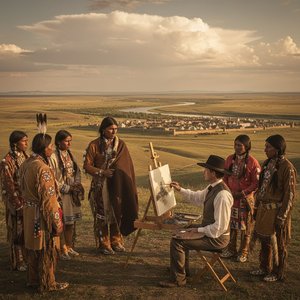
George Catlin: Witnessing & Representing Indigenous Life on the American Frontier
Explore the captivating art of George Catlin, renowned for his vivid portraits & landscapes documenting Native American life on the frontier. Discover a vanishing world through stunning paintings and historical context.
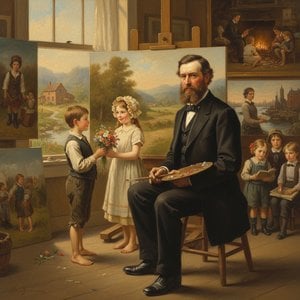
John George Brown: Capturing American Life & Sentiment in 19th-Century Genre Painting
Explore the captivating genre paintings of John George Brown, celebrated for his realistic depictions of 19th-century American life. Discover his legacy & find museum-quality reproductions at ArtsDot.


