


 Vista previa
 Compartir
 Compartir
 Ver detalles
 Guía
Guía

 Descargar
 Ver artículos similares
 Radiografía
 Presentación de diapositivas
 Estadísticas
Pintura con violín


 Leer más
La obra de arte que se muestra en esta página está protegida por las leyes de propiedad intelectual, lo que significa que no podemos crear ni vender legalmente una reproducción idéntica. Esta protección se hace cumplir en virtud de acuerdos internacionales como el Convenio de Berna y por las leyes nacionales, incluidas aquellas establecidas por el Ley de derechos de autor de los EE. UU. - Título 17.
Este método cumple plenamente con las normativas de derechos de autor, ya que no implica la copia ni la duplicación de la obra protegida. En su lugar, se trata de una reinterpretación creativa: una nueva pintura influenciada por la original, pero que no es idéntica a ella.
Giclée / Impresión de arte
Impresiones giclée o en lienzo de calidad de museo con producción rápida y opciones de acabado flexibles. ( Encargar reproducción pintada a mano Ver versión en imagen digital)




P118B €10

P118H €10

P118W €10

P438Z €10

P508JH €12

P508YH €12

P805H €10

P805Z €10

P919BZ €10

P919G €10

P919XJ €10

P959ZH €10

P968JZ €12

W106C €8

W218G €10

W218JH €8

W218Y €10

W307PJ €10

W316G €10

W316PJ €8

W316Y €10

W398PJ €8

W4111J €10

W500HY €15

W500JH €15

W692G €12

W849H €8

W940BG €15

W953PJ €8




Elija entre nuestros tamaños predefinidos que respetan las proporciones originales de la obra.

Introduzca el ancho y el alto que necesite para adaptarse a su marco o pared. Una impresión solo puede recortarse, nunca hacerse más grande que la imagen original, por lo que un tamaño con una forma distinta perderá parte de la obra. Le enviaremos una maqueta digital para su aprobación antes de realizar cualquier impresión. La imagen que se muestra en esta página no refleja el recorte real; solo la maqueta lo hace.
Envío a todo el mundo () en 2 semanas en lugar de las 4/5 semanas estándar. (22 octubre)

Envío exprés gratuito a todo el mundo

Lienzo de lino de alta calidad

Seguro de envío completo

Garantía de reembolso de impuestos aduaneros

Garantía de fidelidad cromática exacta

Política de devolución de 100 días (solo por defectos)

Garantía de devolución del 100% del dinero

Oferta por volumen
 La opción de vidrio solo está disponible en tamaños inferiores a 110 cm.

Pintura con violín
Giclée / Impresión de arte
Tamaño de la reproducción
-


Precio total
€ 54
Una Sinfonía Geométrica en Tonos Cálidos: Análisis de "Painting with Violin" de Franz Ehrlich
La obra maestra presentada aquí, “Painting with Violin” atribuida al arquitecto alemán Franz Ehrlich (nacido en 1907), representa una exploración fascinante del lenguaje abstracto geométrico impulsada por principios constructivistas y Bauhaus. Pintada en 1973 con pastel sobre papel de grano fino, la pieza captura una esencia musical que trasciende la mera representación visual, ofreciendo una experiencia estética profunda para el observador atento. Ehrlich, influenciado directamente por la escuela Bauhaus donde estudió entre 1927 y 1930, abrazó una visión artística comprometida con la innovación formal y conceptual, dejando un legado significativo en el ámbito del diseño gráfico y arquitectónico alemán.- Descripción General: La composición visual domina una estructura cuadriculada meticulosamente definida por líneas rectas cruzadas que establecen un marco ordenado y equilibrado. Estas líneas proporcionan una guía esencial para la integración de formas curvas suaves, evocadoras del cuerpo del violín y su elegante scroll (enrolladura), creando una tensión dinámica entre rigidez y fluidez.
- Paleta Cromática: La paleta cromática seleccionada por Ehrlich se caracteriza por una tonalidad cálida y apagada dominada por tonos amarillos suaves, beige y crema. Estos colores están enriquecidos por acentos discretos de naranja pastel y rosa en ciertas áreas, generando una atmósfera nostálgica que invita a la contemplación.
- Técnica Pictórica: La ejecución artística emplea la técnica del pastel sobre papel preparado, permitiendo una aplicación ligera y transparente que revela la textura natural del soporte. Esta elección estilística enfatiza la importancia de la superficie como elemento expresivo, añadiendo profundidad sensorial a la obra.
- Contexto Histórico: El nacimiento de esta pieza coincide con el período de mayor actividad artística del arquitecto Ehrlich, marcando un punto culminante en su trayectoria profesional y creativa. La influencia de movimientos vanguardistas como el Bauhaus y el Constructivismo se manifiesta claramente en la estética simplificada y racional que caracteriza la composición.
- Simbolismo y Emoción: Más allá de una representación literal del instrumento musical, “Painting with Violin” puede interpretarse como un símbolo de armonía interna y equilibrio emocional. La geometría precisa utilizada por Ehrlich transmite una sensación de orden y claridad intelectual, mientras que los tonos cálidos evocan sentimientos de confort y belleza estética.
Preguntas y respuestas
¿A qué etapa de la carrera de Franz Ehrlich corresponde la fecha de 1973 de "Pintura con violín"?
La fecha de 1973 sitúa a "Pintura con violín" en el Mature Period del desarrollo de Franz Ehrlich.
¿Qué tamaño de reproducción se sugiere para "Pintura con violín" de Franz Ehrlich?
Se sugiere una reproducción de Grande para "Pintura con violín" de Franz Ehrlich. El tamaño puede ajustarse manteniendo las proporciones.
¿Cómo se combinan el medio y el movimiento en "Pintura con violín"?
"Pintura con violín" de Franz Ehrlich combina la técnica de Acrílico sobre lienzo con el estilo Analytical Cubism. La técnica y el movimiento describen la elaboración y el estilo de la obra.
Obras relacionadas


Biografía del artista
Early Life and Education
Franz Ehrlich, a name synonymous with both architectural innovation and poignant historical experience, was born in 1907 in Reuth, Germany – a small town nestled within the landscape of Bavaria. From his earliest years, a deep-seated passion for the arts ignited within him, a spark that propelled him towards formal training. He wasn’t simply drawn to aesthetics; there seemed to be an innate understanding of form and structure, a desire to translate visual concepts into tangible realities. This inclination led him to enroll at the prestigious Bauhaus in Dessau, a crucible of modern art and design, from 1927 to 1930. The Bauhaus wasn’t merely a school; it was a revolutionary movement, a laboratory for experimentation where traditional artistic boundaries were relentlessly challenged. Here, under the tutelage of masters like Walter Gropius, László Moholy-Nagy, Paul Klee, and Joost Schmidt, Ehrlich honed his skills in architecture, graphic design, and sculpture, absorbing the principles of functionalism, geometric abstraction, and a profound belief in art’s ability to serve humanity. The Bauhaus experience fundamentally shaped his artistic perspective, instilling within him a commitment to both beauty and social responsibility – values that would profoundly influence his subsequent work.Artistic Career and Communist Affiliation
Ehrlich's artistic journey was inextricably linked to the turbulent political climate of Weimar Germany. His affiliation with the communist party proved to be a defining moment, one that dramatically altered the course of his life and career. In 1935, he faced arrest and imprisonment by the rising Nazi regime, an event that forced him into hiding and ultimately led to a period of profound hardship and displacement. Despite these immense challenges, Ehrlich refused to abandon his artistic pursuits. He continued to create, driven by a deep sense of conviction and a desire to express his beliefs through his art. This resilience in the face of adversity is perhaps one of the most remarkable aspects of his biography. His work during this period reflects a heightened awareness of social injustice and political oppression – themes that would continue to resonate throughout his career. The experience of persecution instilled within him a profound empathy for those marginalized by society, informing his design choices and artistic vision.Notable Works
Ehrlich’s oeuvre is characterized by a remarkable blend of architectural innovation, graphic design expertise, and sculptural experimentation. Several projects stand out as particularly significant contributions to the world of art and design. “800 YRS. FRAMEWORK WALL 3” (Leipzig Trade Fair), for example, showcases his ability to integrate form and function in a striking display rack, demonstrating a mastery of spatial relationships and material manipulation. His execution plan for Professor Dr. Baumann’s house exemplifies his meticulous attention to detail and his understanding of architectural principles. Perhaps most intriguing is “1933” – a photo-sculptural advertising project that brilliantly combined photography with sculpture, creating a unique visual language that captured the spirit of the era. These projects, along with others such as the design for the entrance gate inscription at Auschwitz (“Jedem das Seine”), reveal a complex and deeply thoughtful artist grappling with profound social and political issues.Museums and Collections
Ehrlich’s artistic legacy is preserved in several key institutions around the world. The ArtsDot.com website offers an extensive collection of his works, providing a valuable resource for researchers and art enthusiasts alike. Furthermore, the Bauhaus Dessau Foundation (Dessau-Roßlau, Germany) serves as a vital repository of his architectural drawings, models, and other archival materials, offering invaluable insights into his creative process. The foundation’s commitment to preserving and interpreting the Bauhaus legacy ensures that Ehrlich's contributions to modern design continue to be recognized and celebrated. His work is also featured in various exhibitions and collections internationally, solidifying his place as a significant figure in 20th-century art and architecture.Legacy and Impact
Franz Ehrlich’s life story is more than just the chronicle of an artist; it's a poignant reflection of Germany’s tumultuous history during the first half of the 20th century. His experiences – from his formative years at the Bauhaus to his imprisonment under the Nazi regime and his subsequent work in East Germany – offer a powerful lens through which to examine the intersection of art, politics, and social justice. He wasn't simply an architect or designer; he was a witness to history, a participant in resistance movements, and a creator whose work bore testament to both the beauty and the brutality of his time. His legacy endures not only through his architectural designs and graphic works but also as a symbol of resilience, creativity, and unwavering commitment to human dignity.
Franz Ehrlich
1907 - 1984 , Alemania
Datos clave
- Artistic Movement Or Style: Bauhaus, Expresionismo
- Artists Or Movements Influenced By This Artist:
- El Bauhaus
- La Liga Comunista Joven
- Artists Who Influenced This Artist:
- Walter Gropius
- László Moholy-Nagy
- Klee
- Joost Schmidt
- Date Of Birth: 1907
- Full Name: Franz Ehrlich
- Nationality: Germano
- Notable Artworks:
- 800 YRS. FRAMEWORK WALL 3
- Untitled (HKB I o II)
- Painting con Violín
- Place Of Birth: Reuth, Alemania
Artículos relacionados

Acuarelas Legendarias: 10 Obras Maestras que Transformaron el Arte | ArtsDot
Descubre 10 acuarelas legendarias de Turner, Monet y Sargent que revolucionaron el arte. Explora la historia, técnica y belleza de estas obras maestras impresionistas y románticas. Reproducciones de museo en ArtsDot.com.

Visiones Efímeras: Historia y Resonancia Emocional de la Pintura Acuarela
Descubre la fascinante historia de la acuarela, desde sus orígenes hasta su expresión contemporánea. Explora técnicas, artistas clave como Paul Klee y encuentra reproducciones de alta calidad en ArtsDot.

Ephemeral Echoes: Exploring the Aesthetic & Historical Significance of Vintage Watercolor Painting
Explore the captivating world of vintage watercolor painting! Discover its rich history, techniques, influential artists & collecting tips. Expert insights for enthusiasts and collectors at ArtsDot.

Ephemeral Visions: Exploring the Artistic Legacy & Contemporary Practice of Watercolor Painting
Explore the captivating world of watercolor painting! Discover its rich history, essential techniques, influential artists & collecting tips. A comprehensive guide for art enthusiasts from ArtsDot.
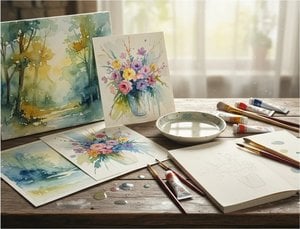
Ephemeral Visions: Exploring the Artistic Legacy & Nuances of Watercolor Painting
Explore the captivating world of watercolor painting! Discover its rich history, essential techniques, influential artists & collecting tips from art experts. A comprehensive guide for enthusiasts.


