

- 49.0 x 84.0 cm


The picture follows your choices: , .
Descripción del objeto
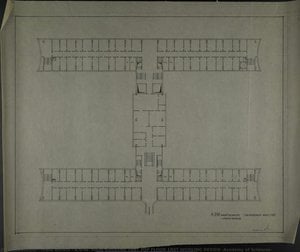
A detailed 1959 architectural drawing by Franz Ehrlich showcasing an intricate construction schedule for a TV studio project, blending Bauhaus precision with graphic design excellence for your collection.
 Ver más
Biografía del artista
Explora el arte de Franz Ehrlich: arquitecto, calígrafo y diseñador gráfico alemán. Descubre su influencia de la Bauhaus, sus afiliaciones comunistas y sus diseños innovadores.
Reproducción al óleo hecha a mano
Óleo sobre lienzo pintado a mano en el tamaño y marco de su elección, realizado por encargo por nuestros artistas. ( Cambiar a impresiones Cambiar a imagen digital)
Esta obra está protegida por derechos de autor
La obra de arte que se muestra en esta página está protegida por las leyes de propiedad intelectual, lo que significa que no podemos crear ni vender legalmente una reproducción idéntica. Esta protección se hace cumplir en virtud de acuerdos internacionales como el Convenio de Berna y por las leyes nacionales, incluidas aquellas establecidas por el Ley de derechos de autor de los EE. UU. - Título 17.
Como una alternativa respetuosa y legal, ofrecemos obras de arte personalizadas y pintadas a mano inspiradas en la original. Nuestros expertos y profesionales del arte estudian cuidadosamente el estilo, el sentimiento y la esencia artística de la obra original para crear una pieza nueva y única que evoque la misma sensación, siendo al mismo tiempo una creación original por derecho propio.
Este método cumple plenamente con las normativas de derechos de autor, ya que no implica la copia ni la duplicación de la obra protegida. En su lugar, se trata de una reinterpretación creativa: una nueva pintura influenciada por la original, pero que no es idéntica a ella.
More about this painting
 Ver en contexto
 Enviar
 Compartir
 Detalles
 Guía
Guía

 Descargar
 Similares
 Radiografía
 Presentación de diapositivas
 Q&A
Q&A Estadísticas
Order your painting in four simple steps
Take your time. You can change any answer; the price in your order card follows each choice.
1 Step one of four
Which size would you like?
These sizes keep the proportions of the original painting. The drawing shows your choice on a wall, above a two-metre sofa.
Or give your own measurements
Elija entre nuestros tamaños predefinidos que respetan las proporciones originales de la obra.

Indique el ancho y el alto que necesite para adaptarse a su marco o pared. Al tratarse de una obra pintada a mano, si requiere un tamaño con una proporción distinta, el artista puede pintar un poco más alrededor de la imagen o recortarla ligeramente; usted elige. Le enviaremos una maqueta digital para su aprobación antes de comenzar la pintura. La imagen que se muestra en esta página no refleja el resultado real; solo la maqueta lo hace.
2 Step two of four
How should it be prepared: rolled, stretched or framed?
The prices below are for the size you chose in step one.
Choose the edges of the stretched canvas
Choose your frame

White €1

Blurside €1

Extended €1

P118B €10

P118H €10

P118W €10

P438Z €10

P508JH €12

P508YH €12

P805H €10

P805Z €10

P919BZ €10

P919G €10

P919XJ €10

P959ZH €10

P968JZ €12

W106C €8

W218G €10

W218JH €8

W218Y €10

W307PJ €10

W316G €10

W316PJ €8

W316Y €10

W398PJ €8

W4111J €10

W500HY €15

W500JH €15

W692G €12

W849H €8

W940BG €15

W953PJ €8

H24-GOLD €30

H24-SILVER €30

H36-GOLD €45

H36-SILVER €45
Con marco
Moulding: . Overall size with the frame: .
3 Step three of four
Would you like anything changed in the painting?
Most people answer no. Because each painting is made by hand, our artist can also adapt it for you.
After order, ArtsDot.com team will email client for instructions and provide a mockup preview
4 Step four of four
A few finishing options
All of them are optional. The answers already selected cost nothing extra.
Who paints it?
Envío a todo el mundo () en 3-4 semanas en lugar de las 5 semanas estándar. (2 noviembre). Sin comprometer la calidad.
A nameplate, as in a museum?
Detalles de la placa de bronce grabada
This elegant plaque features the artist's name and the title of the artwork, finely engraved for a timeless presentation.
It is made from bronze with a refined, elegant finish. The text is precisely laser-engraved for a sharp and permanent result. Measuring 9x2 cm, the plaque is compact yet easy to read. It's built to be durable and scratch-resistant, offering a professional, museum-quality look. Mounting is simple thanks to the included adhesive backing.
Detalles de la placa de acrílico transparente
The plaque includes essential engraved details such as the artist's name, the title of the artwork, the date it was created, the type of media used-like oil on canvas or watercolor-a brief description of the piece, and a QR code that links to the complete artwork information.
It is crafted from clear acrylic, offering a sleek, modern appearance. The text is UV-engraved in black to ensure strong visual contrast. With a size of 10x15 cm, it ensures optimal readability. It comes equipped with two metal hooks for secure wall mounting. The plaque is designed to be weather-resistant, making it suitable for various environments, and it includes interactive features that work seamlessly with smartphone scanning.
Detalles de la placa de acrílico negro
This elegant plaque includes engraved information such as the artist's name, the title of the artwork, the date it was created, the type of media used (like oil on canvas or watercolor), a short description of the artwork, and a QR code for quick access to more information.
The plaque itself is made from refined black acrylic with a premium finish. The text is laser-engraved in white for high contrast and readability. Its size is 10x15 cm, designed to be easy to read. It comes with two metal hooks for professional mounting. The design is sleek and fits any interior style. It is also weather-resistant and durable, with built-in digital integration for mobile compatibility.
A protective varnish?
When do you need it?
✓ Check and order
Your painting, as you ordered it

CONSTRUCTION SCHEDULE FOR THE MOST FAVOURABLE IMPLEMENTATION OF AN INVESTMENT PROJECT TV STUDIOS FOR 4-HOUR PER WEEK PROGRAM
Técnica de reproducción
Dimensiones de la reproducción
-

Selección de artistas premium
Mayor nivel de detalle, delicadeza y tiempo de producción adicional
-

Enmarcado de reproducción
-
-
Para obras de arte o reproducciones que midan más de 105 cm (aproximadamente 41 pulgadas) en cualquiera de sus lados, el marco se enviará como un kit desmontado. Este método garantiza una entrega segura y evita daños durante el transporte.
Se requiere montaje profesional: este no es un producto para hacer usted mismo (DIY).
El kit debe ser ensamblado y el lienzo tensado por un enmarcador profesional con experiencia, utilizando cola para madera (no incluida), una tenaza para tensar lienzos y sargentos para mantener los bastidores alineados mientras la cola se seca. Un montaje incorrecto o una tensión desigual del lienzo pueden dañar la obra de arte de forma permanente y no están cubiertos por nuestra garantía.
 Para obras de arte o reproducciones que midan más de 105 cm (aproximadamente 41 pulgadas) en cualquiera de sus lados, el marco se enviará como un kit desmontado. Este método garantiza una entrega segura y evita daños durante el transporte.
Se incluyen todos los listones de madera maciza, cortados con precisión según las medidas.
Se ensambla con los tornillos incluidos, además de cola para madera para las uniones de las esquinas, la cual no se incluye y debe ser proporcionada por su enmarcador.
Se requieren herramientas profesionales que no están incluidas: un alicate para tensar lienzos (tensor) y abrazaderas para mantener los bastidores alineados mientras se seca el pegamento.
Importante:
Las uniones de las esquinas requieren cola para madera, los listones deben sujetarse con prensas hasta que la cola esté completamente seca, y para tensar el lienzo en el bastidor ensamblado se requiere una pinza para tensar lienzos. Ninguno de estos elementos está incluido en el kit. Por favor, contacte con un profesional del enmarcado con experiencia antes de realizar un pedido de este tamaño.

Cartela
-
-

Barniz protector
Barniz brillante (realza los colores y protege contra la luz y la humedad)
-

Personalizar mi obra
Ejemplos de lo que se puede personalizar: sustituir el rostro por una foto del cliente; añadir una mascota (por ejemplo, cambiar un gato por un perro); incluir un mensaje oculto en el fondo; cambiar el paisaje o los elementos del fondo.
-

Envío urgente
Envío a todo el mundo () en 3 o 4 semanas, en lugar de las 5 semanas habituales. (2 noviembre). Sin comprometer la calidad.
-
Envío urgente
Envío internacional () en 5 semanas. (9 noviembre).
Incluido
Precio total final
€ 234
La opción de vidrio solo está disponible en tamaños inferiores a 110 cm.
Included with every order
- Envío exprés gratuito a todo el mundo
- Lienzo de lino de alta calidad
- Seguro de envío total
- Garantía de reembolso de aranceles aduaneros
- Garantía de fidelidad cromática exacta
- Política de devolución de 100 días (solo por defectos)
- Garantía de devolución del 100% del dinero
- Descuento por cantidad


The Precision of Progress: A Blueprint of Visionary Intent
In the intersection of architectural rigor and graphic artistry lies a remarkable piece of mid-century documentation: CONSTRUCTION SCHEDULE FOR THE MOST FAVOURABLE IMPLEMENTATION OF AN INVESTMENT PROJECT TV STUDIOS FOR 4-HOUR PER WEEK PROGRAM. Created in 1959 by the master of form, Franz Ehrlich, this work transcends its utilitarian origins to become a captivating study of order and anticipation. At first glance, the viewer is met with an intricate tapestry of tables, diagrams, and charts that map out the birth of a media space. It is not merely a schedule; it is a visual manifesto of structural possibility, where every line and cell serves as a heartbeat in the rhythm of industrial progress.
The painting, executed on paper with a delicate yet commanding presence, measures 49 x 84 cm, offering a panoramic view into the meticulous mind of its creator. Ehrlich utilizes a technique that blends the precision of technical drafting with the expressive soul of graphic design. The composition is dense with information, yet it maintains a rhythmic balance that guides the eye through a labyrinth of data. For the collector or interior designer, this piece offers a sophisticated geometric complexity that serves as a stunning focal point in modern, minimalist, or industrial-themed spaces, providing a sense of intellectual depth and structured elegance.
A Legacy Forged in Bauhaus Discipline
To understand the soul of this work, one must look to the hands that held the pen. Franz Ehrlich was a product of the legendary Bauhaus Dessau, an institution that redefined the relationship between art, craft, and industry. Having studied there between 1927 and 1930, Ehrlich carried the avant-garde principles of functionalism and clarity into his later works. This specific piece, created decades after his formative years, reflects a matured mastery of the Bauhaus ethos—the idea that beauty is found in the most efficient and logical arrangement of elements.
The historical context of 1959 adds a layer of profound gravity to the work. Living through the turbulent shifts of mid-century Germany, Ehrlich’s work often mirrored the tension between individual creativity and the collective necessity of reconstruction and planning. The subject matter—the implementation of TV studios—speaks to an era of burgeoning communication and the technological optimism of the post-war period. There is a quiet heroism in these charts; they represent the blueprint for a new way of seeing the world through the lens of emerging mass media.
The Aesthetic of Order and Emotional Resonance
Beyond its technical merits, the artwork possesses an evocative emotional impact that resonates with anyone moved by the beauty of logic. There is a certain serenity found in its absolute organization. The repetition of tables and the structured flow of diagrams create a meditative quality, inviting the viewer to lose themselves in the details of the project's timeline. It evokes a sense of nostalgia for an era when progress was measured in tangible, meticulously planned steps.
For those seeking to adorn a curated collection or a professional studio, this reproduction offers more than just decoration; it offers a conversation piece that bridges the gap between historical documentation and fine art. The interplay of light and shadow within the intricate linework provides a tactile richness that makes every viewing a new discovery. It is a celebration of the architect's vision—a moment frozen in time where the future was being carefully, beautifully constructed.
Preguntas y respuestas
¿Qué edad tenía Franz Ehrlich cuando se creó "CONSTRUCTION SCHEDULE FOR THE MOST FAVOURABLE IMPLEMENTATION OF AN INVESTMENT PROJECT TV STUDIOS FOR 4-HOUR PER WEEK PROGRAM"?
Franz Ehrlich creó "CONSTRUCTION SCHEDULE FOR THE MOST FAVOURABLE IMPLEMENTATION OF AN INVESTMENT PROJECT TV STUDIOS FOR 4-HOUR PER WEEK PROGRAM" a la edad de 52. El artista nació en 1907 y la obra data de 1959.
¿Cómo se combinan el contraste y la armonía en "CONSTRUCTION SCHEDULE FOR THE MOST FAVOURABLE IMPLEMENTATION OF AN INVESTMENT PROJECT TV STUDIOS FOR 4-HOUR PER WEEK PROGRAM"?
La composición cromática de "CONSTRUCTION SCHEDULE FOR THE MOST FAVOURABLE IMPLEMENTATION OF AN INVESTMENT PROJECT TV STUDIOS FOR 4-HOUR PER WEEK PROGRAM" de Franz Ehrlich combina un contraste Serene con una armonía Unified Palette.
¿En qué año se creó "CONSTRUCTION SCHEDULE FOR THE MOST FAVOURABLE IMPLEMENTATION OF AN INVESTMENT PROJECT TV STUDIOS FOR 4-HOUR PER WEEK PROGRAM"?
"CONSTRUCTION SCHEDULE FOR THE MOST FAVOURABLE IMPLEMENTATION OF AN INVESTMENT PROJECT TV STUDIOS FOR 4-HOUR PER WEEK PROGRAM" de Franz Ehrlich fue creada en 1959.
Obras relacionadas




Franz Ehrlich
1907 - 1984, Alemania
Biografía del artista
Early Life and Education
Franz Ehrlich, a name synonymous with both architectural innovation and poignant historical experience, was born in 1907 in Reuth, Germany – a small town nestled within the landscape of Bavaria. From his earliest years, a deep-seated passion for the arts ignited within him, a spark that propelled him towards formal training. He wasn’t simply drawn to aesthetics; there seemed to be an innate understanding of form and structure, a desire to translate visual concepts into tangible realities. This inclination led him to enroll at the prestigious Bauhaus in Dessau, a crucible of modern art and design, from 1927 to 1930. The Bauhaus wasn’t merely a school; it was a revolutionary movement, a laboratory for experimentation where traditional artistic boundaries were relentlessly challenged. Here, under the tutelage of masters like Walter Gropius, László Moholy-Nagy, Paul Klee, and Joost Schmidt, Ehrlich honed his skills in architecture, graphic design, and sculpture, absorbing the principles of functionalism, geometric abstraction, and a profound belief in art’s ability to serve humanity. The Bauhaus experience fundamentally shaped his artistic perspective, instilling within him a commitment to both beauty and social responsibility – values that would profoundly influence his subsequent work.Artistic Career and Communist Affiliation
Ehrlich's artistic journey was inextricably linked to the turbulent political climate of Weimar Germany. His affiliation with the communist party proved to be a defining moment, one that dramatically altered the course of his life and career. In 1935, he faced arrest and imprisonment by the rising Nazi regime, an event that forced him into hiding and ultimately led to a period of profound hardship and displacement. Despite these immense challenges, Ehrlich refused to abandon his artistic pursuits. He continued to create, driven by a deep sense of conviction and a desire to express his beliefs through his art. This resilience in the face of adversity is perhaps one of the most remarkable aspects of his biography. His work during this period reflects a heightened awareness of social injustice and political oppression – themes that would continue to resonate throughout his career. The experience of persecution instilled within him a profound empathy for those marginalized by society, informing his design choices and artistic vision.Notable Works
Ehrlich’s oeuvre is characterized by a remarkable blend of architectural innovation, graphic design expertise, and sculptural experimentation. Several projects stand out as particularly significant contributions to the world of art and design. “800 YRS. FRAMEWORK WALL 3” (Leipzig Trade Fair), for example, showcases his ability to integrate form and function in a striking display rack, demonstrating a mastery of spatial relationships and material manipulation. His execution plan for Professor Dr. Baumann’s house exemplifies his meticulous attention to detail and his understanding of architectural principles. Perhaps most intriguing is “1933” – a photo-sculptural advertising project that brilliantly combined photography with sculpture, creating a unique visual language that captured the spirit of the era. These projects, along with others such as the design for the entrance gate inscription at Auschwitz (“Jedem das Seine”), reveal a complex and deeply thoughtful artist grappling with profound social and political issues.Museums and Collections
Ehrlich’s artistic legacy is preserved in several key institutions around the world. The ArtsDot.com website offers an extensive collection of his works, providing a valuable resource for researchers and art enthusiasts alike. Furthermore, the Bauhaus Dessau Foundation (Dessau-Roßlau, Germany) serves as a vital repository of his architectural drawings, models, and other archival materials, offering invaluable insights into his creative process. The foundation’s commitment to preserving and interpreting the Bauhaus legacy ensures that Ehrlich's contributions to modern design continue to be recognized and celebrated. His work is also featured in various exhibitions and collections internationally, solidifying his place as a significant figure in 20th-century art and architecture.Legacy and Impact
Franz Ehrlich’s life story is more than just the chronicle of an artist; it's a poignant reflection of Germany’s tumultuous history during the first half of the 20th century. His experiences – from his formative years at the Bauhaus to his imprisonment under the Nazi regime and his subsequent work in East Germany – offer a powerful lens through which to examine the intersection of art, politics, and social justice. He wasn't simply an architect or designer; he was a witness to history, a participant in resistance movements, and a creator whose work bore testament to both the beauty and the brutality of his time. His legacy endures not only through his architectural designs and graphic works but also as a symbol of resilience, creativity, and unwavering commitment to human dignity.


Artículos relacionados

The Nuances of Graphite: Exploring Emotional Depth & Technical Mastery in Pencil Drawing
Explore the captivating world of graphite drawing! Discover its rich history, master essential techniques like chiaroscuro, and learn how artists evoke emotion through this timeless medium. Expert insights for art enthusiasts.

25 Obras Maestras del Museo Británico que Debes Ver: Un Viaje por la Historia
Explora 25 tesoros del Museo Británico: de Da Vinci a Miguel Ángel. ¡Descubre estas obras maestras en ArtsDot.com!
Frederick Bridgman: Anatomical Mastery & the Evolution of Figure Drawing Instruction
Explore the anatomical mastery of George B. Bridgman & his revolutionary figure drawing techniques. Discover how his methods transformed art instruction and continue to inspire artists today. Learn more at ArtsDot.