


 Ver en contexto
 Enviar
 Compartir
 Detalles

 Descargar
 Similares
 Radiografía
 Presentación de diapositivas
Flowers
 Oil On Canvas
- WallArt
- Italian Romanticism
 19th Century
 124.0 x 95.0 cm
 Pinacoteca de Brera
 Ver más
Reproducción al óleo hecha a mano
Óleo sobre lienzo pintado a mano en el tamaño y marco de su elección, realizado por encargo por nuestros artistas. ( Comprar impresión Comprar imagen)




P118B $10

P118H $10

P118W $10

P438Z $10

P508JH $12

P508YH $12

P805H $10

P805Z $10

P919BZ $10

P919G $10

P919XJ $10

P959ZH $10

P968JZ $12

W106C $8

W218G $10

W218JH $8

W218Y $10

W307PJ $10

W316G $10

W316PJ $8

W316Y $10

W398PJ $8

W4111J $10

W500HY $15

W500JH $15

W692G $12

W849H $8

W940BG $15

W953PJ $8




Elija entre nuestros tamaños predefinidos que respetan las proporciones originales de la obra.

Puede ingresar sus propias dimensiones para adaptarse a un marco o espacio específico. Si el tamaño seleccionado no coincide con las proporciones de la imagen original, recortaremos la obra o extenderemos la pintura con elementos adicionales pintados a mano. Se le enviará una maqueta digital para su aprobación antes de comenzar la producción.
Tenga en cuenta que la vista previa en pantalla no refleja el recorte o la extensión reales. Solo la maqueta mostrará con precisión la composición final.
Si bien existen tamaños personalizados, recomendamos seleccionar una dimensión de la lista predefinida para preservar las proporciones originales.
Tras realizar el pedido, el equipo de ArtsDot.com enviará un correo electrónico al cliente para solicitar instrucciones y proporcionarle una vista previa del boceto.
Envío a todo el mundo () en 3-4 semanas en lugar de las 5 semanas estándar. (23 agosto). Sin comprometer la calidad.

Envío exprés gratuito a todo el mundo

Lienzo de lino de alta calidad

Seguro de envío total

Garantía de reembolso de impuestos aduaneros

Garantía de fidelidad cromática exacta

Política de devolución de 60 días (solo por defectos)

Garantía de devolución del 100% del dinero

Descuento por cantidad
 La opción de vidrio solo está disponible en tamaños inferiores a 110 cm.

Flowers
Técnica de reproducción
Dimensiones de la reproducción
-


Precio total final
$ 263
Descripción de la obra
A Symphony of Petals: The Romantic Soul of Francesco Hayez
In the quietude of a masterfully rendered still life, Francesco Hayez’s “Flowers” emerges not merely as a botanical study, but as a profound whisper from the heart of Italian Romanticism. Created between 1834 and 1835, this exquisite work transcends the boundaries of simple decoration to offer a window into a turbulent era. While the eye is immediately drawn to the vibrant, overflowing bouquet, the discerning viewer senses an underlying tension—a delicate balance between the ephemeral beauty of nature and the enduring spirit of a nation yearning for unity. Hayez, a master of capturing both the tangible and the intangible, uses this arrangement of blossoms to compose a visual poem that resonates with hope, vitality, and a subtle, poetic melancholy.
The composition is a triumph of classical balance and dramatic contrast. A central vase, brimming with an abundance of life, sits anchored upon a dark, richly patterned cloth. This deep, grounding element serves as the perfect stage for the luminous explosion of color above it. Hayez’s technique is nothing short of breathtaking; through the meticulous application of oil glazes, he achieves a translucent quality that allows light to seemingly dance within each petal. One can almost feel the velvety texture of the crimson roses and the delicate, papery lightness of the lilies. The artist’s ability to manipulate light creates an illusion of shimmering movement, as if a gentle breeze might stir the arrangement at any moment, making the painting feel less like a static object and more like a living, breathing presence.
Symbolism and the Echo of History
To look upon “Flowers” is to engage with the political pulse of nineteenth-century Italy. During this period, much of the Italian peninsula languished under foreign dominion, yet beneath this surface of repression, a fervent nationalist sentiment was beginning to bloom. In the language of Romanticism, flowers were rarely just flowers; they were potent allegories. The lushness of the bouquet can be interpreted as a metaphor for the latent potential and burgeoning strength of the Italian identity. The interplay of light and shadow—the chiaroscuro effect—mirrors the struggle between the darkness of political fragmentation and the bright promise of a unified future.
For the collector or interior designer, this piece offers an unparalleled opportunity to introduce a sense of historical depth and sophisticated elegance into a space. The painting’s ability to harmonize intense color with a serene atmosphere makes it a versatile masterpiece for high-end curation. Whether placed in a sunlit gallery or a moody, classical study, the work commands attention through its sheer technical brilliance and emotional complexity. It is an investment in a piece of history that continues to bloom with new meanings, offering a timeless aesthetic that celebrates both the delicate beauty of the natural world and the indomitable strength of the human spirit.
Obras relacionadas


Biografía del artista
Primeros años y formación
Francesco Hayez, un renombrado pintor italiano, nació el 10 de febrero de 1791 en Venecia, Italia. Su padre, Giovanni, era de origen francés, mientras que su madre, Chiara Torcella, provenía de Murano. El joven Francesco demostró una predisposición al dibujo y fue aprendiz de restaurador de arte por su tío.Carrera artística
La trayectoria artística de Hayez comenzó en 1806 cuando se inscribió en la nueva Academia de Bellas Artes de Milán, donde estudió bajo la tutela de Teodoro Matteini. En 1809, ganó un concurso que le otorgó un año de estudio en la Accademia di San Luca en Roma. Esta exposición a diversas influencias artísticas moldeó su estilo, que más tarde se convertiría en una característica distintiva del romanticismo italiano.Obras notables y estilo
El oeuvre de Hayez se caracteriza por grandiosas pinturas históricas, alegorías políticas y retratos excepcionalmente finos. Algunas de sus obras notables incluyen:- El beso, considerada una de sus mejores obras por los contemporáneos, que ha ganado estima con el tiempo.
- El Papa Urbano II predicando la primera cruzada en la plaza de Clermont, una pieza significativa que muestra su estilo narrativo histórico.
- Retrato, Matilde Juva-Branca, que ejemplifica su habilidad para capturar la esencia de sus sujetos.
Museos y colecciones
Las obras de Hayez se exhiben en varios museos, incluyendo la Civica Galleria d'Arte Moderna en Milán, que alberga una impresionante colección de arte moderno y contemporáneo.- El Papa Urbano II predicando la primera cruzada en la plaza de Clermont (235 x 157 cm, Fondazione Cariplo, Milán)
- Perfil de Francesco Hayez en ArtsDot
- Wikipedia: Francesco Hayez
Legado e impacto
La influencia de Hayez en el romanticismo italiano es innegable. Su trabajo ha sido objeto de estudio para historiadores del arte y entusiastas por igual, con sus piezas continuando inspirando a nuevas generaciones de artistas. Se le considera un puente entre el neoclasicismo y el romanticismo, y su capacidad para combinar elementos históricos, políticos y emocionales lo convirtió en uno de los pintores más importantes de su época. Su obra sigue siendo relevante hoy en día como testimonio del espíritu romántico italiano y de la búsqueda de identidad nacional.
Francesco Hayez
1791 - 1882 , Italia
Datos clave
- Artistas Que Influyeron:
- Teodoro Matteini
- Antonio Canova
- Fecha De Fallecimiento: 21 de diciembre de 1882
- Fecha De Nacimiento: 10 de febrero de 1791
- Influencia En Artistas: Generaciones de artistas
- Lugar De Nacimiento: Venecia, Italia
- Movimiento Artístico: Romanticismo italiano
- Nacionalidad: Italiana
- Nombre Completo: Francesco Hayez
- Obras Notables:
- El beso
- Pope Urban II preaching
- Portrait, Matilde Juva-Branca
Artículos relacionados

Silent Narratives: Exploring the Enduring Appeal of Still Life Painting Across Centuries
Explore the rich history of still life painting with ArtsDot. Discover Dutch Masters, decode vanitas symbolism & learn about collecting timeless art. Expert insights and museum-quality reproductions.
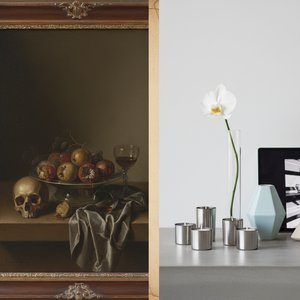
The Enduring Appeal of Still Life: A Historical & Contemporary Exploration
Explore the rich history & symbolism of still life painting with ArtsDot. Discover masterpieces from the Dutch Golden Age, learn about vanitas art, and find expert guidance for collecting timeless artworks.

Jan Jansz Wijnants: A Study in Dutch Golden Age Still Life & Floral Transience
Explore the captivating world of Jan Wijnants and Dutch Golden Age still life painting. Discover symbolism, masterful techniques & lasting influence on floral art history. Learn more!

Abraham Hendricksz van Beyeren: Pioneering Dutch Still Life & the Banquet Tradition
Explore the captivating world of Dutch Golden Age still life with Abraham van Beyeren. Discover his innovative techniques, symbolic banquet scenes & lasting influence on art history. Learn about collecting these masterpieces.

De la Naturaleza Muerta Clásica a la Abstracción Contemporánea: Elevando los Espacios de Entretenimiento en Villas a Través de Reproducciones Artísticas
Descubre la evolución del bodegón y cómo integrar reproducciones artísticas de alta calidad en tu villa. Expertos en arte, selección exclusiva y asesoramiento personalizado.



