
- Inicio

- Impresión en lienzo
- Fernand Léger
- Untitled

 Encargar reproducción Comprar imagen en alta resolución
 Enviar
 Compartir
 Detalles
 Añadir a favoritos

 Descargar
 Similares
 Radiografía
 Presentación de diapositivas
Untitled

 Ver más
Giclée / Impresión de arte
Impresión giclée o en lienzo de calidad de museo con producción rápida y opciones de acabado flexibles.




P118B $10

P118H $10

P118W $10

P438Z $10

P508JH $12

P508YH $12

P805H $10

P805Z $10

P919BZ $10

P919G $10

P919XJ $10

P959ZH $10

P968JZ $12

W106C $8

W218G $10

W218JH $8

W218Y $10

W307PJ $10

W316G $10

W316PJ $8

W316Y $10

W398PJ $8

W4111J $10

W500HY $15

W500JH $15

W692G $12

W849H $8

W940BG $15

W953PJ $8




Elija entre nuestros tamaños predefinidos que respetan las proporciones originales de la obra.

Puede introducir sus propias dimensiones para adaptarse a un marco o espacio específico. Si el tamaño seleccionado no coincide con las proporciones de la imagen original, recortaremos la obra de arte o extenderemos la imagen con un borde con efecto espejo o de color sólido. Se enviará una maqueta digital para su aprobación antes de que comience la producción.
Tenga en cuenta que la vista previa en pantalla no refleja el recorte o la extensión real. Solo la maqueta mostrará con precisión la composición final.
Aunque existen tamaños personalizados, recomendamos seleccionar una dimensión de la lista predefinida para preservar las proporciones originales.
Entrega mundial () en 2 semanas en lugar de las 4/5 semanas estándar. (18 julio)

Envío exprés gratuito a todo el mundo

Lienzo de lino de alta calidad

Seguro de envío total

Garantía de reembolso de impuestos aduaneros

Garantía de fidelidad de color

Política de devolución de 60 días (solo por defectos)

Garantía de devolución del 100% del dinero

Descuento por pedido múltiple
 La opción de vidrio solo está disponible en tamaños inferiores a 110 cm.

Untitled
Giclée / Impresión de arte
Tamaño de la reproducción
-


Precio total final
-
Descripción de la obra
A Life Forged in Form: The World of Fernand Léger
Fernand Léger, born Joseph Fernand Henri Léger in 1881 amidst the rural landscapes of Argentan, Normandy, stands as a pivotal figure in the evolution of modern art. His journey from the farmlands of his youth to the forefront of Parisian avant-garde circles is a testament to an unwavering artistic vision and a relentless pursuit of capturing the spirit of the machine age. Unlike many of his contemporaries who embraced abstraction as a retreat from representation, Léger sought to *integrate* modernity – its dynamism, its mechanical forms, its very essence – into a new visual language that was both powerfully abstract and deeply rooted in the observable world. His early life, steeped in the physicality of agricultural labor, provided a grounding contrast to the industrialized future he would so passionately depict. Initially destined for architecture, Léger’s path shifted towards painting after arriving in Paris around 1900, supporting himself through illustration work and absorbing the influences of Impressionism and Cubism before forging his own distinctive style.The Birth of Geometric Abstraction
Léger's artistic breakthrough arrived during the tumultuous years following World War I, coinciding with the burgeoning fascination for industrialization and technological advancement. Rejecting the prevailing trend toward pure abstraction—the fragmentation and simplification championed by Picasso and Braque—Léger embarked on a radical experiment: to represent reality not through illusionistic depiction but through geometric forms – cubes, cylinders, spheres – arranged in bold, contrasting colors. This approach wasn’t merely stylistic; it was fundamentally conceptual. Léger believed that these shapes mirrored the underlying structure of machines and urban environments, reflecting the pervasive influence of industrial logic on human experience. He famously declared, “I want to paint what I see,” but insisted that he saw not what *appeared* but what *was*.Technique and Material Innovation
Léger’s distinctive technique involved applying pigment onto ceramic surfaces using a method known as "polychrome," which allowed for the creation of vibrant, textured murals. This innovative process—developed collaboratively with Georges Bauquier—involved layering multiple coats of glaze over earthenware tiles, resulting in astonishingly luminous and durable artworks. The meticulous preparation of each tile was itself an artistic endeavor, reflecting Léger’s commitment to precision and control. Furthermore, he experimented extensively with color palettes, favoring combinations of primary hues – red, yellow, blue – punctuated by black and white, creating visual compositions that were both visually arresting and intellectually stimulating.Symbolism Within Geometric Form
Despite its apparent simplicity, Léger’s art is laden with symbolic meaning. The geometric shapes themselves represent not just mechanical structures but also concepts of order, stability, and universality. Recurring motifs—such as the human figure rendered in simplified cubes—suggested a reimagining of humanity's relationship to technology and the environment. Léger envisioned humans as inhabiting a world dominated by machines, yet simultaneously retaining their essential human qualities – emotion, vitality, and connection to nature. The artist’s intention was to convey a sense of optimism about the future, portraying it not as a dystopian nightmare but as an opportunity for artistic renewal.Emotional Impact and Legacy
Fernand Léger's paintings resonate with viewers today precisely because they capture a profound emotional truth: the anxiety and exhilaration inherent in confronting the transformative forces of modernity. The bold colors, energetic compositions, and stylized figures evoke a feeling of dynamism and movement—a visual embodiment of the human spirit striving to adapt to an ever-changing world. Léger’s influence extends far beyond his own lifetime, inspiring generations of artists who continue to explore the possibilities of geometric abstraction as a means of expressing complex ideas about humanity's place in history. His enduring legacy serves as a reminder that art can illuminate both the beauty and the challenges of our time.Obras similares


Biografía del artista
vida temprana y formación
fernand léger, un pintor, escultor y cineasta francés, nació el 4 de febrero de 1881 en Argentán, Orne, Baja Normandía. Su padre criaba ganado, y Léger inicialmente se formó como arquitecto de 1897 a 1899. Luego se mudó a París en 1900, ganándose la vida como dibujante arquitectónico.desarrollo artístico
El trabajo temprano de Léger estuvo influenciado por el impresionismo, como se ve en le jardin de ma mère (mi madre's garden) (1905). Después de asistir a la escuela de artes decorativas y la academia Julian, comenzó a trabajar seriamente como pintor a los 25 años. Su estilo evolucionó hacia una forma personal del cubismo, que los críticos denominaron "tubismo" por su énfasis en las formas cilíndricas.cubismo y el grupo puteaux
En 1910, Léger expuso en el salón de otoño junto a jean metzinger y henri le fauconnier. Se unió al grupo puteaux, también conocido como la sección dorada (la sección de oro), junto con otros artistas como francis picabia y marcel duchamp.guerra y su influencia en el trabajo de léger
Las experiencias de Léger en la Primera Guerra Mundial impactaron significativamente su obra. Durante su tiempo en el frente, produjo dibujos de piezas de artillería, aviones y soldados compañeros. Su pintura soldier with a pipe (1916) refleja este período.obra posterior y legado
La obra posterior de Léger, caracterizada por formas mecánicas y elegantes, lo vinculó a la tradición de la pintura figurativa francesa. Sus paisajes animados de 1921 mostraron figuras y animales en formas armoniosas y aerodinámicas.- ver obras de fernand léger en ArtsDot
- más sobre fernand léger en wikipedia
- descubra el musée national fernand léger (francia) con ArtsDot
- la mujer sentada (100 x 81 cm, tubismo)
- elemento de máquina (cubismo)

Fernand Léger
1881 - 1955 , Francia
Datos clave
- Artistas Influenciados Por: ['Pop Art']
- Artistas Que Influyeron:
- Cézanne
- Impresionismo
- Fecha De Nacimiento: 4 de febrero de 1881
- Lugar De Nacimiento: Argentan, Francia
- Movimiento Artístico:
- Cubismo
- Tubismo
- Nacionalidad: Francés
- Nombre Completo: Fernand Léger
- Obras Notables:
- La Mujer Sentada
- Elemento de Máquina
- El Gran Desfile
- Paisajes Animados
Artículos relacionados
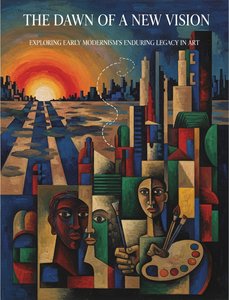
El Amanecer de una Nueva Visión: Explorando el Legado Duradero del Modernismo Temprano en el Arte
Descubre el legado del Modernismo en el arte: desde sus raíces románticas hasta su influencia en las vanguardias. Análisis de artistas, temas y técnicas clave. ¡Explora la belleza atemporal con ArtsDot!

Los 10 Maestros del Cubismo: Obras que Revolucionaron el Arte |
Descubre los 10 lienzos cubistas que revolucionaron el arte moderno. Explora la historia de Picasso, Braque y otros maestros del cubismo en . Reproducciones de alta calidad para tu hogar.

Las 10 Obras Maestras en Acrílico que Revolucionaron el Arte |
Descubre las 10 obras maestras en acrílico que revolucionaron el arte moderno. Explora la historia de Pollock, Rothko y Warhol, sus técnicas y paletas vibrantes. Encuentra reproducciones de alta calidad e inspírate para decorar tu hogar con .

Abstracción Geométrica: 10 Obras Maestras que Transformaron el Arte Moderno | ArtsDot
Descubre las 10 obras maestras de la abstracción geométrica que revolucionaron el arte moderno. Explora a Mondrian, Malevich y Kandinsky en ArtsDot.com. Reproducciones de alta calidad para tu hogar.

Fernand Léger: Las 25 Obras Maestras del Tubismo y la Vanguardia Francesa | ArtsDot
Descubre las 25 obras maestras de Fernand Léger, pionero del tubismo y la vanguardia francesa. Explora su estética industrial, composiciones geométricas y vibrantes colores. Reproducciones de arte exclusivas en ArtsDot.com.



