


 Vista previa
 Compartir
 Compartir
 Ver detalles
 Guía
Guía

 Descargar
 Ver artículos similares
 Radiografía
 Presentación de diapositivas
 Estadísticas
untitled (2966)


 Leer más
Reproducción al óleo hecha a mano
Óleo sobre lienzo pintado a mano en el tamaño y marco de su elección, realizado por encargo por nuestros artistas. ( Cambiar a formato impreso Ver versión en imagen digital)




P118B €10

P118H €10

P118W €10

P438Z €10

P508JH €12

P508YH €12

P805H €10

P805Z €10

P919BZ €10

P919G €10

P919XJ €10

P959ZH €10

P968JZ €12

W106C €8

W218G €10

W218JH €8

W218Y €10

W307PJ €10

W316G €10

W316PJ €8

W316Y €10

W398PJ €8

W4111J €10

W500HY €15

W500JH €15

W692G €12

W849H €8

W940BG €15

W953PJ €8




Elija entre nuestros tamaños predefinidos que respetan las proporciones originales de la obra.

Puede ingresar sus propias dimensiones para adaptarse a un marco o espacio específico. Si el tamaño seleccionado no coincide con las proporciones de la imagen original, recortaremos la obra o extenderemos la pintura con elementos adicionales pintados a mano. Se le enviará una maqueta digital para su aprobación antes de comenzar la producción.
Tenga en cuenta que la vista previa en pantalla no refleja el recorte o la extensión reales. Solo la maqueta mostrará con precisión la composición final.
Si bien existen tamaños personalizados, recomendamos seleccionar una dimensión de la lista predefinida para preservar las proporciones originales.
Tras realizar el pedido, el equipo de ArtsDot.com enviará un correo electrónico al cliente para solicitar instrucciones y proporcionarle una vista previa del boceto.
Envío a todo el mundo () en 3-4 semanas en lugar de las 5 semanas estándar. (11 octubre). Sin comprometer la calidad.

Envío exprés gratuito a todo el mundo

Lienzo de lino de alta calidad

Seguro de envío completo

Garantía de reembolso de impuestos aduaneros

Garantía de fidelidad cromática exacta

Política de devolución de 100 días (solo por defectos)

Garantía de devolución del 100% del dinero

Oferta por volumen
 La opción de vidrio solo está disponible en tamaños inferiores a 110 cm.

untitled (2966)
Técnica de reproducción
Tamaño de la reproducción
-


Precio total
€ 226
The Pulse of Modernity: A Cubist Vision
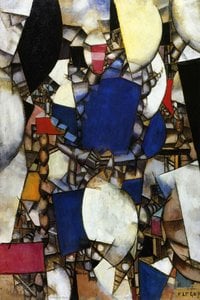
Fernand Léger's untitled (2966) is far more than a mere arrangement of shapes; it is a crystallized moment from the dawn of the industrial era. Created around 1930, during the height of the Cubist movement, this work serves as a daring assertion that abstraction could capture both the frantic energy of progress and the tangible reality of a changing world. As one gazes upon the canvas, they are immediately met with a riot of geometric forms—angular blocks of white, gray, and vibrant orange that seem to defy traditional perspective. Léger, a master of the machine aesthetic, utilizes these fragmented shapes to mimic the repetitive, rhythmic patterns of factory machinery, inviting the viewer to experience the transformative power of industrialization through a purely visual language.Texture, Color, and the Mechanical Rhythm
The brilliance of this piece lies in its profound physicality. Léger employed a technique known as impasto, applying thick, deliberate layers of oil paint to create a surface that is as much about touch as it is about sight. By building up pigments such as cadmium orange and titanium white, he achieved a palpable texture that captures the very essence of his subject matter. This heavy layering does not merely add richness; it provides a sense of weight and permanence to the fleeting movement depicted on the canvas. The interplay between the stark whites and the energetic oranges creates a striking contrast, much like the bright sparks of a working engine against a cold, metallic backdrop. For the collector or interior designer, this piece offers a commanding presence, bringing a sophisticated, tactile energy to any contemporary space.Symbolism Amidst the Fragments
Within this complex web of geometry, Léger embeds profound symbols of hope and liberation. At the heart of the composition sits a large, white bird, acting as a central anchor amidst the fractured landscape. This soaring figure serves as a poignant metaphor for freedom, rising above the rigid, mechanical structures that represent the constraints of modern life. Scattered throughout the scene, smaller birds and vibrant oranges add layers of depth and organic complexity to the otherwise structured environment. It is this delicate balance between the mechanical and the natural—the tension between the industrial machine and the spirit of life—that gives untitled (2966) its enduring emotional impact. To possess a reproduction of this work is to invite a conversation about progress, resilience, and the beautiful chaos of the modern age into one's home.Preguntas y respuestas
¿Quién vende copias pintadas a mano de "untitled (2966)" de Fernand Léger?
"untitled (2966)" está disponible como una reproducción al óleo pintada a mano sobre lienzo de lino. El pedido puede realizarse en esta página, con una variedad de tamaños a elegir.
¿Qué estado de ánimo y emoción expresa "untitled (2966)" de Fernand Léger?
El estado de ánimo capturado en "untitled (2966)" de Fernand Léger es Minimalista moderno, y su tono emocional es Serenidad.
¿Está "untitled (2966)" disponible como una impresión de bellas artes?
Puede solicitar una impresión de "untitled (2966)" de Fernand Léger directamente en esta página: una impresión de bellas artes sobre lienzo de algodón o papel de lienzo de archivo.
¿Dónde puedo ver una vista previa de "untitled (2966)"?
Para previsualizar una reproducción de "untitled (2966)" de Fernand Léger, abra la página de Vista previa de la obra.
¿Cuál es el tono predominante de "untitled (2966)" de Fernand Léger?
El tono dominante de "untitled (2966)" de Fernand Léger es Tonos cálidos de atardecer. El tono es la base cromática de la paleta.
¿Quién es el artista detrás de "untitled (2966)"?
"untitled (2966)" se atribuye a Fernand Léger.
¿Qué atmósfera aportaría "untitled (2966)" a un espacio?
"untitled (2966)" de Fernand Léger tiene una atmósfera Minimalista moderno y se recomienda para un/a Salón principal. El estado de ánimo es lo que la obra aporta al espacio que la rodea.
Obras relacionadas




Biografía del artista
vida temprana y formación
fernand léger, un pintor, escultor y cineasta francés, nació el 4 de febrero de 1881 en Argentán, Orne, Baja Normandía. Su padre criaba ganado, y Léger inicialmente se formó como arquitecto de 1897 a 1899. Luego se mudó a París en 1900, ganándose la vida como dibujante arquitectónico.desarrollo artístico
El trabajo temprano de Léger estuvo influenciado por el impresionismo, como se ve en le jardin de ma mère (mi madre's garden) (1905). Después de asistir a la escuela de artes decorativas y la academia Julian, comenzó a trabajar seriamente como pintor a los 25 años. Su estilo evolucionó hacia una forma personal del cubismo, que los críticos denominaron "tubismo" por su énfasis en las formas cilíndricas.cubismo y el grupo puteaux
En 1910, Léger expuso en el salón de otoño junto a jean metzinger y henri le fauconnier. Se unió al grupo puteaux, también conocido como la sección dorada (la sección de oro), junto con otros artistas como francis picabia y marcel duchamp.guerra y su influencia en el trabajo de léger
Las experiencias de Léger en la Primera Guerra Mundial impactaron significativamente su obra. Durante su tiempo en el frente, produjo dibujos de piezas de artillería, aviones y soldados compañeros. Su pintura soldier with a pipe (1916) refleja este período.obra posterior y legado
La obra posterior de Léger, caracterizada por formas mecánicas y elegantes, lo vinculó a la tradición de la pintura figurativa francesa. Sus paisajes animados de 1921 mostraron figuras y animales en formas armoniosas y aerodinámicas.- ver obras de fernand léger en ArtsDot
- más sobre fernand léger en wikipedia
- descubra el musée national fernand léger (francia) con ArtsDot
- la mujer sentada (100 x 81 cm, tubismo)
- elemento de máquina (cubismo)

Fernand Léger
1881 - 1955 , Francia
Datos clave
- Artistas Influenciados Por: ['Pop Art']
- Artistas Que Influyeron:
- Cézanne
- Impresionismo
- Fecha De Nacimiento: 4 de febrero de 1881
- Lugar De Nacimiento: Argentan, Francia
- Movimiento Artístico:
- Cubismo
- Tubismo
- Nacionalidad: Francés
- Nombre Completo: Fernand Léger
- Obras Notables:
- La Mujer Sentada
- Elemento de Máquina
- El Gran Desfile
- Paisajes Animados
Artículos relacionados

Abstracción Geométrica: 10 Obras Maestras que Transformaron el Arte Moderno | ArtsDot
Descubre las 10 obras maestras de la abstracción geométrica que revolucionaron el arte moderno. Explora a Mondrian, Malevich y Kandinsky en ArtsDot.com. Reproducciones de alta calidad para tu hogar.

Georges Braque: Las 25 Obras Maestras del Cubismo y su Legado en el Arte Moderno
Descubre las 25 obras maestras de Georges Braque, pionero del cubismo. Explora su innovadora técnica, colores y el legado del arte moderno francés. Reproducciones de alta calidad en ArtsDot.com. ¡Encuentra tu inspiración!

Kandinsky: Las 25 Obras Maestras del Pionero de la Abstracción | ArtsDot
Descubre las 25 obras maestras de Wassily Kandinsky, pionero del arte abstracto. Explora su expresionismo, composiciones únicas y la historia detrás de cada cuadro. Reproducciones de alta calidad para decorar tu hogar con arte moderno en ArtsDot.com.

Expresionismo Abstracto: 10 Obras Maestras que Transformaron el Arte |
Descubre las 10 obras maestras del Expresionismo Abstracto: Pollock, Rothko y más. Explora la historia, técnica y significado de estos lienzos icónicos. Reproducciones de arte exclusivas en .

Fernand Léger: Las 25 Obras Maestras del Tubismo y la Vanguardia Francesa | ArtsDot
Descubre las 25 obras maestras de Fernand Léger, pionero del tubismo y la vanguardia francesa. Explora su estética industrial, composiciones geométricas y vibrantes colores. Reproducciones de arte exclusivas en ArtsDot.com.


