


 Vista previa
 Compartir
 Compartir
 Ver detalles
 Guía
Guía

 Descargar
 Ver artículos similares
 Radiografía
 Presentación de diapositivas
 Estadísticas
Three figures


 Leer más
Giclée / Impresión de arte
Impresiones giclée o en lienzo de calidad de museo con producción rápida y opciones de acabado flexibles. ( Encargar reproducción pintada a mano Ver versión en imagen digital)




P118B €10

P118H €10

P118W €10

P438Z €10

P508JH €12

P508YH €12

P805H €10

P805Z €10

P919BZ €10

P919G €10

P919XJ €10

P959ZH €10

P968JZ €12

W106C €8

W218G €10

W218JH €8

W218Y €10

W307PJ €10

W316G €10

W316PJ €8

W316Y €10

W398PJ €8

W4111J €10

W500HY €15

W500JH €15

W692G €12

W849H €8

W940BG €15

W953PJ €8




Elija entre nuestros tamaños predefinidos que respetan las proporciones originales de la obra.

Introduzca el ancho y el alto que necesite para adaptarse a su marco o pared. Una impresión solo puede recortarse, nunca hacerse más grande que la imagen original, por lo que un tamaño con una forma distinta perderá parte de la obra. Le enviaremos una maqueta digital para su aprobación antes de realizar cualquier impresión. La imagen que se muestra en esta página no refleja el recorte real; solo la maqueta lo hace.
Envío a todo el mundo () en 2 semanas en lugar de las 4/5 semanas estándar. (20 octubre)

Envío exprés gratuito a todo el mundo

Lienzo de lino de alta calidad

Seguro de envío completo

Garantía de reembolso de impuestos aduaneros

Garantía de fidelidad cromática exacta

Política de devolución de 100 días (solo por defectos)

Garantía de devolución del 100% del dinero

Oferta por volumen
 La opción de vidrio solo está disponible en tamaños inferiores a 110 cm.

Three figures
Giclée / Impresión de arte
Tamaño de la reproducción
-


Precio total
€ 54
Fernand Léger’s ‘Three Figures’: A Cubist Echo of Modern Life
“Three Figures,” painted in 1921 by the groundbreaking artist Fernand Léger, offers a compelling glimpse into the heart of early 20th-century modernity. This work, executed in Léger's signature Cubist style, isn’t merely a depiction of three individuals; it’s an exploration of human form within the burgeoning landscape of industrialization and urban life. The painting immediately draws the eye to the central trio – two figures intimately connected through a shared embrace, and a third positioned slightly behind, suggesting a dynamic movement and interaction. Scattered throughout the composition are smaller, fragmented figures, echoing Léger’s fascination with the mechanical world and its impact on human experience.
Cubist Innovation and Léger's Vision
Created during a pivotal moment in art history, “Three Figures” exemplifies Léger’s radical approach to Cubism. Unlike some of his contemporaries who sought purely abstract forms, Léger remained deeply engaged with the observable world, translating its geometric qualities – the sharp angles of machinery, the rigid lines of urban architecture – into his artistic language. The painting's fractured planes and multiple perspectives challenge traditional notions of representation, forcing the viewer to actively participate in constructing the image. Léger’s use of bold black and white further emphasizes this effect, stripping away any superfluous detail to reveal the underlying structure of form. This technique was heavily influenced by his upbringing on a farm, where he observed the precise, functional forms of agricultural tools and structures.
Symbolism and Emotional Resonance
Beyond its formal qualities, “Three Figures” is rich in symbolic potential. The embrace between the two central figures suggests connection, intimacy, and perhaps even a yearning for stability amidst the rapid changes occurring around them. The guitar, prominently placed within the scene, adds another layer of interpretation – representing leisure, social interaction, and the burgeoning cultural life of the modern city. Léger’s deliberate use of simplified forms and stark contrasts evokes a sense of both alienation and fascination with the machine age. There's an underlying melancholy in the composition, reflecting perhaps the anxieties and uncertainties associated with this period of unprecedented technological advancement.
Technique and Historical Context
Painted in 1921, “Three Figures” represents a high point in Léger’s artistic development. The work demonstrates his mastery of oil paint, utilizing thick impasto to create a tactile surface that emphasizes the solidity of form. Léger's meticulous attention to detail, combined with his innovative approach to Cubism, firmly established him as one of the leading figures of the modern art movement. This piece is a testament to Léger’s ability to synthesize influences from various sources – including Fauvism and early Futurism – into a uniquely personal and powerfully expressive style. It's important to note that this painting was created during a time of immense social and technological upheaval, reflecting the anxieties and aspirations of a generation grappling with the dawn of the modern era.
Preguntas y respuestas
¿A qué etapa de la carrera de Fernand Léger pertenece "Three figures"?
Dentro de la trayectoria de Fernand Léger, "Three figures" pertenece al Cubist Phase. Esta etapa permite compararla con otras obras del artista.
¿Cómo puedo conseguir una lámina de "Three figures" de Fernand Léger?
Para obtener una impresión de "Three figures" de Fernand Léger, simplemente pídala en su página de Impresión de bellas artes: una impresión de bellas artes sobre lienzo de algodón o papel de lienzo de archivo.
¿Cómo se puede utilizar "Three figures" de Fernand Léger en la decoración del hogar?
Se recomienda "Three figures" de Fernand Léger para Reflective, idealmente en un/a Living Room. El uso y el espacio juntos orientan dónde encaja una reproducción.
Obras relacionadas


Biografía del artista
vida temprana y formación
fernand léger, un pintor, escultor y cineasta francés, nació el 4 de febrero de 1881 en Argentán, Orne, Baja Normandía. Su padre criaba ganado, y Léger inicialmente se formó como arquitecto de 1897 a 1899. Luego se mudó a París en 1900, ganándose la vida como dibujante arquitectónico.desarrollo artístico
El trabajo temprano de Léger estuvo influenciado por el impresionismo, como se ve en le jardin de ma mère (mi madre's garden) (1905). Después de asistir a la escuela de artes decorativas y la academia Julian, comenzó a trabajar seriamente como pintor a los 25 años. Su estilo evolucionó hacia una forma personal del cubismo, que los críticos denominaron "tubismo" por su énfasis en las formas cilíndricas.cubismo y el grupo puteaux
En 1910, Léger expuso en el salón de otoño junto a jean metzinger y henri le fauconnier. Se unió al grupo puteaux, también conocido como la sección dorada (la sección de oro), junto con otros artistas como francis picabia y marcel duchamp.guerra y su influencia en el trabajo de léger
Las experiencias de Léger en la Primera Guerra Mundial impactaron significativamente su obra. Durante su tiempo en el frente, produjo dibujos de piezas de artillería, aviones y soldados compañeros. Su pintura soldier with a pipe (1916) refleja este período.obra posterior y legado
La obra posterior de Léger, caracterizada por formas mecánicas y elegantes, lo vinculó a la tradición de la pintura figurativa francesa. Sus paisajes animados de 1921 mostraron figuras y animales en formas armoniosas y aerodinámicas.- ver obras de fernand léger en ArtsDot
- más sobre fernand léger en wikipedia
- descubra el musée national fernand léger (francia) con ArtsDot
- la mujer sentada (100 x 81 cm, tubismo)
- elemento de máquina (cubismo)

Fernand Léger
1881 - 1955 , Francia
Datos clave
- Artistas Influenciados Por: ['Pop Art']
- Artistas Que Influyeron:
- Cézanne
- Impresionismo
- Fecha De Nacimiento: 4 de febrero de 1881
- Lugar De Nacimiento: Argentan, Francia
- Movimiento Artístico:
- Cubismo
- Tubismo
- Nacionalidad: Francés
- Nombre Completo: Fernand Léger
- Obras Notables:
- La Mujer Sentada
- Elemento de Máquina
- El Gran Desfile
- Paisajes Animados
Artículos relacionados

Fernand Léger: Las 25 Obras Maestras del Tubismo y la Vanguardia Francesa | ArtsDot
Descubre las 25 obras maestras de Fernand Léger, pionero del tubismo y la vanguardia francesa. Explora su estética industrial, composiciones geométricas y vibrantes colores. Reproducciones de arte exclusivas en ArtsDot.com.

Las 10 Pinturas Más Famosas Dominadas por el Negro | Arte y Decoración
Descubre las 10 pinturas más impactantes dominadas por el negro. Explora obras maestras de Rembrandt, Goya y Rothko, su historia y significado. Encuentra reproducciones de arte exclusivas para transformar tu hogar en .

Giclée Prints: Archival Quality & Aesthetic Nuances for the Discerning Collector
Explore the world of giclée prints with ArtsDot. Learn about archival quality, aesthetic nuances & investment potential. Expert guidance for discerning art collectors seeking museum-quality reproductions and lasting value.
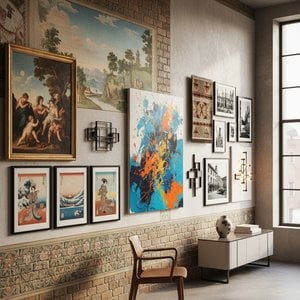
Transforming Spaces: A Comprehensive Exploration of Wall Decor Through Art History & Contemporary Practice
Explore the art of transforming spaces with our comprehensive guide to wall decor. From historical movements to contemporary trends, discover how to curate impactful interiors and commission bespoke artwork for a truly personalized aesthetic.

Arte Industrial: 10 Obras Maestras para un Hogar con Carácter | ArtsDot.com
Descubre 10 obras maestras que capturan la esencia del arte industrial. Explora la historia de Van Gogh, Hopper y Klimt, sus técnicas y paletas. Encuentra lienzos perfectos para un hogar con carácter en ArtsDot.com.


