


 Vista previa
 Compartir
 Compartir
 Ver detalles

 Descargar
 Ver similares
 Radiografía
 Presentación de diapositivas
The mirror

 Leer más
Reproducción al óleo hecha a mano
Óleo sobre lienzo pintado a mano en el tamaño y marco de su elección, realizado por encargo por nuestros artistas. ( Pedir impresión Comprar descarga)




P118B $10

P118H $10

P118W $10

P438Z $10

P508JH $12

P508YH $12

P805H $10

P805Z $10

P919BZ $10

P919G $10

P919XJ $10

P959ZH $10

P968JZ $12

W106C $8

W218G $10

W218JH $8

W218Y $10

W307PJ $10

W316G $10

W316PJ $8

W316Y $10

W398PJ $8

W4111J $10

W500HY $15

W500JH $15

W692G $12

W849H $8

W940BG $15

W953PJ $8




Elija entre nuestros tamaños predefinidos que respetan las proporciones originales de la obra.

Puede ingresar sus propias dimensiones para adaptarse a un marco o espacio específico. Si el tamaño seleccionado no coincide con las proporciones de la imagen original, recortaremos la obra o extenderemos la pintura con elementos adicionales pintados a mano. Se le enviará una maqueta digital para su aprobación antes de comenzar la producción.
Tenga en cuenta que la vista previa en pantalla no refleja el recorte o la extensión reales. Solo la maqueta mostrará con precisión la composición final.
Si bien existen tamaños personalizados, recomendamos seleccionar una dimensión de la lista predefinida para preservar las proporciones originales.
Tras realizar el pedido, el equipo de ArtsDot.com enviará un correo electrónico al cliente para solicitar instrucciones y proporcionarle una vista previa del boceto.
Envío a todo el mundo () en 3-4 semanas en lugar de las 5 semanas estándar. (20 agosto). Sin comprometer la calidad.

Envío exprés gratuito a todo el mundo

Lienzo de lino de alta calidad

Seguro de envío completo

Garantía de reembolso de aranceles aduaneros

Garantía de fidelidad cromática exacta

Política de devolución de 60 días (solo por defectos)

Garantía de devolución del 100% del dinero

Oferta por volumen
 La opción de vidrio solo está disponible en tamaños inferiores a 110 cm.

The mirror
Técnica de reproducción
Tamaño de la reproducción
-


Precio total
$ 263
Descripción de la obra
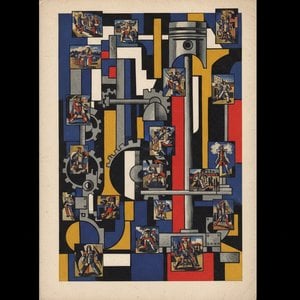
A Study in Form: Exploring Fernand Léger’s “The Mirror”
Fernand Léger's "The Mirror" isn’t merely a depiction of a woman; it’s an ambitious exploration of the intersection between human anatomy and industrial geometry—a cornerstone of Léger’s distinctive artistic approach. Painted sometime around 1925, this monochrome masterpiece exemplifies his unwavering commitment to capturing the transformative influence of the burgeoning machine age on artistic expression. Léger rejected the prevailing trend toward pure abstraction, arguing that true art could simultaneously honor tradition while embracing the radical new realities shaping the twentieth century. Instead of dissolving form into meaningless splashes of color, he meticulously crafted a composition that juxtaposes organic contours—the woman’s torso and arm—with angular, geometric shapes—the chair frame and clock face—creating a dialogue between nature and technology.- Style: Léger's style is characterized by “Constructivism,” a movement born from the Russian Revolution that prioritized functionalism and geometric abstraction as tools for conveying social ideals. However, Léger’s Constructivist tendencies are tempered with an undeniable sensitivity to humanist concerns.
- Technique: Léger employed a bold palette of black and white, utilizing thick impasto—a technique where paint is applied in textured layers—to imbue the canvas with palpable physicality. This deliberate materiality underscores Léger’s belief that art should engage the senses and communicate directly with the viewer.
Historical Context: The Machine Age and Artistic Response
The painting emerged during a period of profound societal change—the aftermath of World War I and the rapid acceleration of industrialization. Léger responded to this era not with despair or nostalgia, but with an optimistic conviction that art could illuminate the potential for progress while acknowledging the anxieties inherent in confronting modernity. The inclusion of the chair frame and clock face isn’t accidental; they serve as visual anchors, grounding the figure within a broader framework of urban life and timekeeping—symbols of efficiency and control against which Léger subtly contrasts the vulnerability represented by the human form.Symbolism Beyond Representation
While “The Mirror” eschews traditional figurative representation, it’s laden with symbolic significance. The woman herself embodies resilience and strength, positioned in a posture that conveys both grace and determination. Her raised arm suggests aspiration—a reaching for something beyond the immediate physical realm—while simultaneously mirroring the upward thrust of industrial structures. Léger's deliberate simplification of form isn’t an abandonment of emotion; rather, it amplifies it by stripping away extraneous detail, forcing the viewer to confront the essence of human experience.Emotional Impact and Artistic Legacy
Ultimately, “The Mirror” transcends its formal constraints to evoke a powerful emotional response. The stark monochrome palette contributes to an atmosphere of contemplative seriousness, inviting viewers to contemplate themes of identity, vulnerability, and the enduring relationship between humanity and technology. Léger’s pioneering approach paved the way for subsequent generations of artists who sought to reconcile abstraction with observation—a legacy that continues to inspire creativity and dialogue within contemporary art.Obras relacionadas


Biografía del artista
vida temprana y formación
fernand léger, un pintor, escultor y cineasta francés, nació el 4 de febrero de 1881 en Argentán, Orne, Baja Normandía. Su padre criaba ganado, y Léger inicialmente se formó como arquitecto de 1897 a 1899. Luego se mudó a París en 1900, ganándose la vida como dibujante arquitectónico.desarrollo artístico
El trabajo temprano de Léger estuvo influenciado por el impresionismo, como se ve en le jardin de ma mère (mi madre's garden) (1905). Después de asistir a la escuela de artes decorativas y la academia Julian, comenzó a trabajar seriamente como pintor a los 25 años. Su estilo evolucionó hacia una forma personal del cubismo, que los críticos denominaron "tubismo" por su énfasis en las formas cilíndricas.cubismo y el grupo puteaux
En 1910, Léger expuso en el salón de otoño junto a jean metzinger y henri le fauconnier. Se unió al grupo puteaux, también conocido como la sección dorada (la sección de oro), junto con otros artistas como francis picabia y marcel duchamp.guerra y su influencia en el trabajo de léger
Las experiencias de Léger en la Primera Guerra Mundial impactaron significativamente su obra. Durante su tiempo en el frente, produjo dibujos de piezas de artillería, aviones y soldados compañeros. Su pintura soldier with a pipe (1916) refleja este período.obra posterior y legado
La obra posterior de Léger, caracterizada por formas mecánicas y elegantes, lo vinculó a la tradición de la pintura figurativa francesa. Sus paisajes animados de 1921 mostraron figuras y animales en formas armoniosas y aerodinámicas.- ver obras de fernand léger en ArtsDot
- más sobre fernand léger en wikipedia
- descubra el musée national fernand léger (francia) con ArtsDot
- la mujer sentada (100 x 81 cm, tubismo)
- elemento de máquina (cubismo)

Fernand Léger
1881 - 1955 , Francia
Datos clave
- Artistas Influenciados Por: ['Pop Art']
- Artistas Que Influyeron:
- Cézanne
- Impresionismo
- Fecha De Nacimiento: 4 de febrero de 1881
- Lugar De Nacimiento: Argentan, Francia
- Movimiento Artístico:
- Cubismo
- Tubismo
- Nacionalidad: Francés
- Nombre Completo: Fernand Léger
- Obras Notables:
- La Mujer Sentada
- Elemento de Máquina
- El Gran Desfile
- Paisajes Animados
Artículos relacionados
Fernand Léger: Las 25 Obras Maestras del Tubismo y la Vanguardia Francesa | ArtsDot
Descubre las 25 obras maestras de Fernand Léger, pionero del tubismo y la vanguardia francesa. Explora su estética industrial, composiciones geométricas y vibrantes colores. Reproducciones de arte exclusivas en ArtsDot.com.

Blanco Sublime: Los 10 Cuadros Más Famosos Dominados por la Luz y el Color
Descubre los 10 cuadros blancos más emblemáticos de la historia del arte. Explora Monet, Van Gogh y Klimt, y su magistral uso de la luz y el color. Encuentra reproducciones de alta calidad e inspírate para tu decoración en .

Esculturas de Bronce Legendarias: 10 Obras Maestras que Transformaron el Arte | ArtsDot
Descubre las 10 esculturas de bronce más legendarias que revolucionaron el arte. Explora la historia de Rodin, Degas y otros maestros del bronce. Encuentra reproducciones de alta calidad e inspiración para tu hogar en ArtsDot.com.

The Enduring Form: Exploring Themes & Techniques in Sculpture Across Historical Periods
Explore the rich history of sculpture from ancient masterpieces to contemporary innovations. Discover key techniques, influential artists & investment potential for discerning art collectors.

Las 10 Obras Maestras de Bronce que Revolucionaron la Historia del Arte | ArtsDot
Descubre las 10 esculturas de bronce más influyentes de la historia del arte. Explora obras maestras de Rodin, Degas y otros genios. Encuentra reproducciones de arte de calidad museo en ArtsDot.com.



