
- Inicio

- Impresión en lienzo
- Fernand Léger
- Still Life

 Encargar reproducción Comprar imagen en alta resolución
 Enviar
 Compartir
 Detalles
 Añadir a favoritos

 Descargar
 Similares
 Radiografía
 Presentación de diapositivas
Still Life


 Ver más
Giclée / Impresión de arte
Impresión giclée o en lienzo de calidad de museo con producción rápida y opciones de acabado flexibles.




P118B $10

P118H $10

P118W $10

P438Z $10

P508JH $12

P508YH $12

P805H $10

P805Z $10

P919BZ $10

P919G $10

P919XJ $10

P959ZH $10

P968JZ $12

W106C $8

W218G $10

W218JH $8

W218Y $10

W307PJ $10

W316G $10

W316PJ $8

W316Y $10

W398PJ $8

W4111J $10

W500HY $15

W500JH $15

W692G $12

W849H $8

W940BG $15

W953PJ $8




Elija entre nuestros tamaños predefinidos que respetan las proporciones originales de la obra.

Puede introducir sus propias dimensiones para adaptarse a un marco o espacio específico. Si el tamaño seleccionado no coincide con las proporciones de la imagen original, recortaremos la obra de arte o extenderemos la imagen con un borde con efecto espejo o de color sólido. Se enviará una maqueta digital para su aprobación antes de que comience la producción.
Tenga en cuenta que la vista previa en pantalla no refleja el recorte o la extensión real. Solo la maqueta mostrará con precisión la composición final.
Aunque existen tamaños personalizados, recomendamos seleccionar una dimensión de la lista predefinida para preservar las proporciones originales.
Entrega mundial () en 2 semanas en lugar de las 4/5 semanas estándar. (22 julio)

Envío exprés gratuito a todo el mundo

Lienzo de lino de alta calidad

Seguro de envío total

Garantía de reembolso de impuestos aduaneros

Garantía de fidelidad de color

Política de devolución de 60 días (solo por defectos)

Garantía de devolución del 100% del dinero

Descuento por pedido múltiple
 La opción de vidrio solo está disponible en tamaños inferiores a 110 cm.

Still Life
Giclée / Impresión de arte
Tamaño de la reproducción
-


Precio total final
-
Descripción de la obra
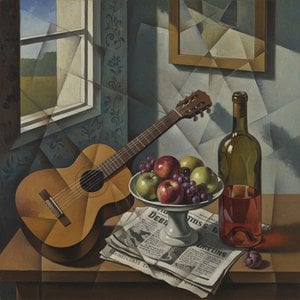
Fernand Léger’s Still Life: A Symphony of Geometric Form
The painting “Still Life” by Fernand Léger, completed in 1927, isn't merely an arrangement of objects; it’s a deliberate manifesto of Léger’s artistic philosophy – a fervent embrace of geometric abstraction as a response to the burgeoning influence of industrialization. Examining this artwork reveals not just visual aesthetics but also a profound commentary on the anxieties and aspirations of the era.- Subject Matter: Léger eschews traditional still life conventions, opting instead for a carefully curated selection of commonplace items – a vase brimming with flowers, a bottle radiating light, a bowl holding fruit, utensils meticulously positioned—objects familiar to everyday life yet rendered unrecognizable through Léger’s transformative vision.
- Style: Léger's style is undeniably Cubist-influenced, albeit radically simplified. He dismantles the illusion of three dimensions, fracturing objects into angular planes and intersecting lines that echo the rhythms of machinery. This fragmentation isn’t destructive; it’s liberating—a means of conveying movement and dynamism within a static composition.
- Technique: Léger employs a bold palette dominated by primary colors – scarlet red, cadmium yellow, ultramarine blue – applied with thick impasto strokes that create palpable textural surfaces. The paint itself becomes an active participant in the artwork’s expressive power, mirroring the relentless energy of the industrial landscape.
Historical Context: Embracing the Machine Age
The painting emerged during a period of intense societal upheaval following World War I. Léger was deeply affected by the devastation and disillusionment that gripped Europe, perceiving the war as a symbol of irrational violence and fragmentation. He responded to this crisis not with melancholic introspection but with an urgent desire to forge a new artistic language—one capable of confronting the challenges posed by technological progress without succumbing to despair.Symbolism: Geometric Precision Versus Organic Decay
Despite Léger’s deliberate rejection of naturalistic representation, his artwork is laden with symbolic significance. The geometric forms – cubes, cylinders, cones—represent the dominance of machine logic and the relentless march toward industrial standardization. Simultaneously, however, Léger subtly incorporates elements of organic decay—the drooping petals of flowers, the bruised fruit—serving as a poignant reminder of the fragility of life and the inevitable confrontation between nature and technology.Emotional Impact: A Vision of Controlled Chaos
“Still Life” transcends mere visual depiction; it communicates an emotional state – one characterized by both apprehension and exhilaration. Léger’s masterful manipulation of color, texture, and form generates a sense of controlled chaos—a dynamic equilibrium that captures the paradoxical beauty inherent in embracing modernity while acknowledging its darker side. The painting invites contemplation on themes of transformation, resilience, and the enduring human spirit.- Interior Design Considerations: Léger’s bold geometric style lends itself beautifully to contemporary interior design schemes—particularly those prioritizing minimalist aesthetics and vibrant color accents. Reproductions of “Still Life” can serve as striking focal points within spaces seeking a connection to artistic heritage.
Fernand Léger's "Still Life" remains an enduring testament to the transformative power of art – a captivating exploration of form, color, and symbolism that continues to inspire audiences worldwide.
Obras similares


Biografía del artista
vida temprana y formación
fernand léger, un pintor, escultor y cineasta francés, nació el 4 de febrero de 1881 en Argentán, Orne, Baja Normandía. Su padre criaba ganado, y Léger inicialmente se formó como arquitecto de 1897 a 1899. Luego se mudó a París en 1900, ganándose la vida como dibujante arquitectónico.desarrollo artístico
El trabajo temprano de Léger estuvo influenciado por el impresionismo, como se ve en le jardin de ma mère (mi madre's garden) (1905). Después de asistir a la escuela de artes decorativas y la academia Julian, comenzó a trabajar seriamente como pintor a los 25 años. Su estilo evolucionó hacia una forma personal del cubismo, que los críticos denominaron "tubismo" por su énfasis en las formas cilíndricas.cubismo y el grupo puteaux
En 1910, Léger expuso en el salón de otoño junto a jean metzinger y henri le fauconnier. Se unió al grupo puteaux, también conocido como la sección dorada (la sección de oro), junto con otros artistas como francis picabia y marcel duchamp.guerra y su influencia en el trabajo de léger
Las experiencias de Léger en la Primera Guerra Mundial impactaron significativamente su obra. Durante su tiempo en el frente, produjo dibujos de piezas de artillería, aviones y soldados compañeros. Su pintura soldier with a pipe (1916) refleja este período.obra posterior y legado
La obra posterior de Léger, caracterizada por formas mecánicas y elegantes, lo vinculó a la tradición de la pintura figurativa francesa. Sus paisajes animados de 1921 mostraron figuras y animales en formas armoniosas y aerodinámicas.- ver obras de fernand léger en ArtsDot
- más sobre fernand léger en wikipedia
- descubra el musée national fernand léger (francia) con ArtsDot
- la mujer sentada (100 x 81 cm, tubismo)
- elemento de máquina (cubismo)

Fernand Léger
1881 - 1955 , Francia
Datos clave
- Artistas Influenciados Por: ['Pop Art']
- Artistas Que Influyeron:
- Cézanne
- Impresionismo
- Fecha De Nacimiento: 4 de febrero de 1881
- Lugar De Nacimiento: Argentan, Francia
- Movimiento Artístico:
- Cubismo
- Tubismo
- Nacionalidad: Francés
- Nombre Completo: Fernand Léger
- Obras Notables:
- La Mujer Sentada
- Elemento de Máquina
- El Gran Desfile
- Paisajes Animados
Artículos relacionados
Deconstructing Reality: A Comprehensive Exploration of Cubist Still Life
Explore the revolutionary world of Cubist Still Life with ArtsDot. Discover Picasso & Braque's groundbreaking techniques, its philosophical roots, and lasting impact on modern art. Expert insights for collectors.

Más Allá del Retrato: Bodegones Personalizados, un Legado Artístico para Espacios Exclusivos
Cree bodegones personalizados únicos para su hotel con ArtsDot. Expertos artistas reproducen obras maestras o crean piezas originales a medida. Calidad excepcional, confianza y un legado artístico duradero.

Severin Roesen: Evoking National Identity Through American Still Life Painting
Explore the captivating world of Severin Roesen, a major American still life painter influenced by Dutch masters. Discover his lush compositions and the symbolism within his art – a window into 19th-century America.

De la Naturaleza Muerta Clásica a la Abstracción Contemporánea: Elevando los Espacios de Entretenimiento en Villas a Través de Reproducciones Artísticas
Descubre la evolución del bodegón y cómo integrar reproducciones artísticas de alta calidad en tu villa. Expertos en arte, selección exclusiva y asesoramiento personalizado.

Silent Narratives: Exploring the Enduring Appeal of Still Life Painting Across Centuries
Explore the rich history of still life painting with ArtsDot. Discover Dutch Masters, decode vanitas symbolism & learn about collecting timeless art. Expert insights and museum-quality reproductions.



