


 Vista previa
 Compartir
 Compartir
 Ver detalles
 Guía
Guía

 Descargar
 Ver artículos similares
 Radiografía
 Presentación de diapositivas
 Estadísticas
Composition on a yellow background


 Leer más
Reproducción al óleo hecha a mano
Óleo sobre lienzo pintado a mano en el tamaño y marco de su elección, realizado por encargo por nuestros artistas. ( Cambiar a formato impreso Ver versión en imagen digital)




P118B €10

P118H €10

P118W €10

P438Z €10

P508JH €12

P508YH €12

P805H €10

P805Z €10

P919BZ €10

P919G €10

P919XJ €10

P959ZH €10

P968JZ €12

W106C €8

W218G €10

W218JH €8

W218Y €10

W307PJ €10

W316G €10

W316PJ €8

W316Y €10

W398PJ €8

W4111J €10

W500HY €15

W500JH €15

W692G €12

W849H €8

W940BG €15

W953PJ €8




Elija entre nuestros tamaños predefinidos que respetan las proporciones originales de la obra.

Escriba el ancho y el alto que necesite para adaptarse a su marco o a su pared. Al ser una obra pintada a mano, para un tamaño con una forma distinta, el artista puede pintar un poco más alrededor de la imagen o recortar un poco; usted elige. Le enviaremos una maqueta digital para su aprobación antes de comenzar la pintura. La imagen que se muestra en esta página no refleja el resultado real; solo la maqueta lo hace.
Tras realizar el pedido, el equipo de ArtsDot.com enviará un correo electrónico al cliente para solicitar instrucciones y proporcionarle una vista previa del boceto.
Envío a todo el mundo () en 3-4 semanas en lugar de las 5 semanas estándar. (23 octubre). Sin comprometer la calidad.

Envío exprés gratuito a todo el mundo

Lienzo de lino de alta calidad

Seguro de envío completo

Garantía de reembolso de impuestos aduaneros

Garantía de fidelidad cromática exacta

Política de devolución de 100 días (solo por defectos)

Garantía de devolución del 100% del dinero

Oferta por volumen
 La opción de vidrio solo está disponible en tamaños inferiores a 110 cm.

Composition on a yellow background
Técnica de reproducción
Tamaño de la reproducción
-


Precio total
€ 231
A Radiant Symphony of Modernity
In the vibrant landscape of mid-century modernism, few works capture the rhythmic pulse of the machine age as evocatively as Fernand Léger’s “Composition on a Yellow Background.” Created in 1941, this masterpiece stands as an arresting testament to the burgeoning spirit of Cubism and its desire to translate the dynamism of industrial life onto canvas. The painting is not merely a visual spectacle; it is a profound dialogue between the rational and the subconscious, where a dominant, luminous yellow expanse serves as a living, breathing environment that radiates warmth and energy. This sun-drenched backdrop invites the viewer into a world where the boundaries between organic life and mechanical precision begin to blur, creating an atmosphere that is both intellectually stimulating and visually hypnotic.
Léger’s approach to this composition transcends simple abstraction, moving toward what he famously championed as “Tubism.” Rather than fragmenting figures into multiple perspectives in the traditional Cubist manner of Picasso or Braque, Léger focused on capturing the structural essence of the modern era. He utilized interlocking planes and bold, contrasting colors to convey a sense of weight and volume. The palette is deceptively simple yet strikingly impactful—a dominant yellow punctuated by stark whites and deep crimsons. Through his meticulous use of a spatula technique, Léger imparted a palpable, tactile quality to the surface, mirroring the rough materiality of the industrial landscape he so passionately sought to portray. This texture invites the eye to wander across the canvas, feeling the rhythmic, metallic hum of a city in motion.
Symbolism and the Industrial Pulse
Within this geometric dance, Léger weaves a complex tapestry of objects that ground his abstraction in the reality of the twentieth century. The composition features an intriguing array of elements: white hands prominently displayed, each delicately holding small objects, alongside clocks that suggest the relentless march of time in an era of mass production. A chair and a bowl appear nestled within the arrangement, acting as anchors of domesticity amidst the swirling energy of modern shapes. These elements are not merely decorative; they represent the integration of human existence with the technological advancements of the age. The painting rejects a contemplative retreat into pure abstraction, choosing instead to engage directly with the objects and rhythms of an urbanizing world.
For the discerning collector or interior designer, this artwork offers more than just aesthetic beauty; it provides a focal point of profound historical significance. It embodies the transition from the rural landscapes of Léger’s youth to the high-voltage energy of the machine age. The emotional impact of the piece lies in its ability to evoke a sense of progress and vitality. To hang a reproduction of this work is to invite a piece of history into a space—a piece that celebrates strength, geometry, and the unapologetic beauty of modern life. It is an ideal selection for those seeking to infuse a contemporary interior with a sense of movement, structural integrity, and a bold, avant-garde spirit.
Preguntas y respuestas
¿De qué trata "Composition on a yellow background"?
"Composition on a yellow background" de Fernand Léger representa: geometric forms, industrial imagery, human hands, clock motif, collage technique, modern art, dynamism, texture.
¿Se encuentra "Composition on a yellow background" de Fernand Léger entre las obras más codiciadas del Cubist Collage?
"Composition on a yellow background" figura con un nivel de Iconic entre las obras del Cubist Collage en el catálogo.
¿Cómo encaja "Composition on a yellow background" con los temas y el estilo de Fernand Léger?
Dentro de la obra de Fernand Léger, "Composition on a yellow background" se inscribe en el estilo Cubist Collage, junto a los temas de cubist roots, social equality, industrial vision, monumental scale, pop art precursor.
Obras relacionadas


Biografía del artista
vida temprana y formación
fernand léger, un pintor, escultor y cineasta francés, nació el 4 de febrero de 1881 en Argentán, Orne, Baja Normandía. Su padre criaba ganado, y Léger inicialmente se formó como arquitecto de 1897 a 1899. Luego se mudó a París en 1900, ganándose la vida como dibujante arquitectónico.desarrollo artístico
El trabajo temprano de Léger estuvo influenciado por el impresionismo, como se ve en le jardin de ma mère (mi madre's garden) (1905). Después de asistir a la escuela de artes decorativas y la academia Julian, comenzó a trabajar seriamente como pintor a los 25 años. Su estilo evolucionó hacia una forma personal del cubismo, que los críticos denominaron "tubismo" por su énfasis en las formas cilíndricas.cubismo y el grupo puteaux
En 1910, Léger expuso en el salón de otoño junto a jean metzinger y henri le fauconnier. Se unió al grupo puteaux, también conocido como la sección dorada (la sección de oro), junto con otros artistas como francis picabia y marcel duchamp.guerra y su influencia en el trabajo de léger
Las experiencias de Léger en la Primera Guerra Mundial impactaron significativamente su obra. Durante su tiempo en el frente, produjo dibujos de piezas de artillería, aviones y soldados compañeros. Su pintura soldier with a pipe (1916) refleja este período.obra posterior y legado
La obra posterior de Léger, caracterizada por formas mecánicas y elegantes, lo vinculó a la tradición de la pintura figurativa francesa. Sus paisajes animados de 1921 mostraron figuras y animales en formas armoniosas y aerodinámicas.- ver obras de fernand léger en ArtsDot
- más sobre fernand léger en wikipedia
- descubra el musée national fernand léger (francia) con ArtsDot
- la mujer sentada (100 x 81 cm, tubismo)
- elemento de máquina (cubismo)

Fernand Léger
1881 - 1955 , Francia
Datos clave
- Artistas Influenciados Por: ['Pop Art']
- Artistas Que Influyeron:
- Cézanne
- Impresionismo
- Fecha De Nacimiento: 4 de febrero de 1881
- Lugar De Nacimiento: Argentan, Francia
- Movimiento Artístico:
- Cubismo
- Tubismo
- Nacionalidad: Francés
- Nombre Completo: Fernand Léger
- Obras Notables:
- La Mujer Sentada
- Elemento de Máquina
- El Gran Desfile
- Paisajes Animados
Artículos relacionados
Los 10 cuadros más famosos dominados por el ocre amarillo: Arte y decoración atemporal
Descubre los 10 cuadros más famosos con tonos ocres amarillos. Explora la historia de Van Gogh, Monet y otros artistas clave del impresionismo y postimpresionismo. Encuentra reproducciones de arte de museo en .
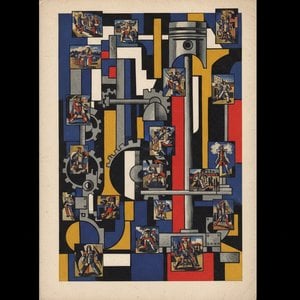
Fernand Léger: Las 25 Obras Maestras del Tubismo y la Vanguardia Francesa | ArtsDot
Descubre las 25 obras maestras de Fernand Léger, pionero del tubismo y la vanguardia francesa. Explora su estética industrial, composiciones geométricas y vibrantes colores. Reproducciones de arte exclusivas en ArtsDot.com.
Los 10 cuadros más famosos dominados por el 'amarillo cromo': Arte y decoración
Descubre los 10 cuadros más emblemáticos dominados por el 'amarillo cromo': Van Gogh, Monet y otros maestros. Historia del arte, técnicas y decoración con lienzos impresionistas. ¡Explora la colección completa en ArtsDot.com!

Arte Industrial: 10 Obras Maestras para un Hogar con Carácter | ArtsDot.com
Descubre 10 obras maestras que capturan la esencia del arte industrial. Explora la historia de Van Gogh, Hopper y Klimt, sus técnicas y paletas. Encuentra lienzos perfectos para un hogar con carácter en ArtsDot.com.

Deconstruyendo la Realidad: El Impacto Revolucionario del Cubismo en el Arte del Siglo XX
Descubra el revolucionario impacto del Cubismo en el arte del siglo XX. Análisis profundo de Picasso, Braque y su legado. Guía para coleccionistas apasionados e inversores.


