


La imagen se ajusta a sus preferencias: , .
Descripción del objeto
Discover "Sandø" by Eilif Peterssen (1894), a serene Norwegian landscape painting in an impressionistic style. Explore its muted colors, soft brushstrokes & connection to nature.
Biografía del artista
Explora los paisajes y retratos de Eilif Peterssen, maestro del realismo e impresionismo. Descubre su influencia de la Escuela de Múnich.
 Ver más
Reproducción al óleo hecha a mano
Óleo sobre lienzo pintado a mano en el tamaño y marco de su elección, realizado por encargo por nuestros artistas. ( Cambiar a impresiones Cambiar a imagen digital)
Más información sobre esta pintura
 Ver en contexto
 Enviar
 Compartir
 Detalles
 Guía
Guía

 Descargar
 Similares
 Radiografía
 Presentación de diapositivas
 Preguntas y respuestas
 Estadísticas
Pida su pintura en cuatro sencillos pasos
Tómese su tiempo. Puede cambiar cualquier respuesta; el precio en su carrito de compra se actualizará según cada elección.
1 Paso uno de cuatro
¿Qué tamaño desea?
Estos tamaños mantienen las proporciones de la pintura original. El dibujo muestra su elección en una pared, sobre un sofá de dos metros.
O introduce tus propias medidas
Elija entre nuestros tamaños predefinidos que respetan las proporciones originales de la obra.

Indique el ancho y el alto que necesite para adaptarse a su marco o pared. Al tratarse de una obra pintada a mano, si requiere un tamaño con una proporción distinta, el artista puede pintar un poco más alrededor de la imagen o recortarla ligeramente; usted elige. Le enviaremos una maqueta digital para su aprobación antes de comenzar la pintura. La imagen que se muestra en esta página no refleja el resultado real; solo la maqueta lo hace.
2 Paso dos de cuatro
¿Cómo desea recibirlo: enrollado, estirado o enmarcado?
Los precios que aparecen a continuación corresponden al tamaño seleccionado en el primer paso.
Elige el acabado de los bordes del lienzo
Elige tu marco

Blanco €1

Bordes difuminados €1

Continuación de imagen €1

P118B €10

P118H €10

P118W €10

P438Z €10

P508JH €12

P508YH €12

P805H €10

P805Z €10

P919BZ €10

P919G €10

P919XJ €10

P959ZH €10

P968JZ €12

W106C €8

W218G €10

W218JH €8

W218Y €10

W307PJ €10

W316G €10

W316PJ €8

W316Y €10

W398PJ €8

W4111J €10

W500HY €15

W500JH €15

W692G €12

W849H €8

W940BG €15

W953PJ €8

H24-GOLD €30

H24-SILVER €30

H36-GOLD €45

H36-SILVER €45
Con marco
Moldura: . Dimensiones totales con marco: .
3 Paso tres de cuatro
¿Desea realizar algún cambio en la pintura?
La mayoría de las personas responden que no. Debido a que cada pintura se realiza a mano, nuestro artista también puede adaptarla para usted.
Tras realizar el pedido, el equipo de ArtsDot.com enviará un correo electrónico al cliente para solicitar instrucciones y proporcionar una vista previa del boceto
4 Paso cuatro de cuatro
Algunas opciones de acabado
Todos ellos son opcionales. Las respuestas ya seleccionadas no tienen ningún coste adicional.
¿Quién lo pinta?
Envío a todo el mundo () en 3-4 semanas en lugar de las 5 semanas estándar. (6 noviembre). Sin comprometer la calidad.
¿Una placa de identificación, como en un museo?
Detalles de la placa de bronce grabada
This elegant plaque features the artist's name and the title of the artwork, finely engraved for a timeless presentation.
It is made from bronze with a refined, elegant finish. The text is precisely laser-engraved for a sharp and permanent result. Measuring 9x2 cm, the plaque is compact yet easy to read. It's built to be durable and scratch-resistant, offering a professional, museum-quality look. Mounting is simple thanks to the included adhesive backing.
Detalles de la placa de acrílico transparente
The plaque includes essential engraved details such as the artist's name, the title of the artwork, the date it was created, the type of media used-like oil on canvas or watercolor-a brief description of the piece, and a QR code that links to the complete artwork information.
It is crafted from clear acrylic, offering a sleek, modern appearance. The text is UV-engraved in black to ensure strong visual contrast. With a size of 10x15 cm, it ensures optimal readability. It comes equipped with two metal hooks for secure wall mounting. The plaque is designed to be weather-resistant, making it suitable for various environments, and it includes interactive features that work seamlessly with smartphone scanning.
Detalles de la placa de acrílico negro
This elegant plaque includes engraved information such as the artist's name, the title of the artwork, the date it was created, the type of media used (like oil on canvas or watercolor), a short description of the artwork, and a QR code for quick access to more information.
The plaque itself is made from refined black acrylic with a premium finish. The text is laser-engraved in white for high contrast and readability. Its size is 10x15 cm, designed to be easy to read. It comes with two metal hooks for professional mounting. The design is sleek and fits any interior style. It is also weather-resistant and durable, with built-in digital integration for mobile compatibility.
¿Un barniz protector?
¿Para cuándo lo necesita?
✓ Revisar y pedir
Su pintura, tal como la solicitó

Sandø
Técnica de reproducción
Dimensiones de la reproducción
-

Selección de artistas premium
Mayor nivel de detalle, delicadeza y tiempo de producción adicional
-

Enmarcado de reproducción
-
-
Para obras de arte o reproducciones que midan más de 105 cm (aproximadamente 41 pulgadas) en cualquiera de sus lados, el marco se enviará como un kit desmontado. Este método garantiza una entrega segura y evita daños durante el transporte.
Se requiere montaje profesional: este no es un producto para hacer usted mismo (DIY).
El kit debe ser ensamblado y el lienzo tensado por un enmarcador profesional con experiencia, utilizando cola para madera (no incluida), una tenaza para tensar lienzos y sargentos para mantener los bastidores alineados mientras la cola se seca. Un montaje incorrecto o una tensión desigual del lienzo pueden dañar la obra de arte de forma permanente y no están cubiertos por nuestra garantía.
 Para obras de arte o reproducciones que midan más de 105 cm (aproximadamente 41 pulgadas) en cualquiera de sus lados, el marco se enviará como un kit desmontado. Este método garantiza una entrega segura y evita daños durante el transporte.
Se incluyen todos los listones de madera maciza, cortados con precisión según las medidas.
Se ensambla con los tornillos incluidos, además de cola para madera para las uniones de las esquinas, la cual no se incluye y debe ser proporcionada por su enmarcador.
Se requieren herramientas profesionales que no están incluidas: un alicate para tensar lienzos (tensor) y abrazaderas para mantener los bastidores alineados mientras se seca el pegamento.
Importante:
Las uniones de las esquinas requieren cola para madera, los listones deben sujetarse con prensas hasta que la cola esté completamente seca, y para tensar el lienzo en el bastidor ensamblado se requiere una pinza para tensar lienzos. Ninguno de estos elementos está incluido en el kit. Por favor, contacte con un profesional del enmarcado con experiencia antes de realizar un pedido de este tamaño.

Cartela
-
-

Barniz protector
Barniz brillante (realza los colores y protege contra la luz y la humedad)
-

Personalizar mi obra
Ejemplos de lo que se puede personalizar: sustituir el rostro por una foto del cliente; añadir una mascota (por ejemplo, cambiar un gato por un perro); incluir un mensaje oculto en el fondo; cambiar el paisaje o los elementos del fondo.
-

Envío urgente
Envío a todo el mundo () en 3 o 4 semanas, en lugar de las 5 semanas habituales. (6 noviembre). Sin comprometer la calidad.
-
Envío urgente
Envío internacional () en 5 semanas. (13 noviembre).
Incluido
Precio total final
€ 235
La opción de vidrio solo está disponible en tamaños inferiores a 110 cm.
Incluido en cada pedido
- Envío exprés gratuito a todo el mundo
- Lienzo de lino de alta calidad
- Seguro de envío total
- Garantía de reembolso de aranceles aduaneros
- Garantía de fidelidad cromática exacta
- Política de devolución de 100 días (solo por defectos)
- Garantía de devolución del 100% del dinero
- Descuento por cantidad


Obras relacionadas


Eilif Peterssen
1852 - 1928, Noruega
Biografía del artista
Un legado de luz y línea: La vida de Eilif Peterssen
En el corazón de la Noruega del siglo XIX, un período definido por una floreciente identidad nacional y una profunda conexión con el accidentado paisaje nórdico, Eilif Peterssen emergió como una fuerza transformadora. Nacido como Hjalmar Eilif Emanuel Peterssen en 1852, dentro de la vibrante atmósfera cultural de Christiania, la actual Oslo, su propio linaje estaba impregnado de las tradiciones artísticas de su patria. Desde sus primeros años en el distrito de Frogner, Peterssen demostró una sensibilidad innata hacia el mundo que lo rodeaba, un rasgo que más tarde se manifestaría en su capacidad para capturar tanto la escala monumental de la naturaleza noruega como los matices íntimos del alma humana. Su viaje no fue meramente uno de crecimiento personal, sino una sofisticada odiseya a través de las capitales artísticas más prestigiosas de Europa, donde cada parada añadía una nueva capa de complejidad a su pincelada.
La base de su maestría técnica se sentó en su Noruega natal, donde estudió en la Escuela de Pintura Johan Fredrik Eckersberg. Sin embargo, la verdadera expansión de su vocabulario artístico ocurrió al aventurarse más allá de las fronteras de su nación de nacimiento. Sus viajes por Copenhague y Alemania le pusieron en contacto con las rigurosas tradiciones académicas de la Real Academia Real de Bellas Artes de Dinamarca y el espíritu innovador de la Escuela de Arte de Weimar Saxon-Grand Ducal en Karlsruhe. Fue durante estos años formativos cuando Peterssen comenzó a alejarse del realismo estricto, absorbiendo las energías experimentales de sus contemporáneos. Su estancia en Múnich resultó particularmente transformadora; bajo la guía de maestros como Wilhelm von Diez y Franz von Lenbach, adoptó las paletas de colores audaces y expresivas y las técnicas de plein air características de la Escuela de Múnich, un movimiento que alteraría para siempre su enfoque de la luz y la atmósfera.
La maestría del retrato y el paisaje
La obra de Peterssen es una dualidad impresionante de temas, oscilando entre la grandiosidad de la narrativa histórica y la tranquila intimidad del retrato. Obtuvo reconocimiento temprano con su poderosa pintura histórica, Christian II firmando la sentencia de muerte de Torben Oxe, una obra que demostró su capacidad para dominar la tensión dramática y el peso histórico. Sin embargo, fue en el reino del retrato donde verdaderamente se consolidó como uno de los cronistas de carácter más venerados de Noruega. Sus retratos eran más que meros parecidos; eran estudios psicológicos que capturaban la esencia de las figuras más influyentes de la época. A través de su pincel, los estados contemplativos del legendario compositor Edvard Grieg y la profundidad intelectual del dramaturgo Henrik Ibsen fueron plasmados con una dignidad profunda y realista.
Paralelo a su éxito en el retrato, existía su profunda conexión espiritual con el paisaje noruego. Como figura prominente dentro del círculo de los Pintores de Skagen, Peterssen buscó capturar las cualidades efímero de la luz mientras danzaba sobre el terreno nórdico. Sus paisajes se caracterizan por una sensibilidad impresionista, donde los límites entre la tierra y el cielo a menudo se desdibujan en un todo cohesivo y atmosférico. Ya sea representando la serena quietud de Sevilosen o los tonos evocadores y apagados de El pescador de salmón, su trabajo evoca una sensación de soledad y reverencia por el mundo natural. Su habilidad para traducir las texturas rugosas de Noruega en composiciones suaves y luminosas le permitió convertirse en un pionero del Impresionismo Paisajístico Noruego.
Una contribución duradera a la identidad nacional
Más allá del lienzo, la influencia de Eilif Peterssen se extendió hasta el tejido mismo del simbolismo nacional noruego. En 1905, un año de inmensa importancia política para Noruega, se le encomendó el diseño del nuevo escudo de armas de la nación. Su creación, que presenta al icónico león noruego, se convirtió en un elemento permanente de la identidad del Estado, utilizado tanto por el gobierno como por la casa real hasta el día de hoy. Este logro subraya su papel no solo como observador de la cultura, sino como un participante activo en la construcción de una estética nacional.
La importancia de la carrera de Peterssen reside en su capacidad para cerrar la brecha entre el realismo académico tradicional y los impulsos modernos y emotivos del Impresionismo. La obra de su vida sirve como un vínculo vital en la evolución del arte nórdico, reflejando un período de intensa transición y florecimiento creativo. Contemplar una pintura de Peterssen es presenciar a un maestro navegando el delicado equilibrio entre la realidad tangible del mundo físico y la belleza intangible de la luz y la emoción. Su legado permanece grabado en los paisajes que amó y en los rostros que inmortalizó, erigiéndose como un testimonio del poder perdurable del espíritu noruego.
Artículos relacionados

Los 10 Maestros del Paisaje Impresionista: Obras que Cambiaron la Historia del Arte
Descubre los 10 lienzos impresionistas que revolucionaron el arte. Monet, Renoir y más… Explora la historia, técnica y belleza de cada obra maestra. Encuentra reproducciones de alta calidad para tu hogar en ArtsDot.com.

Paisajes Románticos: 10 Obras Maestras que Definieron un Movimiento Artístico
Descubre los 10 paisajes románticos más influyentes de artistas como Caspar David Friedrich y Turner. Explora la belleza, el simbolismo y las técnicas del movimiento romántico. Reproducciones de arte exclusivas en ArtsDot.com.
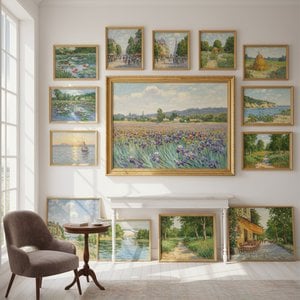
Los 10 Maestros del Paisaje Impresionista: Obras que Cambiaron la Historia del Arte
Descubre los 10 lienzos impresionistas que revolucionaron el arte. Explora la historia de Monet, Van Gogh y Renoir, sus técnicas y colores vibrantes. Encuentra reproducciones de alta calidad para decorar tu hogar en ArtsDot.com