

 Ver en contexto
 Enviar
 Compartir
 Detalles
 Guía
Guía

 Descargar
 Similares
 Radiografía
 Presentación de diapositivas
 Q&A
Q&A Estadísticas
untitled (7574)


 Ver más
Giclée / Impresión de arte
Impresiones giclée o en lienzo de calidad de museo con producción rápida y opciones de acabado flexibles. ( Comprar pintura hecha a mano Cambiar a imagen digital)




P118B €10

P118H €10

P118W €10

P438Z €10

P508JH €12

P508YH €12

P805H €10

P805Z €10

P919BZ €10

P919G €10

P919XJ €10

P959ZH €10

P968JZ €12

W106C €8

W218G €10

W218JH €8

W218Y €10

W307PJ €10

W316G €10

W316PJ €8

W316Y €10

W398PJ €8

W4111J €10

W500HY €15

W500JH €15

W692G €12

W849H €8

W940BG €15

W953PJ €8




Elija entre nuestros tamaños predefinidos que respetan las proporciones originales de la obra.

Introduzca el ancho y el alto que necesite para adaptarse a su marco o pared. Una impresión solo puede recortarse, nunca hacerse más grande que la imagen original, por lo que un tamaño con una forma distinta perderá parte de la obra. Le enviaremos una maqueta digital para su aprobación antes de realizar cualquier impresión. La imagen que se muestra en esta página no refleja el recorte real; solo la maqueta lo hace.
Envío a todo el mundo () en 2 semanas en lugar de las 4/5 semanas estándar. (2 noviembre)

Envío exprés gratuito a todo el mundo

Lienzo de lino de alta calidad

Seguro de envío total

Garantía de reembolso de aranceles aduaneros

Garantía de fidelidad cromática exacta

Política de devolución de 100 días (solo por defectos)

Garantía de devolución del 100% del dinero

Descuento por cantidad
 La opción de vidrio solo está disponible en tamaños inferiores a 110 cm.

untitled (7574)
Giclée / Impresión de arte
Dimensiones de la reproducción
-


Precio total final
€ 55
A Study in Vulnerability: The Raw Emotion of Egon Schiele
In the hauntingly beautiful expanse of Egon Schiele’s “Untitled (7574),” we encounter a moment frozen in time, where the boundaries between the physical body and the psychological soul begin to blur. Painted during the turbulent years of 1916 to 1918, this work serves as a profound window into the heart of Austrian Expressionism. The central figure—a woman draped languidly on her back with legs extended upward—commands the viewer's attention not through traditional grace, but through an unsettling, palpable vulnerability. There is a certain tremor in the composition, a nervous energy that suggests the subject is caught in a state of both repose and profound existential anxiety.
Schiele’s technique is nothing short of visceral. Eschewing the polished perfection of classical portraiture, he employs thick, agitated brushstrokes that create a textured surface pulsating with life and unrest. His signature use of the curvilinear line—jagged, restless, and intensely expressive—delineates the contours of the figure, imbuing the flesh with an almost electric dynamism. This approach does not merely depict a form; it exposes the very nervous system of the subject, inviting those who gaze upon it to witness the raw, unshielded ache of existence.
The Shadows of History and Symbolism
To understand the emotional weight of this piece, one must consider the heavy atmosphere of the First World War that permeated Schiele’s world. As Europe grappled with unprecedented destruction, Schiele channeled this pervasive sense of dread and disillusionment into his art. The upward thrust of the woman's legs can be interpreted as a symbolic reach for aspiration or transcendence, yet it is simultaneously anchored by a heavy sense of limitation and mortality. The subject's averted gaze suggests a deep introspection, perhaps even a subtle defiance against the encroaching darkness of the era.
For the discerning collector or interior designer, this artwork offers more than mere decoration; it provides a focal point of profound intellectual and emotional depth. The interplay between the striking red of the dress and the stark, expressive lines creates a dramatic tension that can transform a space, lending an air of sophisticated melancholy and historical gravity to any gallery or curated room. It is a piece that demands conversation, acting as a powerful meditation on the fragility of human life and the enduring strength of the creative spirit.
Preguntas y respuestas
¿Cómo puedo ver una vista previa de una reproducción de "untitled (7574)" de Egon Schiele?
Para previsualizar una reproducción de "untitled (7574)" de Egon Schiele, acceda a la página de Vista previa de la obra de la obra.
¿De qué manera se relacionan los colores de "untitled (7574)" de Egon Schiele con su carga emocional?
La paleta Earthy de "untitled (7574)" de Egon Schiele armoniza con su tono emocional Melancholic. El color es una de las formas en que una obra transmite sentimiento.
¿Qué sensación transmite "untitled (7574)" de Egon Schiele?
"untitled (7574)" de Egon Schiele transmite una sensación Melancholic dentro de un ambiente general Dramatic.
Obras relacionadas


Biografía del artista
Egon Schiele: Vida y Legado
Primeros Años e Influencias
- Nacido el 12 de junio de 1890 en Tulln an der Donau, Baja Austria, Egon Schiele experimentó una infancia moldeada tanto por la inclinación artística como por las dificultades personales.
- Su padre, Adolf Schiele, era jefe de estación, instando en el joven Egon una fascinación por los trenes – un motivo que aparecería sutilmente más tarde en su obra.
- El temprana fallecimiento de su padre a causa de sífilis cuando Schiele tenía 14 años lo impactó profundamente, llevando a su crianza por parte de su tío materno, Leopold Czihaczek.
- Czihaczek brindó apoyo pero también ejerció una influencia controladora, que contribuyó al complejo paisaje emocional reflejado en el arte de Schiele.
Trayectoria Artística y Desarrollo
- La formación artística de Schiele comenzó en la Kunstgewerbeschule (Escuela de Artes y Oficios) en Viena, pero pronto se trasladó a la Akademie der bildenden Künste (Academia de Bellas Artes).
- Pronto se sintió decepcionado con el enfoque conservador de la Academia, encontrándola sofocante para su visión expresiva. Finalmente, abandonó la formación formal.
- Las influencias tempranas incluyeron a Gustav Klimt, una figura destacada en la Sezión Vienesa, cuyo estilo decorativo y exploración del simbolismo resonaron con Schiele. Sin embargo, Schiele pronto desarrolló un estilo distintivamente individual.
- Sus primeras obras a menudo presentaban retratos y autorretratos inquietantes, caracterizados por figuras distorsionadas y una intensa emotividad.
Características y Temas Clave
- El arte de Schiele es reconocido por su honestidad cruda y profundidad psicológica. Exploró sin miedo temas de sexualidad, muerte, ansiedad e aislamiento.
- Su estilo distintivo presenta figuras alargadas, poses contorsionadas y líneas expresivas que transmiten una sensación de vulnerabilidad y tormento emocional.
- Autorretratos constituyen una parte significativa de su obra, ofreciendo atisbos íntimos en su mundo interior.
- También creó numerosos retratos de otros, a menudo representando a las personas con un realismo sin tapujos e insight psicológico.
- La pintura de paisajes jugó un papel en su trabajo, demostrando su dominio de la forma y el color, aunque fue menos central que sus obras figurativas.
Logros Importantes y Reconocimiento
- A pesar de enfrentar censura y desafíos legales (incluyendo una breve prisión por supuestamente corromper a menores con su arte), Schiele ganó reconocimiento en los círculos vanguardistas de Viena.
- Co-fundó el Neues Wiener Kunstgruppe (Nuevo Grupo de Arte Vienés) en 1909, mostrando su obra junto con otros artistas progresistas.
- Obras significativas incluyen Autorretrato con Physalis, Pareja Abraza y Paisaje de Campo (Kreuzberg cerca de Krumau).
- Para el tiempo de su prematura muerte, Schiele se había establecido como una figura destacada en el Expresionismo Austríaco.
Significado Histórico y Legado
- Egon Schiele murió en 1918 durante la pandemia de gripe española a los 28 años, truncando una prometedora carrera.
- Su obra influyó profundamente en las generaciones posteriores de artistas, particularmente aquellos interesados en explorar temas psicológicos y desafiar las normas artísticas convencionales.
- El enfoque audaz de Schiele en la forma y el tema sigue resonando con el público actual, convirtiéndolo en una de las figuras más importantes e influyentes del arte del siglo XX temprano.
- Sus pinturas se conservan ahora en importantes colecciones de museos en todo el mundo, y las reproducciones de su obra están ampliamente disponibles, asegurando que su legado artístico perdure.

Egon Schiele
1890 - 1918 , Croacia
Datos clave
- Artistas Que Influyeron: ['Gustav Klimt']
- Fecha De Muerte: 1918
- Fecha De Nacimiento: 12 de junio de 1890
- Influenciado A Artistas: ['Generaciones posteriores']
- Lugar De Nacimiento: Viena, Croacia
- Movimiento Artístico: Expresionismo
- Nacionalidad: Austriaco
- Nombre Completo: Egon Schiele
- Obras Notables:
- Autorretrato con Physalis
- Pareja Abraza
- Paisaje de Campo (Kreuzberg)
Artículos relacionados

The Enduring Allure of the Nude: A Historical & Artistic Exploration of the Human Form
Explore the captivating history of nude art! Discover iconic paintings & artists from classical to modern eras. Uncover symbolism, techniques & find museum-quality reproductions at ArtsDot.

Expresionismo Pictórico: 10 Obras Maestras que Definieron un Movimiento Revolucionario | ArtsDot
Descubre las 10 obras maestras del expresionismo que revolucionaron el arte moderno. Explora la historia de Munch, Kirchner, Kandinsky y más. Reproducciones de alta calidad para decorar tu hogar con emoción y estilo en ArtsDot.com.
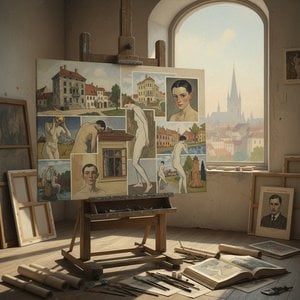
Emoción Pura: Las 25 Obras Maestras de Egon Schiele que Debes Conocer
Explora las 25 obras maestras de Egon Schiele y su expresionismo. Descubre reproducciones de museo en ArtsDot.com.

Egon Schiele: Expressionism, Anxiety & the Modern Condition – A Comprehensive Exploration
Explore the emotionally charged world of Egon Schiele (1890-1918). Discover his Expressionist masterpieces, psychological themes, and lasting impact on modern art. A comprehensive guide for collectors & enthusiasts.

Crimson Threads of Narrative: Exploring Symbolism & Representation in Artworks Featuring the Red Dress
Explore the rich symbolism of the red dress in art history! From ancient power displays to iconic portraits like Cézanne’s 'Madame Cezanne', discover the cultural and artistic significance behind this captivating color. Expert analysis & insights.


