

 Ver en contexto
 Enviar
 Compartir
 Detalles
 Guía
Guía

 Descargar
 Similares
 Radiografía
 Presentación de diapositivas
 Preguntas y respuestas
 Estadísticas
untitled (3117)


 Ver más
Giclée / Impresión de arte
Impresiones giclée o en lienzo de calidad de museo con producción rápida y opciones de acabado flexibles. ( Comprar pintura hecha a mano Cambiar a imagen digital)




P118B €10

P118H €10

P118W €10

P438Z €10

P508JH €12

P508YH €12

P805H €10

P805Z €10

P919BZ €10

P919G €10

P919XJ €10

P959ZH €10

P968JZ €12

W106C €8

W218G €10

W218JH €8

W218Y €10

W307PJ €10

W316G €10

W316PJ €8

W316Y €10

W398PJ €8

W4111J €10

W500HY €15

W500JH €15

W692G €12

W849H €8

W940BG €15

W953PJ €8




Elija entre nuestros tamaños predefinidos que respetan las proporciones originales de la obra.

Introduzca el ancho y el alto que necesite para adaptarse a su marco o pared. Una impresión solo puede recortarse, nunca hacerse más grande que la imagen original, por lo que un tamaño con una forma distinta perderá parte de la obra. Le enviaremos una maqueta digital para su aprobación antes de realizar cualquier impresión. La imagen que se muestra en esta página no refleja el recorte real; solo la maqueta lo hace.
Envío a todo el mundo () en 2 semanas en lugar de las 4/5 semanas estándar. (5 noviembre)

Envío exprés gratuito a todo el mundo

Lienzo de lino de alta calidad

Seguro de envío total

Garantía de reembolso de aranceles aduaneros

Garantía de fidelidad cromática exacta

Política de devolución de 100 días (solo por defectos)

Garantía de devolución del 100% del dinero

Descuento por cantidad
 La opción de vidrio solo está disponible en tamaños inferiores a 110 cm.

untitled (3117)
Giclée / Impresión de arte
Dimensiones de la reproducción
-


Precio total final
€ 56
A Portrait of Vulnerability: Examining Egon Schiele’s Untitled (3117)
The painting “untitled (3117)” by Austrian Expressionist Egon Schiele stands as a haunting testament to the anxieties and passions simmering beneath the surface of early 20th-century art. Captured in an unknown date, this piece depicts a woman undergoing childbirth—a scene fraught with physical pain and psychological vulnerability—rendered with Schiele’s signature blend of impressionistic softness juxtaposed against jarring expressionist distortion. It's more than just a depiction; it’s an exploration of the human condition at its most primal and emotionally raw.- Subject Matter: The central figure is presented in a strikingly unflinching pose, emphasizing her vulnerability as she confronts the monumental task of giving birth. Her legs are spread wide apart, conveying both physical discomfort and a deliberate exposure of her anatomy—a bold gesture that challenged artistic conventions of its time.
- Style & Technique: Schiele’s style is characterized by elongated figures, angular lines, and a deliberate flattening of perspective, hallmarks of Expressionism. The artist employs thick impasto brushstrokes to build up texture on the canvas, creating a palpable sense of physicality and conveying the intensity of the moment depicted.
- Historical Context: Schiele’s work emerged during a period marked by significant social upheaval and intellectual ferment—the aftermath of World War I and the burgeoning influence of psychoanalysis. Artists like Gustav Klimt, whom Schiele admired, were grappling with similar themes of mortality and psychological complexity, shaping the broader artistic landscape of the era.
Exploring Schiele’s Expressionist Vision
Schiele’s artistic approach distinguishes him from many of his contemporaries who favored idealized depictions of beauty. Instead, he sought to capture the inner turmoil of the human psyche—a feat achieved through masterful manipulation of line and color. The artist's obsession with portraying distorted figures stems from a profound belief that art should confront viewers with uncomfortable truths about themselves and their world. This unflinching gaze is evident in every brushstroke, cementing Schiele’s legacy as one of Expressionism’s most influential voices.Reproductions & Artistic Inspiration
A high-quality reproduction of “untitled (3117)” can serve as a powerful addition to any interior design scheme—bringing an element of dramatic tension and psychological depth into the space. Consider framing it in a dark wood frame to accentuate its stark contrasts, or pairing it with complementary colors that evoke feelings of melancholy and introspection. Let Schiele’s masterful depiction inspire you to explore themes of vulnerability, resilience, and the beauty found within confronting difficult emotions—a timeless message conveyed through an unforgettable artwork.Preguntas y respuestas
¿Qué colores predominan en "untitled (3117)" de Egon Schiele?
La identidad cromática de "untitled (3117)" de Egon Schiele: una paleta Pastels, dominada por el Putty (#f2e5af).
¿Puedo pedir una reproducción al óleo de "untitled (3117)"?
Puede solicitar una reproducción pintada a mano de "untitled (3117)" de Egon Schiele directamente en su página de Reproducción al óleo pintada a mano: una reproducción al óleo pintada a mano sobre lienzo de lino, realizada bajo pedido.
¿Es "untitled (3117)" más bien clara o más bien oscura en su conjunto?
"untitled (3117)" de Egon Schiele presenta un nivel de brillo de brilliant, con una luminancia de Luminous.
Obras relacionadas


Biografía del artista
Egon Schiele: Vida y Legado
Primeros Años e Influencias
- Nacido el 12 de junio de 1890 en Tulln an der Donau, Baja Austria, Egon Schiele experimentó una infancia moldeada tanto por la inclinación artística como por las dificultades personales.
- Su padre, Adolf Schiele, era jefe de estación, instando en el joven Egon una fascinación por los trenes – un motivo que aparecería sutilmente más tarde en su obra.
- El temprana fallecimiento de su padre a causa de sífilis cuando Schiele tenía 14 años lo impactó profundamente, llevando a su crianza por parte de su tío materno, Leopold Czihaczek.
- Czihaczek brindó apoyo pero también ejerció una influencia controladora, que contribuyó al complejo paisaje emocional reflejado en el arte de Schiele.
Trayectoria Artística y Desarrollo
- La formación artística de Schiele comenzó en la Kunstgewerbeschule (Escuela de Artes y Oficios) en Viena, pero pronto se trasladó a la Akademie der bildenden Künste (Academia de Bellas Artes).
- Pronto se sintió decepcionado con el enfoque conservador de la Academia, encontrándola sofocante para su visión expresiva. Finalmente, abandonó la formación formal.
- Las influencias tempranas incluyeron a Gustav Klimt, una figura destacada en la Sezión Vienesa, cuyo estilo decorativo y exploración del simbolismo resonaron con Schiele. Sin embargo, Schiele pronto desarrolló un estilo distintivamente individual.
- Sus primeras obras a menudo presentaban retratos y autorretratos inquietantes, caracterizados por figuras distorsionadas y una intensa emotividad.
Características y Temas Clave
- El arte de Schiele es reconocido por su honestidad cruda y profundidad psicológica. Exploró sin miedo temas de sexualidad, muerte, ansiedad e aislamiento.
- Su estilo distintivo presenta figuras alargadas, poses contorsionadas y líneas expresivas que transmiten una sensación de vulnerabilidad y tormento emocional.
- Autorretratos constituyen una parte significativa de su obra, ofreciendo atisbos íntimos en su mundo interior.
- También creó numerosos retratos de otros, a menudo representando a las personas con un realismo sin tapujos e insight psicológico.
- La pintura de paisajes jugó un papel en su trabajo, demostrando su dominio de la forma y el color, aunque fue menos central que sus obras figurativas.
Logros Importantes y Reconocimiento
- A pesar de enfrentar censura y desafíos legales (incluyendo una breve prisión por supuestamente corromper a menores con su arte), Schiele ganó reconocimiento en los círculos vanguardistas de Viena.
- Co-fundó el Neues Wiener Kunstgruppe (Nuevo Grupo de Arte Vienés) en 1909, mostrando su obra junto con otros artistas progresistas.
- Obras significativas incluyen Autorretrato con Physalis, Pareja Abraza y Paisaje de Campo (Kreuzberg cerca de Krumau).
- Para el tiempo de su prematura muerte, Schiele se había establecido como una figura destacada en el Expresionismo Austríaco.
Significado Histórico y Legado
- Egon Schiele murió en 1918 durante la pandemia de gripe española a los 28 años, truncando una prometedora carrera.
- Su obra influyó profundamente en las generaciones posteriores de artistas, particularmente aquellos interesados en explorar temas psicológicos y desafiar las normas artísticas convencionales.
- El enfoque audaz de Schiele en la forma y el tema sigue resonando con el público actual, convirtiéndolo en una de las figuras más importantes e influyentes del arte del siglo XX temprano.
- Sus pinturas se conservan ahora en importantes colecciones de museos en todo el mundo, y las reproducciones de su obra están ampliamente disponibles, asegurando que su legado artístico perdure.

Egon Schiele
1890 - 1918 , Croacia
Datos clave
- Artistas Que Influyeron: ['Gustav Klimt']
- Fecha De Muerte: 1918
- Fecha De Nacimiento: 12 de junio de 1890
- Influenciado A Artistas: ['Generaciones posteriores']
- Lugar De Nacimiento: Viena, Croacia
- Movimiento Artístico: Expresionismo
- Nacionalidad: Austriaco
- Nombre Completo: Egon Schiele
- Obras Notables:
- Autorretrato con Physalis
- Pareja Abraza
- Paisaje de Campo (Kreuzberg)
Artículos relacionados

Impresiones Giclée: Guía Técnica sobre Pigmentos de Archivo y Calidad de Soporte para Coleccionistas
Domina la técnica Giclée y el uso de pigmentos de archivo para coleccionismo. Descubre cómo evaluar la calidad de tus reproducciones hoy.

The Enduring Legacy of Fine Art Prints: Technique, History & Aesthetic Impact
Explore the rich history & techniques of fine art prints. Discover investment potential, assess authenticity, and learn how to preserve your collection with expert guidance. Trusted insights for discerning collectors.
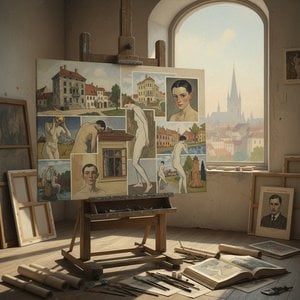
Emoción Pura: Las 25 Obras Maestras de Egon Schiele que Debes Conocer
Explora las 25 obras maestras de Egon Schiele y su expresionismo. Descubre reproducciones de museo en ArtsDot.com.

Expresionismo Pictórico: 10 Obras Maestras que Definieron un Movimiento Revolucionario | ArtsDot
Descubre las 10 obras maestras del expresionismo que revolucionaron el arte moderno. Explora la historia de Munch, Kirchner, Kandinsky y más. Reproducciones de alta calidad para decorar tu hogar con emoción y estilo en ArtsDot.com.

Egon Schiele: Expressionism, Anxiety & the Modern Condition – A Comprehensive Exploration
Explore the emotionally charged world of Egon Schiele (1890-1918). Discover his Expressionist masterpieces, psychological themes, and lasting impact on modern art. A comprehensive guide for collectors & enthusiasts.


