

 Vista previa
 Compartir
 Compartir
 Ver detalles

 Descargar
 Ver similares
 Radiografía
 Presentación de diapositivas
untitled (2635)


 Leer más
Adquiera una imagen digital de alta resolución y optimizada, muy superior a la vista previa en línea.
Cada archivo es preparado meticulosamente por nuestros especialistas internos mediante el uso de herramientas avanzadas y un experto retoque manual. Nos aseguramos de que cada imagen posea una claridad excepcional, una precisión cromática impecable y un detalle minucioso.
El archivo final se entrega por correo electrónico en un plazo de 72 horas, optimizado para su uso inmediato en entornos profesionales, editoriales y de impresión. Esta es la misma calidad en la que confían los estudios de diseño, las editoriales y las galerías de primer nivel.
Imagen Digital
Descarga un archivo de alta resolución para exhibición personal, impresión y proyectos creativos. ( Pedir impresión Encargar reproducción pintada a mano)
Incluido en cada compra de imágenes digitales
Entrega digital experta, garantizada.
Al elegir ArtsDot.com, no solo está adquiriendo una imagen; está recibiendo una obra de arte digital mejorada profesionalmente, elaborada con precisión y respaldada por una garantía de satisfacción. Esto es todo lo que incluye su pedido, automáticamente:

Entrega rápida por email
Recibirá su archivo de imagen digital en alta resolución por correo electrónico en un plazo de 72 horas tras realizar su pedido, listo para su uso inmediato.

Archivo digital optimizado por IA
Su obra de arte se optimiza profesionalmente mediante herramientas avanzadas de IA y edición manual, garantizando el máximo detalle, claridad y precisión cromática.

Reenvío gratuito de por vida
¿Has borrado o perdido tu archivo por error? No te preocupes: te lo volveremos a enviar en cualquier momento, sin coste adicional.

Sin gastos de importación, siempre
Disfrute de su obra de arte al instante sin aduanas, aranceles ni gastos de envío; las descargas digitales siempre están libres de impuestos.

Garantía de precisión de color
Garantizamos que su imagen digital refleje los colores originales con la mayor fidelidad posible, mediante el uso de herramientas profesionales y gestión del color.

Garantía de satisfacción de 60 días
Si no está satisfecho con su imagen digital, la revisaremos o le reembolsaremos el 100% en un plazo de 60 días, sin preguntas.

100% Garantía de devolución de dinero
¿No está satisfecho? Obtenga un reembolso completo dentro de los 60 días posteriores a la recepción de su archivo digital, sin necesidad de explicaciones.

Descuentos por volumen
Compra 3 imágenes, ahorra 10% - Compra 5, ahorra 15% - Compra 10+, ahorra 20%. Ideal para proyectos creativos, galerías y agencias.
Descripción del coleccionable
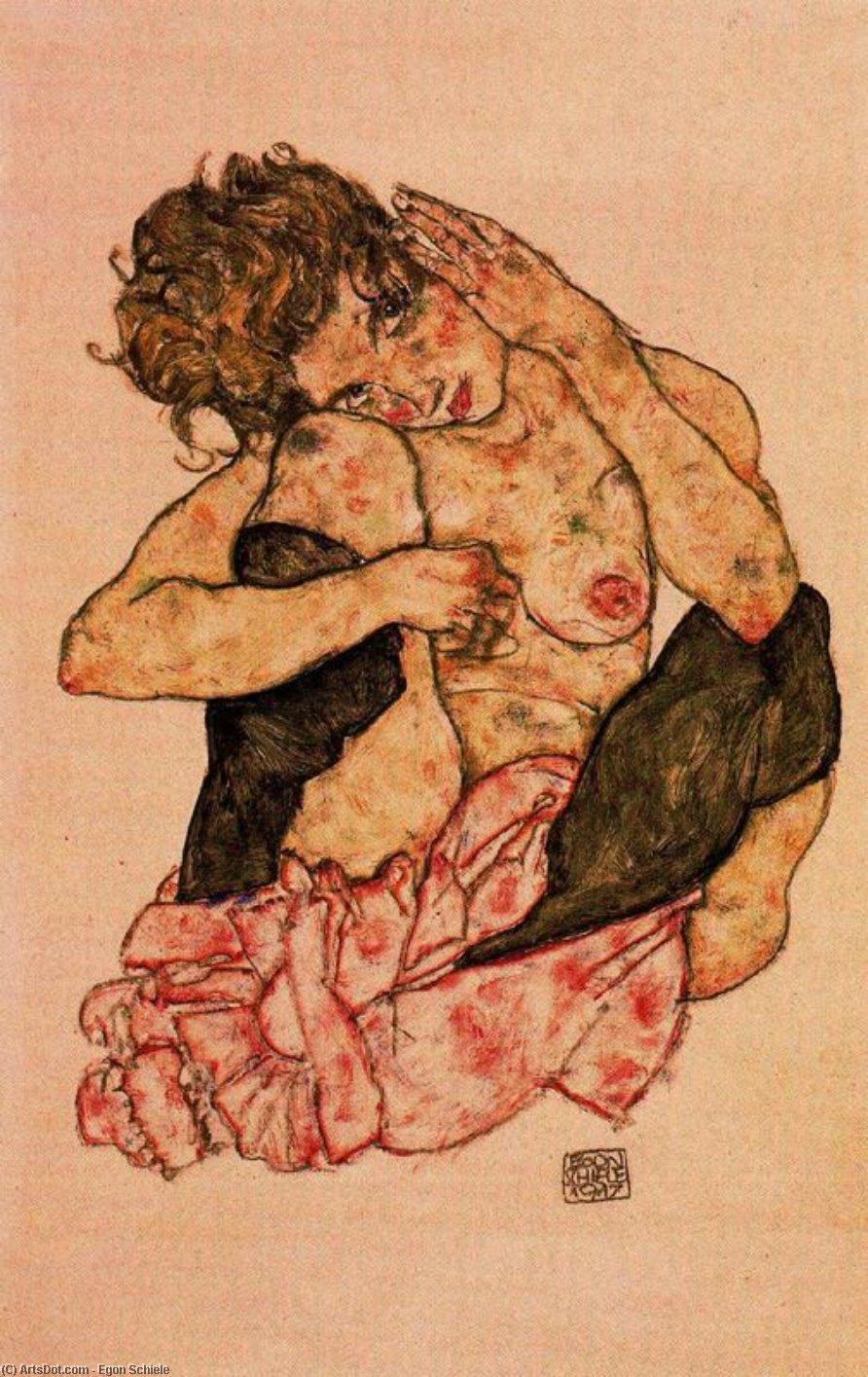
The Raw Embrace: Egon Schiele’s *Untitled (2635)* – A Study in Vulnerability and Desire
Egon Schiele's *Untitled (2635)*, a hauntingly intimate depiction of two figures intertwined on a bed, is more than just a portrait; it’s a visceral exploration of human connection, mortality, and the unsettling beauty of vulnerability. Painted in 1917, during a period of intense personal turmoil for Schiele – marked by illness, loss, and a burgeoning awareness of his own mortality – this work embodies the artist's signature style: bold lines, distorted forms, and an unflinching gaze into the depths of human emotion. The painting’s power lies not in idealized romance but in its raw honesty, capturing a moment suspended between pleasure and pain, life and death.
The scene unfolds with remarkable immediacy. A woman, her body partially nude, is enveloped by the man's arms, their bodies pressed together in a passionate embrace. The composition isn’t formally balanced; instead, it feels deliberately off-kilter, mirroring the emotional instability that characterized Schiele’s life and art. Notice the deliberate lack of detail – the bedclothes are simplified, the faces are obscured, and the background is almost entirely absent. This reduction focuses our attention solely on the figures themselves, intensifying their interaction and amplifying its psychological weight. The man's posture suggests a protective embrace, while the woman’s expression remains ambiguous, hinting at both surrender and resistance.
A Portrait of an Artist in Crisis
Understanding Schiele requires acknowledging the profound impact of his personal life on his art. Born in 1890 in Tulln an der Donau, Austria, he experienced early tragedy with the death of his father from syphilis at just fourteen years old – a trauma that would repeatedly surface throughout his oeuvre. This event, coupled with the loss of his sister Elvira and the subsequent instability of his upbringing under the control of his uncle, instilled in him a deep preoccupation with illness, decay, and the fragility of existence. His uncle’s guardianship, marked by stifling control and a suppression of Schiele's artistic inclinations, further fueled his rebellious spirit and contributed to his sense of isolation.
The painting itself was created during a period when Schiele was struggling financially and emotionally. He had recently separated from his first wife, Edith Harms, and the shadow of World War I loomed large. This context is crucial for interpreting *Untitled (2635)*; it’s not simply a depiction of love but a reflection of an artist grappling with loss, loneliness, and the anxieties of his time. The painting's intensity mirrors Schiele’s own inner turmoil – a desperate attempt to capture and hold onto fleeting moments of connection in the face of inevitable decay.
Symbolism and Technique: Lines as Emotion
Schiele’s distinctive style is immediately recognizable through his use of line. He employed thick, gestural lines that seem to vibrate with energy, conveying a sense of urgency and raw emotion. These lines aren't used to create realistic forms; instead, they are employed to express the artist’s subjective experience – capturing not just what he saw but how he *felt*. The distortion of the figures’ bodies is deliberate, emphasizing their vulnerability and suggesting a state of heightened emotional intensity. Notice, too, the use of color—muted tones dominate, creating a somber atmosphere that underscores the painting's melancholic mood.
The presence of secondary figures in the background – one at the top left and another at the bottom right – adds to the painting’s enigmatic quality. These figures could represent observers or perhaps even echoes of past experiences, further contributing to the sense of unease and psychological complexity. The small figure in the center, closer to the heart of the scene, is particularly intriguing; its obscured features invite speculation about its role within this intimate tableau.
A Legacy of Intensity
*Untitled (2635)* stands as a powerful testament to Egon Schiele’s artistic vision and his unflinching exploration of the human condition. It's a work that demands attention, inviting viewers to confront uncomfortable truths about love, loss, and mortality. Reproductions of this iconic painting offer a remarkable opportunity to bring this intensely emotional artwork into your home or studio, allowing you to experience firsthand the raw beauty and unsettling power of Schiele’s genius. ArtsDot offers meticulously crafted hand-painted reproductions that faithfully capture the nuances of this masterpiece, ensuring its enduring legacy for generations to come.
Obras relacionadas


Biografía del artista
Egon Schiele: Vida y Legado
Primeros Años e Influencias
- Nacido el 12 de junio de 1890 en Tulln an der Donau, Baja Austria, Egon Schiele experimentó una infancia moldeada tanto por la inclinación artística como por las dificultades personales.
- Su padre, Adolf Schiele, era jefe de estación, instando en el joven Egon una fascinación por los trenes – un motivo que aparecería sutilmente más tarde en su obra.
- El temprana fallecimiento de su padre a causa de sífilis cuando Schiele tenía 14 años lo impactó profundamente, llevando a su crianza por parte de su tío materno, Leopold Czihaczek.
- Czihaczek brindó apoyo pero también ejerció una influencia controladora, que contribuyó al complejo paisaje emocional reflejado en el arte de Schiele.
Trayectoria Artística y Desarrollo
- La formación artística de Schiele comenzó en la Kunstgewerbeschule (Escuela de Artes y Oficios) en Viena, pero pronto se trasladó a la Akademie der bildenden Künste (Academia de Bellas Artes).
- Pronto se sintió decepcionado con el enfoque conservador de la Academia, encontrándola sofocante para su visión expresiva. Finalmente, abandonó la formación formal.
- Las influencias tempranas incluyeron a Gustav Klimt, una figura destacada en la Sezión Vienesa, cuyo estilo decorativo y exploración del simbolismo resonaron con Schiele. Sin embargo, Schiele pronto desarrolló un estilo distintivamente individual.
- Sus primeras obras a menudo presentaban retratos y autorretratos inquietantes, caracterizados por figuras distorsionadas y una intensa emotividad.
Características y Temas Clave
- El arte de Schiele es reconocido por su honestidad cruda y profundidad psicológica. Exploró sin miedo temas de sexualidad, muerte, ansiedad e aislamiento.
- Su estilo distintivo presenta figuras alargadas, poses contorsionadas y líneas expresivas que transmiten una sensación de vulnerabilidad y tormento emocional.
- Autorretratos constituyen una parte significativa de su obra, ofreciendo atisbos íntimos en su mundo interior.
- También creó numerosos retratos de otros, a menudo representando a las personas con un realismo sin tapujos e insight psicológico.
- La pintura de paisajes jugó un papel en su trabajo, demostrando su dominio de la forma y el color, aunque fue menos central que sus obras figurativas.
Logros Importantes y Reconocimiento
- A pesar de enfrentar censura y desafíos legales (incluyendo una breve prisión por supuestamente corromper a menores con su arte), Schiele ganó reconocimiento en los círculos vanguardistas de Viena.
- Co-fundó el Neues Wiener Kunstgruppe (Nuevo Grupo de Arte Vienés) en 1909, mostrando su obra junto con otros artistas progresistas.
- Obras significativas incluyen Autorretrato con Physalis, Pareja Abraza y Paisaje de Campo (Kreuzberg cerca de Krumau).
- Para el tiempo de su prematura muerte, Schiele se había establecido como una figura destacada en el Expresionismo Austríaco.
Significado Histórico y Legado
- Egon Schiele murió en 1918 durante la pandemia de gripe española a los 28 años, truncando una prometedora carrera.
- Su obra influyó profundamente en las generaciones posteriores de artistas, particularmente aquellos interesados en explorar temas psicológicos y desafiar las normas artísticas convencionales.
- El enfoque audaz de Schiele en la forma y el tema sigue resonando con el público actual, convirtiéndolo en una de las figuras más importantes e influyentes del arte del siglo XX temprano.
- Sus pinturas se conservan ahora en importantes colecciones de museos en todo el mundo, y las reproducciones de su obra están ampliamente disponibles, asegurando que su legado artístico perdure.

Egon Schiele
1890 - 1918 , Croacia
Datos clave
- Artistas Que Influyeron: ['Gustav Klimt']
- Fecha De Muerte: 1918
- Fecha De Nacimiento: 12 de junio de 1890
- Influenciado A Artistas: ['Generaciones posteriores']
- Lugar De Nacimiento: Viena, Croacia
- Movimiento Artístico: Expresionismo
- Nacionalidad: Austriaco
- Nombre Completo: Egon Schiele
- Obras Notables:
- Autorretrato con Physalis
- Pareja Abraza
- Paisaje de Campo (Kreuzberg)

